There are only six finished novels, which makes Austen the rare great writer you can read completely in a couple of months. It is also why every ranking of her turns into a fight. With six books, moving one up a place is an argument rather than a shrug, so I will say my position now: Persuasion is the best thing she wrote, and Pride and Prejudice is still the one you should read first.
One thing before the list. If you grew up anywhere near rishta conversations, aunties comparing salaries across a dining table, a cousin's marriage being settled in the next room while the tea goes cold, you already have the training that literature students spend a semester acquiring. Austen writes about a marriage market where money comes first and feelings arrive late, and where a woman's whole future turns on a decision she is barely allowed to make. None of that is exotic to an Indian reader.
So this page runs two orders at once. The number beside each book is how good I think it is. The line above the title says where it belongs in a reading order, which is a different question, because the best Austen is not the easiest Austen. Each entry also names the screen version worth your evening, since plenty of you will watch before you read and there is nothing wrong with that.
How I picked these
- Ranked on rereading rather than first impressions. The question I asked of each book was how much it gives back on a second pass, which is where Austen separates from every writer who imitates her.
- The six finished novels come first because they are finished. Lady Susan and Sanditon sit at seven and eight for that reason alone, not because the writing is weaker.
- Fan feeling lost wherever it disagreed with the page. The most quoted of these books is not the best one, and the most defended by critics is the one readers finish least.
- I paid attention to the endings, since that is where her arguments live. Two of these novels close far better than they open, and one hands its heroine a husband it never sells you.
- Adaptations are noted, never counted. Emma is not a better novel because Clueless exists, and Persuasion is not a worse one because Netflix made a mess of it.
- Every edition here was checked through Google Books and Open Library, so the covers belong to real editions rather than print-on-demand blanks.
The whole list at a glance
All 8 books, in order
| # | Book | Author | Year | Vibe | Best for |
|---|
| 1 | Persuasion | Jane Austen | 1817 | restrained, autumnal, aching | readers past twenty five |
| 2 | Pride and Prejudice | Jane Austen | 1813 | witty, warm, perfectly built | your first Austen |
| 3 | Emma | Jane Austen | 1815 | sunny, ironic, intricate | rereaders and puzzle lovers |
| 4 | Sense and Sensibility | Jane Austen | 1811 | sad, sisterly, early | your second Austen |
| 5 | Northanger Abbey | Jane Austen | 1817 | playful, young, sly | readers who love parody |
| 6 | Mansfield Park | Jane Austen | 1814 | severe, watchful, uncomfortable | readers who finish the other five |
| 7 | Lady Susan | Jane Austen | 1871 | wicked, brisk, epistolary | one free evening |
| 8 | Sanditon | Jane Austen | 1925 | unfinished, sharp, modern | Austen completists |
The list
The books, ranked
1
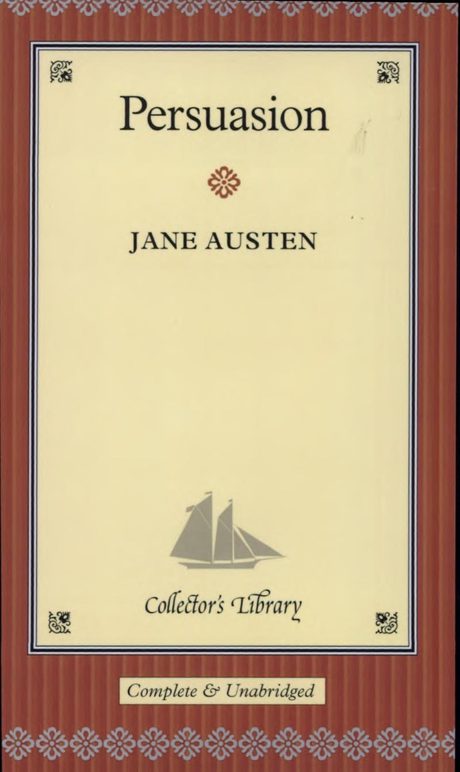
Ranked first / read it fourth
Persuasion
Jane Austen1817about 324 pages
A woman who let herself be talked out of the right man at nineteen meets him again at twenty seven, and he is polite to her.
Anne Elliot is twenty seven, which in her world means the conversation about her marriage is finished. Eight years earlier she was persuaded to refuse a naval officer with no money and no family behind him. Now her father's debts force them to let the house, and the tenants turn out to be an admiral and his wife, who happens to be that same officer's sister, so he walks back into her drawing room rich, admired and perfectly civil. Almost nothing happens. Two people share rooms for months without saying the one thing that matters, while Austen records every glance. Best screen version: the 1995 film with Amanda Root and Ciaran Hinds, which understands that the story is happening on their faces.
Why it is at 1
First because it is the only novel she wrote knowing her time was short, and the compression shows. There are no long comic set pieces, no Mr Collins brought on to perform. The jokes thin out and the ache goes up. If you are nineteen it reads as slow, which is exactly why the reading order sends you here fourth instead of first.
Read it ifyou have ever let somebody talk you out of a person
Skip it ifyou want the comic Austen, because this one is quiet and sad
restrained, autumnal, achingBest for: readers past twenty fivesecond chancenavylate austen
Pairs with: Lady Susan, for the version of Austen with the restraint removed
2

Ranked second / read it first
Pride and Prejudice
Jane Austen1813about 382 pages
Five daughters, no son, an estate going to a cousin, and a rich man moving in three miles away. The rest is dialogue.
Mrs Bennet has five daughters and no son, so the family estate will pass to a cousin the day her husband dies, which makes a wealthy bachelor arriving in the neighbourhood a household emergency. Elizabeth Bennet meets Mr Darcy, decides he is arrogant, and spends three hundred pages working out how much of that verdict was his fault and how much was her own. The plot is famous and survives being famous. What surprises new readers is the dialogue, which moves at the speed of a good sitcom. Best screen version: the 1995 BBC series with Jennifer Ehle and Colin Firth, or Bride and Prejudice if you want it with a Punjabi wedding attached.
Why it is at 2
Second, and the gap is small. Nothing else she wrote is this entertaining line by line and the plotting is close to faultless. It loses the top spot because it hands you exactly what you expect on a reread, while Persuasion keeps changing shape as you get older. It remains the correct place to start, since the comedy pulls you through 1813 prose before you notice you are working.
Read it ifyou want the funniest way into her world
Skip it ifyou resent already knowing the ending, though everybody does
witty, warm, perfectly builtBest for: your first Austenromantic comedysistersclassic
3

Ranked third / read it third
Emma
Jane Austen1815about 516 pages
A rich young woman with nothing to do decides she is brilliant at arranging other people's marriages, and she is spectacularly not.
Emma Woodhouse is wealthy, clever, bored and certain she has a gift for matchmaking. She adopts a younger friend called Harriet, steers her away from a farmer who loves her, and then spends the book being wrong with complete confidence. Her nephew recorded Austen saying she was taking on a heroine nobody but herself would much like, and she understood the risk precisely. This is her funniest novel after Pride and Prejudice and easily her cleverest, because half the clues sit in plain conversation and you miss them the first time. Best screen version: Clueless, honestly, though the 2020 film with Anya Taylor-Joy is the better costume version and Aisha moved the whole thing to Delhi.
Why it is at 3
Third because it is the most skilful thing she built and the least easy to love. Every reread turns up jokes and clues you walked past, which is the mark of a novel constructed rather than simply told. It sits under Pride and Prejudice because Emma holds you at arm's length for two hundred pages, and under Persuasion because cleverness moves you less than regret does.
Read it ifyou like a puzzle hidden inside a comedy
Skip it ifyou need to like the main character early on
sunny, ironic, intricateBest for: rereaders and puzzle loverscomedy of mannersmatchmakingvillage
4

Ranked fourth / read it second
Sense and Sensibility
Jane Austen1811about 264 pages
Two sisters lose their father, their house and most of their money in chapter one, then face the same heartbreak in opposite styles.
The Dashwood sisters lose their father, their home and most of their income within a few pages, and end up in a distant cousin's cottage after their half brother talks himself out of every rupee he promised their dying father he would give them. Elinor keeps everything inside and Marianne keeps nothing inside, and Austen puts them through the same disappointment to measure what each approach costs. It is the earliest of the published novels and you can feel her still assembling the machine: the comedy is broader, the villains more obviously villains. The pain is real though, particularly Elinor's. Best screen version: Ang Lee's 1995 film, written by Emma Thompson, or Kandukondain Kandukondain, which moves the sisters to Tamil Nadu and works.
Why it is at 4
Fourth because the design shows through the fabric. Two sisters as two arguments is neat to the point of being schematic, and the ending hands Marianne a husband the novel never sells to you. What keeps it above Northanger Abbey is Elinor, the most quietly convincing person Austen ever wrote, who carries the entire book on her back without raising her voice.
Read it ifyou have ever been the sensible one in a family
Skip it ifyou want both heroines to end up with men worth having
sad, sisterly, earlyBest for: your second Austensistersgriefmoney
5
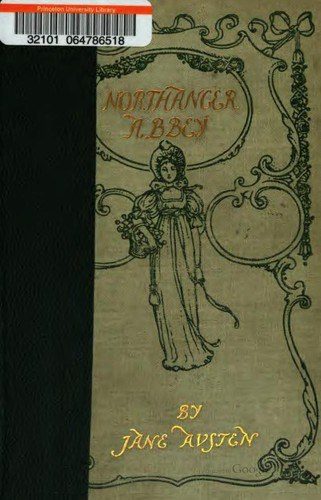
Ranked fifth / read it fifth
Northanger Abbey
Jane Austen1817about 246 pages
A seventeen year old who reads too many gothic novels goes to Bath, then to an old abbey, and starts looking for murdered wives.
Catherine Morland is seventeen, reads far too many gothic novels, and is taken to Bath by neighbours so she can be shown to society. She makes one bad friend and one good one, receives an invitation to an ancient abbey, and immediately begins imagining a murdered wife behind every locked door. The parody targets a genre almost nobody reads today, which sounds like a problem and is not, because the real subject is a girl learning to tell stories apart from people. Austen wrote it early and it appeared after her death. Best screen version: the 2007 television film scripted by Andrew Davies with Felicity Jones.
Why it is at 5
Fifth because the parody has dated and the heroine has not. Catherine is the youngest voice she wrote and the narrator is the funniest she used, breaking in constantly to remind you that you are holding a novel. It sits here because it is slighter than the four above and the villain is dealt with too quickly. Read it once you know her other registers and you get to be inside the joke.
Read it ifyou enjoy books that make fun of books
Skip it ifyou want a grown-up heroine and serious stakes
playful, young, slyBest for: readers who love parodyparodygothicbath
6
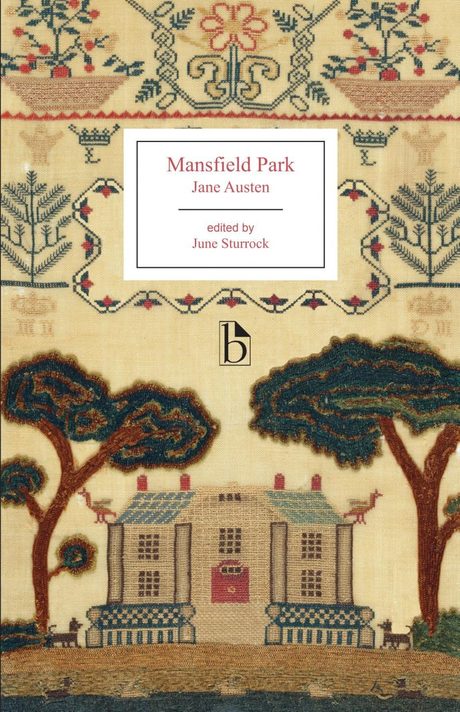
Ranked sixth / read it last
Mansfield Park
Jane Austen1814about 525 pages
A poor girl is sent at ten to live with rich relatives who never let her forget it, and her one weapon is refusal.
Fanny Price is sent at ten to be raised by wealthy relations who remind her constantly of the favour. She grows up quiet, watchful and physically frail, and the novel asks you to admire a girl whose main action is saying no. The Bertram money comes from a plantation in Antigua, named plainly enough in the book that the question cannot be waved away. When two charming visitors arrive from London, everybody behaves badly except Fanny, and Austen makes you feel exactly how exhausting it is to be the only person in a house who will not bend. Best screen version: the 1999 film by Patricia Rozema, which rewrites Fanny into someone bolder than the book allows.
Why it is at 6
Sixth, which is the placement Austen readers will argue with hardest, because critics defend this novel more fiercely than any of the others. My honest reading: it is the most morally serious book she wrote and the least pleasurable, since the heroine's virtue is passive and the man she finally gets is not worth the waiting. Read it last, when you already trust her, and it opens up considerably.
Read it ifyou want the most morally serious book she wrote
Skip it ifyou need a heroine who acts rather than endures
severe, watchful, uncomfortableBest for: readers who finish the other fivemoral seriousnessfamilycountry house
Heads up: the family's wealth comes from a slave plantation in Antigua, which the novel names and leaves unresolved
7

Not a novel / read it any time
Lady Susan
Jane Austen1871
A widow in her thirties moves through other people's houses wrecking marriages, and tells you about it in her own letters.
Lady Susan Vernon stays in one relative's house after another, breaking up marriages as she goes and steering her frightened teenage daughter towards a rich fool, and the whole thing arrives as letters that are funnier and nastier than anything Austen's later heroines are permitted to say. She is the one Austen protagonist who is straightforwardly a villain, and the letter form lets her lie to four people at once while you watch her do it. It runs to about seventy pages. She wrote it young, never published it, and it appeared in print more than fifty years after her death. Best screen version: Love and Friendship, the 2016 film with Kate Beckinsale, the funniest Austen adaptation there is.
Why it is at 7
Seventh only because it is not a novel. As writing it is sharper than at least two of the six, and if you ever wanted proof that Austen could be cruel on purpose, here is the exhibit. It is also the best single evening you can spend with her: one sitting, no subplots, and a heroine who feels no guilt at any point. Read it whenever you like, including tonight.
Read it ifyou want Austen with the manners stripped off
Skip it ifyou need somebody in the book to root for
wicked, brisk, epistolaryBest for: one free eveningnovellalettersvillain
Pairs with: The Watsons and Sanditon, which most editions bind together with it in one slim volume, including the one pictured here
8

Unfinished / read it only once you are hooked
Sanditon
Jane Austen1925about 129 pages
The book she was writing when she died: eleven chapters about property speculation at the seaside, and then nothing.
Austen started this in January 1817 and stopped in March, a few months before her death, leaving eleven chapters behind. A young woman visits a fishing village that two enthusiasts are trying to turn into a fashionable seaside resort, and the fragment concerns property speculation, invalids who thoroughly enjoy their symptoms, and new money arriving on the coast. It reads nothing like the drawing room novels. It is faster, harder and stranger, and it breaks off at precisely the point where a plot would start. Best screen version: the 2019 television series developed by Andrew Davies, which invents everything past chapter eleven and is best treated as fan fiction with a budget.
Why it is at 8
Last because it stops. There is no love story to complete and no lesson waiting at the end, so it earns your time only after the other seven have made you curious about where she was heading next. What it offers is the sight of a writer changing direction at forty one, in a voice that sounds like it belongs to a different century, and that is worth an hour on its own.
Read it ifyou have read the six and want to know what came next
Skip it ifyou need an ending, because there is not one
unfinished, sharp, modernBest for: Austen completistsfragmentsatireseaside
Worth knowing
Why the ranking and the reading order disagree
A ranking answers the question of which book is best. A reading order answers a different one: which book will make you want the next book. Those two lists almost never match for any writer, and with Austen the gap is wide enough to matter. Persuasion is her finest work and a poor introduction, because its power comes from everything it refuses to do, and you cannot feel a refusal until you know what the alternative looked like.
So the order I would actually hand you goes Pride and Prejudice, Sense and Sensibility, Emma, Persuasion, Northanger Abbey, Mansfield Park, with Lady Susan dropped in wherever you have a free evening and Sanditon saved for the end. Comedy first, technique second, regret third, and the difficult one last, once she has earned enough trust from you to be allowed a heroine who never fights back.
Worth knowing
The hardest Austen for a modern reader
Mansfield Park, and it is not close. Fanny Price is the only Austen heroine built out of endurance rather than wit, so the pleasure of watching a clever woman talk her way through a room is simply absent. She is also right about everyone from the first chapter, which removes the arc that makes Elizabeth Bennet and Emma Woodhouse fun. Then there is the Antigua plantation in the background of the family's money, which the novel raises, allows to be questioned once, and then lets fall into silence.
There is a way to read it that works. Treat it as a novel about a house rather than a courtship, and about what a family will do to somebody it has taken in as a favour. Read the theatre chapters slowly, because that is where the whole book turns. And read it sixth, after the other five, when you already believe she knows what she is doing. Readers who start with Mansfield Park usually never pick up a second Austen.
Worth knowing
A word on which edition to buy
Austen runs on money and rank, and both are invisible to us now. When a character has two thousand a year, or is described as being of a certain family, the original reader knew instantly what that meant socially and financially. We do not. An annotated edition from Oxford or Penguin explains those numbers in the notes, and it changes the reading more than any introduction can.
The cheap Indian paperback editions of the six novels are perfectly good for the story and usually carry no notes at all, which is a fair trade for a first read. My suggestion: read Pride and Prejudice in whatever edition you can get hold of quickly, then buy one annotated volume for Mansfield Park or Persuasion, where the social arithmetic is doing the most work.
People also ask
Questions, answered
Which Jane Austen book should I read first?
Pride and Prejudice. It is the funniest, the fastest and the most forgiving of a modern reader, and the comedy carries you across the unfamiliar sentence rhythms before they become a chore. Everything else she wrote reads more easily once you have it behind you. If you already know the story from a film and want something less familiar, start with Sense and Sensibility instead, then come back.
What is Jane Austen's best novel?
Persuasion, in my reading, though most rankings say Pride and Prejudice and that is a reasonable answer. Persuasion is shorter, quieter and written last, by a woman who knew she was ill, and it is the only one of her books about regret rather than discovery. It also rewards age. People who found it slow at twenty tend to find it devastating at thirty five.
How many books did Jane Austen write?
Six completed novels. Four came out while she was alive: Sense and Sensibility, Pride and Prejudice, Mansfield Park and Emma. Northanger Abbey and Persuasion were published together after she died in 1817. Beyond the six there is a finished novella, Lady Susan, two unfinished works, The Watsons and Sanditon, and a pile of juvenilia she wrote as a teenager for her family to read aloud.
Which Jane Austen novel is the hardest to read?
Mansfield Park, by a distance. The heroine is passive on purpose, the moral standard is severe, and the comedy that carries her other books is mostly held back. Readers who begin there often decide Austen is not for them. Save it for sixth, and read the amateur theatre chapters carefully, because the whole argument of the novel is happening in them.
Should I watch the adaptations before reading the books?
It is fine, and for some of these it helps. The 1995 Pride and Prejudice series and Ang Lee's Sense and Sensibility are faithful enough to work as a map. Clueless and Aisha are loose versions of Emma and will not spoil much. Two warnings: the 2019 Sanditon series invents almost everything, and the 2022 Persuasion misreads the tone of the book completely.
Before you go
What to read tonight
If you are starting tonight, open Pride and Prejudice and give it forty pages, which is roughly where the sentences stop feeling like a costume and start sounding like people. If you have already read that one and are choosing between the rest, the tiebreak is simple: Emma when you want to laugh at somebody clever, Persuasion when you want to be quietly wrecked, Sense and Sensibility when you want sisters.
Then do the thing that Austen readers never regret. Wait a few years and read Persuasion again. It is a short book about a woman who let herself be talked out of her own life and got a second chance she did nothing to deserve, and how that lands depends entirely on how much of your own life you have already spent. The book will be the same. You will not be.
Keep going
Lists that pair with this one
Mood & Life
Classic Books for Beginners: 21 Ranked Easiest to Hardest
Twenty one classics arranged on a four rung ladder, easiest first, so you finish the first one instead of abandoning it at page thirty.
Romance
The 15 Best Enemies to Lovers Books, From Austen to BookTok
Fifteen rivalries worth your evenings, ranked by how well the hate is earned, not how fast it melts.
Romance
13 Second Chance Romance Books, Ranked by What the Years Did
Thirteen reunions, ordered by whether the time apart actually changed anybody, with an honest note on which ones end well.
Romance
12 Arranged Marriage Romance Novels That Get the Rishta Right
Twelve books where the match itself is the plot, ranked by how good the love story is and how honestly the family negotiation is written.
Mood & Life
16 Best Books on Love and Relationships (Science, Not Sermons)
Sorted by the stage you are actually in, single, dating, long-term or repair, with an honest note on which ones have research behind them and which ones only sound like they do.