A friend of mine kept a WhatsApp draft to her ex for nine months. She never sent it. She edited it, though, the way you edit a resignation letter you have no intention of handing in: a little shorter every month, a little less angry, until it was three lines that could have gone to anybody. That draft is the whole second chance genre. Two people, a gap, and a message that keeps getting rewritten.
The trouble with most lists on this trope is that they treat the gap as scenery. They meet, they split, five years pass off-page, they run into each other at a wedding and nothing about either of them has moved. I ranked these thirteen by what I call the gap test, which is three questions. Did they break up for a reason a sensible person would recognise? Did the years apart change at least one of them in a way you can point to on the page? And does getting back together cost something, a job, a family truce, a version of themselves they were proud of? The books at the top answer all three. The ones at the bottom are famous, and I will tell you exactly where they thin out.
Four of the thirteen are by South Asian authors, two of those are Persuasion in new clothes, because our families have a real talent for supplying the reason people get separated in the first place. And since this is the one romance trope where the ending is genuinely in doubt, there is an honest ending guide further down. Categories only, no plot, so you know before you start whether you are signing up for a wedding or a wound.
How I picked these
- Every book had to pass the gap test: a real reason for the split, visible change during the years apart, and a reunion that costs somebody something.
- I wanted range in the gap itself. Eight years, eleven years, fifteen years, one agreed year off, and one pair who keep breaking up on a loop. Thirteen identical lake-house reunions would be useless to you.
- The books sit in three tiers, marked on the entries. Tier one is where the years did real work, tier two is a real reunion inside a book with other business, tier three is famous with a catch attached.
- Every title was checked through Google Books and Open Library for a real cover and a real first publication year, so you are not hunting an edition that does not exist.
- Four books by South Asian authors are here on merit. Two of them do Persuasion better than most English-language retellings manage.
- I cut books where the couple were never really apart, and books where the split was one unsent text. People We Meet on Vacation is a friendship being repaired, so it went elsewhere.
The whole list at a glance
All 13 books, in order
| # | Book | Author | Year | Vibe | Best for |
|---|
| 1 | Persuasion | Jane Austen | 1817 | quiet, aching, autumnal | readers who like restraint |
| 2 | Love and Other Words | Christina Lauren | 2018 | tender, nostalgic, quietly devastating | readers who love dual timelines |
| 3 | Recipe for Persuasion | Sonali Dev | 2020 | warm, prickly, family-heavy | Austen readers who want desi |
| 4 | Every Summer After | Carley Fortune | 2022 | lake town, summer ache | monsoon or holiday reading |
| 5 | Happy Place | Emily Henry | 2023 | beach house, quiet panic | readers who want fake dating too |
| 6 | Normal People | Sally Rooney | 2018 | spare, intimate, uncomfortable | readers who like it real |
| 7 | Much Ado About Nada | Uzma Jalaluddin | 2023 | warm, communal, slow burn | fans of Ayesha at Last |
| 8 | After I Do | Taylor Jenkins Reid | 2014 | plain, honest, married | long-relationship readers |
| 9 | Before We Were Strangers | Renée Carlino | 2015 | New York, nostalgic, bittersweet | one-sitting readers |
| 10 | One Day | David Nicholls | 2009 | funny, then brutal | readers who want a novel first |
| 11 | The Notebook | Nicholas Sparks | 1996 | sentimental, sincere, quick | a rainy evening cry |
| 12 | Can Love Happen Twice? | Ravinder Singh | 2011 | earnest, plain, weepy | readers new to English novels |
| 13 | One Indian Girl | Chetan Bhagat | 2016 | brisk, loud, dated | readers who enjoy arguing |
The list
The books, ranked
1
Tier one: the years did real work
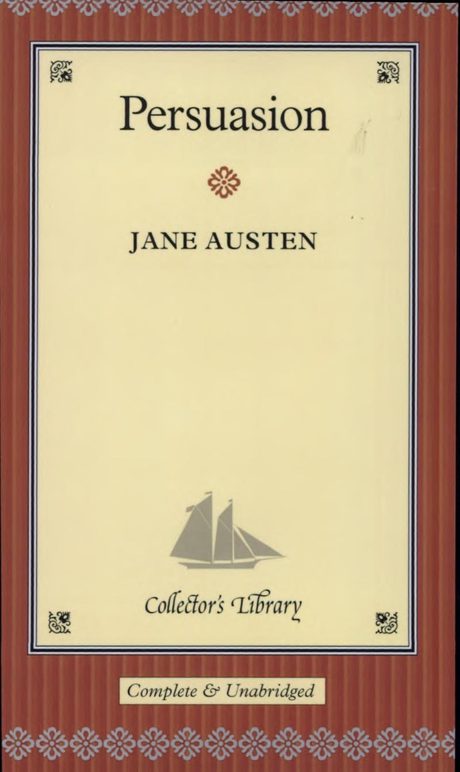
Persuasion
Jane Austen1817about 324 pages
She was talked out of marrying him at nineteen. Eight years later he walks back into her drawing room with a naval fortune.
Anne Elliot let her family and a trusted family friend talk her out of an engagement to a penniless naval officer. Eight years on, Frederick Wentworth returns rich, decorated and coldly polite, and Anne has to sit through dinners with him while everyone treats her as the spare daughter who missed her chance. Austen wrote this one last and it shows: the jokes are quieter and the ache is louder than anything else she published. Almost nothing happens in the plot sense. Two people are in the same room, not speaking, for two hundred pages, and it is unbearable in the best way.
Why it is at 1
Rank one because the gap does all the work. Anne is not the girl who said no any more; she is a woman who has spent eight years watching her own judgment be proved right and getting no credit for it. Wentworth has to notice that before he can forgive her. The letter near the end is the best single thing in the genre, and every book below is trying to write it again.
Read it ifyou want the original and can sit with quiet
Skip it ifyou need banter and a plot that keeps moving
quiet, aching, autumnalBest for: readers who like restraintclassicslow burnregency
Pairs with: Recipe for Persuasion at rank 3, the desi remake that answers it.
2

Love and Other Words
Christina Lauren2018about 480 pages
Two teenagers built a private language in a closet full of books. Eleven years later they meet in a hospital corridor.
Macy and Elliot grow up alongside each other at a weekend cabin in California, reading in a closet, saying things at sixteen that most adults never say out loud. Then something happens and they do not speak for eleven years. Christina Lauren runs it in two lanes, then and now, alternating chapters, so you watch the friendship being built and the adult wreckage at the same time while hunting for the join. It is a romance about how specific language gets between two people, and how badly that language ages when one of them stops answering.
Why it is at 2
Second because the eleven-year gap is not a device, it is the injury itself, and the book makes you feel the difference between what happened and what each of them decided it meant. The dual timeline earns its keep. My one reservation: the reveal lands late and does heavy lifting the middle should have shared. Still the best modern entry point on this list.
Read it ifyou want the modern benchmark with a real ache
Skip it ifhospital scenes and old grief are too much this week
tender, nostalgic, quietly devastatingBest for: readers who love dual timelinesdual timelinechildhood friendscontemporary
Heads up: grief and parental loss sit under both timelines
3
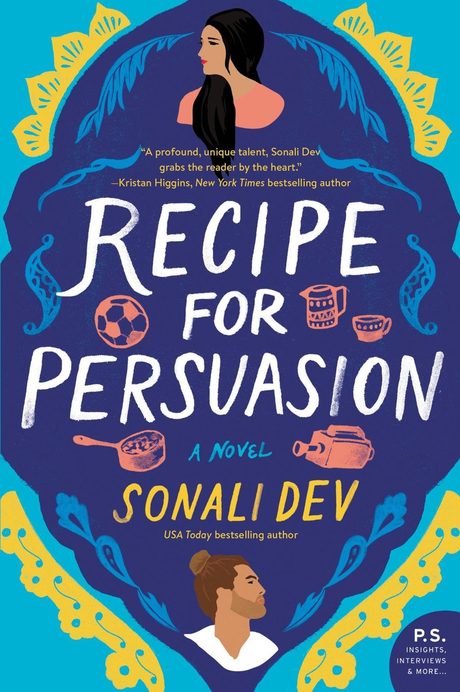
Recipe for Persuasion
Sonali Dev2020about 408 pages
A failing chef and the footballer she dumped get cast on the same cooking show. Neither of them agreed to talk about it.
Ashna Raje is trying to keep her late father's restaurant alive and losing. A celebrity cooking contest offers a lifeline, and the partner she is assigned turns out to be Rico Silva, the man she loved and left when she was young enough to believe she had a good reason. Dev writes the Raje family the way Indian families actually operate, with obligation stacked on top of affection until nobody can tell which is which. There is also a thread about Ashna's mother that is harder and better than the romance itself.
Why it is at 3
Third because it improves the source in one specific way. Austen's Anne is talked out of the match by a family friend; Dev makes the persuasion a mother-shaped hole instead, which hurts considerably more. It sits below Love and Other Words only because the reality-show machinery creaks whenever it takes the wheel. The family scenes are worth the whole book.
Read it ifyou want Persuasion with an Indian American family and food
Skip it ifreality-TV plotting makes you roll your eyes
warm, prickly, family-heavyBest for: Austen readers who want desiausten retellingdesifood
Heads up: panic attacks, a parent's death, a strained mother-daughter history
Pairs with: Persuasion at rank 1, and either order works.
4
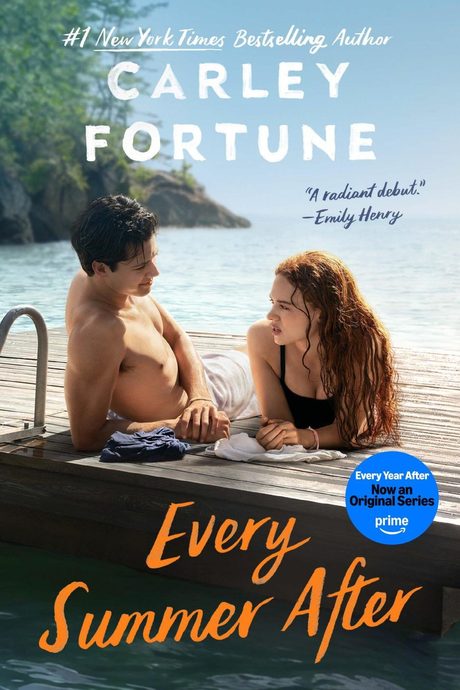
Every Summer After
Carley Fortune2022about 337 pages
Six summers at a lake, one weekend twelve years later, and a funeral that forces them into the same car.
Percy spends her teenage summers at a cottage in Ontario next door to two brothers, and the friendship with Sam becomes the shape of her whole life. Then something ends it badly and twelve years pass. A death brings her back for a weekend. Fortune alternates the summers with the present and she is very good at the physical detail of a lake town: the dock, the wet towels, the boredom that turns into everything. The adult sections are tighter than the teenage ones, which is unusual and welcome.
Why it is at 4
Fourth for the cleanest version of the summer-reunion structure, and because the split comes from genuinely bad behaviour rather than a misunderstanding, so the apology has to be a real apology. It loses ground to the three above because Percy's adult life is thin outside the memories. You believe the past completely and the present about eighty percent.
Read it ifyou want nostalgia with an actual grudge underneath
Skip it ifteenage timelines feel like slow going to you
lake town, summer acheBest for: monsoon or holiday readingdual timelinesmall townbooktok
5
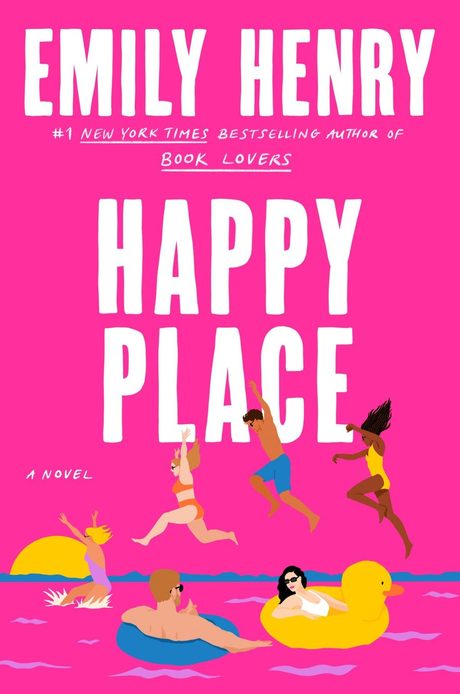
Happy Place
Emily Henry2023
They called off the engagement five months ago and have told nobody. Now they are sharing a bedroom on the annual friends trip.
Harriet and Wyn split up, kept it quiet, and then walked into the same cottage in Maine for the group holiday they have taken every year since college, where six friends still expect them to be a couple. So they perform. Henry is writing about a friend group ageing out of its own traditions as much as she is writing about the two of them, and the crowded house does the work of a locked room. The pretending is funny for a third of the book and then it starts to hurt, which is the design.
Why it is at 5
Fifth because it welds second chance to fake dating and both halves hold. The gap here is months rather than years, which costs it points on my test, and the central problem is one conversation these two keep refusing to have, which will make some readers shout. But nobody writes the particular misery of performing fine in front of people who love you better than Henry does here.
Read it ifyou like Emily Henry and want the sad one
Skip it ifcharacters withholding one conversation for 300 pages annoys you
beach house, quiet panicBest for: readers who want fake dating toofake datingfriend groupcontemporary
Pairs with: The fake dating list, where this trope gets its own ranking.
6
Tier two: real reunion, other business
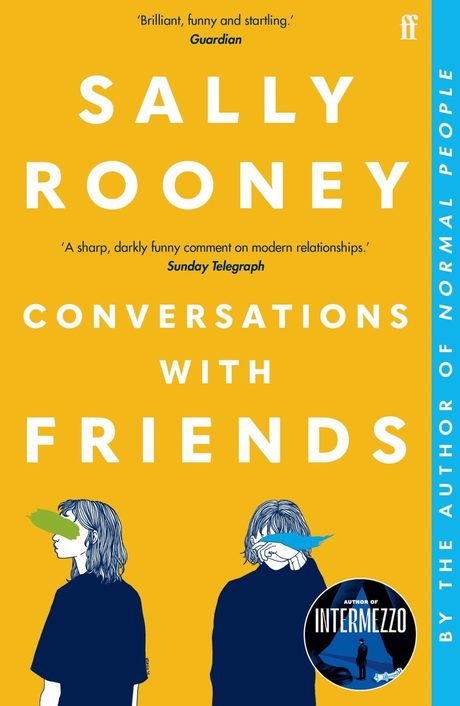
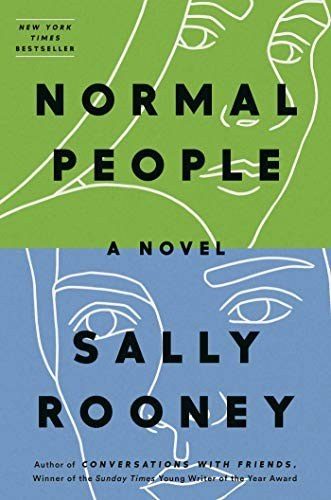
Normal People
Sally Rooney2018about 300 pages
Connell and Marianne find each other, lose each other, and repeat it across four years, first in Sligo and then in Dublin.
In a small town in Ireland he is popular and she is not, and they conduct their entire relationship in secret. At university the social order flips and they keep circling: together, then not, then together. Rooney writes without quotation marks and without cushioning, and the effect is that you sit inside two people who can be honest about everything except the one thing. Class, money and the distance between what they say and what they mean run under every scene. The famous discomfort is real, and so is the fact that it is funnier than people admit.
Why it is at 6
Sixth, and I know that will irritate people, because it is the best novel here and not the best second chance. There is no single gap, there are half a dozen, and Rooney cares about why these two keep failing rather than about the repair. If you want the trope executed properly, go up the list. If you want the truth about why people go back, this is the only book here that will look you in the eye.
Read it ifyou want literary fiction with the romance wiring intact
Skip it ifyou need a guaranteed happy ending to enjoy anything
spare, intimate, uncomfortableBest for: readers who like it realliteraryon again off againirish
Heads up: depression, self-harm, family abuse, a controlling relationship
Pairs with: One Day at rank 10, same illness, different treatment.
7
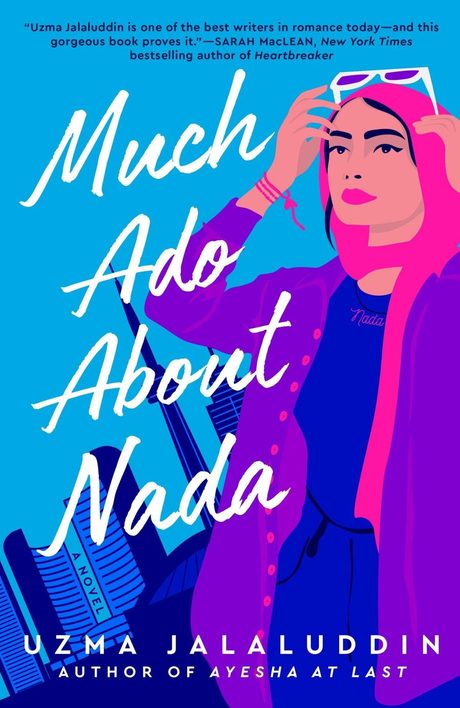
Much Ado About Nada
Uzma Jalaluddin2023about 311 pages
Nada has not spoken to Baz in years. Her best friend drags her to a Muslim convention where he is a headline guest.
Nada Syed is twenty-eight, living with her parents in Toronto, working a job beneath her, and quietly grieving something she built and walked away from. At a large community convention she runs into Baz, now tangled up with her best friend's family, and the reasons the two of them stopped speaking come back in instalments. Jalaluddin writes ummah life with the specificity most novels reserve for weddings: the aunties, the exhibition halls, the business cards, a gossip network that moves faster than fibre broadband. The romance is slow and the community is the co-star.
Why it is at 7
Seventh because the gap holds something rarer than heartbreak, a professional betrayal Nada has never said out loud, which turns the reunion into a question of restitution rather than feelings alone. It sits here rather than higher because the convention keeps interrupting the two of them and the middle third sags. The community writing makes up for it.
Read it ifyou want a Muslim second chance with real community texture
Skip it ifyou want the couple alone on the page most of the time
warm, communal, slow burnBest for: fans of Ayesha at Lastdesimuslimausten inspired
8
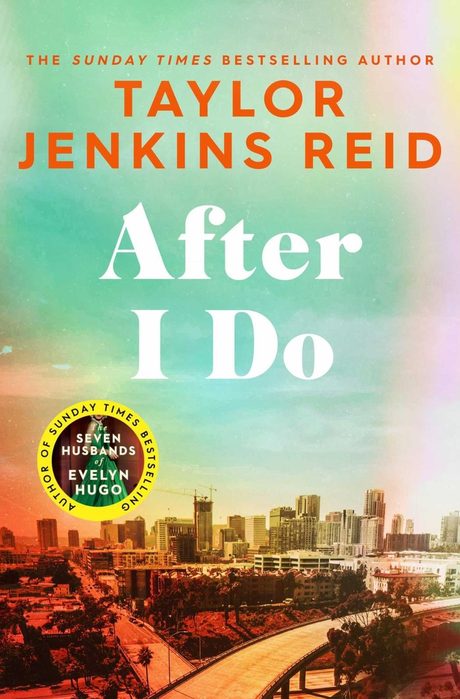
After I Do
Taylor Jenkins Reid2014about 335 pages
A married couple who have started to dislike each other agree to spend one year apart, no contact, and then decide.
Lauren and Ryan met at nineteen, and by their eleventh year together they cannot share a kitchen without one of them turning unpleasant. Instead of divorcing they agree to twelve months of no contact and no rules, after which they will see. Reid alternates Lauren's year, her family, a new flirtation, a great deal of hard thinking, with letters and memories from the marriage. It is the least glamorous book on this list and the most useful, because it asks the question the trope normally skips: what exactly were you supposed to do with the time?
Why it is at 8
Eighth because the gap is the actual subject. Most second chance novels leave the years off-page; this one puts them on the page and makes you sit in the boredom and the small humiliations of a marriage on pause. It ranks here rather than top five because the prose is plain and Reid got much sharper later. If you are the one weighing a reconciliation, read this before anything else.
Read it ifyou are actually weighing a reconciliation right now
Skip it ifyou want butterflies rather than an audit of a marriage
plain, honest, marriedBest for: long-relationship readersmarriagecontemporaryreconciliation
9

Before We Were Strangers
Renée Carlino2015about 320 pages
He posts a missed connection about a girl he lost fifteen years ago. She sees it.
Matt and Grace were nineteen, broke and inseparable in New York, one a photography student and one a music student, and then a single bad decision separated them for fifteen years. He spots her on the subway, loses her again in the crowd, and puts up a missed connection ad. The book flashes back to the student years and forward to two adults circling a conversation neither wants to open. Carlino writes the college half with real charm, and the adult half asks a harsh question: if a misunderstanding took fifteen years, whose fault is that?
Why it is at 9
Ninth because the premise is the best on the list and the execution is merely good. A missed connection ad is a perfect modern engine for a trope built on silence, and the student half is lovely. The present-day half leans on coincidence and the last stretch tips into melodrama. Read it for the idea and for the middle two hundred pages.
Read it ifyou like a strong hook and a fast read
Skip it ifcoincidence-heavy endings make you groan out loud
New York, nostalgic, bittersweetBest for: one-sitting readersmissed connectioncollegecontemporary
10

Tier three: famous, and here is the catch
One Day
David Nicholls2009about 450 pages
Two people meet on graduation night and the book checks in on them on the same date every year for twenty years.
Emma and Dexter meet in Edinburgh in 1988, and the novel returns to them on the fifteenth of July every year after that, whatever they happen to be doing and whoever they happen to be doing it with. She is sharp and stuck, he is charming and rotting, and the structure lets you watch them miss each other in slow motion, one year per chapter. Nicholls is very funny about the specific embarrassments of your twenties: the bad flat, the worse job, the friends who got there faster. It is also the most manipulative book here, and it knows it.
Why it is at 10
Tenth because it is a great novel and a shaky fit. There is no clean split and reunion, there are twenty years of near misses, and the second chances are attempts rather than a repair. It stays on the list because everybody searching this trope means it, and because the annual snapshot is the most copied structural idea here. Go in knowing the ending is not the one you want.
Read it ifyou want twenty years compressed into one date
Skip it ifyou need the reunion to land and then stay landed
funny, then brutalBest for: readers who want a novel firstliterarybritaintwenty years
Heads up: grief, alcoholism, and an ending that upsets people
11
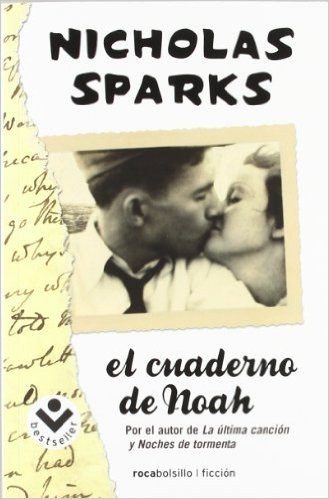
The Notebook
Nicholas Sparks1996about 240 pages
A summer romance at seventeen, letters that never arrived, and a man reading a notebook aloud to a woman who forgets him.
Noah and Allie have one summer as teenagers in North Carolina, get separated by class and by her parents, and meet again fourteen years later when she is engaged to somebody else. Wrapped around that is the frame everyone knows from the film, an old man reading a story to a woman with dementia in a nursing home. It is short, plain and completely shameless about going for the throat. Sparks is not a stylist and the book never pretends otherwise. What he can do is set up one image and hold it until you crack.
Why it is at 11
Eleventh because the second chance is textbook, the fourteen-year gap, the letters, the engagement to the wrong man, and the reason it is not higher is that neither Noah nor Allie changes much during the gap. They simply wait. It works on almost everyone anyway. Treat it as the comfort food of the genre: thin on nutrition, reliable on effect, finished in an evening.
Read it ifyou want the crying done efficiently tonight
Skip it ifyou need prose with some personality in it
sentimental, sincere, quickBest for: a rainy evening cryclassic romanceletterstearjerker
Heads up: dementia and end-of-life care
12
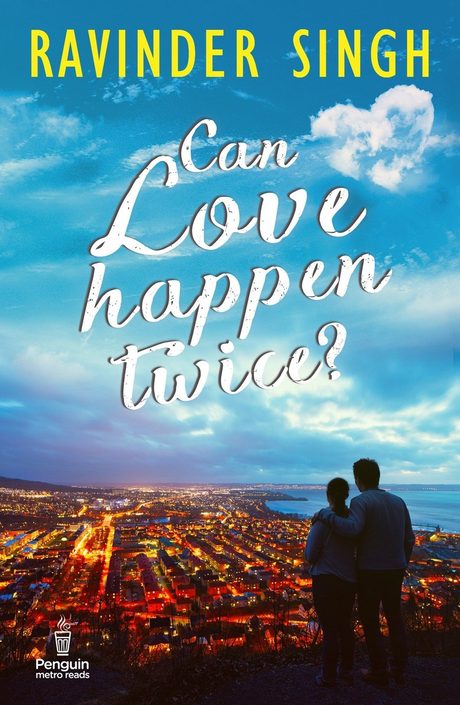
Can Love Happen Twice?
Ravinder Singh2011about 173 pages
The sequel to a real loss. A man whose fiancee died before the wedding tries to work out whether he is allowed to want anything again.
Ravinder Singh's first book was about losing his fiancee before their wedding, and this one picks up after that loss, with Ravin trying to decide whether a second relationship counts as a betrayal or simply as living. The writing is plain to the point of bare and the emotional register is set to maximum from page one. I am not going to pretend it is a well-made novel. What I will say is that for a lot of Indian readers my age this was the first English book they finished by choice, and it is honest about the thing imported romances never touch: what your family, and your own guilt, have to say about attempt number two.
Why it is at 12
Twelfth because it is a second chance at love rather than a second chance with the same person, which is a different animal, and because the craft is thin. It stays for two reasons. The edition I checked runs under two hundred pages, so it is the fastest read here, and it asks the trope's question in the plainest words anybody has used. Read the first book or this will not land.
Read it ifyou read Hindi film emotions happily and want something fast
Skip it ifflat prose and heavy sentiment put you off completely
earnest, plain, weepyBest for: readers new to English novelsindiangriefshort
Heads up: bereavement and survivor guilt
13

One Indian Girl
Chetan Bhagat2016about 272 pages
An investment banker's wedding in Goa, and both her exes turn up with opinions about who she ought to be.
Radhika Mehta is getting married at a Goa resort and telling you, in the first person, about the two relationships that got her here, one from her New York years and one from her Hong Kong posting, while her mother runs the wedding like a project plan. Bhagat is trying to write a woman who earns more than the men around her and gets punished for it, and the setup is a good one. The execution is the problem. Radhika's inner monologue keeps pausing to explain feminism to you, and it often reads like a man drafting what he imagines a woman thinks in the shower.
Why it is at 13
Last because it is the book most likely to be handed to you by a cousin, and the weakest one here, and you deserve to hear that from somebody who read it rather than from a review that stopped at the cover. The question underneath it is real: if two men from your past show up the week you marry a third, what does choosing even mean? The answer arrives wrapped in a lecture. Read it to argue with it.
Read it ifyou want the big Indian one and a fight with it
Skip it ifyou have no patience for a man narrating feminism
brisk, loud, datedBest for: readers who enjoy arguingindiangoa weddinghonest verdict
Worth knowing
The ending guide, spoiler-light
Second chance is the one romance trope where the ending is genuinely up for grabs, so here is the sorting, categories only, no plot. You get the reunion and it holds: Persuasion, Love and Other Words, Recipe for Persuasion, Every Summer After, Happy Place, Much Ado About Nada. You get a resolution that is earned rather than sweet: After I Do and Before We Were Strangers, both of which make you work for it and one of which takes a late swerve that splits readers down the middle.
You get a love story and a loss sitting in the same book: The Notebook, which is the entire reason people cry at it. And you do not get a romance ending at all from Normal People or One Day. Those two are the best-written books here and neither is interested in tucking you in. I have left two uncategorised on purpose: Can Love Happen Twice, because the title is the question, and One Indian Girl, because the closing stretch is the only part of it I would rather you meet cold.
Worth knowing
Where the famous ones went
A few names you expected are missing. People We Meet on Vacation is a friendship that breaks and gets repaired, which is a lovely thing and a different thing, so it belongs with the friends to lovers crowd. It Ends With Us contains a second chance, but the novel is really about leaving, and selling it as a reunion read would be dishonest to anybody who picks it up hoping for comfort. Battle for Bittora has childhood sweethearts on opposite sides of an election, and it lives on the enemies to lovers list because the fight is louder than the gap.
On the Indian shelf, this trope is oddly underwritten in English. Arranged marriage and campus romance dominate, possibly because our real second chances tend to happen quietly, over a decade, in a reply to a birthday message at 11:40 pm. Four is all I could stand behind here, and I would happily make it eight.
People also ask
Questions, answered
What is a second chance romance?
It is a romance where the couple have already been together once, so the story is about the return rather than the meeting. The gap can be eight years, one agreed year off, or an entire marriage. What separates a good one from filler is whether the time apart did anything at all: if you could delete the years and the plot would still run, you are holding a first-chance romance in a costume.
Which second chance romance should I read first?
Love and Other Words at rank 2. It is modern, it moves, and the dual timeline shows you the whole machinery of the trope inside one book. If you would rather start with the classic, Persuasion is short by Austen standards and its last fifty pages are the best in the genre. If you want an Indian setting, begin with Recipe for Persuasion at rank 3 and go from there.
Do second chance romances always have happy endings?
No, which is why this list carries an ending guide. Books shelved as category romance almost always finish with the couple together, because that is the genre contract. The literary crossovers never signed it. Normal People and One Day are here because readers who like this trope keep finding them anyway, and both deserve a warning rather than a straight recommendation if what you want tonight is comfort.
Are there good Indian or South Asian second chance romance novels?
Four made this list: Recipe for Persuasion at rank 3, Much Ado About Nada at 7, Can Love Happen Twice at 12 and One Indian Girl at 13, with caveats attached to the last two. The trope is thinner in Indian English fiction than arranged marriage or campus romance, which is strange for a culture so skilled at separating people who wanted each other.
Is Persuasion worth reading if I only read contemporary romance?
Yes, with one adjustment. Read the first thirty pages slowly and let the sentence rhythm settle, and after that it moves. It is Austen's shortest and saddest, there is no long ballroom comedy to wade through, and the situation is one every modern reader recognises, which is being stuck in a room with somebody you were talked out of. If the language still fights you, watch a film version first and the book gets easier.
What is the difference between second chance and enemies to lovers?
Second chance needs shared history: these two already loved each other and something ended it. Enemies to lovers needs mutual hostility with a cause and no romantic past. A few books qualify for both, which is why titles like Battle for Bittora get claimed by two lists. The quick test is what the couple are recovering from. An old wound puts you in second chance territory, an active fight puts you somewhere else.
Before you go
What to read tonight
If you have a specific person in mind tonight, pick by what you want from the evening rather than by rank. Want to feel understood by a book that will not lie to you? Normal People, and leave your phone in another room. Want the reunion done properly, with an apology that costs something? Persuasion, or Love and Other Words if nineteenth-century sentences are too much after work. Want the crying finished by midnight? The Notebook, and no shame in it.
And if the honest answer is that you are reading this to decide something rather than to find a book, start with After I Do at rank 8. It is the least romantic novel on the list and the only one that treats a year apart as a real year with laundry in it, which is much closer to how these things go than any lakeside reunion.
Keep going
Lists that pair with this one
Romance
The 15 Best Enemies to Lovers Books, From Austen to BookTok
Fifteen rivalries worth your evenings, ranked by how well the hate is earned, not how fast it melts.
Mood & Life
16 Books to Read After a Breakup, in the Order You Can Handle Them
Ordered by stage rather than by quality, because handing somebody Wild in week one is like handing a person with fever a plate of biryani.
Romance
The 25 Best Indian Romance Novels, Ranked Honestly (2026)
Comfort reads, campus tearjerkers, comedies and literary heavyweights, ranked with labels, quick picks and honest skip-it warnings.
Books Like
15 Books Like Normal People That Hurt in the Same Quiet Way
Rooney's novel runs on four wires. Every book here carries at least one of them, and I tell you which.
Romance
Sad Romance Books That Make You Cry: 16, Tissue Rated
Every book gets a tissue count out of five and a hurt type, because grief, bad timing and a terminal diagnosis do not damage you the same way.