I bought my first relationship book at a Crossword in Ahmedabad and asked for a paper bag to go over it, which tells you how we treat this subject. Reading about love felt like confessing I was bad at it. Ten years and a lot of books later, I think the embarrassment is the expensive part. Most of us learn relationships by copying our parents and our favourite films, then wonder why the same fight keeps arriving in different clothes.
So this list is sorted by the stage you are in, not by how famous the author is. Four stages: single, dating, long-term, and repair. Read the three or four books in your stage and ignore the rest until your life moves. The numbers run one to sixteen and they are a route rather than a leaderboard, though the first book is also the one I would hand to almost anyone who asked.
Above every title I have marked where that book's authority comes from: research, a therapist's consulting room, philosophy, reporting, or in one case a novel. That distinction matters. A finding from a lab and a confident opinion from a practice should not sit at the same weight in your head, and this shelf blurs the two on purpose.
Two famous books are missing here deliberately and I say which at the end. Nothing on the list needs a therapist to be useful, though four of them work much better if you have one.
How I picked these
- Sorted by stage, not by fame. Single, dating, long-term, repair. Your stage is three or four books, and the other twelve can wait.
- Every book is labelled by where its authority comes from, so a counsellor's model never gets to sit in the same chair as a research summary.
- Sermons cut. Anything built on men are like this and women are like that did not make it, because that framing has been selling books since 1992 and fixing almost nothing.
- I kept two books I have real problems with, because they are still useful, and I put the problems in writing instead of burying them.
- Every title verified through Google Books and Open Library with a real cover, and a first-publication year I could stand behind rather than the reprint date.
- No book is here because it is popular. Four of the best known titles in this genre are ranked low or left out entirely.
The whole list at a glance
All 16 books, in order
| # | Book | Author | Year | Vibe | Best for |
|---|
| 1 | Attached | Amir Levine | 2010 | clinical, practical, oddly comforting | understanding your own pattern |
| 2 | All About Love: New Visions | bell hooks | 2000 | warm, direct, uncompromising | rethinking what love means |
| 3 | The Art of Loving | Erich Fromm | 1956 | cool, philosophical, bracing | one evening of rethinking |
| 4 | Why We Love | Helen Fisher | 2004 | scientific, curious, unsentimental | surviving the obsessive phase |
| 5 | How to Not Die Alone | Logan Ury | 2021 | practical, brisk, upbeat | active dating right now |
| 6 | Modern Romance | Aziz Ansari | 2015 | funny, reported, light | a plane or a long train |
| 7 | Conversations on Love | Natasha Lunn | 2021 | gentle, wide-ranging, honest | one chapter a night |
| 8 | The Seven Principles for Making Marriage Work | John M. Gottman | 1999 | dry, practical, evidence-led | couples reading together |
| 9 | The Course of Love | Alain de Botton | 2016 | wry, sad, clever | the two-year disappointment |
| 10 | Mating in Captivity | Esther Perel | 2006 | provocative, elegant, unsettling | long-term couples who are bored |
| 11 | Come As You Are | Emily Nagoski | 2015 | friendly, frank, reassuring | understanding desire without shame |
| 12 | The 5 Love Languages | Gary Chapman | 1992 | simple, warm, repetitive | starting a difficult conversation |
| 13 | Hold Me Tight | Sue Johnson | 2008 | clinical, kind, precise | couples stuck in a loop |
| 14 | Nonviolent Communication | Marshall B. Rosenberg | 1999 | methodical, calm, teachable | the next argument |
| 15 | Getting the Love You Want | Harville Hendrix | 1988 | earnest, structured, dated | a weekly repair drill |
| 16 | The State of Affairs | Esther Perel | 2017 | unflinching, humane, uncomfortable | after the disclosure |
The list
The books, ranked
1
Stage 1 Single, research
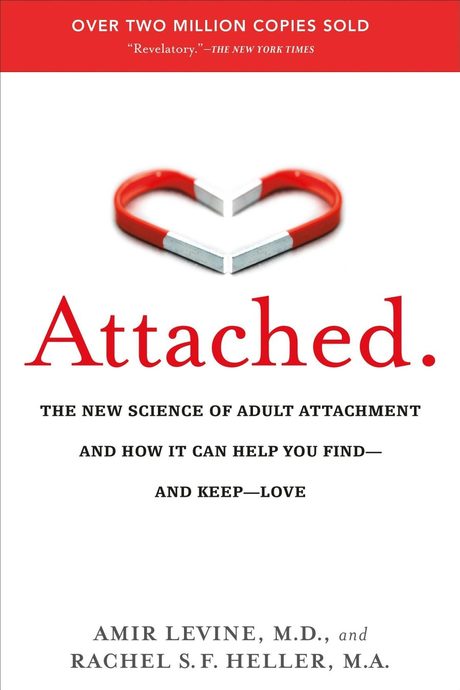
Attached
Amir Levine2010
The book that gives your dating history a diagram instead of a mystery.
Two researchers took attachment theory, which began with studies of babies and their mothers, and applied it to adults on dates. The claim is that most of us run in one of three modes. Secure people are steady and are also the ones we swipe past. Anxious people need reassurance and read a slow reply as danger. Avoidant people want closeness right up to the moment they get it. The book is built from quizzes and case studies that read like transcripts of your own chats, and it carries one genuinely useful warning about the anxious and avoidant pairing that can keep two decent people busy for years.
Why it is at 1
First because it is the fastest return on a hundred pages of reading. Most people arrive at this shelf with one question, why do I keep doing this, and this is the book that answers with a pattern instead of a pep talk. The caveat is real: three boxes are tidier than actual humans, and once you have the vocabulary it becomes tempting to diagnose everyone you have ever dated. Use it on yourself first.
Read it ifyou keep repeating the same pattern and want a name for it
Skip it ifyou dislike personality-type thinking, because the whole book runs on three categories
clinical, practical, oddly comfortingBest for: understanding your own patternattachmentdatingpsychology
Pairs with: Hold Me Tight, which takes the same attachment idea into a live relationship
2
Stage 1 Single, philosophy
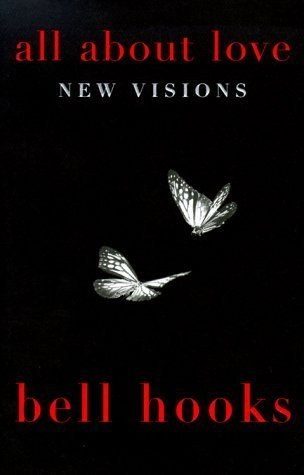
All About Love: New Visions
bell hooks2000about 248 pages
Refuses to let the word stay vague, then holds you to the definition.
bell hooks opens by insisting that love needs a working definition, and hers, borrowed openly from M. Scott Peck, is the will to extend yourself for someone's growth. That single move turns love into an action you choose rather than weather that happens to you. From there she takes apart the things we call love and are not: control, ownership, the household where a child is hit and told it is for their own good. She writes about romance, but also friendship, family, work and faith, because her argument is that you cannot be loving in one room and cruel in the next.
Why it is at 2
Second because it is the only book here that asks what you mean by the word before it tells you what to do. Attached explains how you behave, hooks asks what you are aiming at. It is also the most confronting thing on the list, particularly the chapters on family, and Indian readers may find the pages on parents and obedience landing closer to home than they expected.
Read it ifyou want the definition settled before the technique
Skip it ifyou want steps and scripts, because this book argues rather than instructs
warm, direct, uncompromisingBest for: rethinking what love meansphilosophyself-workfamily
3

Stage 1 Single, philosophy
The Art of Loving
Erich Fromm1956about 184 pages
Written in 1956 and still the sharpest thing ever said about people shopping for partners.
Fromm's opening move is that almost nobody believes love has to be learned. We treat it as a problem of finding the right person rather than developing the ability, so we train for everything else and stay amateurs at this. He then walks through the varieties, between parent and child, between friends, between lovers, and towards oneself, arguing they all run on the same four muscles: care, responsibility, respect and knowledge. Half of it reads like a review of dating apps written seventy years early, especially the passage where he describes two people appraising each other the way buyers appraise a car.
Why it is at 3
Third because it is short, it is an argument rather than a program, and it changes the question from who should I be with to what am I able to give. It is also the oldest book here and it shows. The passages on men and women belong to their decade, and the final chapter turns close to religious. Read the first half slowly and treat the rest as optional.
Read it ifyou like ideas and want the shortest book on this list
Skip it ifyou want modern research, because this is pure argument from 1956
cool, philosophical, bracingBest for: one evening of rethinkingphilosophyclassicshort
4

Stage 1 Single, research
Why We Love
Helen Fisher2004about 324 pages
An anthropologist puts people who are madly in love inside a scanner and reports back.
Fisher's argument is that romantic love is not an emotion the way sadness is an emotion. It is a drive, wired closer to thirst than to sorrow, which is why a rejected person behaves like someone in withdrawal rather than someone who is merely sad. She separates lust, romantic obsession and long attachment into three systems that can point at three different people at the same time, which quietly explains a great deal of human mess. Around the brain research she runs a tour of courtship across cultures and species, and the whole thing stays refreshingly unsentimental about a subject that usually drowns in syrup.
Why it is at 4
Fourth because it lifts the moral weight off a phase that genuinely feels like illness. If you are three weeks into something and cannot eat or sleep, Fisher tells you which system is doing that to you and roughly how long it runs. The trade is that biology explains the feeling and hands you nothing to do about it, so pair it with one of the practical books rather than reading it alone.
Read it ifyou want the biology of obsession explained in plain words
Skip it ifyou want advice, because this book only explains
scientific, curious, unsentimentalBest for: surviving the obsessive phaseneuroscienceanthropologyattraction
Pairs with: read it in the first month after a breakup, before anything about dating again
5
Stage 2 Dating, research and coaching
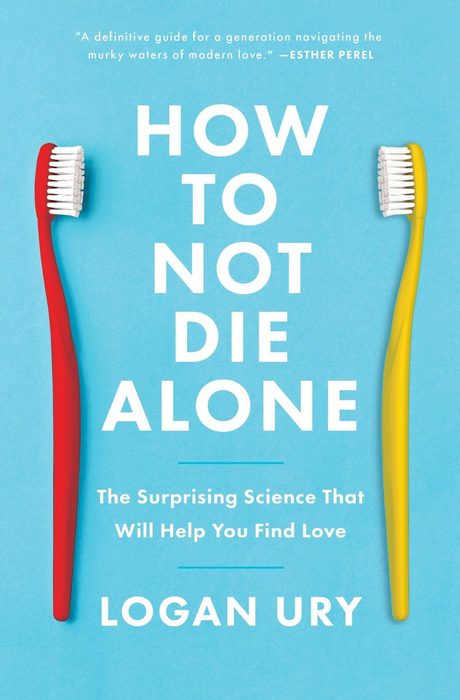
How to Not Die Alone
Logan Ury2021about 352 pages
Treats your dating life as a series of decisions you are making badly, then fixes the decisions.
Ury is a behavioural scientist who works on dating, and her method is to find the specific place where you stall. She names three of them: the romanticiser waiting for a film ending, the maximiser hunting for the best possible option in a country of a billion, and the hesitater who will start dating properly after the promotion, the weight loss, the flat. Then she gets practical about design. How to structure a second date, what to ask yourself afterwards instead of scoring the person, why chemistry on a first meeting predicts less than we assume, and how to end something without vanishing.
Why it is at 5
Fifth and the head of the dating stage because it turns theory into things you can do this week. Attached explains the pattern, Ury hands you the checklist. It is written for a reader with unlimited options and no family asking questions at dinner, so several chapters need translating before they fit an Indian twenty-something. The exercises survive the translation intact.
Read it ifyou are on apps, tired of them, and want a method
Skip it ifself-improvement language makes you itch, because there are worksheets
practical, brisk, upbeatBest for: active dating right nowdatingappsdecisions
6
Stage 2 Dating, reporting
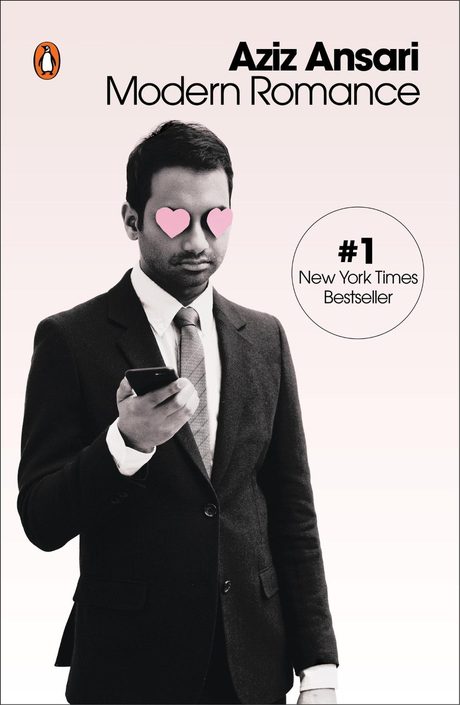
Modern Romance
Aziz Ansari2015about 369 pages
A comedian and a sociologist go looking for what phones did to courtship, and find real answers.
Ansari worked with a sociologist and ran actual research: focus groups, interviews across several countries, and a long look at what our phones do to romantic decisions. The strongest chapter compares generations. Their older interviewees mostly married someone who lived within a few streets, chose quickly, and expected companionship rather than a soulmate. Their younger ones have thousands of options and a paralysis to match. There is a very funny stretch on texting, including the finding that the person taking two hours to reply is rarely running a strategy, they are just as confused as the person waiting.
Why it is at 6
Sixth because it is the only book here you would read purely for entertainment and still come away with something structural about your own behaviour. It is a decade old, which in dating app years is a geological era, so the specifics feel dated even where the psychology holds. Read it after Ury rather than instead of her, and treat it as the fun half of the same subject.
Read it ifyou want the research delivered with jokes
Skip it ifyou want current app advice, because the technology in it is from 2015
funny, reported, lightBest for: a plane or a long trainreportinghumourdating
Heads up: In 2018 Ansari was the subject of a widely reported account of a date, and some readers will want to know that before buying.
7

Stage 2 Dating, interviews
Conversations on Love
Natasha Lunn2021about 320 pages
Thirty honest conversations about finding love, keeping it, and losing it, with no method attached.
Lunn ran a newsletter interviewing writers and therapists about love, and the book keeps that shape: three parts on finding it, keeping it, and losing it, with her own story stitched between the interviews. The conversations are the draw. Philippa Perry on how slowly the real thing can arrive, Dolly Alderton on the cost of staying open, Stephen Grosz on letting a person change into someone else. What makes it stick, though, is Lunn writing from inside her own difficulty rather than reporting back safely from the far side of it.
Why it is at 7
Seventh because it widens the subject at precisely the point where dating advice narrows it. Every other book here is trying to solve you. This one lets thoughtful people talk, including about friendship, grief and wanting a child, and it never once tells you what to do on Saturday. If you want a framework it will frustrate you. If you are tired of frameworks it is the best thing on the list.
Read it ifyou want honest conversation instead of another framework
Skip it ifyou want steps, because there is no method anywhere in it
gentle, wide-ranging, honestBest for: one chapter a nightinterviewsmemoirgrief
Heads up: fertility difficulty and bereavement are discussed at length
8
Stage 3 Long-term, research
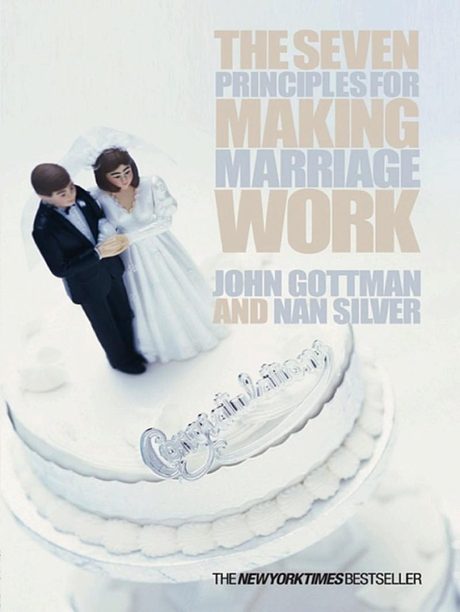
The Seven Principles for Making Marriage Work
John M. Gottman1999about 174 pages
Decades of watching couples argue in a lab, converted into homework that works.
Gottman studied couples in a laboratory with sensors attached, and this book is what he learned turned into exercises. The famous part is the set of four behaviours he treats as warning lights: criticism, contempt, defensiveness, and shutting down mid conversation, with contempt as the most corrosive of them. The rest is homework in the useful sense. Build a map of your partner's inner life, notice the small bids for attention and answer them, and learn which of your fights can be solved and which one the two of you will still be having at sixty. It is dry and it is dated in places.
Why it is at 8
Eighth and the head of the long-term stage because it is the closest thing here to evidence-based maintenance. Perel is more interesting to read and Chapman is easier to remember, but if you want the book that gives two people something to actually do on a Sunday afternoon, it is this one. Bring a notebook, and expect the exercises to feel ridiculous for the first ten minutes before they stop feeling ridiculous.
Read it ifyou are in something long and want maintenance, not drama
Skip it ifyou hate homework, because half of this book is exercises
dry, practical, evidence-ledBest for: couples reading togethermarriageresearchexercises
9

Stage 3 Long-term, fiction
The Course of Love
Alain de Botton2016
A novel that keeps writing past the wedding, into furniture arguments and quiet disappointment.
This is a novel with a running commentary. Rabih and Kirsten meet in Edinburgh, marry, have children, and then de Botton carries on writing past the point where love stories usually stop, into arguments about a glass tumbler, resentment over who booked what, an affair, and the slow work afterwards. Every few pages the story pauses and the author explains what just passed between them, which sounds insufferable and mostly is not. His central claim is that we are all bad at this because romantic films taught us the right person will require no explaining, and that maturity means learning to teach.
Why it is at 9
Ninth because it does the one thing no textbook here can manage: it makes ordinary marital failure feel survivable and occasionally funny. The commentary turns smug in places, and the couple are comfortably middle class in a way that removes most of the pressures an Indian marriage actually carries, money and parents and who lives where. Read it when you are two years in and quietly startled by how normal it got.
Read it ifyou want the argument delivered as a story
Skip it ifauthorial lecturing annoys you, because there is a great deal of it
wry, sad, cleverBest for: the two-year disappointmentfictionmarriagephilosophy
10
Stage 3 Long-term, clinical
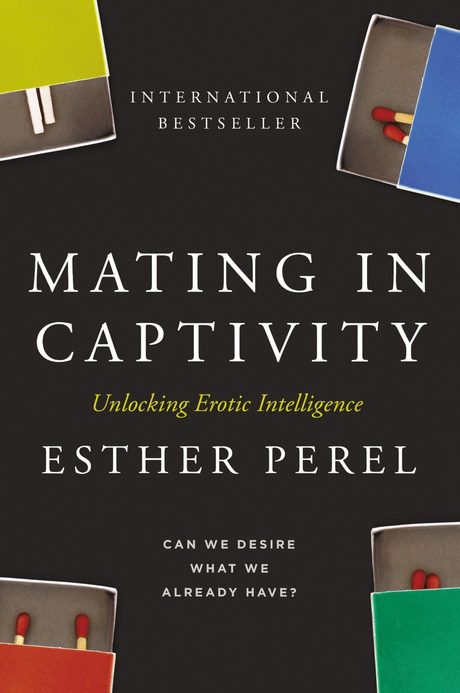
Mating in Captivity
Esther Perel2006about 274 pages
Why desire fades in the relationships that are otherwise going perfectly well.
Perel's question is the one couples cannot say at dinner: why does wanting each other fade in a home that is working. Her answer is that love wants closeness, safety and knowing everything, while desire wants distance, mystery and a small amount of not knowing, so the very things that make a household secure can flatten the erotic life inside it. The book is mostly stories from her consulting room, couples who are affectionate and bored, and she is careful never to hand out technique. There is no chapter of tips waiting at the end to rescue you.
Why it is at 10
Tenth because it names a problem most couples cannot voice, then refuses the easy fix. It is also the book here most likely to be misread as permission for whatever you already wanted to do, so read it slowly and read it honestly. Where Gottman gives you exercises, Perel gives you a lens, and a long relationship needs both. Some readers find her case studies a little too neatly shaped.
Read it ifthe affection is fine and the desire quietly is not
Skip it ifyou want practical steps, because she withholds them deliberately
provocative, elegant, unsettlingBest for: long-term couples who are boreddesiretherapylong-term
Heads up: frank discussion of sex and infidelity throughout
11
Stage 3 Long-term, research
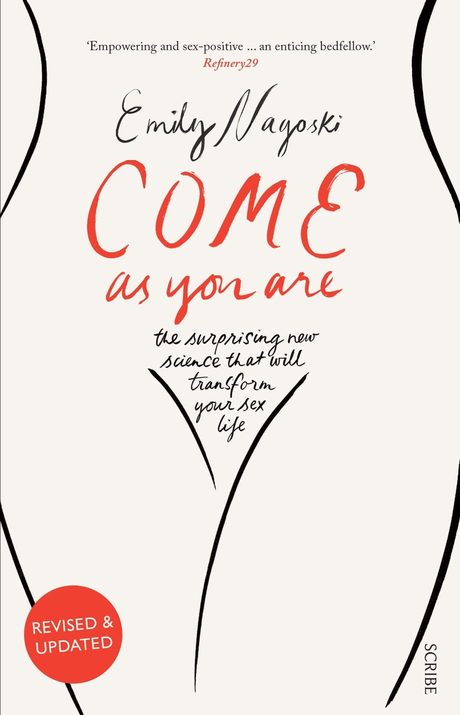
Come As You Are
Emily Nagoski2015about 346 pages
The book that tells most people the thing they were most afraid to ask: you are normal.
Nagoski teaches sexuality, and her main point is that most of us measure ourselves against a model of desire that only fits a minority. She uses an accelerator and a brake. Everyone has both, and for many people the trouble is not a weak accelerator but a set of brakes being pressed constantly by stress, body shame, an unwashed kitchen, an argument from Tuesday that never closed. She also separates spontaneous desire, the kind films show, from responsive desire, which turns up only after things have already begun, and makes the case that the second is not a fault.
Why it is at 11
Eleventh because it is the most practical book here on the part of a relationship people are least able to discuss out loud. Perel explains why desire fades, Nagoski explains the machinery underneath and what to change in your context tonight. The writing is chatty and repeats itself, with more metaphors than the ideas need, so it runs longer than it should. Skim the exercises, keep the framework.
Read it ifyou or your partner suspect something is broken in you
Skip it ifa jokey pop-science tone puts you off, because this is thick with it
friendly, frank, reassuringBest for: understanding desire without shamesexsciencecontext
Heads up: explicit throughout, by design
12
Stage 3 Long-term, one counsellor's model
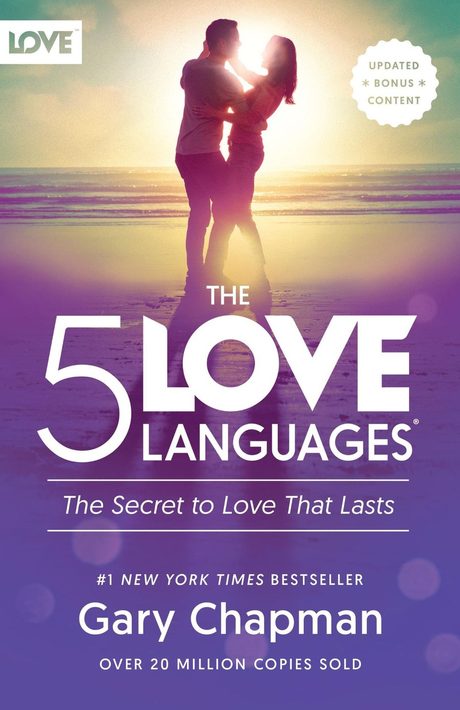
The 5 Love Languages
Gary Chapman1992about 183 pages
The most popular book here and the weakest on evidence, kept for one honest reason.
Chapman is a pastor and marriage counsellor who noticed that couples in his office were often both trying hard and both feeling unloved, because each was giving what they themselves wanted to receive. His fix is five categories: words, time, gifts, acts of service and touch. You identify yours and your partner's, and you stop expecting anyone to guess. That is the entire book, repeated through case studies from his practice, with a mild Christian frame in places that a non-religious reader can read past without much friction. It has sat in every airport bookshop for three decades.
Why it is at 12
Twelfth, and the honest part first. This is one counsellor's filing system rather than a finding, and the research that has tested the matching idea, that each of us has one primary language and that hitting it predicts a happier relationship, has not been kind to it. It stays on the list because the vocabulary works. Couples who could not describe the problem can suddenly describe it once five words exist, and that is worth something.
Read it ifyou want a shared vocabulary for a conversation that keeps stalling
Skip it ifyou want evidence, because there is one man's practice behind this
simple, warm, repetitiveBest for: starting a difficult conversationpopularcommunicationmarriage
13
Stage 4 Repair, clinical
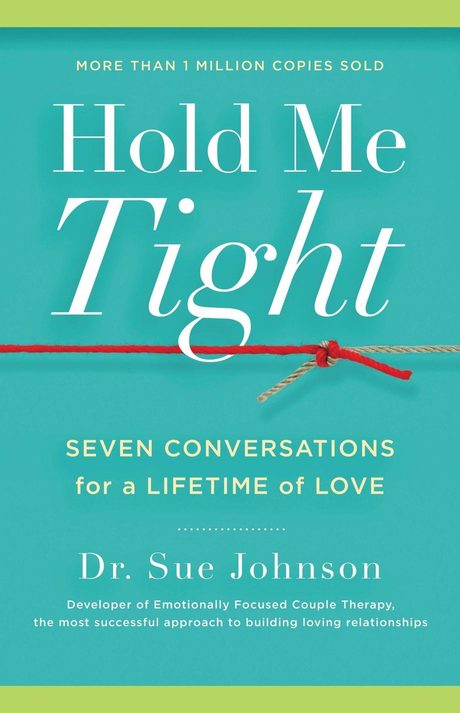
Hold Me Tight
Sue Johnson2008about 162 pages
Turns the fight you have been having for four years into something with a shape and a name.
Johnson developed emotionally focused therapy, and this is that method written for couples to run at home. Her frame is attachment: adults need someone who is reliably there, and most repeating fights are not about the dishes or the phone at all, they are panic signals that the connection has stopped feeling safe. She names the loops couples fall into, the one where both attack, the one where one chases while the other retreats, the one where both go cold and polite, then walks through seven conversations built to interrupt them. The session transcripts are uncomfortably familiar.
Why it is at 13
Thirteenth and the head of the repair stage because it does the hardest job on this list well. Gottman tells you which behaviours to stop, Johnson explains what the fight was actually about underneath the content. It works far better when both of you read it, and it is close to useless when only one of you is willing, which is the honest limit of the book.
Read it ifthe same fight keeps returning in different clothes
Skip it ifyour partner will not read it, because this one needs two people
clinical, kind, preciseBest for: couples stuck in a looptherapyattachmentrepair
14
Stage 4 Repair, a method
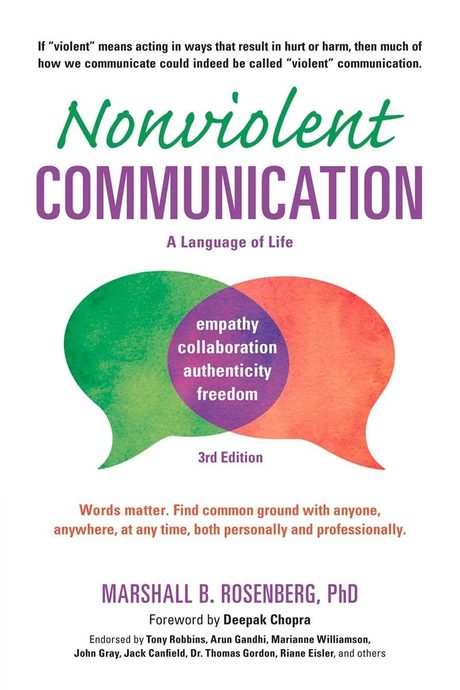
Nonviolent Communication
Marshall B. Rosenberg1999about 233 pages
Not a relationship book at all, which is exactly why it fixes so many relationships.
Rosenberg teaches a four-part way of saying a hard thing: what you observed, what you felt, what you need, and what you are asking for, each kept strictly clear of blame and diagnosis. Most of us collapse all four into a single sentence that opens with the word you and closes with a slammed door. His examples come from schools, prisons, hospitals and conflict zones rather than from marriages, and the method holds up in a kitchen at eleven at night as well as it does in any of those places.
Why it is at 14
Fourteenth because it is the one book here that changes what comes out of your mouth in the next argument, and you can practise it entirely alone. The catch is the phrasing. Delivered out loud exactly as written, it sounds like a robot who attended a workshop, and your partner will notice within one sentence. Learn the four steps, then translate them into the way you actually speak.
Read it ifyour arguments turn into blame within two minutes
Skip it iftherapy-speak makes you cringe, because the scripts are stiff as written
methodical, calm, teachableBest for: the next argumentcommunicationconflictpractical
Pairs with: Hold Me Tight, which explains why the argument started before this one fixes how it runs
15
Stage 4 Repair, clinical
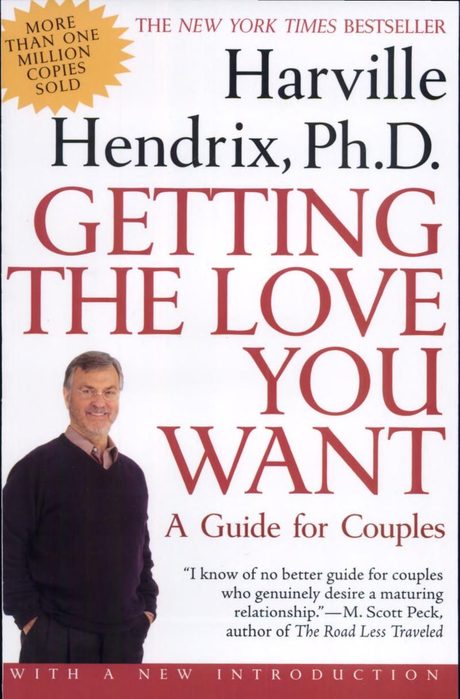
Getting the Love You Want
Harville Hendrix1988about 340 pages
Shaky theory, one exercise so useful it carries the whole book.
Hendrix argues that we are unconsciously drawn to partners who carry the emotional shape of the people who raised us, wounds included, so a relationship becomes an attempt to finish unfinished business with the wrong person. The centrepiece is an exercise he calls the imago dialogue. One person speaks, the other mirrors it back almost word for word, then says why it makes sense, then says what they imagine it feels like from inside. It is slow and it feels artificial for the first several rounds. It is also very hard to keep shouting while doing it, which may be the real mechanism.
Why it is at 15
Fifteenth because the theory is the shakiest thing on this list and the exercise is among the most useful. Nobody has shown that we truly select partners matching a childhood template, and the book presents it as settled fact. So skip the argument and keep the dialogue. If Hold Me Tight is the diagnosis, this is a drill you can run every Sunday until the shouting stops.
Read it ifyou want one structured exercise you can repeat weekly
Skip it ifyou need a theory to be proven before you will try its tool
earnest, structured, datedBest for: a weekly repair drilltherapyexerciseconflict
16
Stage 4 Repair, clinical
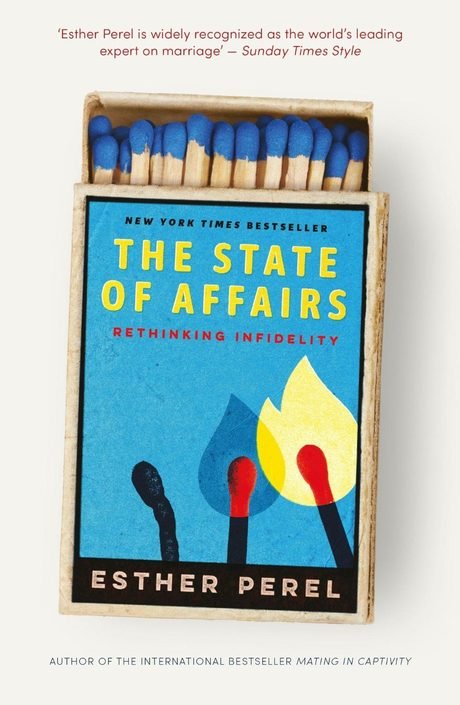
The State of Affairs
Esther Perel2017about 285 pages
The book nobody wants on the shelf until the week they need it badly.
Perel spent years listening to people on all three sides of an affair, the one who strayed, the one who was betrayed, and the one nobody counts. Her hardest argument is that infidelity is not always the symptom of a bad marriage, and that people who describe themselves as happy stray too, usually chasing a version of themselves they miss rather than a better partner. She is explicit that this is an explanation and not a defence. The second half deals with what happens after the disclosure, which is the stretch most couples have no map for whatsoever.
Why it is at 16
Last because it is the book you hope never becomes relevant, and the most valuable thing here the week it does. It will infuriate anyone who wants infidelity treated as a simple moral failure, and it earns some of that anger, because the betrayed partner gets less airtime than the story deserves. Even with that flaw, nothing else I have read explains the aftermath with this much clarity.
Read it ifyou are living through infidelity or the long aftermath
Skip it ifyou want the cheater condemned, because she declines to do that
unflinching, humane, uncomfortableBest for: after the disclosureinfidelitytherapyrepair
Heads up: detailed accounts of betrayal and its aftermath
Worth knowing
How the four stages work
Single covers the time when there is nobody to negotiate with, which is the best time to read this stuff, because nothing you learn has to survive an argument yet. Dating covers the choosing: who, how fast, and how to tell genuine interest from adrenaline. Long-term is everything after the decision, the years when the question stops being whether you love each other and starts being logistics, boredom and desire. Repair is for when something has broken, whether that break is a fight on a loop or a betrayal.
Read your own stage first and read it fully. The most common mistake with this shelf is reading ahead. Somebody who is not dating anyone finishes three marriage books, collects a set of standards that nobody has yet failed, and becomes pickier without becoming wiser. The other books will still be there when your life catches up with them.
Worth knowing
What the label above each book means
Research means the author is summarising studies, their own or other people's, and you could go and check them. Clinical means a therapist is telling you what they have seen across thirty years of the same room, which is real evidence of a kind, and also shaped by who walks through that particular door. Philosophy means an argument you accept or reject on its own logic. Reporting means a journalist went and asked people. Fiction means what it says.
I mark these because the shelf mixes them on purpose. A counsellor's model, printed in the same font and sold beside a research summary, starts to look like a research summary. Knowing which is which does not make you cynical about the book, it just tells you how tightly to hold on to what it claims.
Worth knowing
Two famous books I left out on purpose
Men Are from Mars, Women Are from Venus by John Gray, from 1992, is the most famous book this shelf has ever produced, and it teaches that men and women are effectively separate species with separate needs. That framing feels like an explanation and functions like a permission slip. He withdraws because he is a man, she talks because she is a woman, and nobody has to change anything by Friday. The differences inside each group are larger than the differences between them, which is the one thing the book cannot admit and still be a book.
The Rules, by Ellen Fein and Sherrie Schneider, teaches strategic unavailability: wait before replying, end the call first, make him work for it. It is not that the tactics never produce a second date. It is that they select for a man who enjoys a chase, and tell you nothing about whether you could survive a Sunday with him. Every book on the list above is trying to help you be known. That one is a manual for staying hidden.
People also ask
Questions, answered
What is the best book on love and relationships?
For most people, Attached by Amir Levine and Rachel Heller, because it explains behaviour you have already lived through and does it in about a hundred readable pages. If you want the deeper question of what love even is, read All About Love by bell hooks instead. If you are married and want something to do rather than something to think about, the Gottman book is the one with actual exercises in it.
Which relationship book should I read if I am single?
Start with Attached to understand your own pattern, then How to Not Die Alone for the practical side of dating. Leave the marriage books for later. Read too early, they turn single life into a waiting room and hand you standards nobody has failed yet. If you are single and tired of advice altogether, Conversations on Love by Natasha Lunn is the gentlest thing on the list and the least likely to make you feel behind schedule.
Do the five love languages actually work?
As a shared vocabulary, yes. As a theory, not really. The five categories give couples a way to name a difference they could not previously describe, which is genuinely useful and has ended plenty of circular arguments. What has not held up is the stronger claim, that every person has one primary language and that matching it predicts a happier relationship. Treat it as a conversation starter written by one counsellor, not as a research finding.
Can a relationship book help if my partner will not read it?
Partly. Nonviolent Communication and Attached both work read alone, because they change what you do rather than what the two of you do together. Hold Me Tight and Getting the Love You Want need two readers, and going through them solo mostly produces a person with new vocabulary and a fresh sense of grievance. If your partner will not read, resist summarising the book at them. Run the method quietly and let them notice the difference.
Are these books useful in an Indian context, including arranged marriages?
More than you would expect, with one adjustment. The dating books assume unlimited choice and no family in the room, so Ury and Ansari need translating as you read. Everything in the long-term and repair sections travels intact, because a recurring fight about respect or attention looks the same in Ahmedabad as it does in Ohio. Gottman and Sue Johnson are the two I would hand a newly married couple here, arranged or not, since neither assumes you began as friends.
What should I read after a breakup?
Not the dating books, not yet. Why We Love by Helen Fisher is the right one for the first month, because it treats rejection as a withdrawal state with a chemical timeline, which is oddly steadying at three in the morning. After that, bell hooks. She will not comfort you. She will make you look hard at what you had been calling love, and that is the more useful medicine once the crying stage has passed.
Before you go
What to read tonight
If you are single tonight and want one book, start with Attached, finish it across three sittings, and count how much of your last two years it quietly explains. If you are in something long and flat, the pairing that works is Gottman for the maintenance and Perel for the desire, in that order, because doing the exercises is easier than saying out loud that you are bored.
Wherever you are, the useful move is to stop after each book for a week and try exactly one thing from it. This shelf fails the same way every time. People finish a book, feel understood for two days, then return to precisely what they were doing before. One exercise done badly beats four books read well.
Keep going
Lists that pair with this one
Mood & Life
16 Books to Read After a Breakup, in the Order You Can Handle Them
Ordered by stage rather than by quality, because handing somebody Wild in week one is like handing a person with fever a plate of biryani.
Mood & Life
16 Books to Read When You Are Single (None About Fixing You)
Sorted by what you actually need tonight: company, a story, or an argument. Nothing here treats being single as a condition.
Mood & Life
16 Self-Help Books That Actually Work (And 4 That Do Not)
I judged every one of these by a single test: six months after you finish, does anything change on an ordinary Tuesday?
Mood & Life
20 Best Books to Read in Your 20s, Grouped by the Problem
Four problems run this decade, work, love, money and meaning, so the list is sorted that way instead of pretending one book fixes all four.
Mood & Life
15 Books About Friendship: Envy, Drift and the Ones That Last
Every friendship in fiction is under one particular strain, so I have named the strain on each book and ranked them by how true it feels.