People like to say that P G Wodehouse sells better in India than in England. I cannot prove the numbers and I am not going to pretend I can, but walk through any second hand book market in Ahmedabad or College Street and count the Jeeves spines stacked between the engineering guides. Something in the British comic novel took root here and never left, and it happened while the rest of the world moved on to American comedy.
My theory is that British comedy runs on three engines, and we happen to own all three. Class, which we have in a version so detailed it needs its own atlas. Embarrassment, which any Indian family gathering produces by the kilo. Understatement, which is what you use when saying the true thing out loud would end the marriage. A British comic novel is usually one man too polite to say what he wants, watching his life fall apart in front of people he cannot afford to offend. We recognise him instantly.
The catch is that some of these books ask for homework. Slang from 1938, a school system nobody explains, a television show that stopped airing before you were born. So each entry carries a footnote tax, low to high, which tells you how much British context you need before the jokes land. The ranking is by funniness alone. The tax is stated separately so you can pick by effort as well as by taste.
How I picked these
- Funny had to be the main job of the book, not a bonus on top of a serious novel.
- British means written from inside Britain. Indian comic novels and American ones have their own lists on this site.
- One book per author, with one exception: Pratchett appears twice because Good Omens is half Neil Gaiman and does an entirely different job from Going Postal.
- I dropped books that only work if you already know the class code, unless they were funny enough to be worth the homework.
- Cut on purpose: Money by Martin Amis, clever and mean but exhausting, and England, England by Julian Barnes, which is an idea rather than a comedy.
- Every edition here was checked through Google Books and Open Library with a real cover attached.
The whole list at a glance
All 14 books, in order
| # | Book | Author | Year | Vibe | Best for |
|---|
| 1 | The Code of the Woosters | P. G. Wodehouse | 1938 | sunny, silly, perfectly built | first Wodehouse, gifting to anyone |
| 2 | Lucky Jim | Kingsley Amis | 1954 | furious, farcical, unbuttoned | anyone stuck in a bad job |
| 3 | The Hitchhiker's Guide to the Galaxy | Douglas Adams | 1979 | deadpan, cosmic, absurd | beginners and science fiction readers |
| 4 | Three Men in a Boat | Jerome K. Jerome | 1889 | sunny, rambling, timeless | school students and slow evenings |
| 5 | Going Postal | Terry Pratchett | 2004 | angry, warm, very smart | fantasy readers and sceptics |
| 6 | Cold Comfort Farm | Stella Gibbons | 1932 | brisk, arch, mock gothic | readers who like clever heroines |
| 7 | The Secret Diary of Adrian Mole, Aged 13 3/4 | Sue Townsend | 1982 | earnest, deluded, sad funny | teenagers and short reading windows |
| 8 | Scoop | Evelyn Waugh | 1938 | cold, precise, merciless | journalists and media students |
| 9 | The Diary of a Nobody | George Grossmith | 1892 | polite, oblivious, immortal | short bursts and office readers |
| 10 | Good Omens | Terry Pratchett | 1990 | warm, chatty, ramshackle | fans of the television version |
| 11 | Bridget Jones's Diary | Helen Fielding | 1996 | chaotic, self mocking, warm | anyone facing marriage questions |
| 12 | High Fidelity | Nick Hornby | 1995 | funny, male, self aware | music obsessives in their thirties |
| 13 | The Buddha of Suburbia | Hanif Kureishi | 1990 | horny, restless, sharp | readers of diaspora fiction |
| 14 | Changing Places | David Lodge | 1975 | clever, structured, playful | academics and Lucky Jim fans |
The list
The books, ranked
1
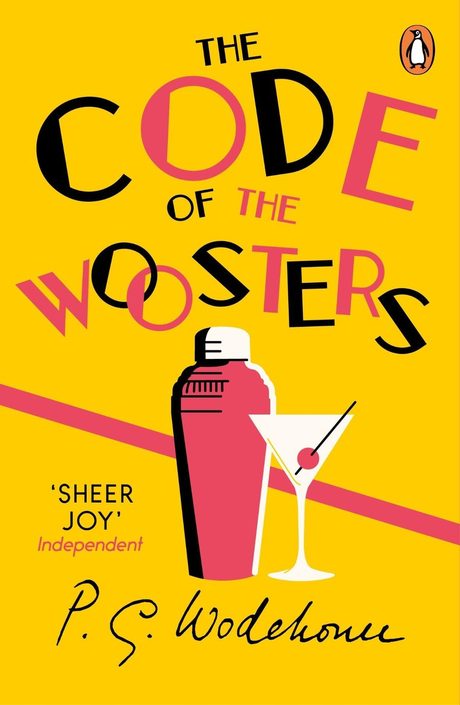
Engine is class, footnote tax medium
The Code of the Woosters
P. G. Wodehouse1938
Bertie Wooster is sent to steal a silver cow creamer, gets engaged by accident, and is saved by his valet as usual.
Bertie is dispatched by his aunt to sneer at a cow shaped silver jug so that its owner will sell it cheaply, which is the sort of errand that makes sense only in this world. From there he collects a stolen policeman's helmet, an unwanted engagement, a friend who cannot propose without a stiff drink, and a would be dictator called Roderick Spode who leads a movement of men in black shorts. Jeeves solves everything with one piece of information he has been sitting on for a hundred pages. The plot is engineered like a Swiss watch and the sentences are better than the plot.
Why it is at 1
First because Wodehouse is the only writer here who is funny in every single paragraph, and because this is the book where his machinery works most cleanly. The 1930s slang takes about thirty pages to absorb and then disappears. Spode is also proof that the gentlest comic writer in English could see fascism coming and chose to make it ridiculous.
Read it ifyou want farce built with real engineering behind it
Skip it ifyou need characters who change or grow
sunny, silly, perfectly builtBest for: first Wodehouse, gifting to anyonefarceclassjeeves
Pairs with: Right Ho, Jeeves, if this one leaves you wanting the next fix.
2
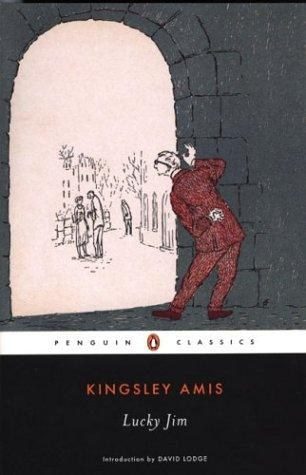
Engine is embarrassment, footnote tax medium
Lucky Jim
Kingsley Amis1954about 276 pages
A junior lecturer who hates his job, his professor and his own politeness, heading towards the drunkest lecture in fiction.
Jim Dixon teaches medieval history at a provincial university and is terrified of losing a post he does not want. His professor forces him into a weekend of madrigal singing and amateur culture. He burns a guest bed with a cigarette and spends a whole chapter hiding the evidence. He is in a relationship maintained entirely by guilt, and interested in a woman attached to somebody else. Almost every laugh comes from the distance between what Jim says politely and what he is thinking, and Amis lets you hear both.
Why it is at 2
Second because it is the funniest novel ever written about hating your job, and everyone under thirty five in a first job recognises Jim within ten pages. It sits below Wodehouse only because the humour is crueller and the ending arrives a bit conveniently. The final lecture scene is worth the whole book.
Read it ifyou have ever smiled at a senior while planning his downfall
Skip it ifyou dislike a hero who is petty, jealous and slightly nasty
furious, farcical, unbuttonedBest for: anyone stuck in a bad jobcampusworkplacefarce
Heads up: the attitudes to women are of their time and have not aged well
3
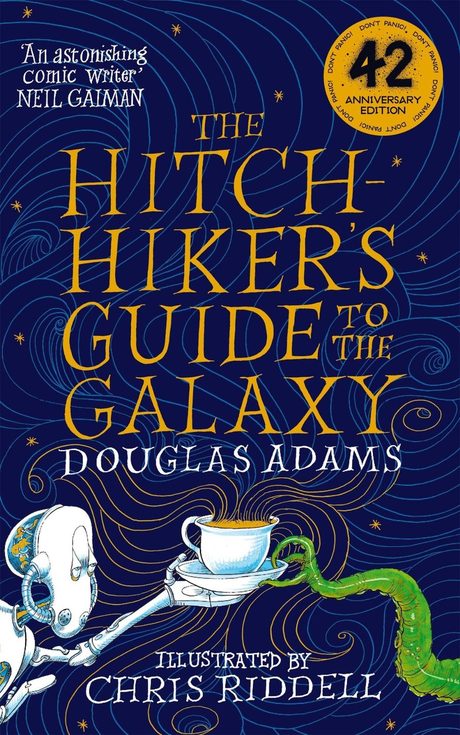
Engine is understatement, footnote tax low
The Hitchhiker's Guide to the Galaxy
Douglas Adams1979about 233 pages
Arthur Dent loses his house to a bypass and his planet to a galactic one, and reacts to both with the same mild irritation.
Adams began this as a radio series and the timing shows on every page, since the jokes are built to land out loud. Arthur is dragged off Earth seconds before it is destroyed, and the rest is a tour of a universe run on bureaucracy, bad poetry and worse management. There is a depressed robot, a two headed president, a computer that spends millions of years producing an answer nobody can use, and a paragraph about towels that has outlived most of the science fiction written since. The comedy comes from cosmic events treated as minor administrative inconveniences.
Why it is at 3
Third and the easiest entry on this list, because Adams needs nothing from you except attention. No class code, no British school system, no dated slang. Wodehouse and Amis are funnier if you meet them halfway, while Adams comes to you. If you have never finished a British comic novel, start here and work upwards.
Read it ifyou want jokes that need zero cultural homework
Skip it ifloose plotting and constant digression annoy you
deadpan, cosmic, absurdBest for: beginners and science fiction readerssci-fiabsurdcult
Pairs with: Good Omens, for the same English shrug applied to the apocalypse.
4
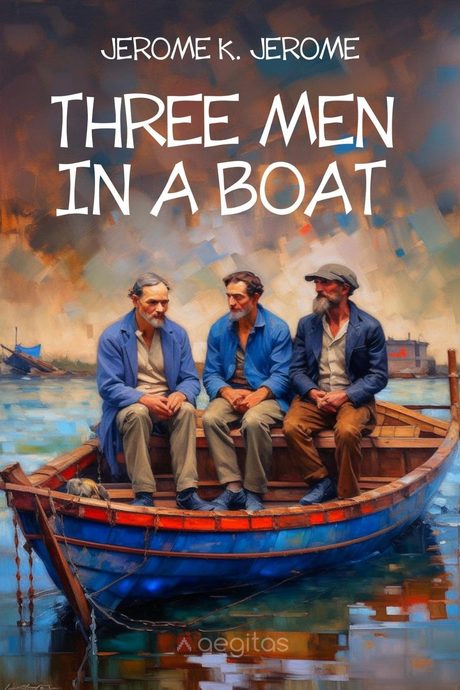
Engine is understatement, footnote tax low
Three Men in a Boat
Jerome K. Jerome1889about 174 pages
Three hypochondriac friends and a dog row up the Thames for a fortnight, and almost nothing goes right.
Jerome set out to write a travel guide to the Thames and produced a comic novel instead, mostly by being unable to stop telling stories about his friends. The narrator opens by diagnosing himself with every disease in a medical dictionary except housemaid's knee. There is a tin of pineapple and no opener, a maze that traps everybody in it, and an uncle whose attempt to hang a picture destroys an afternoon. The Victorian sentences are longer than ours, but the comedy of three useless men insisting they are competent has not aged one day.
Why it is at 4
Fourth because a book from 1889 that still gets laughs on a phone screen has earned it. It is gentler than everything above, with no real plot to hold you, so read it in twenty page pieces rather than in a sitting. The passages where Jerome turns lyrical about the river are the only parts you may skip guiltlessly.
Read it ifyou want gentle comedy and short chapters to dip into
Skip it ifyou need a plot pulling you forward
sunny, rambling, timelessBest for: school students and slow eveningsclassictravelfriendship
5
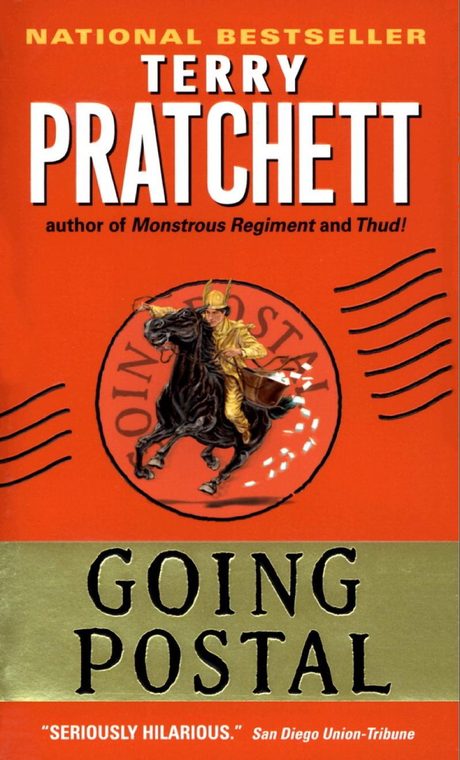
Engine is class satire, footnote tax low
Going Postal
Terry Pratchett2004about 422 pages
A con man is offered a choice between the gallows and running the collapsed city post office, and he takes the post office.
Moist von Lipwig is a professional fraud who gets caught, hanged almost to death, and then handed a job by the ruler of Ankh-Morpork: revive a post office buried under decades of undelivered letters. His competition is the clacks, a semaphore network taken over by an asset stripper who has cut maintenance until the men on the towers are dying. Moist fights him with showmanship, since a swindler's skills turn out to work beautifully in public service. Pratchett is writing about looted infrastructure and the men who loot it, and he makes it consistently funny.
Why it is at 5
Fifth, and the best door into Discworld, because it stands alone and asks nothing of you from the forty books around it. It ranks below Adams because the comedy is carrying an argument at the same time, which slows the pace. For readers who like satire that is angry rather than whimsical, this is the best book on the list.
Read it ifyou want fantasy that is really about corporate looting
Skip it ifwizards and talking golems put you off immediately
angry, warm, very smartBest for: fantasy readers and scepticsfantasysatirediscworld
6

Engine is class, footnote tax medium
Cold Comfort Farm
Stella Gibbons1932about 256 pages
An orphaned city girl moves in with her doom laden rural cousins and starts tidying up their tragic lives whether they like it or not.
Flora Poste is nineteen, newly orphaned, penniless and utterly certain that everything can be organised. She invites herself to her cousins at Cold Comfort Farm in Sussex, where the family specialises in gloom, thwarted passion and an aunt who once saw something nasty in the woodshed and has been dining out on it for fifty years. Flora sets about fixing them with the calm of a woman rearranging furniture. Gibbons is parodying the earthy rural novels of her day, and the joke works even if you have never read one, because the type still exists in every family.
Why it is at 6
Sixth because the parody adds a small layer of distance, and because Flora is the only person here who is fully in control of her own book, which slightly lowers the comic panic. It rewards patience. By the middle you will be quoting the woodshed line, and once you know it you will hear it everywhere in English writing.
Read it ifyou like a heroine who fixes everybody by force of organisation
Skip it ifyou want a hero who suffers and flails
brisk, arch, mock gothicBest for: readers who like clever heroinesclassicparodycountryside
7

Engine is embarrassment, footnote tax medium
The Secret Diary of Adrian Mole, Aged 13 3/4
Sue Townsend1982about 221 pages
A teenage boy records his spots, his poetry and his parents' collapsing marriage, understanding almost none of it.
Adrian is thirteen, lives in Leicester, and believes he is an intellectual because he has started using the library. He measures his spots, sends unreadable poems to the BBC, worships a girl called Pandora, and looks after an elderly neighbour with more competence than he shows anywhere else. Around him, unnoticed, his parents' marriage falls apart, money runs short and Britain in the early eighties gets colder. The comedy is entirely in the gap between what Adrian records and what an adult reader can see happening behind him.
Why it is at 7
Seventh because the diary form makes it the easiest book here to read in five minute pieces, and because the gap between what he sees and what you see never stops being funny. The Thatcher era references need a footnote or two now, and the second half runs thinner than the first, which is what keeps it out of the top five.
Read it ifyou enjoy comedy where the narrator misses the point entirely
Skip it ifteenage self obsession is too close to your own diary
earnest, deluded, sad funnyBest for: teenagers and short reading windowsdiarycoming of ageeighties
Heads up: parental separation, alcohol and depression appear in the background throughout
8

Engine is class, footnote tax medium
Scoop
Evelyn Waugh1938about 293 pages
A newspaper sends the wrong man to cover a war, and he files the story of the year entirely by accident.
William Boot writes a gentle nature column for a London paper and is dispatched to an African country in a case of mistaken identity, because somebody confused him with a fashionable novelist of the same surname. He arrives with absurd luggage, no idea what a war correspondent does, and a talent for being in the right place while understanding nothing. Waugh had reported from Abyssinia himself and clearly loathed most of his colleagues, so the press corps here invent facts, chase each other's mistakes and file rubbish with total confidence.
Why it is at 8
Eighth because the media satire is somehow sharper today than it was in 1938, and because the newspaper office scenes are the best in the book. It drops out of the top five because the African setting is written with the casual prejudice of its era, which stops the laughs cold in a few places, and I would rather say that than pretend it does not happen.
Read it ifyou enjoy media satire and want to see where it began
Skip it ifcolonial era attitudes will spoil the jokes for you
cold, precise, mercilessBest for: journalists and media studentssatiremediaclassic
Heads up: period racism and colonial attitudes in the African chapters
9
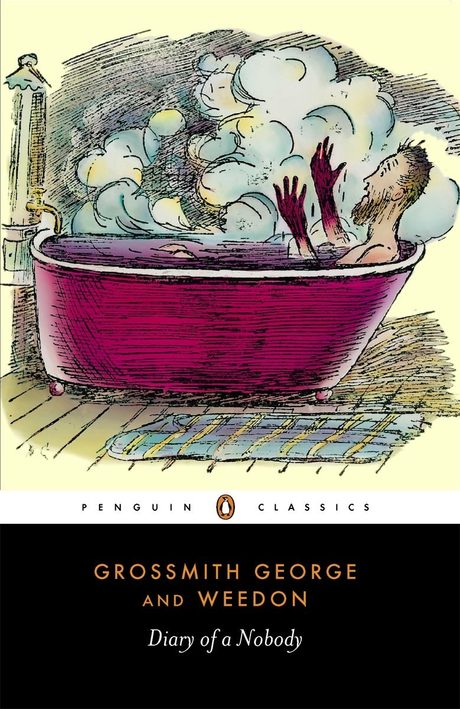
Engine is class, footnote tax medium
The Diary of a Nobody
George Grossmith1892about 256 pages
A London clerk keeps a diary of his very small life, convinced it is of enormous interest, which is exactly why it is.
Charles Pooter is a clerk in the City with a modest house, a patient wife, a son who is embarrassed by him, and complete confidence that his daily life deserves recording. He paints the bath red. He makes puns nobody laughs at and writes them down anyway. He is snubbed by tradesmen and social climbers and files each humiliation carefully. It ran first as a series in Punch, which is why the entries are short and each lands its own joke. Every office and every family still contains a Pooter, and some of us are him.
Why it is at 9
Ninth because it invented a whole comic form, the diary of a man who does not know he is the joke, which runs straight through to Adrian Mole and Bridget Jones. The Victorian suburban detail is what costs it a few places, since some references need explaining, and the entries can feel repetitive if you read too many at once.
Read it ifyou like watching a man fail to notice his own comedy
Skip it ifyou want a story rather than a string of small disasters
polite, oblivious, immortalBest for: short bursts and office readersdiaryvictorianclass
Pairs with: The Secret Diary of Adrian Mole, its direct descendant ninety years later.
10

Engine is absurdity, footnote tax low
Good Omens
Terry Pratchett1990about 420 pages
An angel and a demon who have grown fond of England team up to stop the apocalypse, having misplaced the Antichrist.
Aziraphale and Crowley have been stationed on Earth since the beginning and have quietly come to prefer it to either head office. When the end of the world is scheduled, they decide to sabotage it, only to discover that the Antichrist was swapped at birth and is now an ordinary boy running around an English village with his friends. Witchfinders, a book of prophecies that is always right and never useful, and four bikers of the apocalypse follow. Written by Pratchett and Neil Gaiman together, and their two styles never quite stop wrestling.
Why it is at 10
Tenth because the joint authorship shows: the book is baggier than either writer alone and the middle sags while the plot gathers its pieces. It stays because the two leads are the best comic double act on this list and because the ending is genuinely warm about people. Read Going Postal first if you want Pratchett at full strength.
Read it ifyou want a funny apocalypse with a soft heart
Skip it ifreligious comedy makes you uncomfortable
warm, chatty, ramshackleBest for: fans of the television versionfantasyapocalypseduo
11

Engine is embarrassment, footnote tax low
Bridget Jones's Diary
Helen Fielding1996about 337 pages
A thirty something Londoner counts her cigarettes, her weight and her humiliations, then falls for two men who are both a bad idea.
Fielding started this as a newspaper column and kept the form, so the novel arrives as diary entries that open with a tally of weight, alcohol units and cigarettes. Bridget works in publishing, then television, drinks too much with her friends, is interrogated by relatives at every family gathering about why she is still single, and moves between a charming boss and a stiff barrister named Darcy. The plot borrows openly from Pride and Prejudice. The comedy is in her private voice, which is much sharper and much ruder than the face she shows anyone.
Why it is at 11
Eleventh because it is far better written than its reputation suggests and far more dated than its fans admit. The rishta season pressure will feel familiar to any Indian reader over twenty five, and the smug married dinner scenes are cruelly accurate. The endless calorie counting is the part that has aged worst.
Read it ifyou want a funny diary about being single and interrogated about it
Skip it ifconstant weight and calorie tallies bother you
chaotic, self mocking, warmBest for: anyone facing marriage questionsromcomdiarynineties
Heads up: relentless dieting, weight counting and smoking, which can be difficult if you have a history of disordered eating
12

Engine is embarrassment, footnote tax low
High Fidelity
Nick Hornby1995about 353 pages
A record shop owner is dumped, so he revisits his five worst breakups in order, ranking his own life like a playlist.
Rob runs a failing record shop in north London with two employees who treat music taste as a moral test. His girlfriend leaves, and rather than examine himself he draws up a list of his all time top five breakups and goes to interview the women involved. Around this sit arguments about what your favourite records say about you, and a slow admission that he has been coasting for a decade. Hornby writes male self deception better than anyone, which means the book is often funniest when Rob is at his least likeable.
Why it is at 12
Twelfth because it is the most honest book here about a certain kind of man, and because that man is also tiring across three hundred pages. Anyone who has argued about a top five list at two in the morning will recognise themselves. The women exist mostly to explain Rob to himself, which is the flaw that keeps it here rather than higher.
Read it ifyou have ever ranked your own life into a top five
Skip it ifyou have no patience for a self absorbed narrator
funny, male, self awareBest for: music obsessives in their thirtiesmusicbreakuplondon
Heads up: the narrator's attitudes to women are the point but still grate
13

Engine is class and race, footnote tax low for Indian readers
The Buddha of Suburbia
Hanif Kureishi1990about 284 pages
A half Indian teenager in seventies south London watches his father reinvent himself as a suburban guru and cash in.
Karim is seventeen, bored, ambitious and stuck in the London suburbs when his father starts teaching meditation to white neighbours who are hungry for an Eastern teacher and not fussy about credentials. The family splits, Karim drifts into theatre and then into London itself, and the novel becomes a tour of the seventies through the eyes of a boy nobody can place. It is very funny about the English hunger for spiritual India and equally funny about Karim's own hustling. Underneath the comedy sits real bitterness about the racism of that decade.
Why it is at 13
Thirteenth on funniness and first on relevance, which is why it is here at all. No other book on this list will make an Indian reader laugh and wince in the same paragraph. It ranks below the pure comedies because the last third turns serious and stops trying for laughs, which is the right choice for the novel and a cost on this particular list.
Read it ifyou want British comedy that includes people like us
Skip it ifexplicit sex and period racial slurs are a problem for you
horny, restless, sharpBest for: readers of diaspora fictiondiasporaseventieslondon
Heads up: explicit sex, drug use and the racist language of the period, quoted rather than endorsed
14
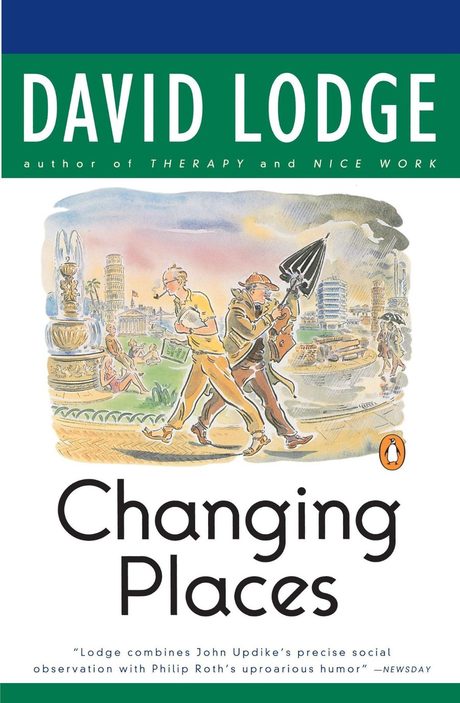
Engine is class, footnote tax medium
Changing Places
David Lodge1975
Two professors swap universities across the Atlantic for six months, and each quietly takes over the other's life.
Philip Swallow, timid and English, exchanges jobs with Morris Zapp, loud and American, in the year campuses everywhere were catching fire. Lodge alternates their two worlds, then starts mixing them, until each man is living the life the other left behind. He plays with form throughout, including a stretch told in letters and a section written as a film script, which sounds like a lecture and reads like a game. The comedy comes from watching two academics be pompous in exactly opposite ways.
Why it is at 14
Last because the academic setting narrows who will enjoy it, and the 1969 campus politics need a little background now. Anyone who has spent time in a university department will find it painfully accurate. If you liked Lucky Jim and want more comedy about clever people behaving badly at work, this is the natural next step.
Read it ifyou have lived inside a university department
Skip it ifcampus politics and literary games bore you
clever, structured, playfulBest for: academics and Lucky Jim fanscampussatireseventies
Pairs with: Lucky Jim, twenty years earlier and considerably angrier.
Worth knowing
The three engines of British comedy
Class is the first engine. Almost every book above turns on somebody who is not quite where they want to be in the social order: Pooter desperate to be respectable, Jim Dixon trapped among people who went to better schools, Bertie Wooster protected by money he did not earn. British comedy assumes everyone knows the ladder and everyone is lying about which rung they are on. Indian readers rarely need this explained, because we run a version with more variables and even sharper rules.
Embarrassment is the second, and it is the engine that travels best. The British comic hero suffers not because of tragedy but because he said the wrong thing at lunch. Adrian Mole, Bridget Jones and Rob in High Fidelity are all humiliated in small ways that never stop mattering to them. Anyone who has sat through a family gathering being asked why they are still unmarried already understands the mechanics.
Understatement is the third and the hardest to imitate. Arthur Dent watches Earth explode and is mostly annoyed about his house. Jeeves conveys total disapproval with a single raised eyebrow and the word indeed. The joke is the gap between the size of the disaster and the size of the reaction, which is why these books read as dry rather than loud, and why they suit reading in public without laughing out loud.
Worth knowing
How the footnote tax works
The footnote tax is my rough measure of how much British context you need before a joke lands. Low means the comedy is self contained and you can start tonight: Adams, Pratchett, Hornby, Fielding, Kureishi. Medium means a handful of references will sail past you, usually slang, school or period politics, and you will still laugh at nine jokes in ten: Wodehouse, Amis, Waugh, the two diaries, Gibbons and Lodge. Nothing here scored high, because I cut the books that did.
If you are starting cold, a good order is Hitchhiker's Guide, then Going Postal, then The Code of the Woosters, then Lucky Jim. That takes you from zero homework to fluent in the class code in four books, and by the end the 1930s slang will read as easily as your own.
People also ask
Questions, answered
What is the funniest British novel ever written?
The Code of the Woosters by P G Wodehouse, if you want laughs on every page and a plot that closes like a lock. Lucky Jim by Kingsley Amis is the better novel about real life, and its final chapter is the single funniest scene on this list. Choose Wodehouse for pure comfort and Amis for comedy with rage in it, since both are short enough to finish in a weekend.
Where should I start with P G Wodehouse?
Start with The Code of the Woosters or Right Ho, Jeeves, both mid period Jeeves novels where the machinery is at its best. Do not begin with the very early books or the short story collections, since the novels give you the full farce with all the pieces moving. There is a longer guide to reading order on this site if you decide you want the whole Wodehouse habit.
Why is British humour so popular in India?
Three reasons that all point the same way. We inherited the language and the office culture, so the jokes about bureaucracy and correct behaviour arrive already translated. We have our own elaborate class system, which makes British status comedy legible in a way it is not everywhere. And these books entered our schools and second hand markets cheaply for decades, so several generations grew up on Wodehouse and Jerome K Jerome before they met American comedy.
Are these novels hard to read for a non British reader?
Mostly no. The five books marked low on the footnote tax need nothing from you beyond attention. The medium ones will send a few references past you, usually slang or school or period politics, and the jokes still work because the situations are universal. My advice is to skip the annotated editions and simply read on, since the meaning of unfamiliar words becomes obvious from context by about page thirty.
Is Bridget Jones's Diary still funny?
Yes, and better written than people remember, since Fielding is very sharp on the difference between a private voice and a public one. Two things have dated badly: the constant calorie and weight counting, and the assumption that being single at thirty is an emergency. Indian readers may find that second part less dated than British ones do, which is either funny or depressing depending on your week.
Which British comic novel should I read if I only read one?
The Hitchhiker's Guide to the Galaxy, because it asks for no background at all and finishes in two sittings. If you already read widely and want something with more weight, take Lucky Jim instead. If you want the book most likely to make you laugh out loud in front of your family and have to explain yourself, it is The Code of the Woosters.
Before you go
What to read tonight
Pick tonight by how much energy you have. If you are tired, start Hitchhiker's Guide, which asks nothing of you and gives back a laugh every second page. If you are angry at work, start Lucky Jim and let somebody else say it for you. If you want to know why every uncle in the family has a Jeeves paperback on the shelf, start The Code of the Woosters and give it thirty pages before you judge the slang.
One habit worth stealing: keep two of these going at once, a diary book for five minute gaps and a plotted one for the evening. Adrian Mole and Pooter were built for the first job, while Wodehouse, Amis and Pratchett want a proper sitting. After four of these the British comic voice starts turning up in your own writing, which is either a gift or a warning.
Keep going
Lists that pair with this one
Comedy
P. G. Wodehouse: Where to Start and the 12 Books to Read First
A reading path in twelve steps, not a best-of, built so the funniest books land when you are ready for them.
Comedy
16 Best Satirical Novels That Are Still Funny and Still Right
Satire has an expiry date, so every book here is scored on two things: is it still funny, and is its target still standing.
Comedy
18 Funny Books That Are Actually Funny, Ranked by Laugh Type
Three tiers, spit-your-tea, snort and chuckle, decided by what my face actually did while reading.
Comedy
The 14 Best Humor Essay Collections, and Which Essay to Read First
Fourteen funny collections built for ten minutes at a time, each with the exact piece to open on.
Comedy
The 16 Best Comedian Memoirs, Ranked by How Funny the Page Is
Stage-funny does not always survive the printing press, so I scored every one of these on the page alone.