14 Romance Novels Men Actually Finish (A Guy's Honest List)
Love stories with plot, jokes, sport and crime in them, ranked by how likely a man who says he does not read romance is to reach the last page.
By Bhavik SarkhediUpdated August 2026Covers and data: Google Books, Open Library
I watched a man at the Mumbai airport bookshop pick up a Nicholas Sparks, read the back, glance around the aisle, put it down, and leave with a book about German submarines. I have done a version of that myself. Romance is the only genre grown men apologise for reading, which is strange, because most of us will happily admit to three hours a day of watching eleven men chase a ball.
So here is the argument, made once and then dropped. A love story is a plot with two people who want something they cannot easily have, which is the same engine as every thriller you have finished. The difference is the cover art. Several of the books below sit in the literary fiction section and are romances anyway. One of them is about a butler who never says a single honest thing to the woman he loves, and it is more devastating than any thriller I have read.
The ranking is by one question: how likely is a man who claims he does not read romance to actually finish this, weighted by whether finishing it is worth his time. So the list leans on plot, jokes, sport and revenge rather than on grief. If you want the books that are engineered to make you cry, they are on a separate page, and sending you there is a kindness rather than a dodge. Each entry says what the book is disguised as, because that is genuinely how this works.
Plot first. Every book here has something happening besides the feelings, which is not a criticism of the genre, just an honest read of who this list is for.
The weepies have gone to their own page. One Day, The Time Traveler's Wife, Love Story and The Notebook used to sit here, and all four are built to end you in a hospital room or a nursing home. That is a different service, offered on the sad romance list. What is left leads with jokes, sport, crime, fencing and friendship.
No condescension in either direction. I have not padded this with war novels that have a girlfriend in chapter nine, and I have not left out the proper romances either, because two of them are better than most of the literary picks.
Two Indian books, because a list for men that pretends we all read only British and American fiction is a list written for somebody else.
First-publication years, checked against Open Library and publisher records, including the original Japanese and Spanish and Swedish dates rather than the English translation dates.
I have read all fourteen. Where a famous book left me cold, I have said so rather than hiding behind its reputation.
A record shop owner in London gets dumped, then goes back through his all-time top five heartbreaks looking for a pattern.
Rob runs a failing record shop, has strong opinions about track order, and has just been left by Laura. So he calls up the five worst break-ups of his life to ask each woman what went wrong, which is a research project designed to avoid the actual answer. Hornby is very funny about male taste as a hiding place: the lists, the rankings, the certainty about music standing in for any certainty about yourself. Then, quietly, the book turns into a story about what growing up costs.
Why it is at 1
Number one because it is the easiest crossing point from the way men are allowed to talk to the way this genre needs you to think. Everything in it arrives through jokes and lists and arguments about B-sides, and by the time you notice you are reading about commitment you are two hundred pages in. No other book here gets a resistant reader that far without him realising.
Read it ifyou argue about music and avoid talking about feelings
Skip it ifyou want a hero you can admire from page one
funny, self-aware, LondonBest for: the friend who says romance is boringmusiccomedybreak-up
Pairs with: Beach Read, for the same trick pulled from the other side
A genetics professor designs a sixteen-page questionnaire to find a wife, then falls for the one woman who fails every question.
Don Tillman schedules his meals by weekday and treats social life as a series of solvable problems, so finding a partner becomes the Wife Project, complete with a screening questionnaire. Rosie is disorganised, a smoker, frequently late, and disqualified on the first page. Then she needs help identifying her biological father, and the project becomes something else entirely. Simsion writes Don from the inside without ever making him the joke, and the comedy comes from the gap between what Don reports and what the reader can see.
Why it is at 2
Second because it is the most reliable gift for a man who reads popular science and nothing else. The structure is a problem-solving story, the tone is comic, and the romance sneaks up through logistics rather than longing. It sits below High Fidelity only because the ending tidies Don up more than the character earns, which is the one moment the book plays it safe.
Read it ifyou like your comedy built out of logic and lists
Skip it ifyou find quirky-narrator novels tiring
logical, warm, funnyBest for: readers of popular sciencecomedyneurodivergent heromelbourne
Fencing, pirates, giants, a revenge plot twenty years in the making, and underneath it a farm boy who only ever says one sentence to the girl.
A farm girl and the boy who works for her father are separated by pirates, a kidnapping, a swamp full of unpleasant rodents and a prince who wants a war rather than a wife. Goldman wraps the adventure in a fake frame, pretending he is merely abridging a much longer classic by an author who does not exist, and keeps interrupting himself in brackets to explain what he has cut and why. That trick is the whole reason it works on people who say fairy tales are not for them. The jokes never stop and the duels are properly choreographed.
Why it is at 3
Third because it is the funniest book on this page and the least romance-shaped from the outside, which makes it the easiest thing to put into the hands of a man who thinks the genre is beneath him. Every objection he is preparing gets made by Goldman first, in the margins, with better timing. It ranks below the two comedies above only because the frame takes about twenty pages to click, and a few readers never make that turn.
Read it ifyou want duels, revenge and jokes with a love story underneath
Skip it ifan author interrupting his own story in brackets will irritate you
funny, swashbuckling, slyBest for: men who dismiss fairy talesadventurecomedyclassic
A boy who has memorised every fact in the world goes to university, joins the quiz team, and gets nothing right about people.
Brian is the first in his family to reach university, arrives in 1985 with a head full of general knowledge and a plan to be interesting, and works his way onto the University Challenge team largely to be near Alice, who is beautiful and posh and several postcodes out of range. Nicholls is very funny about the specific humiliations of class: the wrong clothes, the wrong records, the house at home you would rather nobody visited. Then there is Rebecca, who argues with him constantly and is obviously the point, which every reader works out well before Brian does.
Why it is at 4
Fourth because it is the most painless entry on this list. Short, funny on nearly every page, and the love story hides inside a comedy about being nineteen and pretending to be somebody else. Nicholls later wrote One Day, which is sadder and far more famous and sits on the tearjerker list. This is the better book for getting a resistant reader to the last page, though the ending tidies up in a way the rest of it does not.
Read it ifyou want jokes, quiz trivia and the pain of being nineteen
Skip it ifsecond-hand embarrassment is genuinely hard for you
funny, eighties, cringingBest for: anyone who faked it at universitycomedyclassuniversity
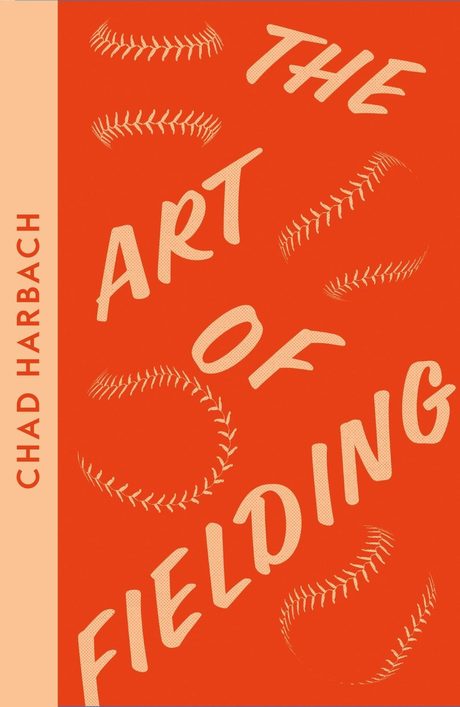
A shortstop who has never thrown a ball wrong throws one wrong, and it goes through four other lives on its way past.
Henry is a shortstop of impossible precision, spotted by a small college on a cold Wisconsin lake, and for a while everything about his life is the clean arc of a ball leaving his hand. Then one throw goes badly and the failure spreads outward. Harbach follows five people around that campus: the player who has forgotten how to do the only thing he can do, the teammate who built him, the college president who falls in love late and inconveniently, the daughter who has walked out of a marriage, and a roommate with plans of his own.
Why it is at 5
Fifth because it is the best answer to a man who says he reads about sport and nothing else. The baseball is real, written by somebody who understands the mechanics of failure rather than the glory, and around it sit three love stories, one of them between two men, none of them written softly. It slips a few places because the last hundred pages take a turn that plenty of readers, me included, still argue about.
Read it ifyou want sport, friendship and three love stories at once
Skip it iflong American campus novels are not your thing
baseball, campus, melancholyBest for: readers who only read sportsportcampusfriendship
Heads up: a death, and a relationship between a college president and a student
An English butler drives across the country to see a woman he worked with, and never once admits why.
Stevens has given his life to service at Darlington Hall and to a definition of dignity that leaves no room for anything else. In 1956 he takes a motoring holiday to the West Country, ostensibly on staffing business, and the trip becomes a slow inventory of everything he chose not to say to Miss Kenton across twenty years of working beside her. The book is written entirely in his own careful, evasive voice, which means the reader sees the love story he is describing without ever naming it.
Why it is at 6
Sixth, and the highest literary pick, because it is the strongest argument on this page that a love story does not need a single romantic scene. Nobody kisses and nobody confesses, and it is the saddest book here and it looks, from the outside, like a novel about staffing a country house. If a man tells you he only reads serious fiction, this is the one you hand him.
Read it ifyou want restraint instead of declarations
Skip it ifyou need characters who say what they mean
restrained, formal, devastatingBest for: readers who only read literary fictionliteraryunreliable narratorregret
Haruki Murakamitranslated by Jay Rubin1987about 340 pages
A Beatles song on a landing plane throws a man back to the two women he loved at nineteen, and the friend who died.
Toru Watanabe is a student in late-sixties Tokyo, orbiting Naoko, who is grieving and fragile and slipping away from him, and Midori, who is alive in a way that frightens him. Murakami keeps the campus protests in the background as noise, because this book is not about politics. It is about the specific loneliness of being twenty and unsure whether the person you love can be reached. Straighter and sadder than the surreal novels people usually mean when they say Murakami.
Why it is at 7
Seventh because it is the book men read when they think they are reading literature and are actually reading a love triangle. It works on that reader completely. Ranked here because the women are written from a distance the novel never closes, and because it is genuinely bleak: if you are in a low patch, this will not lift you out of it.
Read it ifyou want the sad, quiet version of being twenty
Skip it ifyou are already low and need something warm
melancholy, sixties, spareBest for: readers who like Murakami without the catsjapangriefcoming of age
Heads up: suicide, mental illness and explicit sex
An ad executive becomes the Indian team's lucky charm, and the captain who wants nothing to do with luck.
Zoya was born at the exact moment India lifted the 1983 World Cup, which is a family joke until the national team starts winning every match she has breakfast with. The board wants her as a mascot for the World Cup campaign. Nikhil Khoda, the captain, thinks superstition is an insult to the work. Chauhan writes Delhi English better than anyone: the family arguments, the ad agency politics, the cricket dressing room. The romance is a running argument between two people who are both right.
Why it is at 8
Eighth, and the best entry point on this list for an Indian reader who wants none of the imported stuff. You get a full cricket season, a proper comedy of families, and a hero who is competent at his job, which is rarer in romance than it should be. It sits mid-table only because the last act stretches; the first two hundred pages are the most fun on this page.
Read it ifyou want cricket, family noise and a real argument
Skip it ifcricket plots bore you completely
funny, indian, sharpBest for: readers who want desi romancecricketromcomdelhi
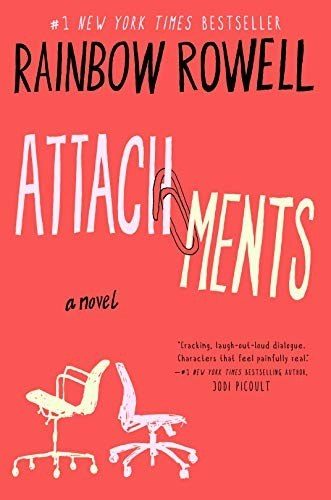
He reads flagged staff email for a newspaper, and falls for one of the writers long before he can work out how to say hello.
Lincoln works nights in IT at a newspaper in 1999, and part of the job is reading the internal email the filter has flagged. Two women on the paper write to each other all day about their work, their families and their disastrous men, and Lincoln keeps not reporting them, because he has started looking forward to it. He knows exactly how indefensible this is. Rowell writes him as a decent man in an impossible position, living at his mother's house, still rebuilding after a break-up that flattened him at nineteen, and the whole thing is funnier and kinder than the premise deserves.
Why it is at 9
Ninth because it is the rare romance narrated by a man who is quietly failing at his own life without being a monster about it, and because the newsroom waiting for the year 2000 to break the computers gives you something to enjoy besides the feelings. It sits mid-table honestly: the ethics of the premise are never fully answered, and Rowell knows it, so the last act has to work harder than it should.
Read it ifyou want a male narrator failing quietly and a workplace to sit in
Skip it ifa hero reading other people's email will bother you throughout
warm, nineties, gentleBest for: night shift workersoffice1999epistolary
Gabriel Garcia Marqueztranslated by Edith Grossman1985about 430 pages
Rejected at twenty, he waits fifty-one years for her husband to die, and keeps a numbered record of everyone in between.
Florentino Ariza loves Fermina Daza, who marries a doctor instead. So Florentino waits, for five decades, while running a river company and accumulating hundreds of affairs he counts in a private ledger. Garcia Marquez writes obsession with a completely straight face, which is what makes the book so strange and so alive: it is a comedy about a man who has confused persistence with love, and a serious novel about ageing, and it never tells you which reading is correct.
Why it is at 10
Tenth because it is the most adult book here in the real sense: it asks what a life spent waiting is actually worth, and refuses to answer. Men often love it for the wrong reason, taking Florentino as a romantic hero rather than a warning, and reading it that way misses the joke. Ranked mid because the pace is slow and one strand involving a teenage girl is genuinely hard to defend.
Read it ifyou want a great novel that argues with itself
Skip it ifyou want a hero worth rooting for
epic, ironic, tropicalBest for: readers who like ambiguityclassictranslationobsession
Heads up: an elderly man's sexual relationship with a young girl in his care
Fredrik Backmantranslated by Henning Koch2012about 368 pages
A furious Swedish widower keeps trying to join his wife, and the neighbours keep interrupting him.
Ove is fifty-nine, recently widowed, recently made redundant, and has decided there is nothing left to stay for. His plans keep being ruined by a pregnant neighbour who needs a lift, a cat that will not leave, and a housing association he cannot stop policing. Backman tells Ove's marriage in flashback, and Sonja emerges as the one thing that ever made him legible to other people. The comedy in the present and the love story in the past are doing the same work from two directions.
Why it is at 11
Eleventh because it is the love story disguised as the story of a man complaining about parked cars, and because it gets to fathers and husbands who would never pick up anything in this category. It loses places for how hard it works you at the end: Backman knows exactly which lever he is pulling, and pulls it repeatedly. Effective, slightly manipulative, still worth it.
Read it ifyou want a marriage told backwards, with jokes
Skip it ifengineered emotion irritates you
grumpy, warm, swedishBest for: fathers and older readersgrieftranslationcomedy
Heads up: repeated suicide attempts, played partly for comedy
A Punjabi boy and a Tamil girl fall in love in two months, then spend two years persuading four parents.
Krish and Ananya meet at IIM Ahmedabad and the romance is settled early, which is the interesting choice: the actual story is the campaign for family approval. Krish moves to Chennai to win her parents, Ananya works on his mother, and the two sets of relatives are kept apart like unstable chemicals. Bhagat is a plain writer with a real ear for family comedy, and the mothers in this book are the best characters he has written. It is also, quietly, about a son and a father who cannot speak.
Why it is at 12
Twelfth because it is the plainest written book here and the one an Indian man is most likely to see himself in, minus the flattering parts. The prose will not impress anyone. The situation will: anybody who has tried to introduce a partner to a difficult parent will recognise every negotiation in it. Ranked here rather than lower because the comedy holds up better than its reputation among people who have not actually read it.
Read it ifyou have parents with opinions about your partner
Skip it ifplain functional prose puts you off
funny, familiar, quickBest for: a two-evening readdesifamilyromcom
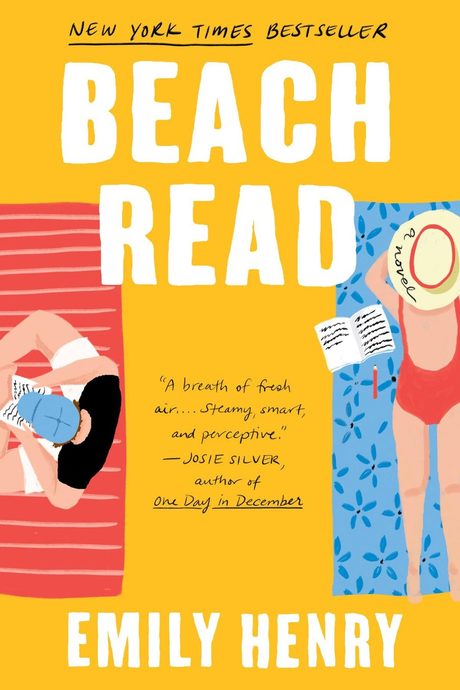
A romance novelist and a literary novelist end up in neighbouring beach houses and swap genres for one summer.
January writes love stories and has stopped believing in them. Augustus writes serious, miserable literary fiction and looks down on hers. Stuck next door to each other for a summer, both blocked, they make a bet: she will write something bleak, he will write something with a happy ending, and each has to teach the other how. Henry uses that setup to argue, cleverly, about what popular fiction is for, while also delivering exactly the thing being argued about.
Why it is at 13
Thirteenth because it puts this entire page's argument on the table: a literary novelist and a romance novelist swapping genres is the stigma question in miniature, and Henry wins the argument while being funnier than her opponent. A man who has read the twelve above should read one book that is smuggling nothing. It ranks here for the honest reason that the last act follows the genre's rules closely, and by then you can see them coming.
Read it ifyou are ready to read one without a disguise
Skip it ifyou want the plot to stay unpredictable
witty, meta, summeryBest for: your first proper romance novelcontemporary romancewritersgrief
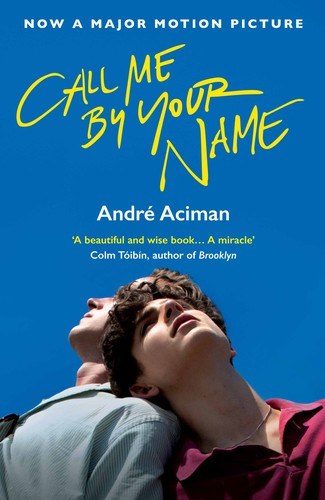
A seventeen year old spends six weeks watching a visiting scholar, and forty years remembering it.
Elio is a precocious teenager at his family's house on the Italian Riviera in 1983 when Oliver arrives for the summer as his father's research guest. Almost nothing happens for a long time: swimming, cycling, transcription, a lot of watching. Aciman writes desire as a state of constant calculation, every gesture examined for meaning, and the prose keeps pace with a mind that will not stop. The father's speech near the end is one of the few passages in modern fiction that people can quote from memory.
Why it is at 14
Last, and last here means hardest to finish rather than worst. It is the most precise book on this page about wanting somebody and it has almost no plot to hold a reluctant reader up. The interior monologue runs long and Elio is exhausting on purpose. Men often avoid it for the wrong reason, assuming a gay love story has nothing in it for them, when the subject is the humiliation of desire, which is universal.
Read it ifyou want desire written with no shortcuts
Skip it ifyou need momentum rather than interior monologue
sensual, obsessive, italianBest for: readers who like long interiorsqueersummerfirst love
Heads up: explicit sex, and an age gap between a teenager and an adult
The fastest way to fail at this is to pick the most famous romance and hope. Match the disguise to your existing shelf instead. If you read popular science and biographies, start at number two. If you read literary fiction and consider the rest beneath you, number six will humble you in about eighty pages. If your shelf is sport, number five gives you the mechanics of failure described by somebody who understands them. If you read fantasy and adventure, number three is a revenge story with duels in it. If you read Indian authors and nothing else, number eight, then number twelve. If you mostly read music writing and essays, number one was written for you specifically.
And if you have read none of these and want the fastest test of whether the genre has anything for you, take number four. It is funny by page ten. If nothing has landed by page fifty, you have lost one evening and you can say so with authority instead of prejudice.
Worth knowing
Where the stigma actually comes from
It is not about content, it is about packaging and about who the genre respects. Romance is the one category that has never pretended its main reader is a man, and being outside the assumed audience feels, wrongly, like being excluded. The covers do the rest of the work: pastel, cursive, two figures in silhouette. Men read love stories all the time and call them literary fiction, war novels, or Murakami.
The other half of the story is what the stigma costs. Fiction about people negotiating with each other is the best available training in reading a room, and men, on the whole, could use more of it than we are getting from thrillers about submarines. That is the entire sermon and it is over now.
People also ask
Questions, answered
Do men actually read romance novels?
Yes, usually while calling them something else. Norwegian Wood, The Remains of the Day and Love in the Time of Cholera are all love stories that men read without hesitation because they are shelved as literature. The resistance is to the packaging and the assumed audience, not to the subject. Once the cover looks serious, the same reader who says romance is not for him will finish a novel about nothing but longing.
What is the best romance novel for a man who does not read romance?
High Fidelity, in most cases. It is funny, narrated by a man being honest about behaving badly, and the love story arrives through arguments about music rather than declarations. If your reader is more scientific than musical, The Rosie Project does the same job through logic and comedy. If he only reads serious literary fiction, hand him The Remains of the Day and say nothing about what it is.
Are there any good romance novels written by men?
Several are on this list: Nick Hornby, Graeme Simsion, William Goldman, David Nicholls, Kazuo Ishiguro, Chad Harbach, Gabriel Garcia Marquez, Andre Aciman, Fredrik Backman and Chetan Bhagat. Worth noticing that when men write love stories they are usually filed as literary fiction or comedy rather than romance, which tells you the label is about marketing rather than subject. The genre itself remains largely written by women, and better for it.
Which romance novel should I read if I mostly read sport, crime or adventure?
The Art of Fielding for sport, because the baseball is real and the failure at the centre of it is described like an injury rather than a metaphor. For adventure and plot, The Princess Bride: duels, a revenge campaign, and a narrator heckling his own story. There is no thriller on this page, and no science fiction either, because the famous option there is The Time Traveler's Wife and it sits on the tearjerker list where it belongs.
Why are the famous weepies not on this list?
Because they have their own page, and mixing them in here does nobody a favour. One Day, The Time Traveler's Wife, Love Story and The Notebook are all engineered to break you, and a man arriving at this page usually wants a story with jokes and stakes rather than a bereavement. The honest verdict on the most famous of them, since people ask: The Notebook has a strong frame and a thin romance, and every emotion in it is announced twice.
Before you go
What to read tonight
Pick by tonight rather than by rank. Two free hours and a bad mood, take Starter for Ten and let somebody else be nineteen and humiliated for a change. A long flight, take The Art of Fielding. A reader who needs convincing, hand him High Fidelity and do not describe it as a romance, because the description is the only thing he is objecting to.
One last suggestion. When you finish two of these, go back and reread the last book you loved that had no love story in it, and count how much of it was actually about somebody wanting somebody. That is when the category stops feeling separate, and the whole question this page is built on quietly disappears.