Somebody spoiled The Murder of Roger Ackroyd for me in a WhatsApp group, in about eleven words, while I was still deciding whether to read it. No apology, no warning, just a man being clever at nine in the morning. That is the real problem with starting Agatha Christie now. She wrote sixty-six crime novels, and the four or five that everybody tells you to begin with are the exact four or five the internet has already ruined for half the people reading this.
So this list is not ordered by quality. It is ordered by how fast each book is likely to be spoiled for you, most fragile first. The three at the top have endings that leak out of trailers, reels and quiz nights, so read them while you still can. The middle is peak Christie with very little leak risk. The bottom is what you can happily save for next year, plus one book I think you should skip until you are already a fan.
Every entry tells you which detective you get, because Poirot and Marple are two different reading experiences and people who bounce off one often love the other. The reading-order question gets an honest answer further down: chronology barely matters in sixty-four of her novels, and matters completely in two.
How I picked these
- Ordered by spoiler risk, not by quality. The books whose endings leak into films, memes and quiz questions come first, while the ones nobody discusses can safely wait.
- Fourteen novels out of sixty-six. I cut the ones that assume you already like her: the Tommy and Tuppence adventures, the short story collections, and the archaeological Poirots.
- Every edition checked through Google Books and Open Library, so the covers here belong to books you can actually find on a shelf or in an app.
- Fame did not decide the order. Two books almost nobody mentions sit in the top half because they are better than their reputation.
- I kept exactly one dud, at fourteen, because a where-to-start list that pretends nothing went wrong in a sixty-six-book career is no use to anyone.
The whole list at a glance
All 14 books, in order
| # | Book | Author | Year | Vibe | Best for |
|---|
| 1 | The Murder of Roger Ackroyd | Agatha Christie | 1926 | cosy, chatty, then cold | readers who hate being spoiled |
| 2 | And Then There Were None | Agatha Christie | 1939 | bleak, fast, claustrophobic | people who rarely read novels |
| 3 | Murder on the Orient Express | Agatha Christie | 1934 | elegant, snowbound, moral | first-time Poirot readers |
| 4 | Death on the Nile | Agatha Christie | 1937 | sunlit, jealous, tense | readers who like character over puzzle |
| 5 | Five Little Pigs | Agatha Christie | 1942 | quiet, sad, exact | readers who like literary mysteries |
| 6 | A Murder Is Announced | Agatha Christie | 1950 | wry, postwar, sharp | readers new to Miss Marple |
| 7 | The ABC Murders | Agatha Christie | 1936 | cold, taunting, procedural | thriller readers trying Christie |
| 8 | Crooked House | Agatha Christie | 1949 | claustrophobic, domestic, cold | readers who like family dramas |
| 9 | Endless Night | Agatha Christie | 1967 | uneasy, romantic, wrong | fans of modern psych thrillers |
| 10 | The Body in the Library | Agatha Christie | 1942 | gossipy, English, tidy | cosy mystery readers |
| 11 | Evil Under the Sun | Agatha Christie | 1941 | sunny, mechanical, mean | puzzle purists |
| 12 | The Pale Horse | Agatha Christie | 1961 | eerie, sixties, sinister | readers who like creepy mysteries |
| 13 | 4.50 from Paddington | Agatha Christie | 1957 | brisk, comfortable, uneven | your third or fourth Marple |
| 14 | Passenger to Frankfurt | Agatha Christie | 1970 | vague, dated, tired | completists only |
The list
The books, ranked
1

Spoiler clock: ruined the fastest
The Murder of Roger Ackroyd
Agatha Christie1926about 212 pages
The village doctor tells you the story of a stabbing, and the story tells you something about the village doctor.
Poirot has retired to a village to grow vegetable marrows, which he is bad at, and the doctor next door narrates the whole book. Roger Ackroyd, the richest man for miles, is found stabbed in his study on the night after a woman he was close to kills herself. Everyone around has something small to hide, and the doctor's sister Caroline collects all of it before lunch. It reads like a warm, gossipy village novel for two hundred pages, and then Christie does the thing that made half the crime writers of the 1920s furious with her.
Why it is at 1
First because it has the shortest fuse. The trick in it is the most quoted twist in crime fiction, and it turns up in listicles, quizzes and the comments under every mystery video on the internet. Read it cold and you get something nobody can hand back to you. Read it after a friend has explained the ending and you are only checking their work.
Read it ifyou want the one twist every crime writer since has borrowed
Skip it ifyou need your detective on every page, because Poirot shares this book
cosy, chatty, then coldBest for: readers who hate being spoiledpoirotclassic twistvillage mystery
Pairs with: Endless Night, the other Christie built on a narrator you trust
2

Spoiler clock: the premise is the spoiler
And Then There Were None
Agatha Christie1939about 324 pages
Ten strangers on an island, a nursery rhyme framed in every bedroom, no detective coming, and the boat is not due until Monday.
Ten people who have never met are invited to a house on a small island off the Devon coast. Their host never appears. A gramophone recording accuses every one of them of a death they were never punished for, and then, in the order of the rhyme hanging in each bedroom, they start dying. Nobody else is on the island, so one of the ten is doing it, and the pool shrinks every chapter. There is no Poirot, no Marple, nobody whose presence promises that order gets restored. It is the most frightening book she wrote and also the tightest.
Why it is at 2
Second because the setup is itself the spoiler. Once you know it is ten people dying to a rhyme, you have absorbed half the tension, and that premise has been borrowed by so many films and shows that most readers meet it secondhand. It is also her best pure thriller, which makes it a kind first Christie for someone who does not really read novels.
Read it ifyou want dread rather than a puzzle you solve politely
Skip it ifyou need a detective, because there is nobody here to trust
bleak, fast, claustrophobicBest for: people who rarely read novelsstandaloneislandthriller
Heads up: the novel first appeared in Britain under a title containing a racial slur, and the rhyme inside was changed along with it; current editions use soldiers
3
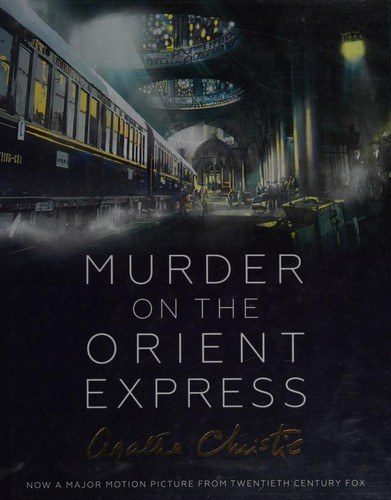
Spoiler clock: the films did it
Murder on the Orient Express
Agatha Christie1934about 288 pages
A train stuck in snow, a dead passenger with too many wounds, and thirteen people who all have an answer ready.
Poirot boards the Orient Express at Istanbul on a night when the carriage is inexplicably full. A snowdrift stops the train in the middle of nowhere, and by morning an American travelling under the name Ratchett has been stabbed repeatedly behind a locked door. No footprints outside, no way off the train, and every passenger has a tidy alibi that only holds if you believe them. Christie's real subject is not the killing. It is what a carriage full of respectable strangers will quietly agree to do, and what a detective decides he owes the law once he knows.
Why it is at 3
Third because it has been filmed so often that the ending leaks out of trailers, parodies and jokes made by people who have not read it. If you have somehow dodged all that, move it to first. The puzzle is simpler than Roger Ackroyd and the pleasure is different: you spend the book watching Poirot fail to catch anybody in a lie.
Read it ifyou like a closed-room puzzle with a moral question at the end
Skip it ifyou have seen either film, because nothing is left to find
elegant, snowbound, moralBest for: first-time Poirot readerspoirotclosed circletravel
4
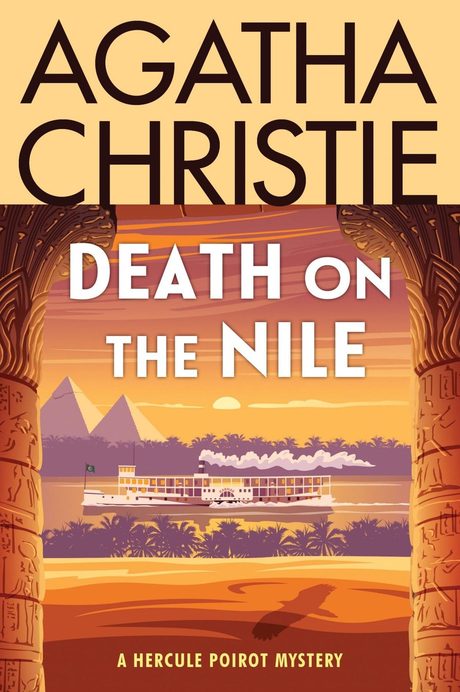
Peak Christie, low leak
Death on the Nile
Agatha Christie1937about 327 pages
A honeymoon on the Nile with the jilted best friend on board, and a boat full of people waiting to see who breaks first.
Linnet Ridgeway has money, looks and a new husband who used to be engaged to her closest friend. The couple leave for Egypt to get away from the mess, and Jacqueline turns up at every hotel and finally on the same steamer, smiling, doing nothing illegal. Poirot is aboard on holiday and watches the pressure build for a hundred pages before anyone dies. That slow first half is why the book works: by the time a shot is fired you know every passenger's debts, grudges and secrets, and you have already suspected the wrong person twice.
Why it is at 4
The best Poirot for atmosphere, and the one I give people who found Orient Express too much like a chess problem. It ranks fourth rather than higher because the plot leans on a piece of mechanics you may see coming if you have read a stack of her books. First-timers almost never do.
Read it ifyou want a holiday setting with real menace under it
Skip it ifyou get impatient waiting for the first body, which takes a while
sunlit, jealous, tenseBest for: readers who like character over puzzlepoirotegyptjealousy
5
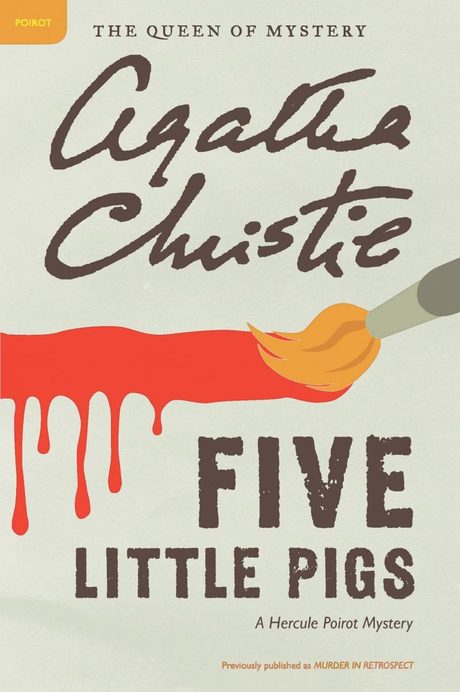
Peak Christie, the one nobody spoils
Five Little Pigs
Agatha Christie1942about 290 pages
A daughter asks Poirot to prove her mother was not a murderer, sixteen years after the trial ended.
Caroline Crale was convicted of poisoning her husband, a painter, and died in prison. Sixteen years later her daughter arrives with a letter in which her mother swore she was innocent. There is nothing left to examine: no body, no scene, no new evidence, only five people who were in that garden on the day. Poirot interviews all five, then asks each of them to write down what they remember. You read the same afternoon five times, and the facts never change while the meaning of them keeps sliding under your feet.
Why it is at 5
Fifth on the clock, first in my affections. Nobody spoils this one because nobody talks about it, which makes it the biggest gift on the list. It also asks something the others do not: what a marriage looks like from five different sides, and how a jury reads a woman. Come to it once you trust her enough to sit still for a book with no chase in it.
Read it ifyou want a mystery that is also about a marriage
Skip it ifyou need urgency, because this is a cold case told in essays
quiet, sad, exactBest for: readers who like literary mysteriespoirotcold casememory
Pairs with: Crooked House, her other book about a family that cannot be trusted
6
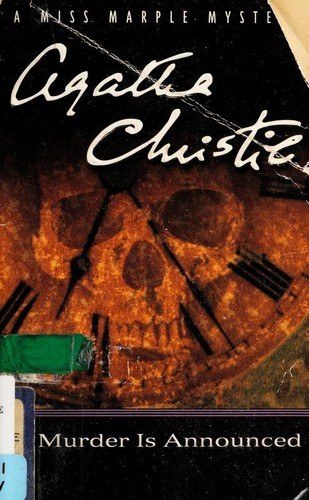
Peak Christie, the best Marple
A Murder Is Announced
Agatha Christie1950
The local paper announces a murder for Friday at half past six, and half the village turns up to watch.
A small ad in the Chipping Cleghorn gazette invites friends to a murder at Little Paddocks at 6.30 that evening. The neighbours assume it is a party game with drinks afterwards, so they arrive early and stand about being English. At half past six the lights go out, a man with a torch and a revolver comes through the door, shots are fired in the dark, and somebody is dead before anyone finds the fuse box. Miss Marple happens to be staying nearby. The village here is postwar, rationed and shabbier than the Christie of the picture postcards.
Why it is at 6
The best Miss Marple, and the book that proves she is a detective rather than a mascot. Sixth because it sits in the safe zone: famous among Christie readers, almost never spoiled outside them. If your idea of Marple comes from television, this will correct you. She is the coldest reader of human behaviour in the whole catalogue.
Read it ifyou want Marple at full strength in a postwar village
Skip it ifyou dislike large casts, because this village has many households
wry, postwar, sharpBest for: readers new to Miss Marplemarplevillagemisdirection
7
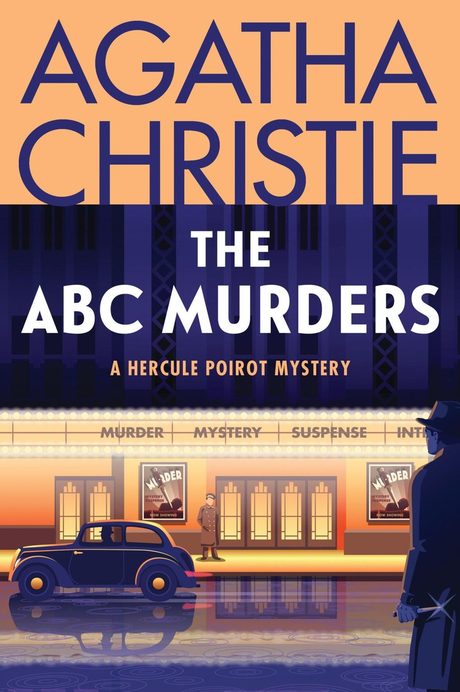
Peak Christie, the serial killer one
The ABC Murders
Agatha Christie1936about 219 pages
A killer writes to Poirot before each murder and works down the alphabet, and the police can do nothing but wait for the next letter.
Poirot receives a typed letter daring him to be in Andover on the twenty-first. A woman named Ascher dies in her shop. The next letter names Bexhill, and a girl called Barnard is found on the beach. An ABC railway guide is left beside every body. This is Christie writing a serial killer decades before the genre had a name for it, with Hastings narrating and cold little chapters following a shabby travelling salesman who may be the man. The tension comes from the calendar: you know roughly when and where the next one falls, and so does everybody else.
Why it is at 7
Seventh because it is the most modern-feeling thing she wrote, which means new readers usually reach it late. Alphabet killings are ordinary now, and that is exactly the trap: your 2026 instincts about serial killers are what she is playing with. It ranks below Five Little Pigs because the middle sags a little once the pattern is set.
Read it ifyou want a proto serial killer novel written in 1936
Skip it ifyou find murders by formula tiring after the second one
cold, taunting, proceduralBest for: thriller readers trying Christiepoirotserial killerhastings
8
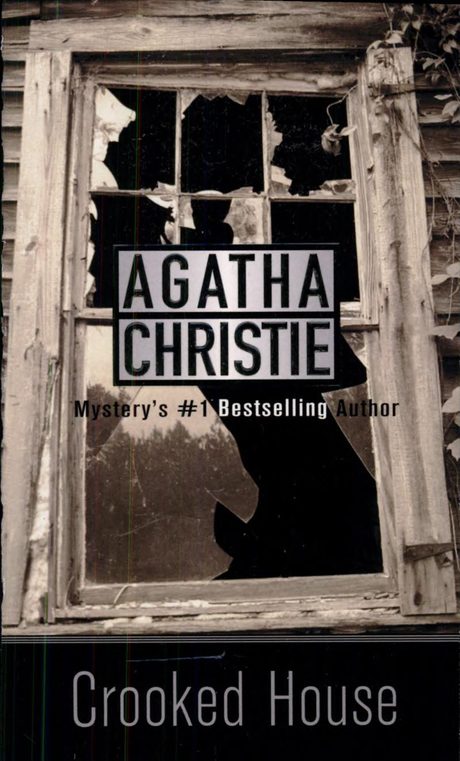
Save for later, the family one
Crooked House
Agatha Christie1949about 288 pages
A rich old man is poisoned in a house where three generations live on top of each other, and every one of them had a reason.
Aristide Leonides came to England with nothing, built a fortune and installed his whole family in one large house that keeps sprouting extra wings. When his medicine is switched and he dies, the household closes around itself: two sons and their wives, a young second wife, a tutor, a formidable great-aunt and three children. Charles Hayward, in love with the granddaughter Sophia, tells the story from the inside. There is no Poirot and no Marple. The book is a study of what happens to a family that never has to leave the house or face anyone outside it.
Why it is at 8
Eighth because standalones do not get spoiled the way the famous four do, so it can wait, and because the ending is the one I would refuse to hint at even in a bar argument. It also shows a different writer from the puzzle-maker. The interest here is entirely in the family, and the solution is a judgement about a person rather than a timetable.
Read it ifyou want family psychology more than a fair-play puzzle
Skip it ifyou want a famous detective doing the work for you
claustrophobic, domestic, coldBest for: readers who like family dramasstandalonefamilypoison
Heads up: children are inside the story, and the last chapter is far bleaker than her cosy reputation suggests
9
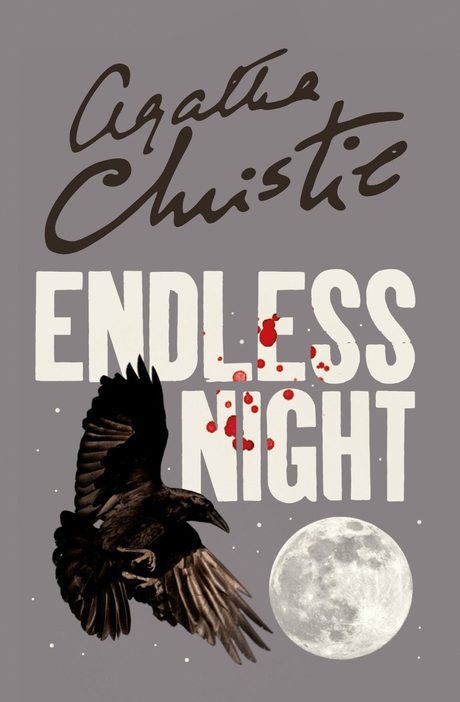
Save for later, the late surprise
Endless Night
Agatha Christie1967about 9 pages
A young man with no money wants a piece of land everyone says is cursed, and then he gets the land and the girl as well.
Michael Rogers drifts between jobs and wants one thing: a stretch of ground called Gipsy's Acre with a view he cannot afford. He meets Ellie, who turns out to be very rich, and they buy the land and build a modern house on it against local advice, because an old woman keeps appearing to warn them off. For most of its length this reads like an uneasy romance told by a likeable narrator with time to talk. Christie was in her mid-seventies and writing in a first-person voice that sounds nothing like the rest of her work.
Why it is at 9
Ninth because almost nobody outside Christie circles has heard of it, which keeps it clean, and because it lands hardest after three or four classics have taught you what to expect from her. The narration is the whole game. This is the closest she came to a modern psychological thriller, thirty years before that shelf existed in every airport.
Read it ifyou want a psychological thriller rather than a puzzle
Skip it ifyou want a detective, because there is barely an investigation here
uneasy, romantic, wrongBest for: fans of modern psych thrillersstandalonefirst personlate christie
Heads up: the book uses the word gypsy throughout and hangs part of its atmosphere on a superstition about a Romani woman, which reads badly now
10
Save for later, Marple's home ground
The Body in the Library
Agatha Christie1942about 198 pages
A young woman nobody in the village recognises is found dead on a respectable couple's library floor before breakfast.
Colonel and Mrs Bantry wake to the news that there is a body in their library: a girl in a cheap spangled evening dress and a great deal of makeup, who has no business being in St Mary Mead at all. Dolly Bantry's first move is to send for her friend Jane Marple, partly to solve it and partly to stop the village deciding that her husband did it. The case travels from the village to a seaside hotel and a family with money. Christie set herself the job of taking the oldest cliche in English crime writing and making it stand up.
Why it is at 10
Tenth because it is the clearest demonstration of how Marple actually thinks. She solves people by matching them to somebody she once knew in the village, and she is rarely wrong for long. It sits below A Murder Is Announced because the middle is thinner and the solution needs two coincidences to hold. Read it for the method more than the plot.
Read it ifyou want the classic village mystery done properly
Skip it ifyou dislike solutions that depend on lucky timing
gossipy, English, tidyBest for: cosy mystery readersmarplest mary meadclassic setup
11
Save for later, the clockwork one
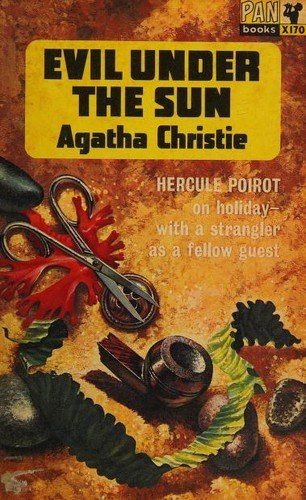
Evil Under the Sun
Agatha Christie1941about 304 pages
Poirot takes a beach holiday, watches a marriage rot in public, and finds a body on the sand by eleven in the morning.
A hotel sits on a small island joined to the Devon coast by a causeway. Arlena Marshall, an actress whom everybody either wants or resents, spends her days sunbathing while her husband pretends not to notice the younger man following her about. Poirot is there in a straw hat being disapproving at everyone. When Arlena is found strangled on a cove that can be reached only one way, the timetable becomes the entire case, and half the hotel has an alibi built out of somebody else's wristwatch.
Why it is at 11
Eleventh because the mechanism is lovely and the people are thin. If you read for the machinery of a trick, move it up five places, since this is the neatest clockwork she ever built. If you read for character, it will feel like well-behaved suspects standing in their marked positions. The setting nearly carries it anyway.
Read it ifyou love alibi timetables and the mechanics of a trick
Skip it ifyou want characters you still remember next week
sunny, mechanical, meanBest for: puzzle puristspoirotislandalibi
12
Save for later, the creepy one
The Pale Horse
Agatha Christie1961about 214 pages
Three women in a converted inn claim they can kill anybody you name, at a distance, without ever going near them.
A priest is attacked after visiting a dying woman, and the list of names hidden in his shoe connects people who have all died quietly of ordinary causes. The trail leads to a former pub called The Pale Horse, where three women run something between a seance business and a contract killing service and insist the method is entirely spiritual. Mark Easterbrook, an academic with no business investigating anything, keeps pulling at the thread. Christie worked in a hospital dispensary in both world wars, and the poisons in her books are described by somebody who handled them.
Why it is at 12
Twelfth because it runs on atmosphere more than deduction, and because the effect depends on you not knowing what is really going on in that inn. This is the Christie for a reader who wants a mystery with the lights off. The investigating is loose and the amateur detective is dull, which is the price of admission.
Read it ifyou want occult atmosphere more than a clean puzzle
Skip it ifyou need a strong detective, because this narrator drifts
eerie, sixties, sinisterBest for: readers who like creepy mysteriesstandalonepoisonoccult
13
Save for later, comfort Marple
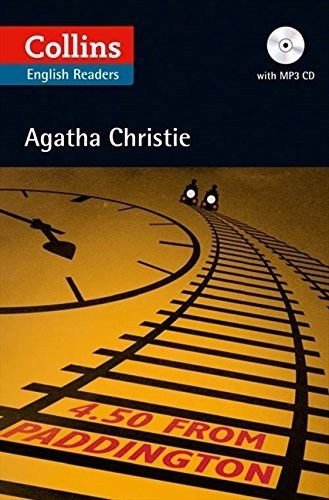
4.50 from Paddington
Agatha Christie1957
A woman watches a murder through the window of a passing train, and nobody believes her because no body turns up.
Elspeth McGillicuddy is on the 4.50 out of Paddington when another train draws level with hers, a blind flies up, and she sees a man strangle a woman ten feet away. She reports it. The railway finds nothing, the police find nothing, and everybody is very polite about her age. Miss Marple believes her, works out where a body could have been pushed off the line, and sends the magnificent Lucy Eyelesbarrow into a nearby house as a cook to go looking for it. Lucy is the best character Christie invented and then never used again.
Why it is at 13
Thirteenth in the reading order, not in quality. The opening is one of her sharpest and the middle is comfortable rather than tight, with a solution that asks you to accept a fairly wide medical convenience. Save it for the point where you want more Marple rather than better Marple. Lucy alone is worth the ticket.
Read it ifyou already like Marple and want a comfortable one
Skip it ifyou want a solution that survives hard questioning
brisk, comfortable, unevenBest for: your third or fourth Marplemarpletrainslucy eyelesbarrow
14
The one to skip at the start
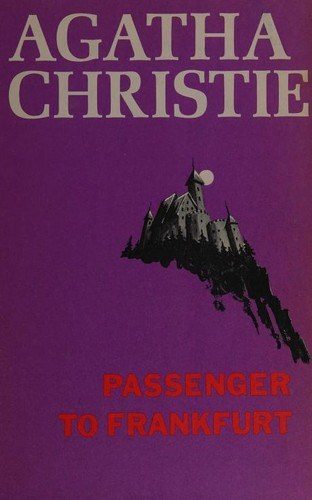
Passenger to Frankfurt
Agatha Christie1970about 228 pages
A bored diplomat lends his passport to a stranger at Frankfurt airport and falls into a global conspiracy that never quite arrives.
A diplomat waiting out a delay at Frankfurt is approached by a woman who says she will be killed unless he gives her his passport and his identity for a few hours. He agrees, mostly because he is bored, and the book then widens into secret youth movements, an international conspiracy and long drawing-room conversations about the state of the world. Christie was in her late seventies. The plot never settles, the villainy stays abstract, and the thing she was better at than anybody, hiding one specific person in plain sight, is simply not on the menu.
Why it is at 14
Last, and here as a warning rather than a recommendation. Every long career has a late book that travelled on the name, and this is hers. I include it because new readers pick Christies at random from a secondhand pile, land on one of these, and decide the reputation is a con. It is not. Start at the top of this list and come here only if you turn into a completist.
Read it ifyou are a completist who wants the entire shelf
Skip it ifyou are choosing your first Christie, or your fifth
vague, dated, tiredBest for: completists onlystandalonelate careerspy
Worth knowing
Does Agatha Christie have a reading order?
For sixty-four of the sixty-six novels, no. Each book resets: a fresh house, a fresh set of suspects, and nothing Poirot or Marple learned last time helps you now. You can start anywhere. Going oldest to newest mainly teaches you how much better she got at people between 1926 and 1950, which is interesting to a fan and irrelevant to a beginner.
Two books have to come last. Curtain is Poirot's final case and Sleeping Murder is Miss Marple's. Christie wrote both in the 1940s, locked them away, and let them be published right at the end of her life and just after it, so they are goodbyes and they read like goodbyes. Reading either one early costs you something you cannot get back.
One smaller exception sits on top of that. The Tommy and Tuppence books are the only series where the characters age in real time, from a broke young couple just after the First World War to a retired pair in the 1970s. If you get that far, take those five in order.
Worth knowing
A word about the language in the older books
Christie published from 1920 to the mid-1970s, and some of the early novels carry the casual racism and antisemitism of the England she lived in. And Then There Were None first appeared in Britain under a title with a racial slur in it, which is why you now find it under a different name with a different rhyme inside. Recent HarperCollins editions have also removed or softened some of the slurs and physical descriptions in the older Poirot and Marple novels.
I am not going to tell you how to feel about any of that. I would rather you knew before you opened the book than met it on page forty and thought the recommendation was careless.
People also ask
Questions, answered
Which Agatha Christie book should I read first?
The Murder of Roger Ackroyd, as long as nobody has told you the ending. It is the trick that made her name and it only works once, so it is the one worth protecting. If you already know the twist, start with And Then There Were None, which does not hang on a single reveal, or with A Murder Is Announced if you would rather begin with Miss Marple than with Poirot. All three are short enough to finish across two evenings.
Do I need to read Agatha Christie in order?
No, with two exceptions. The novels are self-contained, so you can pick up almost any of them without missing anything. Curtain and Sleeping Murder are the last cases for Poirot and Marple, and Christie wrote them decades before they were published so her detectives could be given endings. Read those two after you have spent real time with the characters, or they land as plot instead of farewell. The Tommy and Tuppence books are the only other set that ages in sequence.
Poirot or Miss Marple, which is better for a beginner?
Poirot, usually. His books are plottier and move faster, and most of the famous titles are his. Marple takes a little longer to appreciate because her method is social: she solves crimes by remembering somebody similar from her village and by letting people underestimate her, which they always do. If you prefer character-driven stories, begin with A Murder Is Announced instead and you may never go back to Poirot at all.
How many books did Agatha Christie write?
Sixty-six crime novels, plus more than a dozen short story collections, six romances published as Mary Westmacott, an autobiography and a pile of plays including The Mousetrap. Nobody needs all of it, and most Christie readers stop somewhere around thirty. The fourteen novels here give you every trick she knew, both detectives, the standalones and one book weak enough to prove the good ones were not luck.
Which Agatha Christie book is the scariest?
And Then There Were None, comfortably. There is no detective in it and no promise that order will be put back, which is the opposite of how the rest of her work is built. The Pale Horse is the other one worth naming if you want dread rather than fear, because nothing supernatural is ever confirmed and nothing is ruled out either, and the deaths look exactly like ordinary illnesses until they do not.
Is Agatha Christie hard to read?
No. Her sentences are plain, her chapters are short, and most of these run between two hundred and three hundred pages. The difficulty is cultural rather than linguistic: 1930s English households arrive with servants, inheritances and social rules that take a few chapters to absorb. Give any of them fifty pages. If the world still feels distant, try Endless Night, which is written in a modern first-person voice that could have been published last year.
Before you go
What to read tonight
If you are picking one for tonight, pick The Murder of Roger Ackroyd and read it in two sittings without looking anything up. Do not search the title, do not read the introduction your edition came with, and if a well-meaning cousin opens with "you know the famous one where", leave the room. That book is the only genuinely fragile thing on this list.
After that, follow your temperature rather than the numbers. If you liked the puzzle, go to Five Little Pigs and then The ABC Murders. If you liked the village and the people, go to A Murder Is Announced and stay with Marple a while. If the dread interested you more than the deduction, go to Endless Night and then The Pale Horse, and somewhere in there you will notice you have become a person who reads crime novels.
Keep going
Lists that pair with this one
Genre
18 Best Crime Thriller Books of All Time, Ranked Honestly
Ranked by what is left of the book once you already know the ending, with a straight answer on every twist.
Genre
The 14 Best Detective Series, and Which Book to Start With
I ranked these by the door, not by the house: the exact entry book, how many there are, and whether reading order actually matters.
Genre
The 14 Best Cosy Mysteries, Ranked From Softest to Sharpest
Not ranked by quality, ranked by how much they will actually disturb you, from the ones where nobody bleeds to the ones wearing a tea cosy over a knife.
Mood & Life
Classic Books for Beginners: 21 Ranked Easiest to Hardest
Twenty one classics arranged on a four rung ladder, easiest first, so you finish the first one instead of abandoning it at page thirty.
Mood & Life
20 Unputdownable Books, Ranked by the Engine That Hooks You
I ranked these on one thing: how hard each book made it to stop reading, and which mechanic does the pulling.