My nani read murder mysteries every afternoon of her retirement and never once looked frightened. That confused me until I read one. In a cosy mystery somebody dies on page nine and the world does not end: the tea still gets made, the neighbours still argue about the flower show, and by the last chapter the village has closed over the hole like water over a dropped stone.
The genre runs on four rules. The detective is an amateur with a day job, the violence stays off the page, the community is small enough that everyone is a suspect and everyone stays for dinner, and order comes back at the end. Break the first rule and you have a police procedural. Break the last one and you have literary fiction, which is a fine thing to read but a different sort of evening.
So I have not ranked these by quality, because fourteen good books listed one to fourteen tells you nothing about which one to open tonight. I ranked them by softness. Number one is the safest book here, the one you hand to someone recovering from surgery. Number fourteen looks like a cosy on the cover and has teeth inside. Find the level your nerves want, start there, and work downwards as you get braver.
How I picked these
- Softness sets the order, not quality. Everything here is worth your evening, so the ranking measures temperature instead: how close the book lets real horror get to you.
- First books only. Every entry opens a series or stands alone, so nothing here spoils anything, and if you fall for one there is a queue waiting.
- I cut the books where the murder is the point of the pain. If a novel wants you to sit with a grieving mother for two hundred pages it belongs on the crime thriller list, not this one.
- Three books that get sold as cosy are parked at the bottom with a warning, because being marketed as comfort reading and being comfort reading are not the same job.
- Every edition ran through Google Books and Open Library, so the covers here are real covers and not print on demand blanks.
The whole list at a glance
All 14 books, in order
| # | Book | Author | Year | Vibe | Best for |
|---|
| 1 | The No. 1 Ladies' Detective Agency | Alexander McCall Smith | 1998 | slow, warm, sunlit | recovering from a hard week |
| 2 | The Cat Who Could Read Backwards | Lilian Jackson Braun | 1966 | retro, mild, newsprint | cat people and genre historians |
| 3 | Agatha Raisin and the Quiche of Death | M. C. Beaton | 1992 | wry, brisk, sour sweet | readers tired of nice sleuths |
| 4 | The Marlow Murder Club | Robert Thorogood | 2021 | riverside, brisk, fair play | puzzle lovers who hate gore |
| 5 | Murder Most Unladylike | Robin Stevens | 2014 | 1930s, boarding school, sly | one evening, or a teenager |
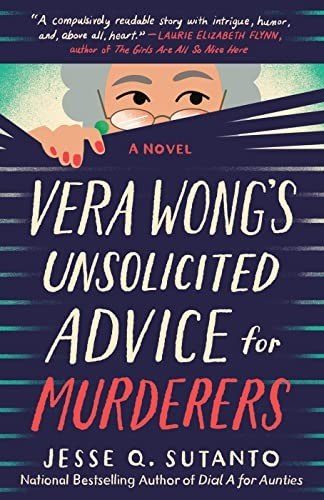
| 6 | Vera Wong's Unsolicited Advice for Murderers | Jesse Q. Sutanto | 2023 | funny, nosy, warm | readers who love found family |
| 7 | The Bangalore Detectives Club | Harini Nagendra | 2022 | 1920s Bangalore, hopeful | readers tired of English villages |
| 8 | The Thursday Murder Club | Richard Osman | 2020 | funny, English, quietly sad | the best all round pick |
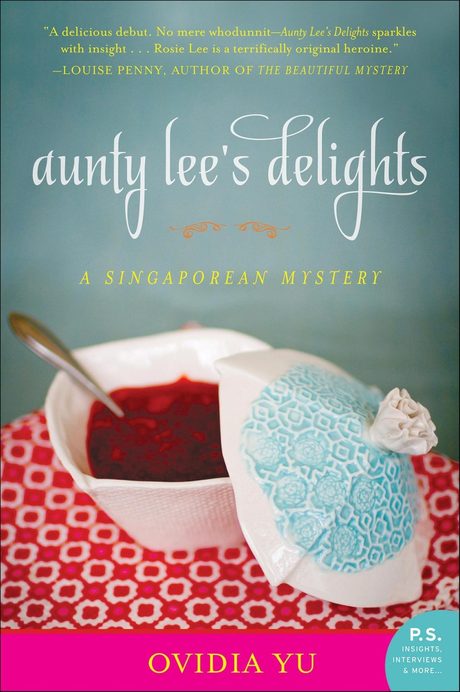
| 9 | Aunty Lee's Delights | Ovidia Yu | 2013 | singapore, spicy, observant | reading with dinner on the way |
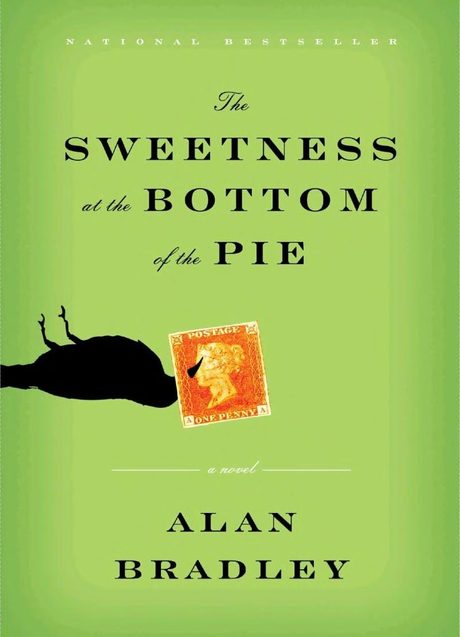
| 10 | The Sweetness at the Bottom of the Pie | Alan Bradley | 2009 | 1950s, gleeful, chemical | readers who want a strong voice |
| 11 | The Murder at the Vicarage | Agatha Christie | 1930 | clockwork, cold, funny | readers starting with the classics |
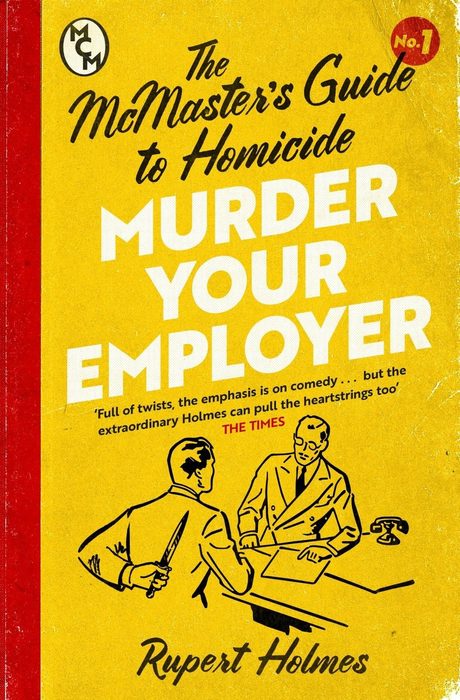
| 12 | Murder Your Employer | Rupert Holmes | 2023 | arch, comic, elaborate | readers who like a gimmick done well |
| 13 | Magpie Murders | Anthony Horowitz | 2016 | meta, clever, cool | readers ready for something sharper |
| 14 | Still Life | Louise Penny | 2005 | quebec, gentle, melancholy | readers moving on from cosy |
The list
The books, ranked
1

Sofa tier, breaks no rules
The No. 1 Ladies' Detective Agency
Alexander McCall Smith1998about 213 pages
A woman in Botswana sells her late father's cattle, opens a detective agency, and solves most of her cases by paying attention.
Precious Ramotswe inherits cattle from her father, sells them, and does the thing nobody in Gaborone expects: she opens a detective agency with a kettle, two desks and no training at all. The cases are small and local. A husband who has vanished, a father who might not be the father, a girl missing from her village. One strand in here is genuinely frightening, and McCall Smith handles it in about four pages and then lets the kettle boil again. Mostly this is a book about a woman who is good at her work and kind to people while she does it.
Why it is at 1
First because it is the least frightening book I have ever read that still contains crime. The pace is the pace of a hot afternoon and the pleasure is Mma Ramotswe's judgment rather than any puzzle. If you want tight plotting you will be restless by page fifty. If you want company, nothing else on this list comes close.
Read it ifyou want warmth, patience and a detective who listens more than she chases
Skip it ifyou need a real puzzle, because the mysteries here are thin on purpose
slow, warm, sunlitBest for: recovering from a hard weekbotswanaseries openergentle
Heads up: one case involves a child in danger, kept brief and undetailed
2
Sofa tier, breaks no rules
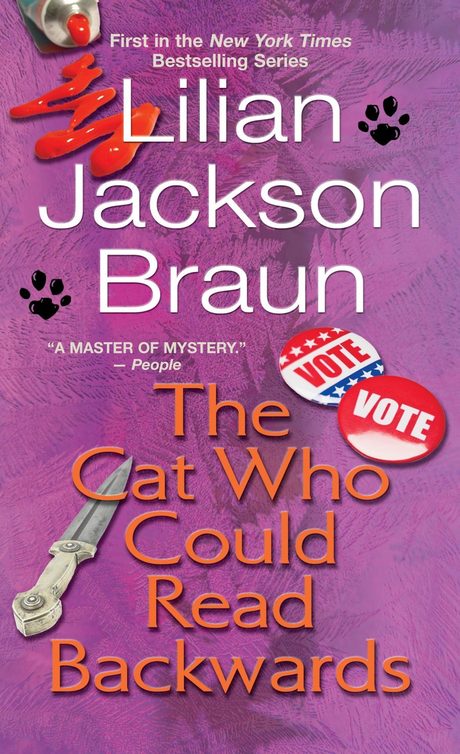
The Cat Who Could Read Backwards
Lilian Jackson Braun1966about 257 pages
A washed up crime reporter takes the art beat, inherits a Siamese cat, and finds the cat is better at clues than he is.
Jim Qwilleran is a newspaperman on the way down, handed the art column as a last chance, when people around the city's gallery scene start dying. He acquires Koko, a Siamese with strong opinions, who scratches at particular books and knocks particular objects off shelves until Qwilleran works out what he has been told. This is the book the entire pet sleuth industry grew out of, and you can feel 1966 in every chapter: the typewriters, the smoking, the way women get described. It is short, silly and oddly restful.
Why it is at 2
Second because nothing in it can hurt you, and because half the cosy shelf in your local bookshop descends from it. Read it as an origin story rather than as a great mystery. The solution plays fair, the pace is mild, and Koko has more personality than several human detectives further down this list. Go in expecting the sixties and you will have a nice time.
Read it ifyou like cats and want to see where the pet sleuth began
Skip it ifcasual sexism from 1966 will sour the mood for you
retro, mild, newsprintBest for: cat people and genre historianscats1960sseries opener
Heads up: attitudes to women and to drinking are very much of their time
3
Sofa tier, breaks no rules
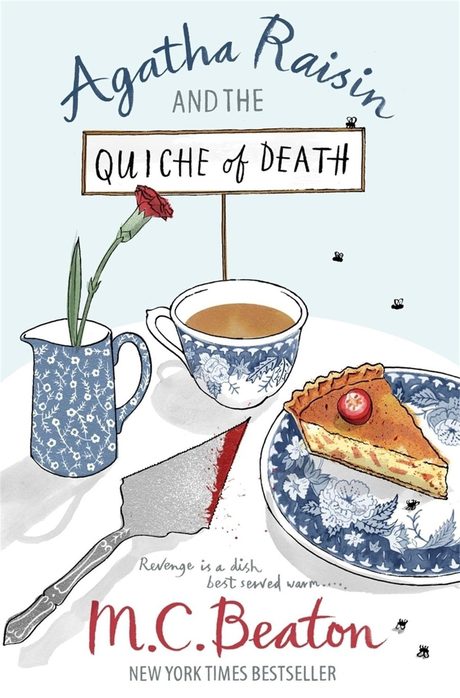
Agatha Raisin and the Quiche of Death
M. C. Beaton1992about 215 pages
A London PR boss retires to a Cotswolds village, cheats at the baking competition, and accidentally kills the judge.
Agatha Raisin sells her public relations firm, buys a cottage in the Cotswolds, and learns that village life does not simply hand you friends because you have arrived. So she enters the local quiche competition with a quiche she bought in London, the judge eats it and dies, and now she has to prove she is a fraud but not a murderer. Beaton's joke is that her heroine is rude, vain, pushy and lonely, which makes her much better company than the usual sweet amateur sleuth. The village is drawn with a cold eye and the plot is light enough for one sitting.
Why it is at 3
Third because the crime is close to farce and the real subject is loneliness, which sounds heavy and plays as comedy. It sits above the two books before it only because Agatha herself is unkind and the village returns the favour with interest. If you want a cosy where the sleuth is not remotely lovable, start here.
Read it ifyou want a prickly funny heroine and English village bitchiness
Skip it ifyou need to like the person you are following for three hundred pages
wry, brisk, sour sweetBest for: readers tired of nice sleuthscotswoldscomicseries opener
4

Sofa tier, breaks no rules
The Marlow Murder Club
Robert Thorogood2021
A retired crossword setter hears a gunshot across the Thames and decides the police need her help whether they want it or not.
Judith Potts lives alone in a large house on the Thames at Marlow, sets crosswords for the papers and swims in the river with no costume on. She hears a gunshot from a neighbour's garden, reports it, and is politely disbelieved. So she recruits two other women who are also treated as invisible, a dog walker and a vicar's wife, and starts asking questions in the mild English way that makes people say far too much. Thorogood builds puzzles first and feelings second, and there is a proper fair play solution waiting at the end.
Why it is at 4
Fourth because the puzzle is real and the killer is out there hunting, which lifts the temperature a little above Agatha Raisin, yet the writing never once tries to upset you. The three women are the reason to stay, not the corpse. It is the most efficient pure whodunnit in this tier.
Read it ifyou want a proper whodunnit and three excellent middle aged women
Skip it ifamateurs trampling over a police investigation irritates you
riverside, brisk, fair playBest for: puzzle lovers who hate goreenglandamateur sleuthsseries opener
5

Sofa tier, bends rule three
Murder Most Unladylike
Robin Stevens2014about 368 pages
Two schoolgirls in 1934 start a detective society, and then the science mistress turns up dead on the gym floor.
Hazel Wong, newly arrived at an English boarding school from Hong Kong, and Daisy Wells, confident in the way rich English girls are trained to be, run a secret detective society that has so far solved nothing worth mentioning. Then Hazel finds the science mistress dead in the gym, and by the time she comes back with Daisy the body has gone. The whole thing is written as Hazel's casebook, and it is far cleverer than its reading age suggests, particularly about how a Chinese girl is handled by a school that believes it is being kind to her.
Why it is at 5
Fifth, and the last of the properly safe ones. It is written for readers around ten, so the murder stays at arm's length, but Stevens never writes down to anybody. It sits at the top of this tier because the casual racism Hazel absorbs is stated plainly on the page, and that is the first genuinely uncomfortable thing on this list.
Read it ifyou want a fast fair puzzle and a narrator you will want to protect
Skip it ifchildren's books annoy you however well they are written
1930s, boarding school, slyBest for: one evening, or a teenagermiddle grade1930sseries opener
Heads up: written for readers around ten; the racism Hazel faces is on the page
6
Weather tier, bends rule two
Vera Wong's Unsolicited Advice for Murderers
Jesse Q. Sutanto2023
A lonely tea shop owner finds a body on her floor, pockets the evidence before calling anyone, and starts feeding her suspects.
Vera Wong runs a Chinatown tea shop with almost no customers, texts her grown son every morning and gets nothing back, and comes downstairs one day to a dead man on her floor. Rather than leave the scene alone she takes the flash drive out of his hand, calls the police afterwards, and then invites the suspects in for tea, on the sound theory that a murderer returns to the scene. What follows is a mystery, but it is really about a woman collecting four broken people and force feeding them soup until they improve.
Why it is at 6
Sixth, and the first book where somebody's grief sits on the page rather than off it. Sutanto keeps the tone light and the dead man still has a widow and a brother, and you are made to look at both of them. Warmer than anything above it and a little sadder too, which is exactly what opens the middle tier.
Read it ifyou want found family, food, and a nosy mother figure running the show
Skip it ifyou want your detective to respect a single rule of evidence
funny, nosy, warmBest for: readers who love found familysan franciscofound familycomic
Heads up: grief and an unhappy marriage are handled directly rather than glossed over
7

Weather tier, bends rule two
The Bangalore Detectives Club
Harini Nagendra2022about 287 pages
A nineteen year old bride in 1920s Bangalore discovers she is bored of being a wife and rather good at investigating a murder.
Kaveri is newly married and installed in her husband's house in 1921 Bangalore, with mathematics books she is not meant to read and a bicycle she is not meant to want. At a club dinner a man is stabbed, a woman she has only just met is blamed, and Kaveri starts asking the questions nobody else will. Nagendra is an ecologist by profession and it shows in how the city is built on the page, the lakes, the gardens, the segregated club. The mystery is decent. The reason to keep reading is Kaveri arguing her way into a life, with a husband who turns out to be an ally.
Why it is at 7
Seventh because it is the best Indian cosy on the shelf right now, and because the darkness here is social rather than criminal. The rules about what a young wife may read, say or ride are the real crime scene, and Nagendra lays them out without a speech. Nothing is graphic and nothing is weightless either, which is what this tier means.
Read it ifyou want a period Indian mystery with a heroine worth following
Skip it ifyou want tight plotting, because the sleuthing is the weakest part of it
1920s Bangalore, hopefulBest for: readers tired of English villagesindiahistoricalseries opener
Heads up: prejudice about caste, class and a woman's place is shown rather than argued with
8

Weather tier, bends rule two
The Thursday Murder Club
Richard Osman2020about 385 pages
Four residents of a smart retirement village meet on Thursdays to pick over cold cases, and then a fresh body arrives.
Elizabeth, Joyce, Ibrahim and Ron live at Coopers Chase in Kent and meet weekly to go through old police files for entertainment. Then the developer who built the place is found dead in his kitchen, they have a live case, and they promptly adopt two real police officers to help them run it. Osman writes jokes at the rate of a professional quizmaster and the plotting plays fair. What surprised me is the thing running underneath: dementia, widowhood, the specific arithmetic of knowing how many years are left. Joyce's diary entries do most of that work quietly.
Why it is at 8
Eighth, and my pick for the best book here overall, which is exactly why it is not at the top. It is funny for three hundred pages and then it puts a hand on your chest. Osman refuses to pretend old age is only charming, and the last fifty pages are the proof. Start here if you want the modern cosy at full strength, and accept that you will cry once.
Read it ifyou want jokes, a fair puzzle and four characters you will miss afterwards
Skip it ifyou are raw about a parent's dementia or a recent death in the family
funny, English, quietly sadBest for: the best all round pickretirement villagecomicseries opener
Heads up: dementia, dying and grief are central rather than incidental
9
Weather tier, bends rule two
Aunty Lee's Delights
Ovidia Yu2013about 176 pages
A Singaporean widow who runs a small restaurant would rather solve a murder herself than let the police spoil her dinner party.
Rosie Lee, known to everybody as Aunty Lee, is a wealthy widow who cooks because she loves it, runs a shophouse restaurant, and treats everyone's business as her own. A body turns up on the beach, a guest fails to arrive at her wine tasting dinner, and she works the case the way she works a kitchen, by watching who eats what and who talks too quickly. Yu is very good on Singapore itself: the money, the domestic workers, the polite social sorting, the gap between what people say at the table and what they mean by it.
Why it is at 9
Ninth because the food writing is the best on this list and the social observation has a blade in it. Aunty Lee is warm and also something of a bully, and the book is honest about how much of Singapore's comfort rests on people who are not comfortable at all. Read it hungry, and not on an empty budget.
Read it ifyou want Southeast Asian food, gossip and sharp social observation
Skip it ifyou want your cosy free of politics, because this one has opinions
singapore, spicy, observantBest for: reading with dinner on the waysingaporefoodseries opener
10
Weather tier, bends rule four
The Sweetness at the Bottom of the Pie
Alan Bradley2009about 400 pages
An eleven year old chemist with her own poisons laboratory finds a dying man in the cucumber patch and is thrilled about it.
Flavia de Luce is eleven, lives in a crumbling English house in 1950, and keeps a Victorian chemistry laboratory upstairs where she plans revenge on her sisters. A dead bird appears on the doorstep with a postage stamp in its beak, her father is arrested, and Flavia sets off on her bicycle to clear him. The voice is the entire book: gleeful, snobbish, precise about poisons and completely unmoved by corpses. Underneath the comedy there is a dead mother nobody in the house will discuss, and Bradley lets that silence sit in every room.
Why it is at 10
Tenth because the delight is real and the family is bleak. Flavia's father is frozen with grief, her sisters are cruel in the way children do not forget, and the book never quite forgives them for it. Funnier than anything else in this tier and lonelier than anything above it, which is a strange mix and the reason readers either adore it or bounce clean off.
Read it ifyou love a precocious narrator and English postwar decay
Skip it ifa clever child narrator makes your teeth itch
1950s, gleeful, chemicalBest for: readers who want a strong voice1950s englandyoung sleuthseries opener
Heads up: a mother's death and a father frozen by it sit under the comedy
11

Weather tier, bends rule four
The Murder at the Vicarage
Agatha Christie1930about 267 pages
The most disliked man in St Mary Mead is shot at the vicar's desk, and an elderly woman who gardens has already worked it out.
Colonel Protheroe is found shot in the vicar's study, and since half the village had a reason to want it, the vicar narrating the story opens by admitting that whoever did it has done the parish a service. This is Miss Marple's first novel and she is nothing like the cuddly figure television later built. She is nosy, certain, and openly convinced that a village gives you a complete education in human wickedness. The plot is a clockwork thing of timings, alibis and two confessions that cannot both be true.
Why it is at 11
Eleventh, the highest placed classic, because Christie is colder than any modern cosy on this list. Nobody grieves. The village rather enjoys itself. The comedy comes from respectable people behaving badly, and Marple's view of human nature is bleaker than Osman's or Thorogood's by a distance. Read it for the machinery, which still runs beautifully nearly a century on.
Read it ifyou want the blueprint of the whole genre, plus the real Miss Marple
Skip it if1930 attitudes to class, servants and young women will irritate you
clockwork, cold, funnyBest for: readers starting with the classicsclassicmiss marplevillage
Heads up: period attitudes to class and gender go unexamined
12
Knife tier, inverts rule one
Murder Your Employer
Rupert Holmes2023about 481 pages
A secret college teaches ordinary people to commit the one murder that would improve the world, and marks them on the attempt.
The McMasters Conservatory admits students who each have one person they need removed from the world, and teaches them how, with lectures, practicals and a firm rule that the target must genuinely deserve it. The book follows three students and their intended victims, framed as a textbook with a fussy dean narrating. It is a comedy about planning murders. The tone is gentle, the setting is the 1950s, the whole thing is built like a puzzle box, and there is still no getting around what everyone in it is training to do.
Why it is at 12
Twelfth because it looks like the softest book on this list and is structurally the strangest one. The rules are turned inside out here: the sleuths are the killers and the pleasure comes from watching a plan work rather than watching one come apart. If you want to know whether you love cosy comfort or only cosy tone, this book is the test.
Read it ifyou want a comic puzzle box and do not mind rooting for the killers
Skip it ifmurder as a hobby is not funny to you, which is a fair position
arch, comic, elaborateBest for: readers who like a gimmick done wellcomic1950sstandalone
Heads up: the whole premise is planning to kill people, played for laughs
13

Knife tier, breaks rule four
Magpie Murders
Anthony Horowitz2016about 492 pages
You read a village whodunnit, then you read the story of the editor whose author died before delivering the final chapter.
Susan Ryeland is an editor who sits down with the new manuscript from her publisher's most profitable crime writer, a 1950s village whodunnit called Magpie Murders. You read that novel inside this one. Then the manuscript stops before the solution, the author is dead, and Susan has to work out both what the fictional detective would have concluded and what happened to the man who invented him. Horowitz is making a point about how much writers come to hate their own creations, and about how a golden age puzzle is actually engineered, while handing you two complete mysteries.
Why it is at 13
Thirteenth because the inner book is a perfect cosy and the outer book is not one at all. The publishing chapters are nasty in an adult way, with real spite and real money in them, and the death that starts it is not tidy. If you want to graduate from this shelf without leaving it, this is the bridge to walk across.
Read it ifyou want two mysteries in one and a puzzle about the genre itself
Skip it ifa book inside a book makes you want to skim to the real story
meta, clever, coolBest for: readers ready for something sharperbook within a bookgolden ageseries opener
Heads up: a death first treated as suicide, and a thoroughly unpleasant cast
14
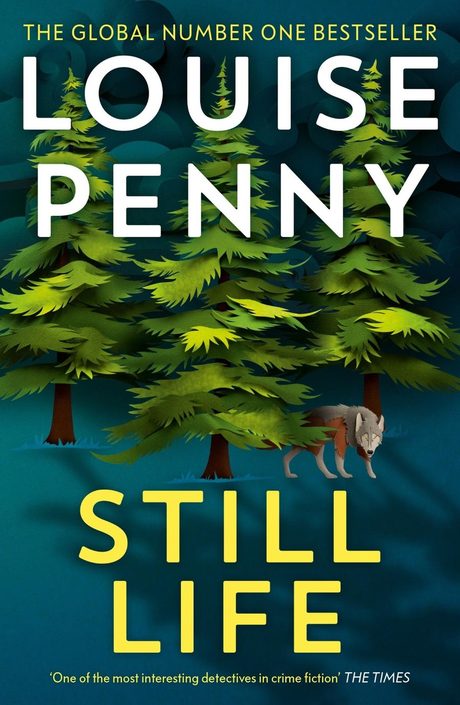
Knife tier, breaks rules one and four
Still Life
Louise Penny2005about 234 pages
A retired teacher is found dead in the woods outside a Quebec village, and the detective who arrives is kinder than the crime.
Jane Neal is killed by an arrow in the woods near Three Pines, a village in Quebec that appears on no map, days after finally letting anyone see her paintings. Chief Inspector Armand Gamache comes down from Montreal, and what makes this series work is that he investigates by listening and by noticing what people are frightened of. The village is the comfort: the bistro, the bookshop, the bread, the fire. The crime is not comforting at all, and Penny is unsentimental about how much cruelty a small pretty place can hold.
Why it is at 14
Fourteenth and the sharpest book here, because Penny writes real grief and real bigotry inside a village that looks like a Christmas card. A police officer runs the investigation, which breaks the amateur rule outright, and one thread follows villagers who cannot accept a gay couple living among them. It is the best written book on this list. It is also the one most likely to make you put it down for a minute.
Read it ifyou want village comfort with a serious adult novel underneath it
Skip it ifyou want the murder to stay a puzzle instead of becoming a wound
quebec, gentle, melancholyBest for: readers moving on from cosyquebecpoliceseries opener
Heads up: homophobia from characters, and grief written at full strength
Worth knowing
The four rules, and which tier breaks them
Rule one, the sleuth is an amateur. Rule two, the violence happens off the page. Rule three, the community is small and everybody stays in it. Rule four, order returns at the end and the damage gets repaired. Books one to five break nothing at all, which is why you can hand them to a nervous reader with a clear conscience.
Books six to eleven bend rule two. The violence still happens offstage, but the grief does not, and somebody in each of these books is genuinely wrecked while the story makes you look at them. Vera's suspects, Kaveri's neighbours, Joyce's diary, Flavia's father. Comfort, with weather in it.
Books twelve to fourteen break rule four, and Still Life breaks rule one on top. Order does not fully return, the damage stays where it fell, and somebody carries it into the next volume. They keep the cosy tone throughout, which is precisely what makes them sneaky. If a book is sold to you as comfort reading and then leaves a bruise, it helps to have been warned first.
Worth knowing
How to start a series without drowning in it
Almost everything here opens a series, and some of those queues are decades long. Read the first one, wait a week, and notice whether you miss the people. That is the only test that matters with a cosy, because the plots are largely interchangeable and the company is not.
Reading in order matters less than the internet insists. Christie and Beaton can be read in any sequence you like. Penny, Stevens and Osman carry their characters forward, so order pays off there. Jump into a Flavia or a Gamache novel at book six and you will still follow the plot, you will only miss why everybody is careful around one particular person.
People also ask
Questions, answered
What makes a mystery cosy rather than crime fiction?
Four things, and a book usually needs at least three of them. The detective is an amateur rather than police. The violence happens off the page and is never described in detail. The setting is a small community where everyone knows everyone. And order returns at the end, with the village more or less intact. Crime fiction can drop all four and often does, which is why a thriller leaves you tense and a cosy leaves you sleepy.
What is the best cozy mystery book to start with?
The Thursday Murder Club by Richard Osman, for most people. It is funny on every page, the puzzle plays fair, and the four main characters are worth the time even when the plot pauses. If jokes about English retirement villages hold no appeal, start with The No. 1 Ladies' Detective Agency for something slower and warmer, or The Marlow Murder Club if what you actually want is a clean whodunnit with no emotional weather in it.
Are cozy mysteries actually scary?
The first eleven books on this list are not. Somebody dies, the death happens offstage, and the tone stays light throughout, so you can read them at midnight without consequences. The last three are different. Magpie Murders and Still Life both contain real cruelty, and Murder Your Employer spends four hundred pages cheerfully planning homicides. Everything here is flagged, so you can stop wherever your nerves tell you to.
Is there a good Indian cosy mystery series?
The Bangalore Detectives Club by Harini Nagendra is the strongest one going right now, set in 1920s Bangalore with a young bride as the sleuth and a husband who backs her rather than blocking her. Vaseem Khan's Baby Ganesh Agency books are the other obvious option, warm and set in modern Mumbai. Both give you a series rather than a single book, which is really the point of the genre.
Do I need to read cosy mystery series in order?
Not for the puzzle, sometimes for the people. Christie and Beaton wrote self contained cases you can pick up anywhere. Louise Penny, Richard Osman and Robin Stevens build their casts across books, so starting at volume one gives you the relationships that make later volumes land. My rule is simple: if the series is loved for its village, read in order, and if it is loved for its plots, start anywhere.
Which cosy mysteries work if I hate cats, knitting and cupcakes?
Plenty of them, because the cute branding is a marketing habit rather than a rule of the genre. Magpie Murders, Murder Your Employer and The Marlow Murder Club have no pets, crafts or bakeries in sight. Aunty Lee's Delights involves food but the food is Peranakan cooking rather than cupcakes. Skip the shelf where the title contains a pun about muffins and you will avoid most of what you are worried about.
Before you go
What to read tonight
If it is late and you want to start something tonight, take The Thursday Murder Club and expect to lose two hours. If you are reading to calm down rather than to be entertained, go to the top of the list instead and let Mma Ramotswe make you tea for three hundred pages, because there is no shame in choosing the softest option when that is what the week has earned.
And when you finish your first one, notice what you missed. If it was the puzzle, move sideways to the detective series that play harder. If it was the village, stay here and read the sequel, because a cosy series is really a standing invitation to the same house, with a different corpse in the garden each time.
Keep going
Lists that pair with this one
Genre
The 14 Best Detective Series, and Which Book to Start With
I ranked these by the door, not by the house: the exact entry book, how many there are, and whether reading order actually matters.
Authors
Agatha Christie: Where to Start, and 14 Books in Spoiler Order
The three to read before somebody spoils them, ten that are peak Christie, and one I would leave on the shelf.
Mood & Life
16 Best Books to Read Before Bed (Nothing Will Keep You Up)
Every book here lets you stop reading, which is the only quality that matters at midnight.
Comedy
18 Funny Books That Are Actually Funny, Ranked by Laugh Type
Three tiers, spit-your-tea, snort and chuckle, decided by what my face actually did while reading.
Genre
15 Best Dystopian Novels, Ranked by How Much Already Exists
I sorted them by one question: how much of the machinery inside each book has already been built, and how much is still invention.