I once spent a whole Sunday at a gallery pretending. I read the wall text, made the face of a person to whom the painting had just said something, and moved on before anyone could ask me what I thought. In four hours I did not have one honest reaction, because I did not have one question to ask the wall.
Here is what I worked out later. Feeling stupid in a gallery is almost never about intelligence. It is about not knowing what a painting was for, who paid for it, what the person who made it was arguing with, and whether you are allowed to dislike it. Most writing about art assumes you already know all four, which is why it reads like a group chat you were added to by mistake.
So these thirteen books are ordered by one plain thing: how quickly each one changes what you see when you are standing in a room. The top four work in a week or less. The middle ones are the maps, slower and worth the month. The last few are about the money and the myth, and one is a novel, because sometimes a story does the job an essay cannot.
Every entry also carries a plate verdict, because roughly half of these are useless as an ebook on a phone and nobody tells you that before you buy.
How I picked these
- Ordered by speed of effect, not by importance. Gombrich is the greater book than Gompertz. Gompertz gets you through a modern art room faster, so he sits higher.
- Indian art is not a bonus chapter here. Two of the top six are Indian, because a reader in this country will stand in front of a Pahari miniature or a Sher-Gil long before they stand in front of a Rothko.
- Every book checked through Google Books and Open Library with a real cover, so there are no ghost print-on-demand editions on this list.
- I cut the coffee table books that are ninety percent pictures and ten percent captions. Lovely objects, but they teach you nothing you can carry into the next room.
- The Goldfinch nearly made it and did not. It is a good novel about grief with a painting inside it, and it will not help you in a gallery, which is the job of this list.
The whole list at a glance
All 13 books, in order
| # | Book | Author | Year | Vibe | Best for |
|---|
| 1 | Ways of Seeing | John Berger | 1972 | short, sharp, political | the first art book |
| 2 | What Are You Looking At? | Will Gompertz | 2012 | chatty, clear, funny | modern art panic |
| 3 | The Spirit of Indian Painting | B. N. Goswamy | 2014 | patient, warm, teacherly | Indian museum visits |
| 4 | The Story of Art Without Men | Katy Hessel | 2022 | brisk, corrective, generous | a first art history |
| 5 | The Story of Art | E. H. Gombrich | 1950 | calm, clear, monumental | a permanent reference |
| 6 | Indian Art | Partha Mitter | 2001 | dense, academic, useful | the Indian timeline |
| 7 | The Lives of the Artists | Giorgio Vasari | 1550 | gossipy, partisan, old | Renaissance context |
| 8 | Just Kids | Patti Smith | 2010 | tender, broke, romantic | anyone making things |
| 9 | Leonardo da Vinci | Walter Isaacson | 2017 | readable, curious, long | one artist in full |
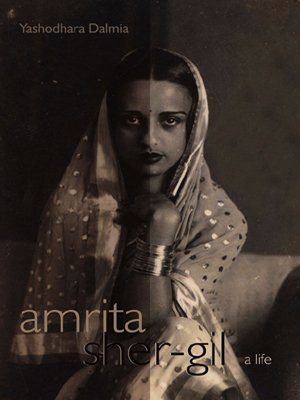
| 10 | Amrita Sher-Gil: A Life | Yashodhara Dalmia | 2006 | serious, unsentimental, Indian | modern Indian art |
| 11 | Seven Days in the Art World | Sarah Thornton | 2008 | cool, reported, unsparing | art world scepticism |
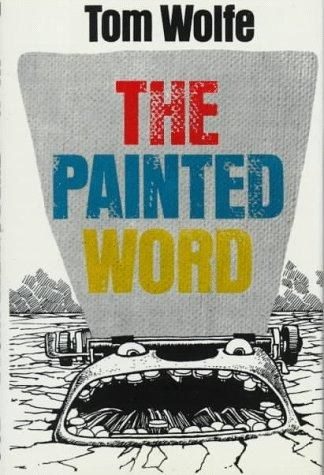
| 12 | The Painted Word | Tom Wolfe | 1975 | short, rude, funny | one evening of doubt |
| 13 | Girl with a Pearl Earring | Tracy Chevalier | 1999 | quiet, sensory, tense | readers who avoid nonfiction |
The list
The books, ranked
1
Look shelf, fine on a phone
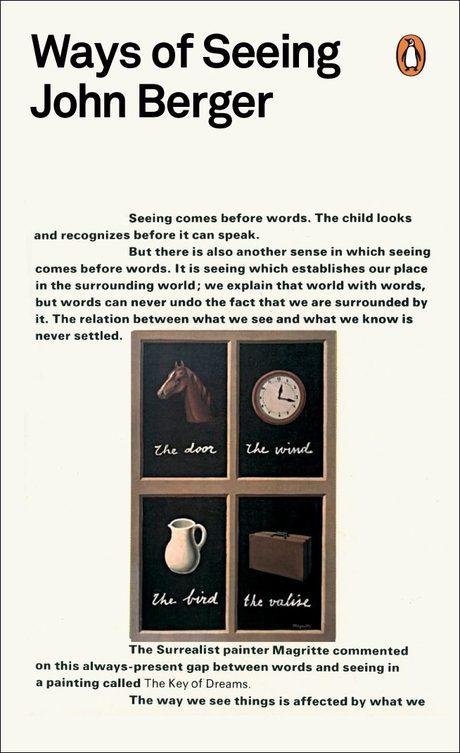
Ways of Seeing
John Berger1972about 208 pages
Seven short essays that rewire how you see paintings, advertising and women in pictures, and the whole thing takes an afternoon.
Berger made a BBC series in 1972 and turned it into this small book, and it still does more per page than anything else on the subject. Four of the essays are written and three are only pictures. He argues that photography broke the old meaning of paintings by letting them travel, that the European nude was built for a male owner standing outside the frame, and that oil painting and advertising are closer relatives than either would like. You can finish it between lunch and evening chai.
Why it is at 1
Number one because nothing else changes your eyes this fast. Gombrich hands you five thousand years. Berger hands you a way of standing in front of a single picture and asking who it was made for and who it was made against. Read him first and every other book here gets easier. One caveat: he is arguing a case, so take it as an argument rather than a neutral guide.
Read it ifyou want your eyes changed in one sitting and you enjoy an argument
Skip it ifyou want a neutral survey, because Berger is pushing a position on every page
short, sharp, politicalBest for: the first art bookhow to lookessaysclassic
Pairs with: The Painted Word, for a writer who thinks the art world got exactly what it deserved.
2
Look shelf, fine on a phone
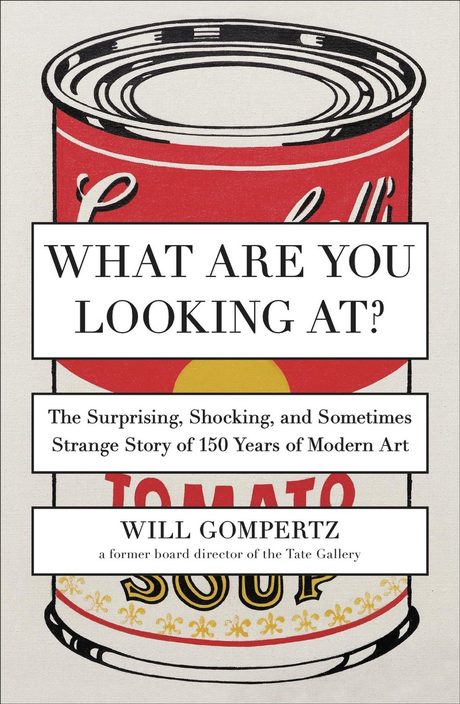
What Are You Looking At?
Will Gompertz2012about 456 pages
The modern art explainer that finally makes the last 150 years feel like one story instead of a series of pranks.
Gompertz ran the BBC arts desk and worked at Tate before that, and he writes like a man who has watched thousands of people stand in front of a Duchamp and feel personally cheated. The book runs from the Impressionists to now, one movement at a time, always answering the question you are too embarrassed to ask out loud, which is why this is in a museum at all. He is funny without being smug, and he never asks you to admire something simply because an institution bought it.
Why it is at 2
Second because it does the one job the classic surveys skip. It explains modern art to somebody who quietly suspects modern art is a con. Berger teaches you how to look and Gompertz tells you what happened and in what order. If your gallery panic is specifically about blank canvases and unmade beds, start here instead of at number one and come back to Berger afterwards.
Read it ifyou get irritated in modern art rooms and want to know what you are missing
Skip it ifyou mainly care about work made before 1850, since that is barely here
chatty, clear, funnyBest for: modern art panicmodern arthistorybeginner
3

Look shelf, buy it printed
The Spirit of Indian Painting
B. N. Goswamy2014
Goswamy sits you down in front of roughly a hundred Indian paintings and teaches you, slowly, how to read one.
Most Indian readers can name three European painters and not one Pahari master, and that is not their fault. Goswamy takes about a hundred paintings from the eleventh century onward and gives each a few pages: what is happening, where your eye is meant to travel, what the border and the colour and the small gesture in the corner are doing. The long opening essay on how these works were made, and for whom, is the part I keep going back to. It is the book that made me stop walking past miniatures.
Why it is at 3
Third, and it would sit higher if it were faster. This fixes the largest gap most of us carry, which is that we were taught to look at Western art and left to guess at our own. It is slower than Berger and heavier than Gompertz, and it is the only book here that changes what you see in a museum in Delhi or Chandigarh rather than one in Paris.
Read it ifyou want to read Indian miniatures instead of glancing past them
Skip it ifyou want a quick modern survey, because this one moves at its own pace
patient, warm, teacherlyBest for: Indian museum visitsindian arthow to lookminiatures
Pairs with: Indian Art by Partha Mitter, which supplies the timeline Goswamy assumes you already have.
4
Look shelf, buy it printed
The Story of Art Without Men
Katy Hessel2022about 637 pages
The survey Gombrich never wrote: five centuries of women artists that most of us were simply never shown.
Hessel started an account about women artists after an art fair where she noticed she had not seen a single work by a woman, and this book is the long version of that project. It runs in order from the Renaissance to now, hundreds of artists, most of whom you will not have heard of, which is precisely the point. It is quick to read, opinionated in a good way, and it travels well outside Europe and America, which single volume surveys still mostly do not. The reproductions are the reason to own it on paper.
Why it is at 4
Fourth because it is the correction the standard survey needs, and because it works as a first history rather than as a supplement to somebody else's. Read only Gombrich and you will finish believing art was made almost entirely by men, which is a fact about who got written down, not about who painted. Hessel is lighter on analysis than Gombrich. She is also the one you will actually finish.
Read it ifyou want a survey that skips the usual roll call of dead European men
Skip it ifyou want deep analysis of single works rather than breadth and pace
brisk, corrective, generousBest for: a first art historywomen artistssurveymodern
5

Map shelf, buy it printed
The Story of Art
E. H. Gombrich1950
The best single volume history of Western art, written for people who know nothing, and still unbeaten after seventy years.
Gombrich wrote this for teenagers and accidentally wrote the book everyone else has had to argue with since. It moves from cave painting to the twentieth century in one clear line, and its trick is that he never lectures. He opens by saying there is no such thing as Art, only artists, which is the least frightening sentence in the whole subject. Each chapter shows you a few works properly instead of flashing fifty at you. It is long, it is Western, and it is where most people's real education starts.
Why it is at 5
Fifth, not because it is worse than the four above but because it is slower to take effect. This is a project rather than an afternoon. What you get for your month is a spine, a sense of what came before what, which turns every gallery label from noise into a location. The honest caveat is the scope. It is Western art, and even the later editions barely step outside that circle.
Read it ifyou want one book that gives you the whole Western spine in order
Skip it ifyou want speed, or you want non-Western art treated properly
calm, clear, monumentalBest for: a permanent referencesurveywestern artclassic
6

Map shelf, a paperback will do
Indian Art
Partha Mitter2001about 295 pages
Five thousand years of Indian art and architecture in under three hundred pages, with none of the tourist brochure voice.
Mitter is a historian and this belongs to the Oxford History of Art series, so it is a proper academic survey rather than a picture book. He runs from the Indus valley through Buddhist and Hindu temple sculpture, the Mughal and Rajput schools, the colonial encounter and the Bengal school, and into modern Indian art. What I value most is that he treats European reactions to Indian art as a subject worth studying rather than as background noise. It is dense, it is short, and it does not flatter you once.
Why it is at 6
Sixth because it is the map Goswamy assumes you have. Read Goswamy for how to look and Mitter for where everything sits, and a museum visit stops being a corridor of unrelated objects. It is drier than anything above it and the reproductions are small, so treat it as a reference you keep on a shelf rather than a book you finish in a weekend.
Read it ifyou want the Indian timeline from an actual historian, not a coffee table
Skip it ifyou want a warm read, because the register here is properly academic
dense, academic, usefulBest for: the Indian timelineindian artsurveyreference
7
Map shelf, fine on a phone
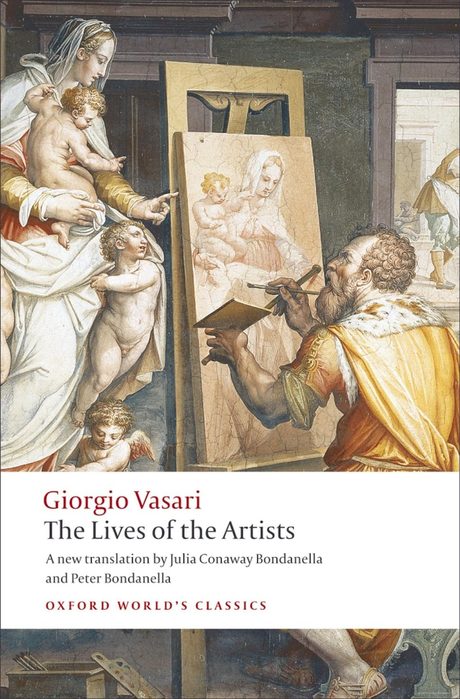
The Lives of the Artists
Giorgio Vasari1550about 624 pages
The first art history book ever written, and it is mostly gossip, which is exactly why it still reads well.
Vasari was a working painter and architect in Florence who decided to write down the lives of the artists around him and before him, and in doing so invented the entire genre. He covers Giotto, Botticelli, Leonardo, Raphael and Michelangelo, whom he all but worshipped. The Oxford selection keeps the good ones and drops the roll call of minor Tuscans. It is opinionated, unreliable in places, and full of workshop detail about grinding pigment, chasing patrons and hating rivals, which is what makes the Renaissance stop being a slide show.
Why it is at 7
Seventh because it is the source everything else quotes, and because it is genuinely entertaining once you accept that it is not a fact checked record. Vasari is writing publicity for Florence and for his own patrons, so read his verdicts as period opinion. Come to it after Gombrich, when you already know who these people are, or the names will slide straight off you.
Read it ifyou like biography, gossip and workshop detail from inside the Renaissance
Skip it ifyou want accuracy, because Vasari repeats legends as though they were records
gossipy, partisan, oldBest for: Renaissance contextrenaissancebiographyclassic
8

Lives shelf, fine on a phone
Just Kids
Patti Smith2010about 310 pages
What it actually costs to decide you are an artist, told by two broke twenty year olds in New York.
Patti Smith and Robert Mapplethorpe met in New York in 1967 with no money and an unshakeable belief that they were artists before either had made anything worth the name. The book follows them through terrible rooms, the Chelsea Hotel, stolen sandwiches and the slow discovery of what each of them was for, she in words and music, he in photography. It is a love story between two people who could not stay a couple and never stopped being each other's first reader. The last chapters are hard going.
Why it is at 8
Eighth, and the first of the lives, because it answers a question the histories skip entirely: why anyone would choose this at all. Nothing here will help you identify a Rothko. It will show you what the years before the work look like, which is the part every museum wall quietly hides. Read it when the survey books start feeling like homework.
Read it ifyou want the human cost behind the work rather than the analysis
Skip it ifyou want to learn how to look at art, because this teaches none of that
tender, broke, romanticBest for: anyone making thingsmemoirnew yorkphotography
Heads up: illness and death, including Mapplethorpe's death from AIDS
9

Lives shelf, buy it printed
Leonardo da Vinci
Walter Isaacson2017about 624 pages
Thousands of surviving notebook pages turned into the clearest account of a mind that refused to stay in one lane.
Isaacson builds the book out of Leonardo's notebooks, which is the right call, because the notebooks are where you meet him: shopping lists beside anatomical drawings, a reminder to find out why the sky is blue, plans for machines nobody could build for four centuries. The painting chapters are the best part, especially the long section on how the Last Supper and the Mona Lisa were actually constructed. He also refuses to hide the failures, the abandoned commissions and the long years of very little.
Why it is at 9
Ninth because it is the most useful single artist biography for a beginner. You watch one person's curiosity at work and finish understanding why the science and the painting were the same activity to him. Isaacson is a smooth popular writer rather than an art historian, so the analysis is lighter than a specialist would give you. Buy it printed, since the colour plates are half of his argument.
Read it ifyou want one artist's mind in full, the science and the painting together
Skip it ifyou want art historical rigour rather than a popular biography
readable, curious, longBest for: one artist in fullbiographyrenaissancescience
10
Lives shelf, printed if you can find it
Amrita Sher-Gil: A Life
Yashodhara Dalmia2006about 288 pages
The short, fierce life of the painter who dragged Indian modern art out of the colonial art school and into the village.
Sher-Gil was born in Budapest in 1913 to a Hungarian mother and a Sikh father, trained in Paris, and then did the thing nobody around her expected. She came back to India and turned her eye on ordinary people in small towns and villages, painting them without pity and without exotic decoration. She died in Lahore in 1941, aged twenty eight. Dalmia is an art historian and works from letters and family papers, so you get the arguments, the affairs and the restlessness alongside the paintings, and she never turns her subject into a saint.
Why it is at 10
Tenth because modern Indian art needs a face and this is the right one. It also pairs neatly with Hessel at number four, since reading them together shows the same erasure running in two countries at once. Dalmia's prose is careful rather than lively, and the book is far easier to find in India than outside it. Worth the hunt either way.
Read it ifyou want the origin story of modern Indian painting through one life
Skip it ifyou want a fast biography, because this one takes its time with the archive
serious, unsentimental, IndianBest for: modern Indian artbiographyindian artmodernism
11

Money shelf, fine on a phone
Seven Days in the Art World
Sarah Thornton2008about 304 pages
A sociologist spends seven days inside the auction, the art school crit, the fair and the prize, and reports who really decides.
Thornton trained as a sociologist and treats the art world as a set of tribes worth studying properly. Each chapter is one day: an evening sale at Christie's, a studio visit, the crit room at an art school, Art Basel, the Turner Prize, a magazine office, the Venice Biennale. Nobody is mocked and nobody is spared either. You come out knowing how a price is actually made, how a reputation is built before the money arrives, and why the same fifty people keep turning up in the room.
Why it is at 11
Eleventh because it answers the question that keeps most people out of galleries in the first place, which is who decided this was worth anything. It is reported from 2008, so the market figures are dated and the digital art boom is missing entirely. The behaviour it documents has not changed. Read it when you suspect the whole thing is rigged and you want to know precisely how.
Read it ifyou want to know who sets prices and reputations, and how
Skip it ifyou want current market reporting, because this is a snapshot of 2008
cool, reported, unsparingBest for: art world scepticismart marketreportagesociology
12
Money shelf, fine on a phone
The Painted Word
Tom Wolfe1975
A hundred odd pages arguing that modern art became illustration for theory, and that the theory arrived first.
Wolfe's claim is simple and rude. By the middle of the twentieth century, he says, you could not see a painting without first reading the critic who told you what it meant, so the writing became the art and the canvas turned into a footnote. He names names, mostly American critics, and he is enjoying himself far too much throughout. It is short, it is unfair in places, and it says out loud the thing that half the people in any modern art room are silently thinking.
Why it is at 12
Twelfth because it is a corrective rather than an education, and it only works once you have something to correct. Read Gompertz first, then this, and you will hold both the case for modern art and the sharpest case against it. Specialists will tell you Wolfe is wrong about several things, and on some of them they are right. He is still worth an evening of your life.
Read it ifyou want the sharpest attack on modern art, written for entertainment
Skip it ifyou want a fair hearing for the artists and critics he goes after
short, rude, funnyBest for: one evening of doubtpolemicmodern artshort
13

The one novel, fine on a phone
Girl with a Pearl Earring
Tracy Chevalier1999about 248 pages
A novel that stands you inside Vermeer's studio and makes you watch a painting get built, decision by decision.
Chevalier invents a life for the girl in Vermeer's painting. Griet is sixteen, sent to work as a maid in a Delft household where the master paints slowly and sells rarely, and the book is really about looking. She learns to grind pigment, to notice that the corner of a room holds five colours rather than one, to see what her employer sees. There is a plot involving a jealous wife and a menacing patron, and it is fine, but the studio is the reason to read it.
Why it is at 13
Thirteenth and the only novel here, because it does one thing none of the nonfiction manages. It slows a painting down to the weeks it took to make. After reading it you will stand closer to canvases and look for the labour in them. It is a light book beside the histories above, and it invents nearly everything about Griet, since almost nothing is known about the real sitter.
Read it ifyou want the making of a painting told to you as a story
Skip it ifyou want art history, because this is fiction with a real painter in it
quiet, sensory, tenseBest for: readers who avoid nonfictionfictionvermeerhistorical
Worth knowing
The plate test, and why the format matters more here than on any other list
An art book is two things at once, an argument and a set of pictures, and the ebook keeps only one of them. On a phone a full page plate becomes a thumbnail the size of a stamp, and Goswamy's whole method, which is to make you look at one painting for four minutes, collapses. So every entry above carries a verdict.
Phone is fine for Berger, Gompertz, Vasari, Patti Smith, Thornton, Wolfe and Chevalier. These are argument books and memoirs where the pictures support the writing. Buy printed for Goswamy, Hessel, Gombrich and Isaacson, where the reproductions are load bearing and a small screen genuinely wastes your money. Mitter and Dalmia sit in between, so a paperback is enough.
One practical note for India. Gombrich and Hessel are heavy hardbacks and priced like it, and both turn up secondhand in decent condition if you are patient. Goswamy is worth full price.
Worth knowing
One question to carry into the room, from each shelf
The reason a gallery feels like an exam is that you arrive without a question. Each shelf here hands you one, and any single question is enough to get through a room honestly.
From the look shelf: who was this made for, and where am I supposed to be standing. From the map shelf: what came just before this, and what was the maker arguing with. From the lives shelf: what did this cost the person who made it. From the money shelf: who decided this was worth hanging, and what did they gain by deciding that.
You do not need all four. Pick the one that suits your temperament, use it on six works, and skip the rest of the room without guilt. Nobody has ever seen a museum properly in one visit, and pretending otherwise is how people end up walking past everything at the same steady speed.
Worth knowing
If you fix one gap, fix the Indian one
Most of us finish school able to recognise a Van Gogh and unable to say a single thing about a Basohli painting, a Chola bronze or the Bengal school. That is a curriculum problem, not a taste problem, and it is repairable with two books.
Goswamy at number three teaches the looking and Mitter at number six supplies the order of events. Dalmia at number ten gives you one modern life to hold on to. Read those three and a room at the National Museum or the NGMA stops being decorative and starts being readable, which is a much better feeling than admiring things politely.
People also ask
Questions, answered
What is the best book about art for a complete beginner?
Ways of Seeing by John Berger, and it is not close. Seven short essays, one afternoon, and it gives you a method rather than a syllabus. If your problem is specifically modern art, the blank canvases and the unmade beds, start with Will Gompertz instead and come back to Berger after. Both are cheap, both are short, and neither assumes you have ever set foot in a gallery before.
Should I read The Story of Art or Ways of Seeing first?
Berger first, always. Ways of Seeing takes an afternoon and changes how you look. The Story of Art takes a month and tells you what you are looking at. Doing it in that order means Gombrich lands on prepared ground, and you will get through him faster. Reversing the order works too, but most people who start with the big survey stall somewhere around the fourteenth century and never restart.
Which books about art actually need a physical copy?
Goswamy, Hessel, Gombrich and Isaacson. In all four the reproductions carry part of the argument, and a phone screen shrinks them into decoration. Berger, Gompertz, Vasari, Patti Smith, Thornton, Wolfe and Chevalier are fine as ebooks because the writing does the work. Mitter and Dalmia sit in the middle and a paperback is plenty. If you buy only one printed book from this list, make it Goswamy.
Are there good books about Indian art for beginners?
Three on this list. B. N. Goswamy's The Spirit of Indian Painting teaches you how to read a miniature one work at a time. Partha Mitter's Indian Art gives you five thousand years of order in under three hundred pages. Yashodhara Dalmia's biography of Amrita Sher-Gil gives modern Indian art a single life to follow. Take them in that order and the gap most of us carry closes quickly.
Do I need to know art history to enjoy a gallery?
No, and the belief that you do is what keeps people out. You need one question and permission to dislike things. Walk in, find six works that hold you for more than ten seconds, ask your question of those six, and leave. Reading history afterwards is far more useful than reading it before, because you will have something of your own to hang it on.
Is The Story of Art still worth buying?
Yes, with one honest caveat. It remains the clearest single narrative of Western art anyone has written, and it was built for readers who know nothing, which is rarer than it sounds. The caveat is its scope. It is Western, it is thin on women artists, and later editions have not fixed either properly. Read it alongside Hessel and Mitter and the blind spots stop mattering.
Before you go
What to read tonight
If you are choosing tonight, take Berger. It costs an evening, it is available everywhere, and by the last essay you will be arguing with a shampoo advertisement on your own phone, which is the exact skill this whole list is trying to give you.
After that, the branch point is honest and simple. If your next gallery is in India, go to Goswamy and give it a month of Sunday mornings. If your next gallery is anywhere else and you want the whole map, start Gombrich and accept that it is a slow build. Either way, go to a room within two weeks of finishing. A book about art that you never test in front of an actual painting turns into trivia within a month, and trivia is the thing that made you feel stupid in the first place.
Keep going
Lists that pair with this one
Nonfiction
15 Best Books About Bollywood, Ranked by Who Paid for Access
Every Hindi cinema book is a trade between access and candour, so I ranked these by how much you actually learn once the trade is made.
Nonfiction
16 Best Books on Indian History for Beginners, in Order
Not a ranking but a route: one or two books per era, from the Indus valley to the news you read this morning.
Indian Fiction
The 12 Best Indian Graphic Novels, and What the Art Actually Does
Twelve books where the drawing carries the story, ranked, with each art style named so you know what you are walking into.
Nonfiction
15 Best Travel Books About India, Even If You Live Here
Ranked by what each one gives a reader who already knows what a railway platform smells like at four in the morning.
Mood & Life
20 Books to Gift Anyone, Sorted by Who You Are Buying For
One book per recipient, from the friend who says he never reads to the boss you barely know, with a note on which ones look expensive.