There was a stretch a few years ago when I would open a file in the morning, read the same paragraph six times, and shut the laptop by eleven. Nothing dramatic was happening. I was not sad, I was not ill, I was simply finished, and every book anyone recommended weighed six hundred pages and opened with a chapter about ancient Rome.
So this list is sorted by how much of you each book asks for. Number one can be read in one page pieces while lying down. Number thirteen is sixty pages of German philosophy and it will make you sit up. Nothing here is ordered by importance, because the most important book on earth is useless if you cannot get past page four.
Every book is one of three things and the label above each title says which. A companion sits with you and explains nothing. A mirror tells you what happened to you and why it is not a character flaw. A lever hands you something you can do on Tuesday. Most people who land on a list like this want a companion first, while telling themselves they want a lever.
One flat thing before we start: reading is not treatment. If you cannot get out of bed, if the problem has moved from your job into your body or your head, talk to a doctor or a therapist. These books are good company and a few of them are very good arguments. None of them is care.
How I picked these
- Sorted by energy cost rather than importance. The first four survive being read in bits while horizontal, the last three need a working brain and a quiet hour.
- Every title verified through Google Books and Open Library with a real cover, so there are no ghost editions on this list.
- I cut the famous sleep book. Sleep matters here, but parts of that book's claims have been publicly challenged by other researchers, and this list already has three books about rest that hold up better.
- I cut the productivity shelf, including the one about doing fewer things well. Burnout is rarely solved by a better system for saying no, and those books tend to leave tired readers feeling behind.
- Corporate wellbeing books got cut too. This is for the person who is burnt out, not the person organising the offsite.
- Where a book has a real problem, an American only argument, a self help tone, a contested claim, I say so inside the entry instead of pretending the book is perfect.
The whole list at a glance
All 13 books, in order
| # | Book | Author | Year | Vibe | Best for |
|---|
| 1 | The Comfort Book | Matt Haig | 2021 | gentle, fragmented, kind | the week you cannot focus |
| 2 | Wintering | Katherine May | 2020 | quiet, seasonal, consoling | shame that came with exhaustion |
| 3 | Rest Is Resistance | Tricia Hersey | 2022 | urgent, spiritual, repetitive | guilt about doing nothing |
| 4 | The Art of Rest | Claudia Hammond | 2019 | curious, calm, practical | planning an actual evening off |
| 5 | Burnout | Emily Nagoski and Amelia Nagoski | 2019 | warm, scientific, direct | exhausted but unable to relax |
| 6 | Do Nothing | Celeste Headlee | 2020 | curious, historical, brisk | readers who need the why first |
| 7 | Rest | Alex Soojung-Kim Pang | 2016 | orderly, researched, persuasive | workaholics who dismiss rest |
| 8 | Four Thousand Weeks | Oliver Burkeman | 2021 | dry, philosophical, freeing | chronic to do list optimism |
| 9 | Laziness Does Not Exist | Devon Price | 2021 | plain, humane, reassuring | the guilt under the tiredness |
| 10 | How to Do Nothing | Jenny Odell | 2019 | essayistic, slow, thoughtful | attention that feels shredded |
| 11 | Can't Even | Anne Helen Petersen | 2020 | reported, angry, thorough | people told to just do yoga |
| 12 | When the Body Says No | Gabor Maté | 2003 | compassionate, clinical, contested | stress that has turned physical |
| 13 | The Burnout Society | Byung-Chul Han | 2010 | severe, abstract, brief | readers who want the theory |
The list
The books, ranked
1

Companion, one page at a time
The Comfort Book
Matt Haig2021
Short pieces you can read lying down, written by someone who has been at the bottom and kept notes.
Haig wrote this from the far side of his own worst years and the format shows it. The book is made of fragments: a paragraph, a list, a short piece about a racehorse, a page that is basically one sentence. There is no argument to follow and nothing to implement, which is the entire point. You open it anywhere, read two pages, put it down. When your attention has broken into pieces, a book made of pieces is the only kind that actually gets read.
Why it is at 1
First because it costs you almost nothing. Every other book here asks you to hold an idea for a whole chapter, this one asks for ninety seconds. It is also the least useful book on the list for understanding burnout, which is why it is first and not best. Keep it by the bed while you work up to the ones that explain.
Read it ifyou want company rather than a diagnosis
Skip it ifaphorisms make you roll your eyes, because there are many here
gentle, fragmented, kindBest for: the week you cannot focuscomfortshort readsmental health
Heads up: the author writes about his own suicidal period
2

Companion, a chapter a night
Wintering
Katherine May2020about 171 pages
A memoir about the fallow seasons of a life, and why we treat them as failure instead of weather.
May's own winter arrived as a pile of ordinary disasters: her husband ill, her work gone, her son refusing school, her body giving up. Instead of pushing through she went looking at what other people and other creatures do in the cold. Bees, Icelandic winters, cold water swimming, the church calendar. The chapters are short essays and the argument under them is quiet: some stretches of a life are meant to be lived slowly, and the shame we attach to slowness does more damage than the slowness ever did.
Why it is at 2
Second because it asks for a chapter of attention rather than a page, and because it does something no self help book manages. It gives permission without handing you a programme. If your burnout arrived with shame attached, which it usually does, this is the book that loosens the shame first. It will not tell you what to do on Monday.
Read it ifyou want permission to slow down without a method
Skip it ifyou want practical steps, because there are none
quiet, seasonal, consolingBest for: shame that came with exhaustionmemoirrestseasons
3
Manifesto, short chapters
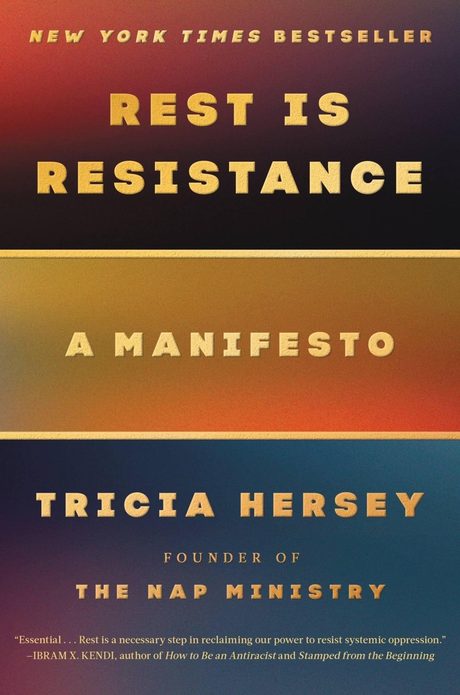
Rest Is Resistance
Tricia Hersey2022about 139 pages
A preacher's case that rest is not a reward you earn after productivity, delivered as a sermon and meant to be.
Hersey calls herself the Nap Bishop and the book reads the way she talks, with repetition, call and response rhythms, and no interest at all in sounding balanced. Her argument connects the modern demand to always be producing with older systems that treated bodies as machines, and she puts naps and daydreaming forward as refusal rather than self care. The chapters are short and circle back on each other. You are not being taught a method here, you are being argued out of a belief, which for most tired people is the harder job.
Why it is at 3
Third because the reading is easy while the register asks something of you. If you were raised on praise for how much you get done, this will feel either like relief or like a fight you want to pick. The repetition that some readers find powerful I found about eighty pages longer than the thesis needed. The thesis still lands.
Read it ifyou want the moral argument for stopping
Skip it ifyou want data and citations instead of preaching
urgent, spiritual, repetitiveBest for: guilt about doing nothingmanifestorestessays
4
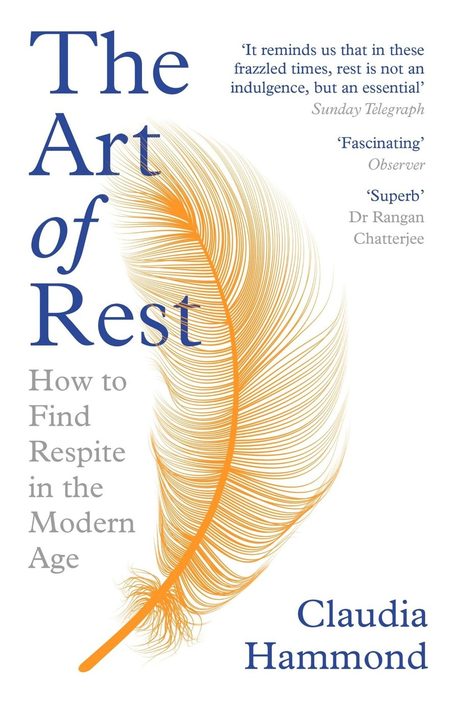
Lever, one restful thing per chapter
The Art of Rest
Claudia Hammond2019about 255 pages
A science writer works through what actually rests people, and the winners are not what your phone suggests.
Hammond worked on a large public survey about rest and then wrote a chapter on each of the activities that came out on top, from reading and being in nature to doing very little at all. Each chapter takes one activity, asks whether the evidence supports its reputation, and says so honestly when it does not. This is the most practical book here in the ordinary sense of the word. You finish a chapter knowing one specific thing you could do this evening that has a decent chance of restoring you rather than just filling the hours.
Why it is at 4
Fourth because it is the first book on the list that hands you something to do, and it manages that without selling a system. Hammond is a science writer so the caveats sit in the text rather than hidden in an endnote. Set against Pang at number seven, which treats recovery as an input to better work, this one simply asks what refills a person.
Read it ifyou want evidence checked answers about what restores you
Skip it ifyou want emotional writing, because this is calm and reportorial
curious, calm, practicalBest for: planning an actual evening offresearchrestpractical
5
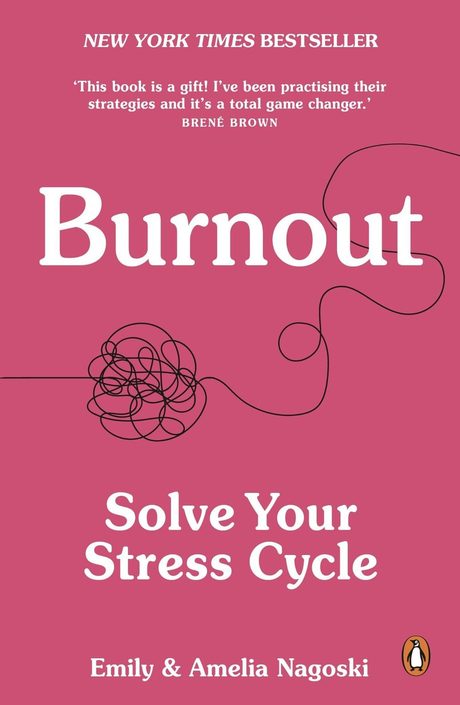
Lever, the core book
Burnout
Emily Nagoski and Amelia Nagoski2019about 261 pages
The book that separates the stressor from the stress, and explains why clearing your inbox does not calm your body.
The Nagoski sisters, one a health educator and one a choral conductor, make a distinction most writing on this subject misses. The thing that stresses you and the stress response running inside your body are two separate problems, and dealing with the first does not automatically end the second. Your body has opened a cycle that needs closing, through movement, breathing, crying, affection, laughter, or a few other routes they lay out plainly. Around that sits a longer argument about how women in particular are trained to give until empty, and what can be done about it.
Why it is at 5
Fifth, and my pick for best overall, because it is the only book here that changed what I did rather than only what I thought. It sits in the middle because it needs real attention: the science is explained well and there is a lot of it. If you read exactly one book about burnout, read this, and read the chapter on completing the cycle twice.
Read it ifyou want a physical explanation and a practical response
Skip it ifa book addressed throughout to women will bother you
warm, scientific, directBest for: exhausted but unable to relaxsciencestresspractical
6
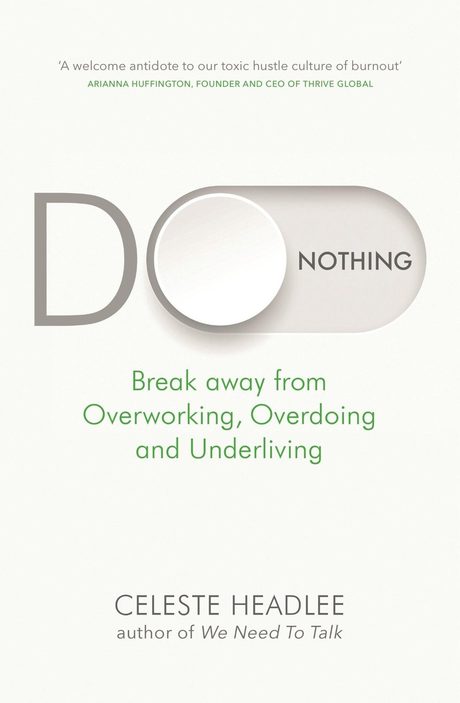
Mirror, with history attached
Do Nothing
Celeste Headlee2020about 194 pages
How work became the thing we are, told through the history that built the working day.
Headlee starts from her own collapse and then goes backwards to look at how the working day, the wage and the idea of efficiency were assembled. Factory clocks, time and motion studies, leisure quietly redefined as self improvement. The history is not there for curiosity, it is there for release: once you can see that the rules exhausting you were designed by particular people for particular reasons, they stop feeling like natural law. The last third turns to what she changed in her own days, and that is the weaker part of the book.
Why it is at 6
Sixth because the history takes concentration and repays it. It covers ground close to Petersen at number eleven and is far easier going, so if the structural argument interests you but a long American cultural study does not, start here instead. The personal advice at the end is thin and I would skim it without guilt.
Read it ifyou want the story of how overwork was invented
Skip it ifyou want your own life addressed rather than history
curious, historical, briskBest for: readers who need the why firsthistoryworkessays
7
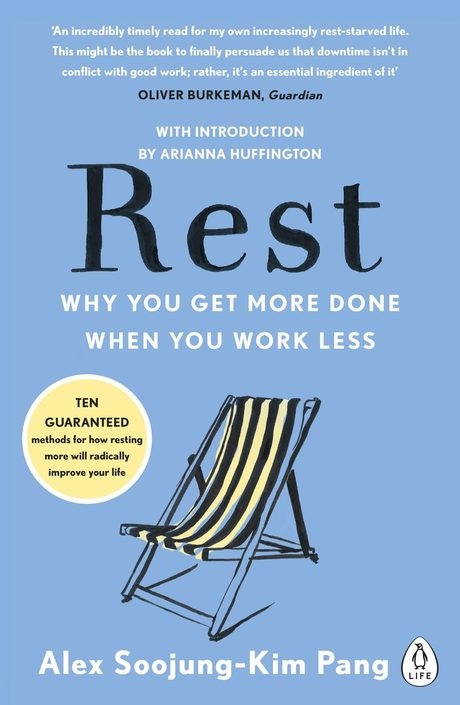
Lever, for people who will not stop
Rest
Alex Soojung-Kim Pang2016about 272 pages
Rest presented as a skill and a work strategy, which is the trick that gets workaholics to actually try it.
Pang looks at scientists, writers and generals who did serious work in four focused hours and then went walking for the rest of the day, and argues that their rest was deliberate rather than left over. Naps, walks, sleep, deep play, sabbaticals. Every claim comes dressed in research and biography, and the writing is orderly rather than warm. The effect on a certain kind of reader is enormous, because it gives permission in the only language that reader trusts, which is the language of output.
Why it is at 7
Seventh because it needs a working brain, and because I have a problem with it. The frame is productivity: rest so that you produce more. That is the same logic that drove you into the ground and this book never questions it. It stays on the list because for the person who genuinely cannot stop, this is the one argument that gets through the door.
Read it ifyou only take rest seriously when it improves your work
Skip it ifyou are done with productivity framing entirely
orderly, researched, persuasiveBest for: workaholics who dismiss restresearchworkhabits
8

Mirror, philosophical
Four Thousand Weeks
Oliver Burkeman2021about 224 pages
You get about four thousand weeks, you will never get on top of everything, and the relief starts right there.
Burkeman spent years reviewing productivity books before concluding that the project itself is the trap, since efficiency creates more demand than it ever clears. The book takes a finite life seriously: with roughly four thousand weeks in hand, most things will be left undone, and choosing what to fail at is the actual skill. It is a philosophy book wearing a time management jacket, and it is funny in a dry English way that keeps all the mortality from turning heavy.
Why it is at 8
Eighth because it wants sustained attention and because it does not comfort you, it corrects you. It sits beside Do Nothing on this list, but where Headlee explains the system around you, Burkeman goes after the belief you carry personally: that one day you will be caught up. Read it when a little energy has come back, not at the bottom.
Read it ifyou want a philosophy that ends the catching up fantasy
Skip it iftalk of mortality unsettles you at the moment
dry, philosophical, freeingBest for: chronic to do list optimismphilosophytimeessays
9
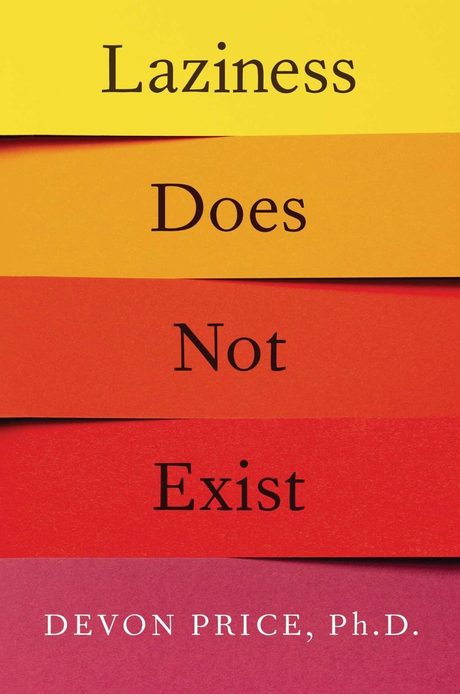
Mirror, the guilt one
Laziness Does Not Exist
Devon Price2021about 256 pages
A social psychologist argues that the feeling you call laziness is almost always information about your limits.
Price puts the thesis in the title. What gets called laziness is usually exhaustion, fear, unclear demands or a body that has hit a wall, and the moral label stops anybody from looking for the real cause. The book moves through work, relationships, activism and information overload, using case studies and a fair amount of Price's own history. The writing is plain and it gets repetitive in the back half, but the central idea is a genuinely useful tool, because guilt is what stops most burnt out people from resting even when the time finally exists.
Why it is at 9
Ninth because it needs real reading time and because the idea only works if you sit inside it for a while. This is the book for the person whose problem is not the workload but the voice calling them lazy every time they stop. It overlaps a little with Hersey at number three, and the difference is simple: Hersey preaches, Price explains.
Read it ifyou feel guilty resting even when you are wrecked
Skip it ifcase studies and personal anecdote irritate you
plain, humane, reassuringBest for: the guilt under the tirednesspsychologyguiltwork
10
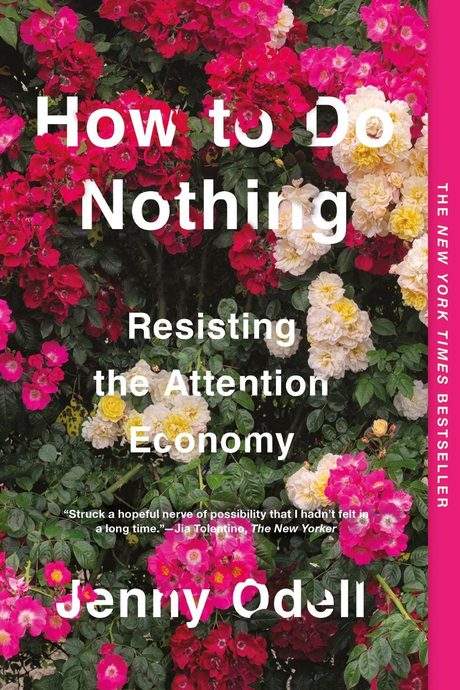
Mirror, dense and rewarding
How to Do Nothing
Jenny Odell2019about 257 pages
Not a guide to doing nothing but an argument about where your attention goes and who is collecting it.
Odell is an artist and this reads closer to a set of essays than to advice. She writes about a rose garden she sits in, about birds she taught herself to notice, about labour history, and about why refusing to be endlessly available is a political act rather than a lifestyle choice. The title has misled plenty of readers who expected a rest manual. What the book actually offers is a slower way of attending to the place you already live in, which for some people is exactly what burnout took away.
Why it is at 10
Tenth because it is hard reading in places and wanders on purpose. I have argued about this book with friends: half of them call it the most useful thing they read that year, half stall at chapter two. Try it once some capacity has returned. If the wandering annoys you, go back to Hammond at number four instead.
Read it ifyou want art and philosophy about attention
Skip it ifyou want structure, because this one meanders
essayistic, slow, thoughtfulBest for: attention that feels shreddedessaysattentionart
11
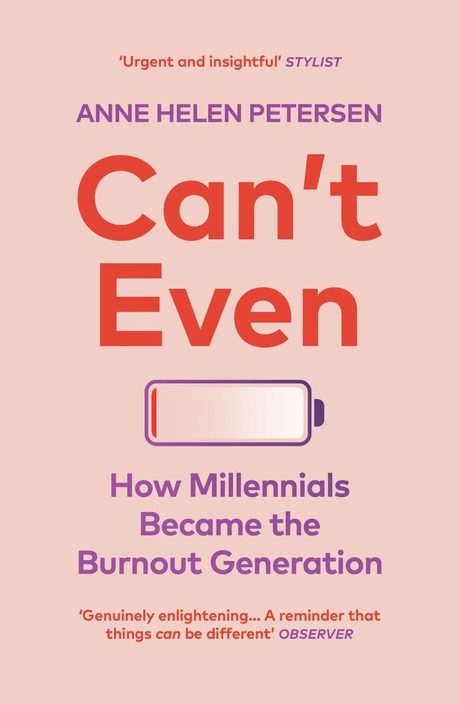
Mirror, structural
Can't Even
Anne Helen Petersen2020about 268 pages
A journalist's case that burnout is less a personal failing than the shape of a whole generation's working life.
Petersen expanded a viral essay into a book about why millennials feel wiped out by tasks that look small from outside. She works through childhood over scheduling, the promise that passion work would eventually pay, insecure jobs, parenting under constant observation, and phones that turned every hour into a work hour. The reporting is good and the interviews are sharp. The book is also relentless and it does not end with a fix, because her argument is that individual fixes are the product being sold to you.
Why it is at 11
Eleventh because it is long, very American and heavy going when you are already flat. The student debt and childcare chapters describe a country that is not ours. The core argument travels perfectly well though: our parents' bargain about hard work stopped paying out, and we kept working as though it still did. Read it when you want the argument rather than the comfort.
Read it ifyou want the systemic explanation with reporting behind it
Skip it ifyou need hope at the end, because there is not much
reported, angry, thoroughBest for: people told to just do yogareportingworkmillennials
12
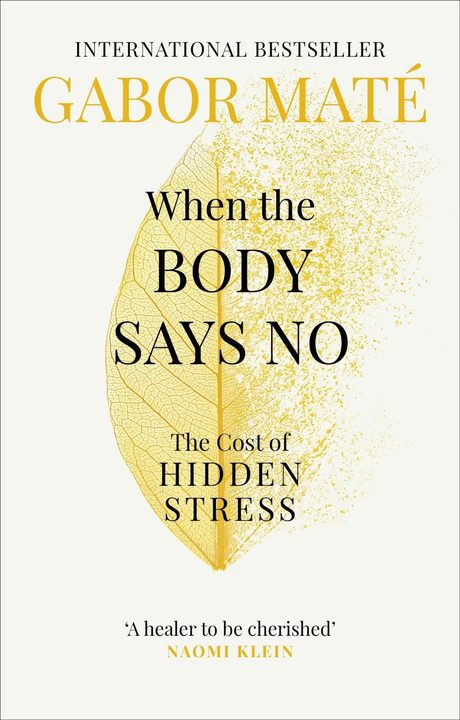
Mirror, the body one, with a caution
When the Body Says No
Gabor Maté2003about 398 pages
A doctor's argument that stress swallowed for years shows up later in the body, told through patient stories.
Maté spent decades in family practice and palliative care, and this book collects what he saw there: patients who could not say no, who managed everyone else's feelings, who fell ill in ways that seemed to follow the pattern of their lives. He walks through stress physiology and then through case histories, and the writing is compassionate rather than clinical. For readers who have been told their exhaustion is imaginary, being taken seriously by a doctor on the page can hit surprisingly hard.
Why it is at 12
Twelfth because it needs attention and because it needs a warning label. The link between personality, stress and specific diseases is stated far more firmly here than the current evidence supports, and taken carelessly it slides into blaming sick people for being sick. Read it for the case histories and the attention to the nervous system, not as a verdict on why you fell ill.
Read it ifyou want the body taken seriously in this conversation
Skip it ifyou are unwell right now and would take the causal claims personally
compassionate, clinical, contestedBest for: stress that has turned physicalhealthstressmedicine
Heads up: serious illness, cancer and death run through the whole book
13

Mirror, sixty pages, hardest here
The Burnout Society
Byung-Chul Hantranslated by Erik Butler2010about 69 pages
A short philosophy book arguing that nobody has to force you to work any more, because you took over the job yourself.
Han's claim is that we moved out of a world organised around prohibition and into one organised around endless possibility, and the damage changed shape as we went. The old arrangement had somebody telling you no. The new one has you telling yourself yes, more, again, until you exploit yourself with an efficiency no employer ever managed. He calls this figure the achievement subject, and the exhaustion that follows is closer to a self inflicted wound than a factory injury. Sixty odd pages, no case studies, no advice, several sentences you will read three times.
Why it is at 13
Last because it costs more attention per page than anything else here. It is also the book most likely to name the feeling you cannot name: that nobody is making you do this, and that this is precisely the problem. Read it after Burkeman, when you want the sharpest version of the idea and can handle academic prose.
Read it ifyou want philosophy that names the mechanism
Skip it ifdense translated theory is not a restful activity for you
severe, abstract, briefBest for: readers who want the theoryphilosophytheoryshort
Worth knowing
Three books here have rest in the title and they are not the same book
Hersey at number three argues that rest is a right and that the demand to always be producing has an ugly history behind it. Hammond at number four asks which activities actually restore people and reports what the evidence says. Pang at number seven argues that deliberate rest produces better work, which is a very different claim and a slightly uncomfortable one on a list like this. If you only want one of the three: Hammond for the evening, Hersey for the guilt, Pang for the person who refuses to stop.
Worth knowing
Reading order if you are at the bottom right now
Start at one and two, which ask nothing of you. Move to five when you can hold an idea for twenty minutes, since that is where the practical help lives. Save eight, eleven, twelve and thirteen for the recovery phase, when an argument starts feeling interesting rather than exhausting. Nobody reads a list like this in order, but if you begin with Han while running on empty you will conclude that reading is over for you, and that is not true.
People also ask
Questions, answered
What is the single best book about burnout?
Burnout by Emily and Amelia Nagoski, at number five. It is the only one that explains the mechanism, the stress cycle running in your body separately from whatever set it off, and then tells you how to close it. The catch is that the book is addressed to women throughout, so other readers have to read past the address. If that is a dealbreaker, start with The Art of Rest instead and come back to this one later.
Is burnout the same thing as depression?
No, although they can look alike from inside and can happen together. The World Health Organization lists burn-out in ICD-11 as an occupational phenomenon tied to chronic workplace stress rather than as a medical condition. Depression does not stop at the office door. If low mood is covering everything in your life, or you are having thoughts of harming yourself, that is a conversation for a doctor or a therapist, and nothing on this list replaces it.
Which book should I read if I have no energy to read at all?
The Comfort Book at number one. It is built in one page pieces, so you can read it in gaps and lose nothing by forgetting where you stopped. Wintering at number two is the next step up, since it works chapter by chapter. Audiobooks count for both, and there is no rule anywhere saying a book has to be finished for opening it to have been worth your time.
Do these books help if the real problem is my job?
Partly, and the honest answer is that no book can renegotiate your workload. Petersen at eleven and Headlee at six say plainly that the cause is structural, which helps because it stops you hunting for a personal defect. The Nagoskis are the most practical about what you can still do for your own body while the job stays exactly what it is. Real change usually needs a conversation with a manager, a change of role, or an exit.
Are there any Indian books about burnout?
Not many, and the gap is worth naming out loud. Everything on this list comes out of the United States, Canada, Britain or Germany, so the specific pressures Indian readers carry, joint family expectations, six day weeks, one salary holding up several households, appear nowhere in these pages. Read them for the mechanism, which travels well, and be ready to translate the examples yourself. If you know an Indian book that does this properly, I would like to hear about it.
Before you go
What to read tonight
If you are reading this at eleven at night with work still open in another tab, do not start at the top of the list and work down. Get The Comfort Book, or borrow Wintering, and give yourself the small win of finishing something. The Nagoskis will wait until Saturday, when you have twenty clear minutes to give them, and they are worth waiting for.
If you get through three of these and nothing shifts, treat that as information rather than failure. Books work on the story you tell yourself about your tiredness, which matters more than it sounds, but they cannot change your hours, your manager, or the number of people living on your salary. At some point the useful move is a conversation with a person, not another chapter.
Keep going
Lists that pair with this one