A friend of mine had a bad winter three years ago, and the people who love him sent books. He got eleven of them. He read none, because every one arrived as a task, and he was already failing at the tasks he had. That is what most lists like this one miss. Finding a good book on the subject is easy. The hard part is that a person in the middle of it has about nine minutes of attention and no appetite for a project.
So this list is not ranked best to worst. It runs from the book that asks least of you to the one that asks most. Number one you can read in fragments at three in the morning. Number sixteen needs a stable month and a pencil. In between sit memoirs, three novels, two arguments about the science, and the practical books that give you something to do on paper instead of something else to feel.
One thing said plainly, once, and then I will not repeat it in every entry. None of these books is treatment. A book can name a thing you have not been able to name, and it can make a bad night less lonely, and it cannot assess you, prescribe for you, or sit in a room with you. Treat it as company on the way to help rather than a replacement for it. There are content notes on every entry that needs one, and helpline numbers at the end.
How I picked these
- Ordered by load rather than by quality, because most people arrive at a list like this on a bad day and leave with a book they cannot finish.
- The two most recommended books here, The Body Keeps the Score and Lost Connections, are on the list with the criticism they have earned attached to them, not hidden in a footnote.
- Memoir, fiction, science and practical books are mixed together and then labelled, since almost nobody wants sixteen books from one category.
- One book per author, so Matt Haig appears once and Notes on a Nervous Planet is not here even though it is good.
- I left off Man's Search for Meaning. It is a serious book about surviving atrocity, and it gets handed to depressed people as an instruction to find meaning, which is precisely the capacity the illness removes.
- Every title checked with a real cover through Google Books and Open Library before it went on the list.
The whole list at a glance
All 16 books, in order
| # | Book | Author | Year | Vibe | Best for |
|---|
| 1 | Reasons to Stay Alive | Matt Haig | 2015 | warm, fragmented, hopeful | the worst weeks |
| 2 | Furiously Happy | Jenny Lawson | 2015 | manic, funny, tender | long diagnoses and dark humour |
| 3 | Chemical Khichdi | Aparna Piramal Raje | 2022 | candid, practical, Indian | bipolar disorder, Indian families |
| 4 | Darkness Visible | William Styron | 1990 | grave, precise, literary | putting words to it |
| 5 | Self-Compassion | Kristin Neff | 2011 | kind, practical, researched | self-criticism and burnout |
| 6 | The Happiness Trap | Russ Harris | 2007 | practical, plain, usable | anxiety and stuck thinking |
| 7 | Feeling Good | David D. Burns | 1980 | systematic, dated, effective | self-directed cognitive therapy |
| 8 | Maybe You Should Talk to Someone | Lori Gottlieb | 2019 | warm, absorbing, humane | people considering therapy |
| 9 | An Unquiet Mind | Kay Redfield Jamison | 1995 | brilliant, candid, unsettling | bipolar disorder and clinicians |
| 10 | My Age of Anxiety | Scott Stossel | 2013 | funny, learned, unresolved | chronic anxiety and phobias |
| 11 | Em and the Big Hoom | Jerry Pinto | 2012 | funny, brutal, loving | families and caregivers |
| 12 | Everything Here Is Beautiful | Mira T. Lee | 2018 | expansive, tender, unresolved | siblings and caregivers |
| 13 | The Bell Jar | Sylvia Plath | 1963 | cold, exact, airless | readers who are currently stable |
| 14 | Lost Connections | Johann Hari | 2018 | readable, argumentative, overconfident | the social side of depression |
| 15 | The Body Keeps the Score | Bessel van der Kolk | 2014 | ambitious, humane, overstated | trauma, PTSD, therapists |
| 16 | The Noonday Demon | Andrew Solomon | 2001 | vast, humane, unsparing | the full picture, later |
The list
The books, ranked
1

Load: light, readable in pieces
Reasons to Stay Alive
Matt Haig2015about 221 pages
The one to open at your worst, because it is built in fragments and asks nothing of your concentration.
Matt Haig was twenty four and living in Ibiza when his mind came apart, and he writes about that year and the ones after it in short pieces, some a page long, some three lines. Lists, arguments with his younger self, notes on what helped and what did not help at all. It is not a study and never pretends to be one. The honesty about how repetitive and boring recovery actually is may be the most useful thing in it, and you can read the whole book out of order, which matters when your attention has gone.
Why it is at 1
First because of one practical fact: you can read this when you cannot read. Everything else here needs a run of concentration, and this one is built to survive a broken attention span. It is thin on science and it is not a manual, so treat it as the door rather than the room behind it.
Read it ifyou want company more than you want an explanation
Skip it ifyou want mechanisms, evidence and citations
warm, fragmented, hopefulBest for: the worst weeksmemoirdepressionanxiety
Heads up: describes suicidal thinking, including standing at a cliff edge
2

Load: light, and genuinely funny
Furiously Happy
Jenny Lawson2015about 353 pages
A very funny book about serious mental illness, written by somebody having a good day about her worst ones.
Jenny Lawson has depression, anxiety and a stack of other diagnoses, and she writes about all of it as comedy without once pretending it is fine. There is a taxidermied raccoon on the cover, held aloft in a pose of enormous enthusiasm, which tells you the register you are in. The book jumps between absurd episodes and short quiet chapters where she stops joking and says something you will read twice. Her argument is that if you have been handed a life with this inside it, you are allowed to be furiously happy in the gaps.
Why it is at 2
Second because humour is badly underrated as a first step, and almost nothing else here will make you laugh. The chapters are short and mostly disconnected, so the load stays low and you can put it down mid-book without losing the thread. It will irritate readers who want structure, since it wanders on purpose, and it explains nothing about the illnesses it describes.
Read it ifyou want to laugh about the thing before you can discuss it
Skip it ifyou want structure, because this one wanders by design
manic, funny, tenderBest for: long diagnoses and dark humourmemoirhumouranxiety
Heads up: self-harm, depression, and mentions of suicidal thinking
3
Load: light to medium, and the Indian one
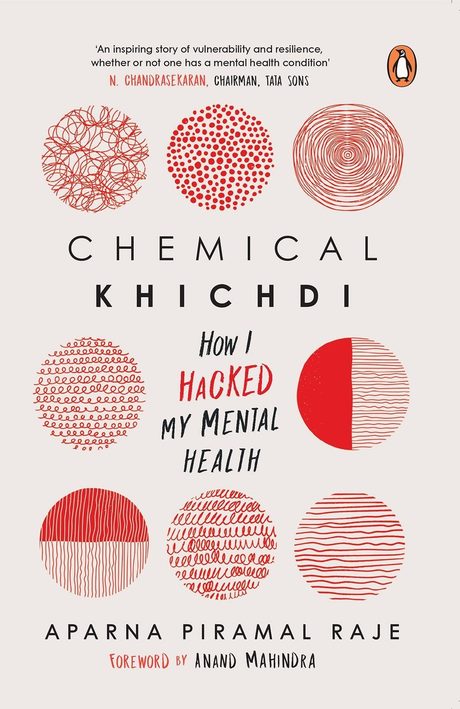
Chemical Khichdi
Aparna Piramal Raje2022about 257 pages
Living with bipolar disorder in India, written by somebody who names the family and workplace pressures the imported books never mention.
Aparna Piramal Raje has bipolar disorder and writes about the shape of a life arranged around it: episodes, medication, hospital, work, marriage, and the long stretches of ordinary time in between. What separates this from the American and British memoirs is the setting. Indian families, Indian offices, Indian silence about psychiatry, and the specific question of what you say at a wedding when an aunt asks why you took a year off. She builds the book around the kinds of support that kept her steady, and she gives space to the people around her, including her family and her doctor.
Why it is at 3
Third because everything else on this list assumes a Western setting, and the gap becomes obvious the moment you consider telling your parents. This is the book to give an Indian household that needs to understand a diagnosis without receiving a lecture. As prose it is less finished than Jamison at nine, and it is far more useful if you live here.
Read it ifyou are Indian and want a book that knows what your relatives will say
Skip it ifyou want the science of bipolar disorder rather than one life inside it
candid, practical, IndianBest for: bipolar disorder, Indian familiesmemoirbipolarindia
Heads up: manic and depressive episodes, hospitalisation
4

Load: short but heavy
Darkness Visible
William Styron1990
Eighty pages on a depression that arrived at sixty, and still the most exact description anybody has managed.
Styron was a well known novelist in his sixties when depression took him apart, and this short book is his attempt, written after he recovered, to describe the thing accurately. He is openly angry about the word depression, which he considers far too mild for what actually happens, and he keeps reaching for other language: a storm, a drowning, a room with the walls moving in. The whole thing runs about eighty pages. There is no programme in it and no recovery plan, only one writer refusing to let the illness go undescribed.
Why it is at 4
Fourth because it is the shortest serious book here and the best written by a distance. Read it when you need proof that the thing you are inside is real, has a shape, and has been survived by somebody. It is heavy for its length, which is why it counts as short rather than light, and I would not hand it to somebody in an acute crisis.
Read it ifyou want the most exact account of depression in print
Skip it ifyou are in an acute low, because this book stays inside the illness
grave, precise, literaryBest for: putting words to itmemoirdepressionshort
Heads up: detailed description of suicidal planning
5
Load: medium, with exercises
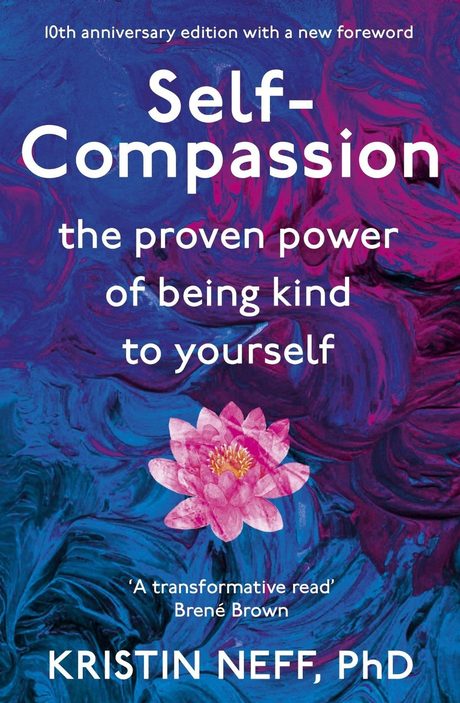
Self-Compassion
Kristin Neff2011about 248 pages
The research on being decent to yourself, from the psychologist who built the standard measure for it.
Neff's case is that self-esteem is a poor foundation, since it depends on being above average at something and collapses the moment you are not, and that self-compassion works better because it asks you to win nothing. She splits it into three parts: kindness towards yourself, recognising that suffering is a normal feature of being a person rather than proof of personal defect, and holding a painful feeling without either suppressing it or drowning in it. Exercises follow most chapters, and they are the reason to buy the book. The prose is plain and sometimes repeats itself.
Why it is at 5
Fifth because it has the lowest barrier of the practical books: no thought records, no daily schedule, just short exercises you can do in a notebook on a bus. It is useful for the very common case of somebody who is not clinically unwell and speaks to themselves in a way they would never speak to a friend. Burns at seven goes much deeper on technique.
Read it ifyou are harder on yourself than you would ever be on a friend
Skip it ifthe word compassion makes you want to close the tab
kind, practical, researchedBest for: self-criticism and burnoutpracticalpsychologyexercises
6
Load: medium, straight technique
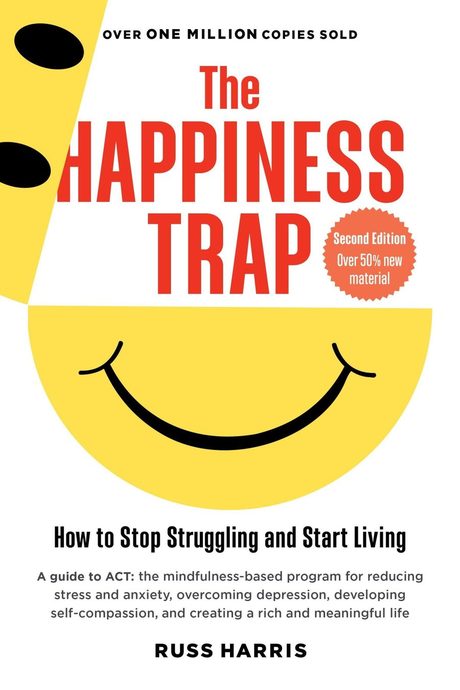
The Happiness Trap
Russ Harris2007about 321 pages
The argument that chasing happiness is what keeps people stuck, and the techniques for stopping the chase.
Harris introduces acceptance and commitment therapy in ordinary language, and his opening move is that the rule about being happy is itself the trap: the harder you work at removing an unwanted thought, the more central it becomes. Instead he teaches you to notice a thought as a thought rather than as a fact, make room for the discomfort, and then act on what you actually value while the discomfort is still there. The exercises are short and slightly ridiculous, such as singing an anxious sentence to a tune, and they work more often than they have any right to.
Why it is at 6
Sixth because it is the shortest route into a therapy with real evidence behind it, and because it never asks you to argue with your own thoughts, which is where plenty of people give up on the cognitive approach. It sits just above Feeling Good because it takes less discipline to begin. It repeats itself, and the cheerful tone can grate on a bad day.
Read it ifyou want technique rather than somebody's life story
Skip it ifyou want a story, because this is a manual from the first page
practical, plain, usableBest for: anxiety and stuck thinkingpracticalACTworkbook
7
Load: heavy, it is homework
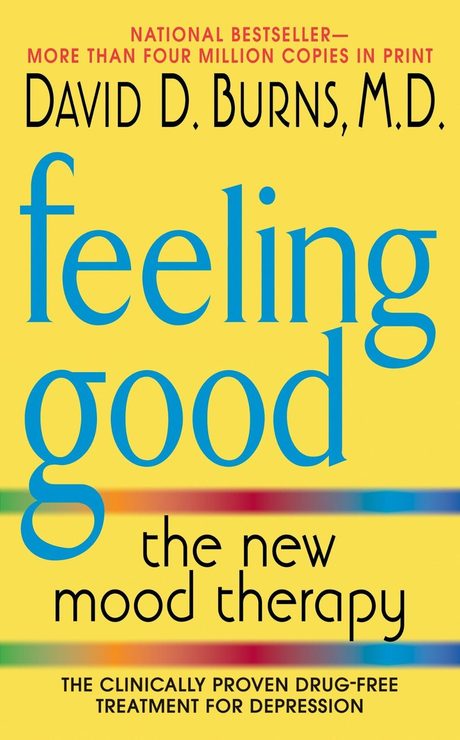
Feeling Good
David D. Burns1980about 738 pages
The original cognitive therapy workbook, still the most useful book here if you actually do the writing.
Burns published this in 1980 and it remains the standard self-help book for cognitive therapy. The core is a catalogue of the ways thinking goes wrong under a low mood, all-or-nothing thinking, mind reading, catastrophising, and a written method for catching those thoughts and testing them against evidence. Done properly it is work: you write the thought down, name the distortion, write a response, and do it several times a day for weeks. The prose has dated, and the chapters on medication belong to a different decade of psychiatry.
Why it is at 7
Seventh because nothing on this list changes anything without effort, and this is where the effort is most likely to pay off. It ranks below the two lighter practical books only because the load is genuine: skim it and you get nothing at all. Do the written exercises for three weeks and most people notice something shift. Ignore the drug chapters.
Read it ifyou will genuinely write things down for several weeks
Skip it ifyou want to read rather than do written exercises
systematic, dated, effectiveBest for: self-directed cognitive therapypracticalCBTworkbook
8
Load: medium, reads like fiction
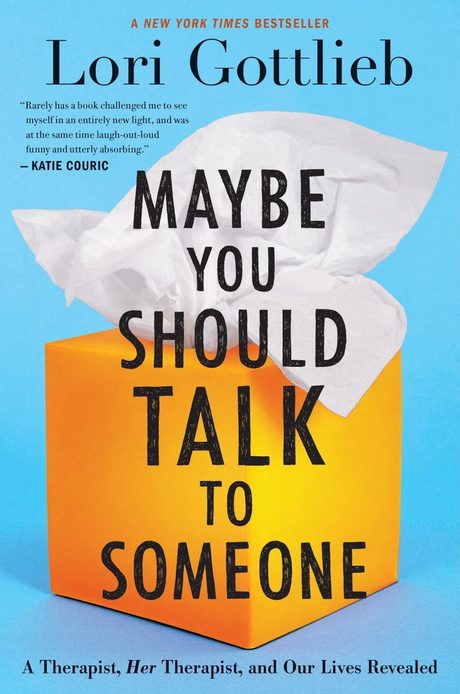
Maybe You Should Talk to Someone
Lori Gottlieb2019about 433 pages
A therapist gets dumped, goes to therapy herself, and lets you sit in both chairs at the same time.
Gottlieb is a therapist in Los Angeles whose boyfriend leaves without warning, which sends her to a therapist of her own. The book runs her sessions alongside those of four of her patients, among them a rude television producer and a young woman with a terminal diagnosis, moving between the two chairs so you see what a therapist is thinking while she sits there saying very little. It is warm, occasionally too tidy, and it is the book that gets people who have never considered therapy to consider it.
Why it is at 8
Eighth because it does something nothing else here manages: it removes the mystery from the room. Plenty of people in India avoid therapy partly because they cannot picture what happens in it, and this shows the picture in detail. Medium load, since it is long but moves like a novel. The endings land tidier than real therapy usually does.
Read it ifyou are curious about therapy and have never been
Skip it ifyou want clinical detail rather than stories about people
warm, absorbing, humaneBest for: people considering therapymemoirtherapystories
Heads up: terminal illness and the death of a patient
9
Load: medium, memoir with a clinician's eye
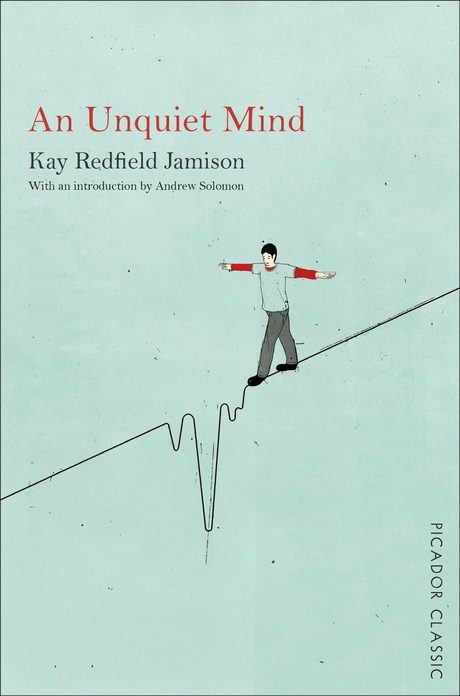
An Unquiet Mind
Kay Redfield Jamison1995about 257 pages
A professor of psychiatry with bipolar disorder writes about her own illness from both sides of the desk.
Jamison studies mood disorders for a living and has one. The memoir moves through her manias, which she describes with a dangerous fondness, the depressions that followed them, her long resistance to lithium, and a suicide attempt, all while she was building an academic career treating people with the same condition. The double position is what makes the book valuable. She can tell you what mania feels like from inside and what it looks like on a clinician's chart, and she is honest about how many years it took her to accept the treatment she was prescribing to others.
Why it is at 9
Ninth because it is the best account of bipolar disorder by somebody who also understands the science of it, and because it is unusually good on the part nobody writes about, the temptation to stop medication once you feel well. Medium load overall and heavier through the middle. Chemical Khichdi at three is the closer read if you are in an Indian household.
Read it ifyou want the illness described by somebody who studies it professionally
Skip it ifyou want a fast read, since the academic passages slow it down
brilliant, candid, unsettlingBest for: bipolar disorder and cliniciansmemoirbipolarpsychiatry
Heads up: a suicide attempt described in detail
10
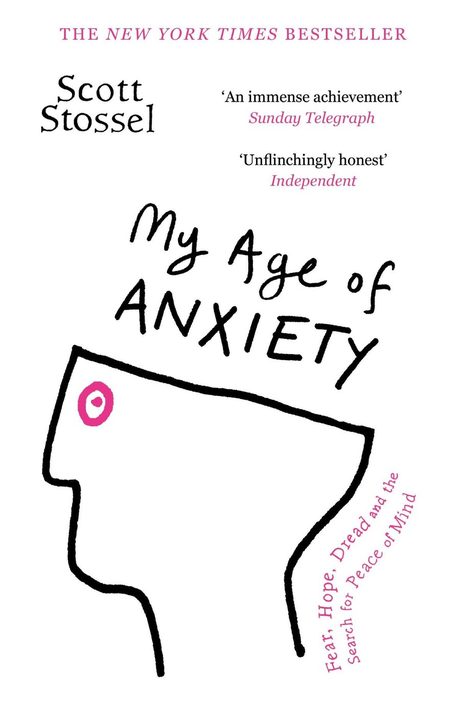
Load: medium to heavy, half history
My Age of Anxiety
Scott Stossel2013about 418 pages
A history of anxiety braided with the author's own, including every treatment he tried and how few of them worked.
Stossel has had a phobia-heavy anxiety disorder since childhood, and he alternates between his own humiliating episodes and a history of how anxiety has been understood, from ancient physicians through Freud to the pharmaceutical era. He is very funny about his own catastrophes and then completely sober about the fact that decades of therapy, medication and effort have not cured him. That refusal to finish on a triumph is exactly why the book is trusted by people who have anxiety and are tired of being promised outcomes by other books.
Why it is at 10
Tenth because it is the most complete book on anxiety here and the least hopeful one. Useful when you want to know what this thing is and where it came from, rather than what to do on Monday morning. If you want help before understanding, go to Harris at six instead. The history sections are long and they are what push the load up.
Read it ifyou want the full history of anxiety and one honest life inside it
Skip it ifyou need technique and hope right now
funny, learned, unresolvedBest for: chronic anxiety and phobiasmemoiranxietyhistory
Heads up: panic, phobia, and a detailed medication history
11

Load: medium, and the best novel here
Em and the Big Hoom
Jerry Pinto2012about 212 pages
A son grows up in a small Bombay flat with a mother whose mind keeps leaving, and comes back.
Em is the narrator's mother: funny, filthy-mouthed, brilliant, and carrying an illness that takes her away in cycles, into hospital and back again. The family of four arrange their entire lives around her weather inside a one-bedroom flat in Mahim. The son narrates, trying to work out who she was before all this, whether the same thing is waiting for him, and how you love a person you also dread. Pinto puts the comedy and the horror in the same paragraph, which is how families like this actually live, hour to hour.
Why it is at 11
Eleventh because fiction manages one thing memoir cannot: it seats you inside the family rather than inside the patient. If you are the child, sibling or partner of somebody unwell, this is your book on the list. It is a novel and not a guide, and it is genuinely distressing in stretches, which is why it sits in the middle of the load order rather than near the top.
Read it ifyou grew up around somebody else's illness
Skip it ifyou are looking for tools rather than a novel
funny, brutal, lovingBest for: families and caregiversfictionindiabipolar
Heads up: repeated suicide attempts, psychiatric hospitalisation, explicit language
12
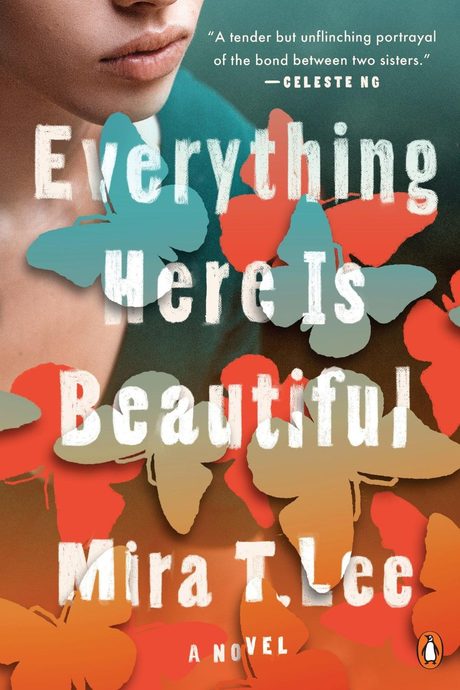
Load: medium, told from both sides
Everything Here Is Beautiful
Mira T. Lee2018about 386 pages
Two sisters, one of them unwell, and a novel that refuses to decide which of them is right.
Lucia is charismatic, impulsive and ill. Miranda is the older sister who has built her life around catching her. The novel follows both across continents and years while Lucia makes a life, has a child, stops her medication, is hospitalised, and insists that her version of reality belongs to her. Lee gives Lucia a full voice of her own rather than treating her as a problem the family has to solve, and the result puts you in the impossible position both sisters occupy, where love and control turn out to be very difficult to separate.
Why it is at 12
Twelfth because it takes on the hardest question on this list: what do you do when the person who is unwell says no. It moves more slowly than Pinto at eleven and covers more geography, and it earns its place by never letting you settle into believing one sister has the answer. Read it after Em and the Big Hoom if that one landed hard.
Read it ifyou love somebody who does not agree that they need help
Skip it ifyou want resolution, because this novel will not hand you one
expansive, tender, unresolvedBest for: siblings and caregiversfictionpsychosisfamily
Heads up: psychosis, involuntary hospitalisation, suicidal behaviour
13

Load: heavy, the classic
The Bell Jar
Sylvia Plath1963about 254 pages
The novel that gets the flatness of depression exactly right, written by somebody who did not survive hers.
Esther Greenwood wins a month at a magazine in New York and discovers that the prize she worked years for feels like nothing at all. She goes home, stops sleeping, stops writing, and comes apart, and the second half moves through a suicide attempt and a series of hospitals using the treatments of the 1950s. What Plath catches better than almost anyone is the flatness of it: not sadness, but the sense of watching your own life through glass while everybody around you offers congratulations. It appeared under a pen name weeks before her death.
Why it is at 13
Thirteenth because it is the most accurate novel here about how depression bends perception, and the heaviest to carry, since you read it knowing what happened to the author afterwards. The low placement in the load order is deliberate. This is not a book for a bad week. Read it when you are steady enough to hold the novel and the biography at the same time.
Read it ifyou want the interior experience rendered precisely
Skip it ifyou are unwell right now, because there is no relief anywhere in it
cold, exact, airlessBest for: readers who are currently stablefictionclassicdepression
Heads up: suicide attempt, electroconvulsive therapy, and outdated psychiatric practice
14
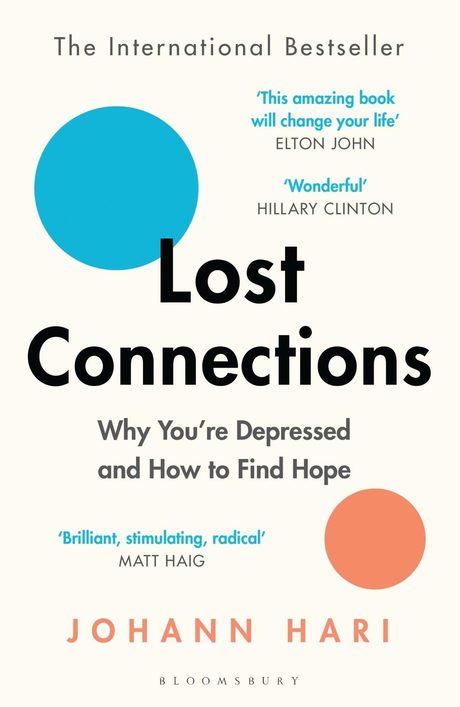
Load: medium, argument rather than memoir
Lost Connections
Johann Hari2018about 417 pages
The case that depression is often a response to how we live, plus the reasons to read it with your guard up.
Hari's argument is that we have been sold a simple chemical story about depression, and that a large share of what gets called depression is a response to conditions: work with no meaning in it, loneliness, insecure status, no contact with anything larger than yourself. He travels, interviews researchers, and reports on community-based experiments. The reporting reads well and the questions are good ones. His certainty is the problem, since he tends to present contested findings as settled and gives thin space to the evidence pointing the other way.
Why it is at 14
Fourteenth because the ideas are worth having and the sourcing needs your attention. Hari left a British newspaper after a controversy over attribution in his journalism, and several psychiatrists pushed back hard on how he presents the antidepressant evidence. Read it as a provocation alongside Burns at seven rather than as a verdict, and please do not stop medication because a journalist wrote a persuasive chapter.
Read it ifyou want the social case for depression and can hold it loosely
Skip it ifyou want careful, hedged, heavily qualified science writing
readable, argumentative, overconfidentBest for: the social side of depressionnonfictionargumentcontested
Heads up: argues at length about antidepressant efficacy, which some readers find destabilising
15

Load: heavy, and the most argued about
The Body Keeps the Score
Bessel van der Kolk2014
The book that turned trauma into a household word, useful and oversold in roughly equal measure.
Van der Kolk's case is that trauma lodges in the body and the nervous system rather than only in memory, and that talking about it is often not enough to shift it. He draws on decades of clinical work with veterans and abuse survivors, then argues for treatments that work through the body: yoga, movement, theatre, EMDR, neurofeedback. The clinical stories are the strongest part and the reason people press it on their friends. The chapters explaining what is happening inside the brain are where the confidence runs well ahead of the footnotes.
Why it is at 15
Fifteenth because it is the most recommended book about trauma and the one that needs the largest caveat. Researchers have argued that several claims in it, particularly around memory and some of the body-based treatments, are stated far more firmly than the evidence supports. It is long, it is graphic in places, and it deserves a sceptical hand on the wheel throughout.
Read it ifyou want the clinical picture of trauma and will check the claims
Skip it ifyou are freshly traumatised, because the case histories are explicit
ambitious, humane, overstatedBest for: trauma, PTSD, therapistsnonfictiontraumacontested
Heads up: graphic accounts of child abuse, sexual violence and war
16
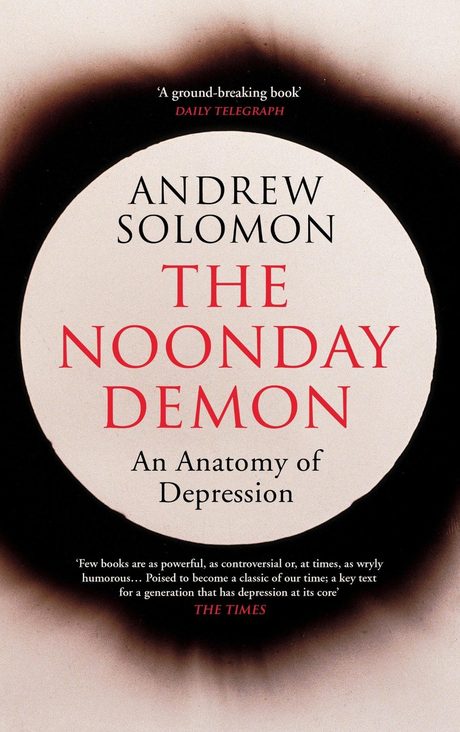
Load: heavy, needs a steady month
The Noonday Demon
Andrew Solomon2001about 690 pages
Five hundred pages on depression from every angle, and the most complete book written on the subject.
Solomon had three major breakdowns and then spent years reporting on the illness from every direction: the history of how it has been treated, the drugs, the therapies, the politics of who gets diagnosed and who gets overlooked, depression among the very poor, and the arguments around suicide. His own story runs through all of it as the spine. The book is enormous, frequently gorgeous at sentence level, and it refuses to simplify anything, which is why it takes weeks and why nobody reads it in a bad month.
Why it is at 16
Sixteenth because it asks the most and returns the most. Everything before it here is short, light or narrow by design. This is the reference work, the one you come back to once you are well enough to want the whole picture instead of a hand to hold. Begin it when you have a steady stretch of weeks ahead, not on a low Sunday night.
Read it ifyou are steady and want the complete account of the illness
Skip it ifyou are unwell right now, since the size alone will defeat you
vast, humane, unsparingBest for: the full picture, laternonfictiondepressionreference
Heads up: suicide, drug use, self-harm and sexual content, described directly
Worth knowing
The same sixteen, sorted by type instead
If load order is not how your brain works, here is the other cut. Memoir and lived experience: one, two, three, four, nine and ten. Therapy from the inside: eight. Fiction that gets it right: eleven, twelve and thirteen. Practical books with exercises in them: five, six and seven. Argument and science: fourteen, fifteen and sixteen.
A rough rule that has held up across everyone I have handed these to. Memoir helps you feel less strange, fiction helps you understand somebody else, and only the practical books actually change what you do on a Tuesday. If you are picking one from each column, take one, eleven and seven.
Worth knowing
If the book is for somebody else
Ask before you buy. An unasked-for book about a person's illness can land as a verdict rather than a kindness, particularly if it is a practical one, because a workbook implies homework and homework implies that they have not been trying. The safest gifts here are one, two and three, all of which read as company rather than instruction.
Do not give somebody in a crisis a five hundred page book. Fifteen and sixteen are for people who are already steady, and thirteen is not a gift for anybody who is currently unwell, whatever the reputation of the novel. If you are not sure, ask what they would find useful, and be ready for the answer to be nothing, not right now.
People also ask
Questions, answered
What is the best book about mental health to start with?
Reasons to Stay Alive by Matt Haig, at number one, because it is built in short fragments you can read out of order and it demands almost no concentration. If you want something with technique rather than a life story, start with The Happiness Trap at six instead. If you are Indian and want a book that understands the family context you are dealing with, start with Chemical Khichdi at three.
Can reading a book actually help with depression or anxiety?
It can help, and it is not treatment. The practical books here are based on therapies with real evidence behind them, and working through the written exercises in Feeling Good or The Happiness Trap does change how some people think over a few weeks. The memoirs help in a different way, by making the experience less isolating. Neither can assess you or prescribe for you, so use them alongside a professional rather than instead of one.
Is The Body Keeps the Score worth reading?
Yes, with a caveat. The clinical stories are strong and it explains why talk alone sometimes fails, which is genuinely useful. Researchers have also argued that several of its claims, particularly around traumatic memory and some body-based treatments, are stated more confidently than the evidence supports. Read it as one clinician's argument rather than as settled science, and skip it entirely if you are freshly traumatised, because the case histories are explicit.
Are there good Indian books about mental health?
Two on this list, and both are worth your time. Chemical Khichdi by Aparna Piramal Raje at number three is a memoir of living with bipolar disorder inside an Indian family and an Indian workplace. Em and the Big Hoom by Jerry Pinto at eleven is a novel about growing up with a mother who is ill, set in a small Mahim flat, and it is the best written book on this entire list.
What book should I give a friend who is depressed?
Ask first, then give them Reasons to Stay Alive or Furiously Happy. Both are short, both are readable in pieces, and neither one instructs the reader to do anything. Avoid the workbooks unless your friend has asked for practical help, because handing somebody exercises can read as a comment on how hard they are trying. Never give a five hundred page book to a person in a bad month.
Which of these is best for anxiety specifically?
The Happiness Trap at number six if you want something to do about it, because acceptance and commitment therapy handles anxious thinking without asking you to argue your way out of a thought. My Age of Anxiety at ten if you want to understand where anxiety comes from and how it has been treated across history. The two work well together, one for technique and one for perspective.
Before you go
What to read tonight
Match the book to the week you are actually having rather than to the reputation of the book. If tonight is bad, stay in the first three and ignore the rest of the list. If you are steady and curious, start around fourteen and work outward. If you are reading for somebody else, ask them what they want before you wrap anything.
And the plain part again, because it belongs at the end as much as at the start. None of this is treatment. If you are in India and things are bad right now, Tele-MANAS on 14416 is the government helpline and runs day and night in several languages, and KIRAN on 1800-599-0019 is the other national line. A book will still be there tomorrow. That call does not have to wait.
Keep going
Lists that pair with this one
Mood & Life
16 Books About Existential Crisis, Gentlest to Heaviest
Ordered by how much weight each one puts on you at 2 a.m., starting with the ones that are safe to read tonight.
Mood & Life
16 Self-Help Books That Actually Work (And 4 That Do Not)
I judged every one of these by a single test: six months after you finish, does anything change on an ordinary Tuesday?
Mood & Life
16 Books to Read After a Breakup, in the Order You Can Handle Them
Ordered by stage rather than by quality, because handing somebody Wild in week one is like handing a person with fever a plate of biryani.
Mood & Life
20 Best Books to Read in Your 20s, Grouped by the Problem
Four problems run this decade, work, love, money and meaning, so the list is sorted that way instead of pretending one book fixes all four.
Mood & Life
18 Books to Read in Your 30s, Not the 20s List Again
Grouped under the six questions this decade actually asks, with a line on every book about what changes if you read it at 35 instead of 25.