A breakup ends a relationship. A divorce ends a household, and in India it usually ends a committee too, because by the time you sign anything your marriage has shareholders: parents, siblings, the cousin who introduced you, the aunt who will have opinions at every function for the next decade. That is why the breakup shelf does not work here. Most of those books quietly assume you can stop seeing the person. You cannot, if you share a child, a flat, a loan, or a Sunday lunch tradition with the same forty people.
So I built this list on one question: which seat are you in? The one who left, the one who was left, the one who honestly cannot tell, the child watching from the stairs, or the person who wants instructions rather than company. Every book below is tagged with its seat and with whether it offers company or instructions, because confusing those two is how readers end up furious at a perfectly good book.
The order runs by how much weight a book actually carries for someone in the middle of it, not by literary merit. That is why a comic novel from 1983 sits at number one and Henry James sits at ten. Two famous titles sit at the bottom with reasons attached. One thing before we start: this is a list about feeling, not law. Indian divorce runs on statutes, personal law and a family court calendar that no memoir will prepare you for. For that you want a lawyer, not a paperback.
How I picked these
- Marriage, not dating. Every book here involves a real marriage coming apart, usually with property, in-laws or children attached. Breakups got their own list.
- Seat first, then rank. Each entry says who it is written for, because a book that saves the person who left can enrage the person who was left.
- Company or instructions, labelled on every entry. Most of these keep you company. Three of them hand you something to do with your hands, which on some nights is the only thing that works.
- Cut: Conscious Uncoupling, because renaming the pain is not the same as carrying it, and the new vocabulary tends to arrive months before the feelings do. Also cut the American divorce-lawyer manuals, which mislead an Indian reader in ways that cost real money.
- Honest placement for the famous ones. Two bestsellers sit at eleven and twelve, and I say exactly what they are good for and where they run out.
- Every book verified through Google Books and Open Library with a real cover, and first-publication years checked by hand instead of taken from whichever reprint turned up.
The whole list at a glance
All 12 books, in order
| # | Book | Author | Year | Vibe | Best for |
|---|
| 1 | Heartburn | Nora Ephron | 1983 | sharp, funny, wounded | the newly blindsided |
| 2 | Custody | Manju Kapur | 2011 | cold, exact, upsetting | Indian readers with children |
| 3 | Fleishman Is in Trouble | Taffy Brodesser-Akner | 2019 | sardonic, modern, unsparing | anyone certain they were wronged |
| 4 | The Cost of Living | Deborah Levy | 2018 | cool, precise, quietly defiant | starting over after forty |
| 5 | Dept of Speculation | Jenny Offill | 2014 | fragmented, wry, aching | one evening on the sofa |
| 6 | A Separation | Katie Kitamura | 2017 | cool, watchful, unsettling | readers who like distance |
| 7 | Crazy Time | Abigail Trafford | 1982 | practical, blunt, reassuring | the first chaotic year |
| 8 | The Good Divorce | Constance Ahrons | 1994 | calm, structured, evidence-led | co-parenting after the split |
| 9 | The Post-Birthday World | Lionel Shriver | 2007 | clever, adult, unsentimental | the still-deciding |
| 10 | What Maisie Knew | Henry James | 1897 | ironic, patient, quietly brutal | adult children of divorce |
| 11 | Untamed | Glennon Doyle | 2020 | urgent, quotable, evangelistic | the push to decide |
| 12 | Eat Pray Love | Elizabeth Gilbert | 2006 | confessional, roaming, uneven | guilt about leaving |
The list
The books, ranked
1

The one who was left, company
Heartburn
Nora Ephron1983about 270 pages
Seven months pregnant, husband in love with someone else, and she is still stopping to give you the vinaigrette recipe.
Rachel Samstat is a cookbook writer, pregnant with her second child, when she works out that her husband is in love with a tall woman in their Washington circle. What follows is not a tragedy, it is a running commentary: the group therapy sessions, the humiliating dinner parties, the friends picking sides, and the recipes she keeps dropping into the middle of her own collapse. Ephron based it on the end of her own marriage, which is why the jokes have something sharp underneath them. Under two hundred pages, and it moves like a woman talking fast because slowing down would hurt.
Why it is at 1
First because it does something no other book here manages: it lets you be funny about the thing while the thing is still happening. Fleishman is smarter about modern marriage and Custody is closer to your actual life, but neither hands you permission to laugh. Ephron also refuses the noble-victim pose that most divorce memoirs cannot resist. Read this one even if you read nothing else.
Read it ifyou want company that jokes instead of counselling you
Skip it ifyou want your betrayal taken seriously in a serious voice, because the whole book is armour
sharp, funny, woundedBest for: the newly blindsidedautobiographical novelbetrayalfunny
Heads up: infidelity, a marriage ending during pregnancy
Pairs with: Fleishman Is in Trouble, if you want the same anger updated to the dating-app era
2
The children, company
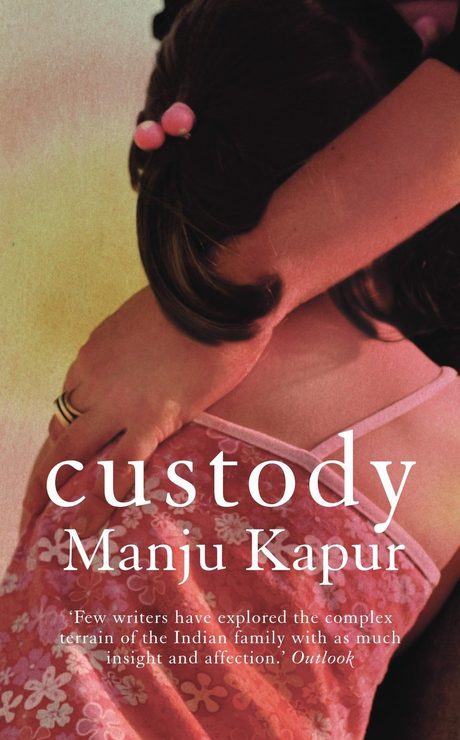
Custody
Manju Kapur2011about 330 pages
A comfortable Delhi marriage ends and the two children turn into the property that everyone is fighting over.
Raman and Shagun have money, a good south Delhi address, two children and a marriage that a colleague of Raman's quietly takes apart. Kapur then does what almost no novelist does: she follows the case. Hearings, adjournments, a lawyer explaining what to say and what to leave out, grandparents recruited as witnesses, children coached in whispers before a visit. The prose is deliberately flat and unsentimental, and that is what makes it land. You watch two ordinary parents turn into strategists, and you watch the children learn to give each adult the answer that adult wants to hear.
Why it is at 2
Second, and the one Indian book here that treats divorce as a system rather than a mood. If you are the one heading into family court in this country, Kapur is closer to your Tuesday than any American memoir will get. It sits below Heartburn only because it offers no comfort at all. Read it when you are steady, not on the worst night of the week.
Read it ifyou want an Indian divorce shown with the courtroom left in
Skip it ifyou need a hopeful ending, or you are inside a custody fight right now
cold, exact, upsettingBest for: Indian readers with childrenindian fictioncustodydelhi
Heads up: children used as bargaining chips in a custody dispute
3

The one who was left, company
Fleishman Is in Trouble
Taffy Brodesser-Akner2019about 384 pages
A newly separated doctor discovers dating apps and self-righteousness at the same time, then the book pulls the chair out from under him.
Toby Fleishman is a liver specialist in Manhattan, freshly separated at forty-one, and suddenly getting more attention on his phone than he got in fifteen years of marriage. Then his ex-wife drops the children at his flat one morning and vanishes. For most of the book you sit inside Toby's version of the marriage, which is detailed, reasonable and completely convincing. The final section changes narrator and everything you had agreed to gets reopened. Brodesser-Akner is a magazine profile writer, and it shows in the best way: money, status, ambition and exhaustion are reported rather than assumed.
Why it is at 3
Third, mostly for that structural trick, which is also the most useful idea on this list. Everyone in a divorce is living inside one very persuasive version of events. This novel makes you feel how airtight your own version is, then walks you through the other one. It ranks below Custody because the world here is wealthy Manhattan, which will read like a different planet from an Indian flat with three generations in it.
Read it ifyou suspect your side of the story is the only side you have heard
Skip it ifyou cannot stand very rich people having very expensive problems
sardonic, modern, unsparingBest for: anyone certain they were wrongedfictionmodern marriageperspective
4
The one who left, company with a little instruction
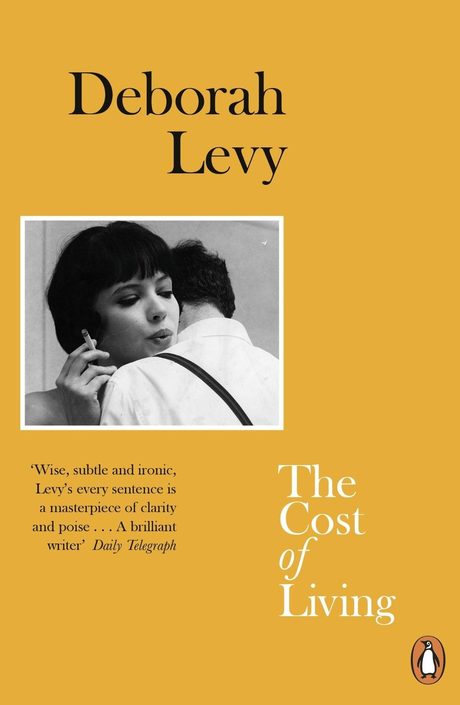
The Cost of Living
Deborah Levy2018about 104 pages
A writer takes her marriage apart at fifty and rebuilds a life in a bad flat, with a borrowed garden shed for a study.
Levy leaves a long marriage in her fifties and ends up in a flat on a hill in north London with two daughters, an electric bicycle and a friend's garden shed to write in. The book is short, built from fragments, and far more interested in the ordinary logistics of a rebuilt life than in the marriage itself: the bills, the chicken carried home on the handlebars, the way a woman sitting alone in a bar gets spoken to. It is the second part of her living autobiography and reads perfectly well on its own.
Why it is at 4
Fourth because it is the best book here on the part nobody warns you about, which is the year after. Levy never explains why the marriage ended and never asks you to take her side. She simply shows a new life being assembled, badly at first and then well. Untamed at eleven is reaching for the same thing and does not get near it.
Read it ifyou have left and now have to build a life at an age nobody expected you to
Skip it ifyou want the story of why the marriage failed, because she withholds it on purpose
cool, precise, quietly defiantBest for: starting over after fortymemoirstarting overwomen
5
Cannot tell which seat, company
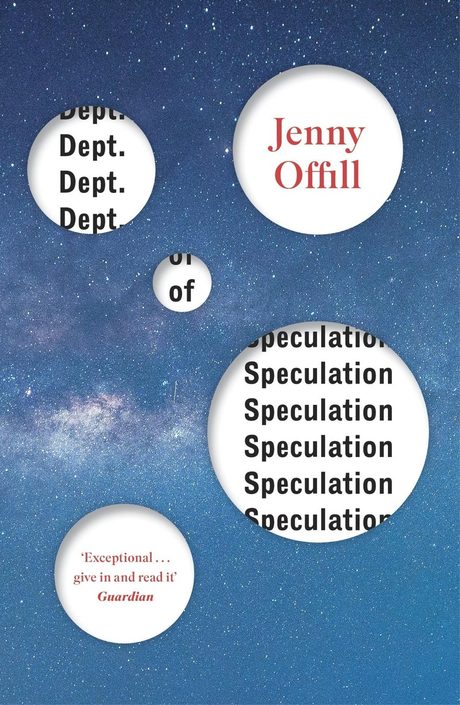
Dept of Speculation
Jenny Offill2014about 127 pages
A marriage told in a few hundred fragments, and somewhere in the middle the narrator stops saying I and becomes the wife.
A wife and mother in New York, once a promising writer, narrates her marriage in short paragraphs: a scrap of philosophy, a fact about Buddhist monks, a joke about bedbugs, then something devastating in nine words. An affair arrives around halfway. What makes the book unusual is the grammar. The narrator drops the first person and starts calling herself the wife, as though she has stepped outside her own life to watch it from the pavement. It runs to about 130 pages and you can finish it in one sitting, though you may not want to.
Why it is at 5
Fifth, and the shortest piece of real literature here. It catches the specific state where a marriage has not ended but has already changed species, which is where plenty of readers actually are. Placed under Levy because it stops before the aftermath. If you are still deciding, this is the one that will describe your Tuesday night back to you.
Read it ifyou like fragments and you are still inside the marriage
Skip it ifyou want a plot with a beginning, a middle and an end
fragmented, wry, achingBest for: one evening on the sofashort novelmarriageaffair
Heads up: infidelity
6
Cannot tell which seat, company
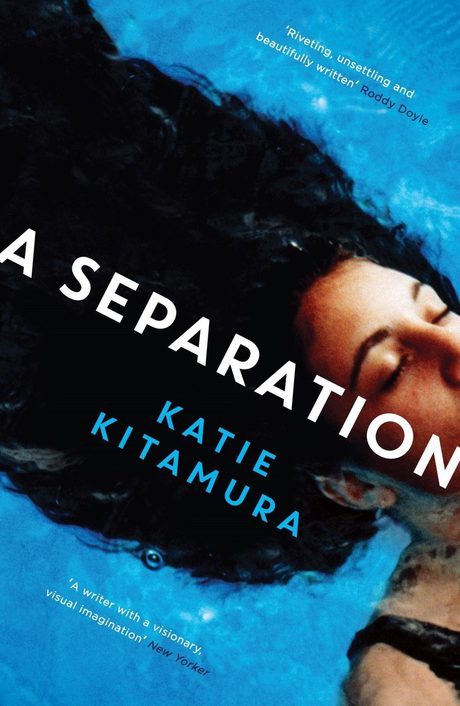
A Separation
Katie Kitamura2017about 192 pages
She has already separated from her husband in secret when his mother rings to say he has gone missing in Greece.
The narrator and Christopher separated months ago and told nobody, which is exactly why she is the one dispatched to Greece when he stops answering his phone. She arrives at a hotel in a fire-scarred stretch of the Mani, asks careful questions of the staff, and thinks about what a marriage becomes once the feeling has gone out of it and only the arrangement is left. The plot has the shape of a mystery and the temperature of an essay. Kitamura writes long, controlled sentences that hold the narrator at a slight distance from her own situation.
Why it is at 6
Sixth because it names something people rarely admit to: the administrative loneliness of an ending nobody has announced yet. Everyone still treats you as a wife when you have quietly stopped being one. It ranks below Offill only because the coldness that makes it good also keeps some readers standing outside it. There is a death in the book, handled very quietly.
Read it ifyou like cold, controlled prose and a narrator who stays too calm
Skip it ifyou want warmth, or a narrator who cries where you would
cool, watchful, unsettlingBest for: readers who like distanceliterary fictionseparationgreece
Heads up: a death, infidelity
7
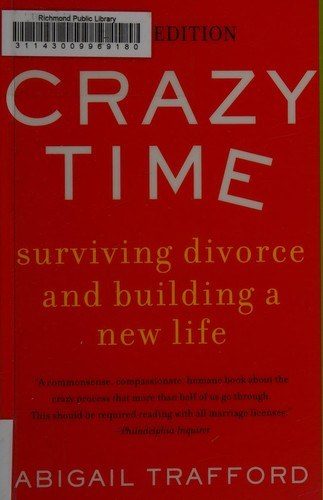
The guide, instructions
Crazy Time
Abigail Trafford1982about 244 pages
The old classic that tells you the year of insanity after a marriage ends is a stage with a shape, not a personality change.
Trafford was a journalist whose own marriage came apart, and she went and talked to divorced people and to the therapists treating them. The result is a map of what she calls crazy time: the stretch either side of a separation when otherwise sensible adults drive past the ex's house at midnight, take up with wildly unsuitable people, spend money they do not have, and swing between rage and mourning twice before lunch. It is dated in places, the examples are all American and straight, and the central observation still holds up better than most newer books manage.
Why it is at 7
Seventh, and the first book here that hands you something instead of sitting beside you. Its one idea, that the madness has a shape and an end date, does more for a panicking reader at 2 am than any amount of literary company. Ranked here rather than higher because the writing is workmanlike and the case studies smell of another decade. Treat it as a manual.
Read it ifyou feel like you are losing your mind and want to know whether that is normal
Skip it ifyou want current research, or examples that are not American and heterosexual
practical, blunt, reassuringBest for: the first chaotic yearnonfictionguiderecovery
8
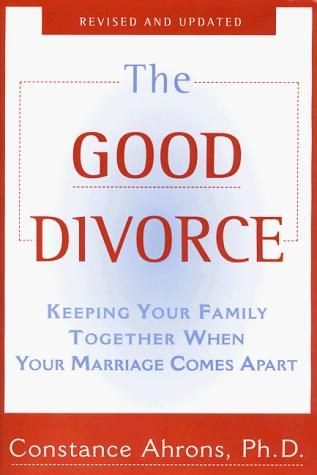
The guide, instructions
The Good Divorce
Constance Ahrons1994
A family researcher argues that a divorce ends a marriage and not a family, then explains how to keep the second part alive.
Ahrons followed divorced families over years and came back with a claim that annoyed plenty of people in 1994: children are harmed less by the divorce itself than by what the adults do in the years afterwards. She sorts separated parents into rough types, from the ones who manage a working partnership to the ones who use their children as messengers, and shows what each pattern produces later on. The advice is concrete and mostly about communication, handovers and boundaries. It is written for an American reader, so ignore the legal detail and take the behaviour.
Why it is at 8
Eighth because it is the most useful book here if children are involved, and because it argues against both of the loud stories: that divorce automatically ruins children, and that it costs them nothing. It is older than most parenting books on the shelf and sharper than most of them. It sits below Crazy Time only because it helps a narrower group of readers.
Read it ifyou have children and need a working arrangement with someone you resent
Skip it ifthe other parent is abusive, because this assumes two people acting in good faith
calm, structured, evidence-ledBest for: co-parenting after the splitnonfictionco-parentingchildren
9

The fork in the road, company
The Post-Birthday World
Lionel Shriver2007about 491 pages
One night, one almost-kiss, and the novel splits into the two lives that follow, running them in alternating chapters.
Irina is a children's book illustrator in London, nine years into a stable partnership with a serious and decent man, when she nearly kisses a loud snooker player at a birthday dinner. The book then runs both versions of the rest of her life side by side: the one where she stays, and the one where she goes. Shriver is scrupulous about it. Neither life is the punishment and neither is the reward. Both contain boredom, good sex, illness, money worries and small daily cruelty, only arranged differently and with different regrets attached.
Why it is at 9
Ninth for what it does to the question everyone in a bad marriage asks at three in the morning. The other life is not better. It is simply another life, with its own bad Tuesdays and its own things you cannot say. That argument is worth the pages, though the pages are many, and readers who want momentum will find the doubling repetitive by the middle.
Read it ifyou are standing at the decision and torturing yourself with the other timeline
Skip it ifyou have no patience for a long novel that tells the same years twice
clever, adult, unsentimentalBest for: the still-decidingfictiontwo timelinesaffair
Heads up: infidelity, serious illness
10

The children, company
What Maisie Knew
Henry James1897about 259 pages
The first great novel about a custody battle, told entirely from inside the head of the child being passed back and forth.
Maisie's parents divorce, loathe each other, and split her six months here and six months there. Each of them remarries, and the two new step-parents then take up with each other, which leaves Maisie shuttling between adults who mostly use her as a way to insult the other household. James keeps the whole story at the level of what a child can observe: tones of voice, sudden kindness arriving just before a request, gifts that come with a message attached. She understands far more than she can name, and the gap between those two things is the book.
Why it is at 10
Tenth because it is over a century old and still the sharpest thing written about being used as a courier by the two people you love. Read it and you will hear yourself differently on the phone in front of your kids. It ranks here because the sentences are Victorian and long, so you will need a slow week. Ahrons tells you what to do; James shows you why it matters.
Read it ifyou were that child, or you are frightened of making one
Skip it ifyou want easy prose, because James makes you work for every paragraph
ironic, patient, quietly brutalBest for: adult children of divorceclassicchildrencustody
11

The one who left, permission
Untamed
Glennon Doyle2020
A memoir about leaving a marriage for a woman, written as a run of very short pieces about learning to trust yourself.
Doyle was a Christian mother of three, publicly and visibly married, when she met the footballer Abby Wambach and knew within seconds that she was going to blow up her life. The book is built from short chapters, some two pages long, mixing that story with pieces on parenting, faith, addiction, body image and the long training that teaches women to be agreeable. It is very quotable and it moves fast. What it is not is a book about the mechanics of divorce: the marriage ends somewhere in the middle and the machinery around it barely appears.
Why it is at 11
Eleventh, with a real caveat. Plenty of readers found the nerve to leave because of this book, and permission is a legitimate thing for a book to give. But it is permission without weather. Levy at four covers the same ground with the aftermath left in, so if you are past deciding and into doing, Levy will serve you better. Take Doyle for the push, not the map.
Read it ifyou know the marriage is over and you need someone to say it out loud
Skip it ifyou want the practical aftermath, or self-help cadence sets your teeth on edge
urgent, quotable, evangelisticBest for: the push to decidememoirself-helpleaving
Heads up: addiction, disordered eating
12
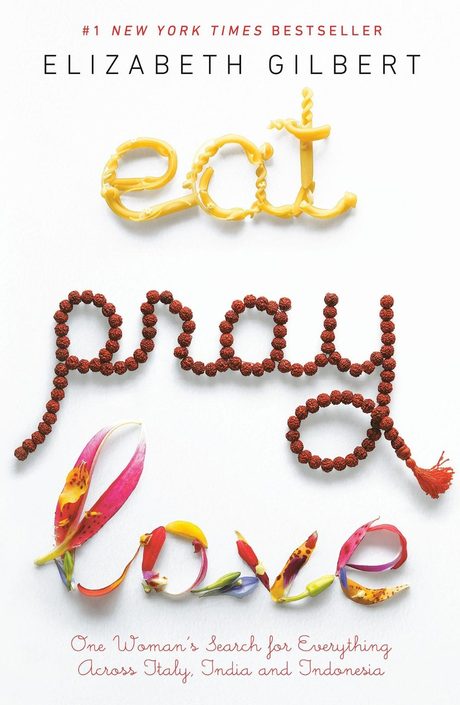
The one who left, company with conditions
Eat Pray Love
Elizabeth Gilbert2006about 402 pages
The famous one. A brutal divorce takes up the first stretch, and then the author leaves the country for a year.
Gilbert asks for a divorce, spends a bruising couple of years fighting over the settlement, has an affair that goes badly, and then travels for a year: eating in Italy, sitting in an ashram in India, falling in love in Bali. The opening chapters are the honest part, including the bathroom floor at three in the morning and the particular guilt of being the one who wanted out when nothing was technically wrong. The rest is a travel memoir with a spiritual through-line, and your mileage depends entirely on your tolerance for that register.
Why it is at 12
Last, because the first fifty pages are genuinely good on the guilt of leaving a decent person and the remaining four hundred are about something else. Indian readers should also brace for the ashram section, which will read as either moving or as a tourist's version of your own religion depending on the day you pick it up. Useful for the confession, not for the cure.
Read it ifyou left and cannot forgive yourself for it
Skip it ifyou want the divorce to stay the subject, or spiritual travelogues put you off
confessional, roaming, unevenBest for: guilt about leavingmemoirtravelleaving
Worth knowing
Company or instructions, and why mixing them up hurts
Every entry above carries two tags: the seat it is written from, and whether it offers company or instructions. Company means the book sits next to you and says yes, this is what it feels like, and it makes no promises about Thursday. Instructions mean the book expects you to do something: a conversation to have, a handover to restructure, a rule about what you will not say in front of your children.
The reason to label them is that people reach for the wrong one and then blame the book. Someone three days into a separation picks up a co-parenting manual and finds it cold and bureaucratic, because at three days you cannot execute anything. Someone eight months in picks up a lyrical novel about a quiet ending and gets nothing, because by then the feeling is familiar and the problem is logistics. Ephron, Levy, Offill and Kitamura are company. Trafford and Ahrons are instructions. Kapur and James are neither: they are evidence, and evidence has its own uses on the days you suspect you are imagining the whole thing.
Worth knowing
A note for Indian readers on law versus feeling
Nine of these twelve books were written in countries where a divorce takes months, the couple usually lives apart already, and nobody's mother is a party to the proceedings. Read them for the interior weather, not the process. The process here involves grounds, waiting periods, maintenance, mediation, and a court schedule that can stretch a mutual-consent case past a year and a contested one much further, all of which varies by which law your marriage was registered under.
Custody by Manju Kapur is the only book on this list that shows any of that machinery, and it is fiction. For the actual rules, talk to a family lawyer in your own city before you talk to anyone else, and get the first conversation over with early, because the most expensive decisions in an Indian divorce tend to get made in the first few weeks by people who are not thinking clearly.
People also ask
Questions, answered
What is the best book to read when going through a divorce?
Heartburn by Nora Ephron, if you were the one left. It is short, extremely funny, and it never asks you to be dignified about your own humiliation. If you want instructions instead of company, read Crazy Time by Abigail Trafford, which explains that the temporary insanity of the first year is a stage rather than a permanent change in who you are. If children are involved, go straight to Constance Ahrons.
Are there any Indian books about divorce?
Custody by Manju Kapur is the one to read. It follows a south Delhi couple from the affair through the separation and into the family court, and it is the only novel here that shows the hearings, the lawyers and the grandparents being enlisted as witnesses. It is cold and it does not comfort you, so pick it up on a steady day. Indian memoirs about divorce exist but are still thin on the ground, which says something about how much silence surrounds it.
Do books about divorce actually help, or do they just make it worse?
They help with two things and not with a third. They make the feelings legible, so you stop believing your reaction is uniquely shameful, and the guides give you scripts for conversations you cannot improvise. What they cannot do is treat depression, sort out your finances or settle custody. If your sleep, appetite or work has been gone for weeks, a book is company on the way to a doctor or a therapist, not a replacement for one.
What should I read if there are children involved?
Two books, in this order. The Good Divorce by Constance Ahrons for what to actually do: how handovers work, what not to say, how to run a civil partnership with someone you no longer like. Then What Maisie Knew by Henry James, which puts you inside the head of a child being passed between two households and used as a weapon by both. Ahrons gives you the rules. James gives you the reason you will follow them.
Is Eat Pray Love a good book about divorce?
For about fifty pages, yes, and they are the fifty pages most people skim past on their way to Italy. Gilbert is honest about the guilt of being the one who wanted out when nothing was technically wrong, and about how long the settlement dragged on. After that it becomes a travel memoir about her recovery rather than her marriage. Read it if the guilt is what is keeping you up. Do not expect it to tell you anything about the ending itself.
How long does the worst part of a divorce last?
No book on this list will give you a number, and anyone who does is guessing about you specifically. What Abigail Trafford does say, from talking to a great many divorced people, is that the chaos has a shape: an early stretch of shock and wild behaviour, then a longer flat stretch, then a slow return of ordinary interest in your own life. Knowing there is a shape helps more than knowing a date would.
Before you go
What to read tonight
If you want to start something tonight, start with Heartburn, because it takes about three hours and it will let you laugh at a point when nothing else can. If you are choosing between the two guides, the tiebreak is simple: Trafford if you are worried about yourself, Ahrons if you are worried about your children.
Then leave a gap. The books that help most in month one are almost useless in month ten, and the reverse is also true. Come back around the time the paperwork calms down and read Levy or Kitamura, when you have the stomach for something quiet about what a life looks like once it has been taken apart and put back together in a different order. The reading you need at the end of this is not the reading you need now.
Keep going
Lists that pair with this one
Mood & Life
16 Books to Read After a Breakup, in the Order You Can Handle Them
Ordered by stage rather than by quality, because handing somebody Wild in week one is like handing a person with fever a plate of biryani.
Mood & Life
16 Best Books on Love and Relationships (Science, Not Sermons)
Sorted by the stage you are actually in, single, dating, long-term or repair, with an honest note on which ones have research behind them and which ones only sound like they do.
Mood & Life
14 Books About Loneliness, Sorted by Where It Actually Lives
Alone in a crowd is a different condition from alone in a room, and these fourteen books know the difference.
Mood & Life
16 Books About Mental Health That Do Not Talk Down to You
Ordered by how much each one asks of you, from the book you can read at three in the morning to the one that needs a steady month.
Mood & Life
18 Books to Read in Your 30s, Not the 20s List Again
Grouped under the six questions this decade actually asks, with a line on every book about what changes if you read it at 35 instead of 25.