Here is something one of the books on this list taught me. The English word loneliness barely carried its modern meaning before about 1800. Earlier writers used oneliness, which meant only that nobody else was in the room, with no ache attached to it. Fay Bound Alberti's argument is that the sore private feeling we now call loneliness is a fairly recent invention, assembled alongside cities, individualism and the idea that your happiness is your own project to manage. Whether or not she is right about the date, the distinction is the useful part.
There are two conditions here and one word doing the work of both. Solitude you chose can be the best two hours of your week. The other kind arrives uninvited, often in a full room, and does not leave when the room does. Most reading lists mash the two together and hand you a stack of sad novels, which helps one reader and quietly insults the other.
So I sorted these fourteen by address. Where does the loneliness actually happen: in a crowd, inside a family that loves you, in a city of twenty million, or in a room you locked from the inside on purpose. Every entry carries its address and a note on whether the aloneness was chosen. The order runs outward from the crowd to the city, then turns back inward to the chosen kind, and finishes with two books that explain the whole mechanism.
One plain thing before the list. Reading is not treatment. If your loneliness has stopped being a mood and started being a medical fact, with sleep and appetite and work going with it, a book is company on the way to a professional and not a substitute for one.
How I picked these
- One rule: being alone has to be the subject, not the weather. Plenty of sad novels contain a lonely character. These are the books where aloneness is the engine.
- Address over intensity. I sorted by where it happens rather than how bad it gets, because a reader arrives knowing the location and not the diagnosis.
- Chosen or unchosen is marked on every entry, since the two need completely different books and the shelf keeps confusing them.
- Cut Quiet by Susan Cain, because introversion is a temperament and not a form of loneliness, and the mix-up sends quiet people hunting for a cure they do not need. Also cut A Man Called Ove, warm and deservedly loved, because the neighbours solve it by chapter twenty and this list is more interested in the people nobody rescues.
- Every book verified through Google Books and Open Library with a real cover, and first-publication years checked by hand rather than copied off whichever reprint came up.
- Translations only where the English edition is real and the translator is named on it.
The whole list at a glance
All 14 books, in order
| # | Book | Author | Year | Vibe | Best for |
|---|
| 1 | Eleanor Oliphant Is Completely Fine | Gail Honeyman | 2017 | funny, awkward, tender | readers new to the subject |
| 2 | Convenience Store Woman | Sayaka Murata | 2016 | deadpan, strange, sharp | one evening |
| 3 | The Heart Is a Lonely Hunter | Carson McCullers | 1940 | aching, humane, American | readers who want the classic |
| 4 | Mrs Dalloway | Virginia Woolf | 1925 | shimmering, interior, sad | readers who like difficulty |
| 5 | Olive Kitteridge | Elizabeth Strout | 2008 | flinty, tender, ordinary | married readers over thirty |
| 6 | Cobalt Blue | Sachin Kundalkar | 2006 | quiet, intimate, unresolved | readers in family homes |
| 7 | The Remains of the Day | Kazuo Ishiguro | 1989 | restrained, devastating, formal | readers over thirty |
| 8 | The Lonely City | Olivia Laing | 2016 | essayistic, cool, consoling | new arrivals in big cities |
| 9 | Open City | Teju Cole | 2011 | wandering, cerebral, unnerving | walkers and overthinkers |
| 10 | Winter in Sokcho | Elisa Shua Dusapin | 2016 | cold, spare, tense | one cold evening |
| 11 | Piranesi | Susanna Clarke | 2020 | serene, strange, luminous | readers who like puzzles |
| 12 | How to Be Alone | Sara Maitland | 2014 | brisk, practical, contrarian | chosen solitude |
| 13 | A Biography of Loneliness | Fay Bound Alberti | 2019 | scholarly, clarifying, argumentative | readers who want context |
| 14 | Loneliness: Human Nature and the Need for Social Connection | John T. Cacioppo | 2008 | clear, scientific, practical | anyone stuck in the spiral |
The list
The books, ranked
1
Alone in a crowd, unchosen
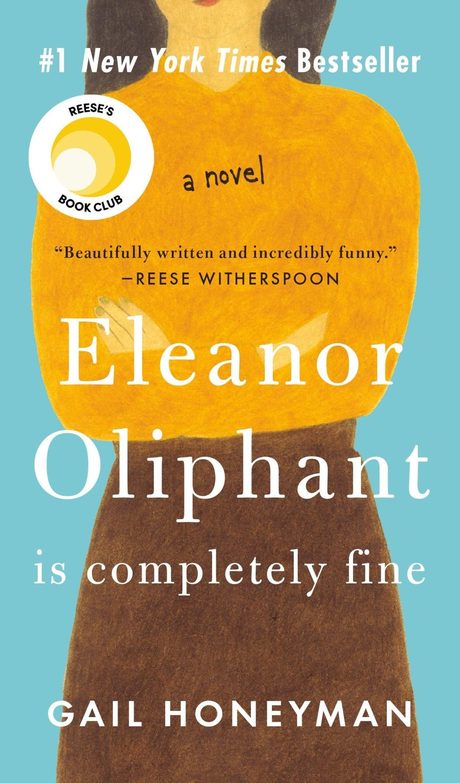
Eleanor Oliphant Is Completely Fine
Gail Honeyman2017
A woman who speaks to nobody between Friday evening and Monday morning, and has convinced herself this is a preference.
Eleanor works in accounts at a Glasgow design firm, eats the same lunch, buys two bottles of vodka on Friday and does not speak to another human until she clocks in on Monday. She tells you she is completely fine and she believes it. Then a chance encounter with an IT colleague and an elderly man collapsing on the pavement drags her, slowly and against her own preference, into ordinary human contact. The comedy comes from Eleanor's total literalness about social rules. The weight comes from the childhood underneath, which the book releases in small pieces you can see arriving.
Why it is at 1
First because it is the most accurate picture I know of loneliness disguised as a routine, and because it works for someone who does not read much. The last third turns heavy and some readers find the ending a shade too tidy. Both fair. It still takes the top spot for the sheer number of pages where you catch yourself nodding.
Read it ifyou know the exact sound of a weekend where the phone does not ring
Skip it ifyou want unrelenting bleakness, because this one warms up
funny, awkward, tenderBest for: readers new to the subjectfictionroutineglasgow
Heads up: childhood abuse, heavy drinking, a suicide attempt
2

Alone in a crowd, chosen, and nobody believes her
Convenience Store Woman
Sayaka Muratatranslated by Ginny Tapley Takemori2016about 110 pages
A thirty-six year old woman is happy working in a Tokyo convenience store, and everyone she knows treats that as a symptom.
Keiko has worked the same convenience store job for eighteen years. The shop manual tells her what to say, when to smile and how to stand, and inside those rules she functions perfectly. Outside them she has no idea what a person is supposed to want. Her sister, her friends and her old classmates keep asking when she will get a proper job or a husband, so she borrows a genuinely unpleasant man to make the questions stop. Murata writes it all in flat, cheerful sentences that make the ordinary pressure to be normal look very strange indeed.
Why it is at 2
Second because it turns the list inside out. Keiko is not lonely. Everyone around her is lonely on her behalf, and the pressure to look normal does far more damage than her solitude ever did. Any Indian reader who has sat through a rishta season will recognise the interrogation immediately. Short enough for one evening, and the ending is not the one you are braced for.
Read it ifyou have been treated as a problem for being content on your own
Skip it ifyou need characters to grow and learn, because Keiko flatly refuses
deadpan, strange, sharpBest for: one eveningjapanese fictionworkconformity
3
Alone in a crowd, unchosen
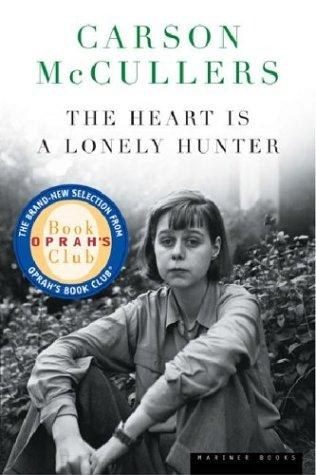
The Heart Is a Lonely Hunter
Carson McCullers1940about 372 pages
Four lonely people in a Georgia mill town pour their lives into one deaf man who cannot answer, and who is lonelier than all of them.
In a poor Southern town, a deaf man named John Singer becomes the confessional booth for four people who have nobody else: a teenage girl who wants to be a musician, a Black doctor carrying a lifetime of righteous fury, a drunk radical nobody listens to, and a cafe owner who watches everyone. Each of them talks at Singer for hours, and each walks away certain that he understands perfectly. He does not. He is busy missing the only friend he ever had. McCullers wrote it at twenty-three, which remains faintly outrageous.
Why it is at 3
Third because it makes the mechanism visible. Loneliness turns people into projectors: we cast an ideal listener onto whoever is quiet enough to hold still, then feel understood by our own reflection. No book here is sadder or more useful about how being heard actually works. It sits below the two above only because 1940s Georgia takes a chapter or two to walk into.
Read it ifyou want the classic that gets closest to the bone
Skip it ifyou cannot take period racism written plainly onto the page
aching, humane, AmericanBest for: readers who want the classicclassicamerican southmisunderstanding
Heads up: racism and racial violence, a suicide
4
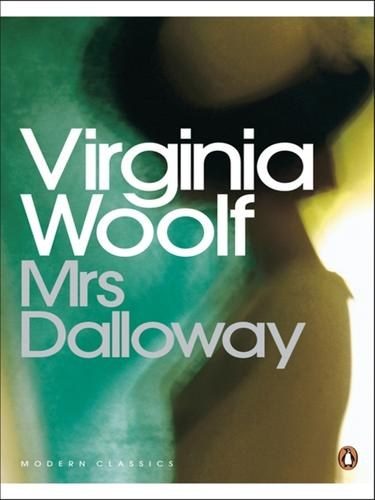
Alone in a crowd, unchosen, at her own party
Mrs Dalloway
Virginia Woolf1925about 261 pages
One June day in London, a woman throws a party and nobody in the house, including her, says the true thing once.
Clarissa Dalloway buys the flowers herself, walks through Westminster, remembers a summer thirty years earlier when she picked one life over another, and gets ready to host a party that evening. Across the city Septimus Smith, back from the war and hearing voices, moves towards a very different afternoon. Woolf runs the two lines in parallel and lets you inside every passing head, which is the trick of the thing: everyone is thinking constantly, almost nobody is saying much, and the gap between those two facts is the loneliest thing in the book.
Why it is at 4
Fourth because it is the definitive account of being alone in company, written a century ago and not bettered since. The party at the end is full of people and colder than any empty room on this list. It ranks below McCullers because the prose keeps some readers standing on the doorstep. If you have bounced off Woolf before, read the first ten pages slowly and out loud.
Read it ifyou have felt most alone at a gathering held in your honour
Skip it ifyou want plot, or you do your reading on a crowded train
shimmering, interior, sadBest for: readers who like difficultyclassicmodernismlondon
Heads up: suicide, war trauma
5

Alone with the people who know you, unchosen
Olive Kitteridge
Elizabeth Strout2008about 270 pages
Thirteen linked stories about a small Maine town and one difficult woman who is lonely inside a marriage, a job and a family.
Olive is a retired schoolteacher, blunt to the edge of cruelty, married to a gentle pharmacist she cannot quite reach and mother to a son who moves across the country partly to get away from her. Strout tells the town in thirteen stories, sometimes with Olive at the centre and sometimes with her passing through the background of somebody else's worst day. The cumulative effect is a portrait of a woman who is loved and still completely alone, mostly because of things she cannot stop herself doing. One late scene about ageing is the most exact thing here.
Why it is at 5
Fifth because it moves the address indoors. The loneliest people on this list are not the ones living by themselves, they are the ones sitting across a breakfast table from somebody who stopped asking. Strout also refuses to make Olive likeable first, which is braver than it sounds. Placed here because the short-story structure accumulates rather than grips, so it asks for patience.
Read it ifyou want the loneliness that happens inside a long marriage
Skip it ifyou need a sympathetic protagonist or a single plot line
flinty, tender, ordinaryBest for: married readers over thirtylinked storiesmarriageageing
Heads up: suicidal thoughts, grief
6

Alone with the people who know you, unchosen
Cobalt Blue
Sachin Kundalkartranslated by Jerry Pinto2006about 136 pages
A brother and a sister in one Pune household fall for the same lodger, and neither can say a word about it to anyone.
Tanay and Anuja live in a middle-class Marathi family in Pune. A young man rents the room upstairs, and both siblings fall in love with him, separately and in secret. He then leaves without warning. The novel is two long monologues, Tanay's addressed to the man who has gone and Anuja's written into a diary, and the effect is of two people alone in the same house with the same wound, unable to say one sentence to each other about it. Kundalkar wrote it in Marathi and Jerry Pinto's English keeps the quiet intact.
Why it is at 6
Sixth, and the Indian book here that gets closest to the particular loneliness of a house full of family. Everyone knows your movements and nobody knows anything about you. For a gay reader in a conservative home, Tanay's half will land like a diagnosis. It is short, unshowy, and it refuses to resolve, which is the honest choice rather than a failure of nerve.
Read it ifyou have carried something unsayable through a full house
Skip it ifyou want plot or closure, because the book offers neither
quiet, intimate, unresolvedBest for: readers in family homesindian fictiontranslatedqueer
Heads up: hidden sexuality, family rejection
7

Alone with the people who know you, chosen and regretted
The Remains of the Day
Kazuo Ishiguro1989about 281 pages
An English butler takes a motoring holiday and slowly works out that he spent his one life being correct instead of being present.
Stevens has served Darlington Hall for decades with complete professional dignity. In 1956, with a new American employer and a few days off, he drives west to visit Miss Kenton, the former housekeeper, on the stated business of staffing. What comes out along the way is everything he did not do: the politics he refused to question, his father dying upstairs while he served drinks below, and the woman who stood in front of him for twenty years. He never says any of this directly. You assemble it out of the things he keeps insisting do not matter.
Why it is at 7
Seventh because it is the study of a loneliness that a man builds himself, brick by brick, out of duty and good manners. Nobody did this to Stevens, and that is the horror of it. Ishiguro also writes the most restrained final pages here, and if the last twenty do not get to you, check your pulse.
Read it ifyou suspect you are being correct instead of being honest
Skip it ifyou want anything at all to happen quickly
restrained, devastating, formalBest for: readers over thirtyliterary fictionregretengland
8
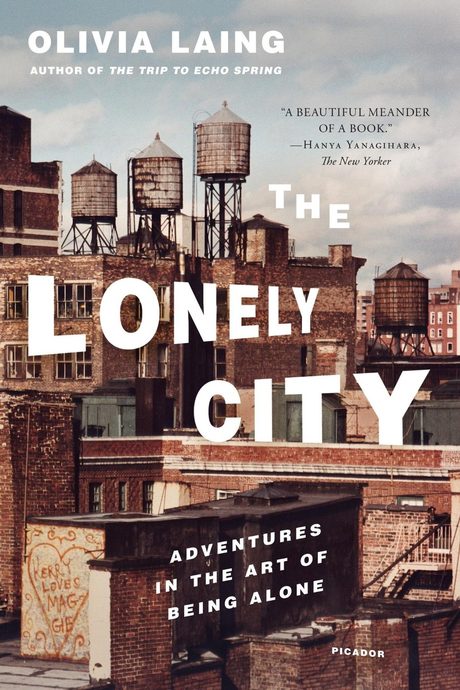
Alone in a city, unchosen
The Lonely City
Olivia Laing2016about 337 pages
A writer alone in New York after a breakup goes looking for company in the work of artists who were also alone there.
Laing moved to New York for a relationship that collapsed on arrival, and found herself in a run of sublets, speaking to almost nobody, painfully aware of her own oddness in shops. Instead of a straight memoir she went into the lives and work of four artists who lived with the same condition in the same city: Edward Hopper and his windows, Andy Warhol and his tape recorder, David Wojnarowicz on the piers during the AIDS years, and the outsider Henry Darger. She braids her own nights through their work, so it reads as art criticism and confession at once.
Why it is at 8
Eighth because it is the best written book here on loneliness as a place rather than a personal defect, and because it insists the condition has a history and an aesthetic instead of a diagnosis. Its argument that loneliness is a matter of scale and glass, not of character, is the line people carry away. Some readers want more of Laing and less of the artists.
Read it ifyou are alone in a big city and want to feel less freakish about it
Skip it ifyou have no interest at all in twentieth century art
essayistic, cool, consolingBest for: new arrivals in big citiesnonfictionartnew york
Heads up: the AIDS crisis, illness, childhood abuse in the Darger chapters
9

Alone in a city, chosen, or so he says
Open City
Teju Cole2011about 274 pages
A Nigerian German psychiatrist walks around New York for a winter, thinking, and the walking is the plot.
Julius is finishing his residency in Manhattan and has recently ended a relationship. So he walks: through the park, past the site of an African burial ground, into a Chinatown cinema, eventually to Brussels for a fortnight. He talks to a Liberian man held in a detention centre, an old professor dying by inches, a Moroccan shop assistant with strong opinions about everything. Julius is excellent company and completely opaque, and about three-quarters of the way through a woman from his past says something that sends you back through everything he has told you.
Why it is at 9
Ninth because it shows the elegant version of loneliness, the kind that presents as independence and good taste. Julius is never sad on the page. He is simply always alone, always moving, always narrating, and the book quietly asks what all that walking is for. A useful corrective for anyone who reads solitude as automatically noble. Slow by design.
Read it ifyou like books where thinking is the action
Skip it ifyou need a plot, or a narrator you can trust
wandering, cerebral, unnervingBest for: walkers and overthinkersliterary fictionnew yorkwalking
Heads up: a disclosure of sexual assault late in the book
10

Alone in a city, unchosen
Winter in Sokcho
Elisa Shua Dusapintranslated by Aneesa Abbas Higgins2016about 87 pages
A young French Korean woman works at a dying guesthouse near the North Korean border, and a French cartoonist checks in.
The narrator, half French and half Korean, works reception at a shabby guesthouse in Sokcho, a beach town near the border that is more or less dead in winter. A middle-aged French graphic novelist arrives looking for something to draw. They circle each other for weeks, mostly not talking, while she cooks, watches her mother sell fish at the market, and looks at her own face and body with a coldness that is hard to read. Very little happens. The cold, the food and the silence do all of the work.
Why it is at 10
Tenth because it is the shortest and most physical book here, and because it puts loneliness in a body rather than a mind: food you cannot eat, a face that belongs to two countries and is claimed by neither. It sits below Cole for range, not for quality. Read it in one sitting on a cold evening and the town will follow you around for a week.
Read it ifyou want atmosphere over plot and can finish a book in one go
Skip it ifyou want warmth, resolution, or a romance that actually happens
cold, spare, tenseBest for: one cold eveningtranslatedkoreashort novel
Heads up: disordered eating, cosmetic surgery
11

Alone in a room on purpose, chosen and complicated
Piranesi
Susanna Clarke2020about 289 pages
A man lives alone in an endless house of statues and tides, keeps a careful journal, and is perfectly content there.
Piranesi lives in a vast house of halls and statues with an ocean that floods the lower levels on a schedule he has learned to predict. He fishes, he catalogues, he tends the bones of the dead who came before him, and he meets one other living person twice a week. He describes all of it with joy. Then small inconsistencies start showing up in his own journals, and the question of how he got there stops being avoidable. Clarke wrote it after years of illness that kept her largely housebound, and knowing that changes the reading.
Why it is at 11
Eleventh because it is the only book here where solitude is genuinely beautiful and you still feel the trap under the floor. Every other chosen-solitude book on this list argues a case. This one simply puts you inside a contented alone life and lets you notice how much you like it there. It is also the one book here I would call joyful.
Read it ifyou want solitude written as wonder rather than affliction
Skip it ifyou want answers early, since the first fifty pages withhold everything
serene, strange, luminousBest for: readers who like puzzlesfantasysolitudemystery
Heads up: captivity, psychological manipulation
12
Alone in a room on purpose, chosen
How to Be Alone
Sara Maitland2014about 182 pages
A short practical book by a woman who lives by herself on a Scottish moor, on being alone without coming apart.
Maitland lives in a house in Galloway with no near neighbours and long stretches of silence, entirely by choice, and she spends the first half of this small book on why our culture treats that as suspicious. She traces how solitude slid from a spiritual achievement to a social failure, then gets practical: exercises for eating out alone, for a day without speech, for facing your own boredom instead of reaching for the phone. It runs under two hundred small pages and belongs to the School of Life series, so expect brisk rather than deep.
Why it is at 12
Twelfth because it is the one book here that gives you something to practise, and because it argues plainly that being alone is a skill and not a symptom. If your solitude is chosen and the people around you keep treating it as a condition, this is your ammunition. Ranked below the fiction because it is thin by design and the philosophy summarises deeper work done elsewhere.
Read it ifyou want to get better at being by yourself on purpose
Skip it ifyour loneliness is the unchosen kind, because this will not speak to it
brisk, practical, contrarianBest for: chosen solitudenonfictionsolitudepractical
13

The explainers, history
A Biography of Loneliness
Fay Bound Alberti2019about 319 pages
A historian argues that loneliness as we feel it is roughly two centuries old, and shows you the machinery that built it.
Alberti is a historian of emotion, and her claim is that the modern sore version of loneliness is not a permanent human constant but a product of the last two hundred years: the retreat of religion, the rise of the individual, industrial cities, the small family unit, and a language that shifted underneath everyone. She works through Victorian letters, widowhood, old age, the internet, and the way loneliness got attached to particular bodies, especially those of old women. The register is academic and the payoff is worth it if you are tired of being told this is your own fault.
Why it is at 13
Thirteenth, and the book that reframes the whole list. If the feeling was manufactured by specific historical conditions, then different conditions could unmake it, which is a more hopeful thought than any novel here offers. Ranked low only because the prose is scholarly and you will skim chapters. Read the introduction even if you read nothing else in it.
Read it ifyou want to know where this feeling came from
Skip it ifyou want comfort tonight, because this is an argument and not a hand to hold
scholarly, clarifying, argumentativeBest for: readers who want contextnonfictionhistoryemotion
14

The explainers, science
Loneliness: Human Nature and the Need for Social Connection
John T. Cacioppo2008about 377 pages
The neuroscientist who spent a career on this argues that loneliness is a biological alarm, much like hunger or thirst.
Cacioppo studied loneliness for decades and his central idea is simple: the feeling is a signal, evolved the way hunger and pain evolved, telling a social animal that its connections are in danger. The trouble is what the alarm does to you while it is ringing. He describes how prolonged loneliness makes people read neutral faces as hostile, remember social events more harshly than they happened, and pull back further, which then confirms the original fear. Written with William Patrick for a general reader, so the science arrives as stories rather than tables.
Why it is at 14
Last because it belongs at the end, once you know the feeling from the inside. Its one big idea, that loneliness distorts your reading of other people while you are inside it, is the most useful sentence on this list for anybody stuck in that spiral. The research is well over fifteen years old now, so treat the specifics as dated and the mechanism as sound.
Read it ifyou want a mechanism you can actually act on
Skip it ifyou want current studies, since the field has moved on since 2008
clear, scientific, practicalBest for: anyone stuck in the spiralnonfictionsciencepsychology
Worth knowing
How the addresses work
Five addresses run through this list. Alone in a crowd covers the first four books, where the loneliness happens in full view of other people and often gets read by them as rudeness or oddness. Alone with the people who know you covers the next three, which is the hardest address to explain to anyone, because from outside it looks like a family. Alone in a city covers the three after that, where the loneliness is partly architectural and partly about being new. Alone in a room on purpose covers the two chosen-solitude books. The last two explain the machine.
The reason to sort this way is that the address tells you which book will help. A person lonely inside a marriage gets almost nothing from a book about learning to eat dinner by yourself, and a person happily alone on a Sunday gets insulted by a novel that treats their week as a tragedy. Everybody knows their own address. Almost nobody knows their diagnosis, and the shelf keeps selling the second thing.
Worth knowing
Chosen or unchosen, and how to tell
The test I use is simple and it has nothing to do with how many hours you spend alone. Chosen solitude has a floor under it. You put the phone down, the quiet arrives, and something in your body settles. Unchosen loneliness has a hum. The quiet arrives and you start checking the phone again, or you turn something on so a voice is in the room, or you find yourself talking to the delivery guy for longer than the transaction needs.
Both states can occupy the same Tuesday. Solitude that is a gift at four in the afternoon can turn into the other thing by nine at night, which is why people mistrust their own reports about it. The books here are split accordingly, and if you pick one from the wrong side of that line, you will find it either smug or unbearably sad. That reaction is information about your address, not about the book.
People also ask
Questions, answered
What is the best book about loneliness?
Eleanor Oliphant Is Completely Fine by Gail Honeyman, if you want a novel that is readable and painfully recognisable at the same time. It shows loneliness the way it usually appears in real life, dressed up as a routine and defended as a preference. If you want the classic, read The Heart Is a Lonely Hunter. If you want to understand rather than feel, start with the Cacioppo book at fourteen.
What is the difference between loneliness and solitude?
Solitude is being alone without an ache. Loneliness is the gap between the connection you have and the connection you want, which is why it turns up in marriages, in families and at parties, and why it can be entirely absent from a week you spend by yourself. The books on this list are marked chosen or unchosen for exactly this reason. Reading the wrong one is how people end up feeling worse.
Can reading actually help with loneliness?
It helps with one specific part of it: the belief that your version is uniquely shameful. A good novel puts your own interior weather in somebody else's head and takes some of the freakishness out of it. What reading cannot do is treat depression or replace human contact. A book is not treatment. If the loneliness has taken your sleep, your appetite or your ability to work, see a doctor or a therapist and take the book along for the wait.
Are there Indian books about loneliness?
Cobalt Blue by Sachin Kundalkar, translated by Jerry Pinto, is the pick here. Two siblings in a Pune house love the same man and cannot tell a soul, including each other, which captures a loneliness particular to Indian family life: total surveillance combined with total privacy about the things that matter. It is short and it does not resolve. Convenience Store Woman is Japanese but the pressure to be normal will feel very local.
Which of these should I read if I am lonely right now, tonight?
Eleanor Oliphant if you want company and some laughter, Winter in Sokcho if you want something short and atmospheric that asks nothing from you, and Piranesi if you want to spend a few hours somewhere strange and beautiful instead of somewhere sad. Leave Mrs Dalloway and Alberti for a steadier week. Neither one is unkind, but both ask for concentration that a bad night will not supply.
Do sad books about loneliness make it worse?
Sometimes, and the difference is whether the book is company or a mirror. Company gives you a character whose interior life you recognise and whose story moves somewhere. A mirror just reflects the stuck feeling back at you at higher resolution. If you notice you are reading to confirm how bad things are rather than to be accompanied, put the novel down and pick up Cacioppo or Maitland instead, because both of those hand you something to do.
Before you go
What to read tonight
If you want to start tonight, start with Eleanor Oliphant, because it goes down easily and it will not leave you alone afterwards. If you already know that book, and your loneliness lives at a table with another person sitting at it, read Olive Kitteridge instead and be ready to recognise yourself in someone you do not like.
Then try the experiment the list is built on. Name your address out loud, just to yourself: in a crowd, in a marriage, in a city, in a room I chose. People spend years treating loneliness as one enormous undifferentiated fact about themselves, and the fact usually turns out to be smaller and more specific than that, which makes it something you can act on. Once you know the address, the right book is easy to find, and so is the right phone call.
Keep going
Lists that pair with this one
Mood & Life
16 Books to Read When You Are Single (None About Fixing You)
Sorted by what you actually need tonight: company, a story, or an argument. Nothing here treats being single as a condition.
Mood & Life
16 Books About Existential Crisis, Gentlest to Heaviest
Ordered by how much weight each one puts on you at 2 a.m., starting with the ones that are safe to read tonight.
Mood & Life
16 Books About Mental Health That Do Not Talk Down to You
Ordered by how much each one asks of you, from the book you can read at three in the morning to the one that needs a steady month.
Mood & Life
15 Books About Friendship: Envy, Drift and the Ones That Last
Every friendship in fiction is under one particular strain, so I have named the strain on each book and ranked them by how true it feels.
Mood & Life
15 Best Books to Read in Monsoon, Matched to Your Rain Day
Ordered the way the season actually moves, from the dry wait before the first burst to the rain that outlasts everybody, with the exact kind of wet day each book suits.