Most reading lists about Kashmir are an argument wearing a bibliography. Somebody picks the six books that agree with him, leaves out the rest, and the reader finishes better informed and no less certain than when he started. I have tried to do the opposite here, and it means this list will annoy people on both sides at least once.
Every entry carries a label saying what the book actually is: memoir, novel, reportage, poetry, graphic memoir, collected testimony, or a political account by someone who was in the room. That distinction matters more here than on any other list I have written, because a novel is not evidence, a memoir is memory with all the loyalty that implies, and an intelligence chief's book is testimony from an interested party. Two of the writers here lived through the same years in the same valley and remember two different places. Reading only one of them is how a person ends up sure.
The order is not best to worst. It runs from the smallest room outward: a girl doing homework during a curfew, a family house that gets locked and left, a town, the valley in fiction, the poems, the collected voices, then the files in Delhi and finally a map that includes the other side of the Line of Control.
These are heavy books. Almost every one has a death in it, several have torture, and a few have accounts of sexual violence, so I have flagged them on the entries. If you want one book and no more, take the first and stop there. If you want to understand why the argument never ends, read the first three in order and let them fight.
How I picked these
- Labelled, never blended. Each entry states its form, because a novel, a memoir and a former spy chief's account are three different kinds of claim on your belief.
- Range on purpose: Kashmiri Muslim writers, Kashmiri Pandit writers, an Indian outsider, a former intelligence officer, and an academic who covers both sides of the Line of Control.
- No verdicts from me on the politics. I describe what each book is and who is speaking, and I leave the arguing to the books, which are better at it than I am.
- I skipped campaign literature from both directions, and academic monographs priced for libraries, since a reader with one evening and one budget cannot use either.
- Every title checked through Google Books and Open Library with a real cover. Two books I wanted to include are missing because no reliable edition with a real cover came up, and I would rather leave a gap than send you after a ghost.
The whole list at a glance
All 14 books, in order
| # | Book | Author | Year | Vibe | Best for |
|---|
| 1 | Rumours of Spring | Farah Bashir | 2021 | intimate, quiet, exact | a first book on Kashmir |
| 2 | Curfewed Night | Basharat Peer | 2008 | plain, steady, devastating | readers who want reporting |
| 3 | Our Moon Has Blood Clots | Rahul Pandita | 2013 | raw, grieving, angry | readers who want the other memory |
| 4 | The Tiger Ladies | Sudha Koul | 2002 | warm, nostalgic, domestic | readers who want the before |
| 5 | Munnu: A Boy From Kashmir | Malik Sajad | 2015 | inventive, bleak, funny | readers who avoid nonfiction |
| 6 | The Half Mother | Shahnaz Bashir | 2014 | restrained, sorrowful, dogged | readers who want one story |
| 7 | The Collaborator | Mirza Waheed | 2011 | haunted, circling, physical | readers who want the fiction first |
| 8 | The Book of Gold Leaves | Mirza Waheed | 2014 | tender, warm, doomed | readers who want a love story |
| 9 | The Far Field | Madhuri Vijay | 2019 | cool, self-aware, uncomfortable | readers who like literary novels |
| 10 | The Country Without a Post Office | Agha Shahid Ali | 1997 | formal, elegiac, exiled | one evening and a reread |
| 11 | A Long Dream of Home | Siddhartha Gigoo | 2015 | collective, uneven, moving | readers who like anthologies |
| 12 | Until My Freedom Has Come | Sanjay Kak | 2011 | urgent, partisan, young | readers who follow the news |
| 13 | Kashmir: The Vajpayee Years | A. S. Dulat | 2015 | chatty, guarded, revealing | readers who like politics |
| 14 | Kashmir: Roots of Conflict, Paths to Peace | Sumantra Bose | 2003 | measured, structural, dry | readers who want the full history |
The list
The books, ranked
1
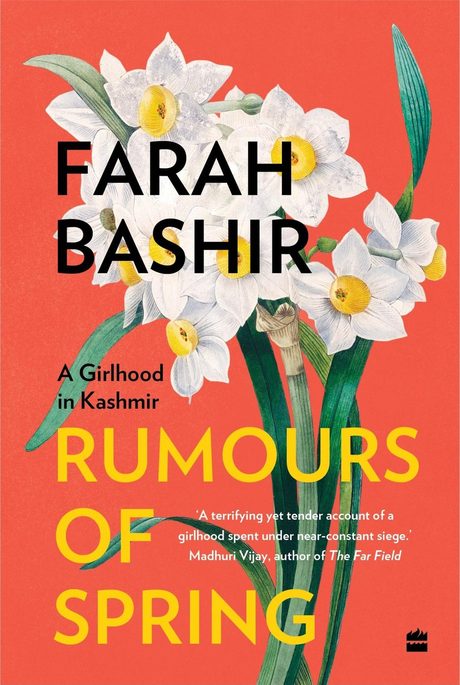
MEMOIR, a Kashmiri girlhood in Srinagar
Rumours of Spring
Farah Bashir2021about 188 pages
A 1990s girlhood told through the four days after her grandmother dies, when a funeral has to be arranged around a curfew.
Bashir builds the book around the night her grandmother died and the days that followed, which is when a family finds out what a curfew does to grief. Around that spine she rebuilds a teenage life: hair falling out from stress, a Walkman, exam preparation between crackdowns, the walk to school past a bunker, the daily arithmetic about what to wear and where to let your eyes rest. It is domestic and exact, and the violence mostly stays at the edge of the frame, which is how it works when you live inside it rather than visit.
Why it is at 1
First because it is the smallest room here and the easiest to walk into. There is no history lecture and no thesis, only a girl finishing homework in a house where the men are made to stand outside during a search. If you have never read a Kashmiri writer, start here, and be ready for the fact that you cannot un-know it afterwards.
Read it ifyou want daily texture instead of an argument
Skip it ifyou want causes, dates and political history
intimate, quiet, exactBest for: a first book on Kashmirmemoir1990ssrinagar
Heads up: grief, a night search, violence at the edges
Pairs with: The Tiger Ladies, which remembers the valley before any of this started
2
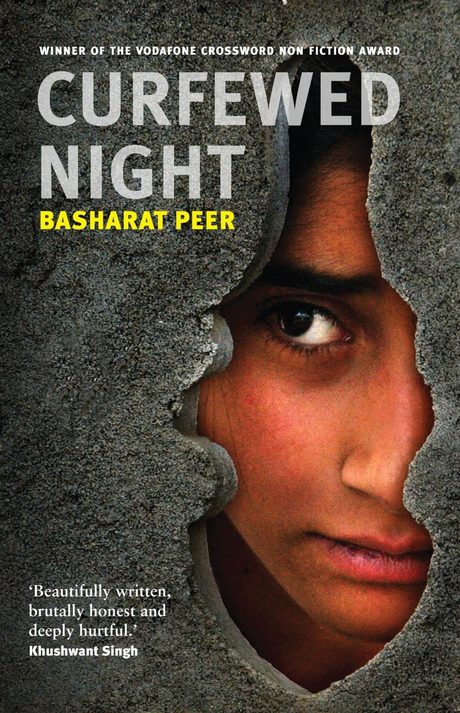
MEMOIR AND REPORTAGE, a Kashmiri journalist
Curfewed Night
Basharat Peer2008about 198 pages
A journalist goes back to report the decade he grew up in, and finds the interrogation centre, the half-widows and the classmates who crossed over.
Peer was a schoolboy when the militancy began, was sent away to study, and became a journalist in Delhi. He goes home and reports his own place: the Papa 2 interrogation centre, a village where the women wait for husbands who never came back, a friend who joined the militants, families who lost sons to one side or to the other. He writes plainly in the first person and lets the interviews carry the weight. Almost every Kashmiri book in English published since is in conversation with this one.
Why it is at 2
Second because it does two jobs at once, a childhood memoir and a reporter's tour of what the 1990s did to ordinary streets. When people say read one book about Kashmir, this is usually the book, and they are not wrong. It sits below Rumours of Spring only because it demands a little more from a reader starting completely cold.
Read it ifyou want reporting and memory in one book
Skip it ifyou cannot read detailed accounts of torture
plain, steady, devastatingBest for: readers who want reportingmemoirreportage1990s
Heads up: torture, custodial violence, killings
Pairs with: Our Moon Has Blood Clots, which remembers the same years from a Kashmiri Pandit house
3
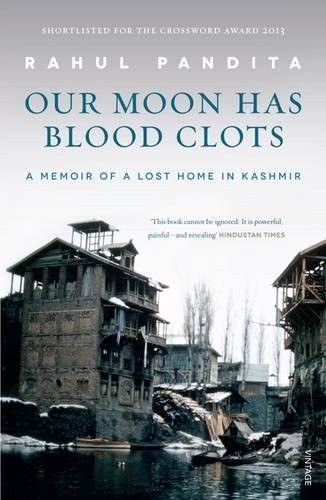
MEMOIR, the Kashmiri Pandit exodus
Our Moon Has Blood Clots
Rahul Pandita2013
A Kashmiri Pandit family leaves Srinagar in 1990 and never gets to return, told by the son who was a schoolboy when the house was locked.
In the winter of 1990 Pandita's family joined the Kashmiri Pandits who left the valley after threats, killings and nights of loudspeaker announcements. The book is mostly about what came afterwards: rented rooms in Jammu, unbearable heat, small humiliations at school, a mother who keeps saying that their house had twenty-two rooms, and a grief with nowhere to file itself. It is angry, and the author makes no claim to be even-handed. Read it as one family's memory rather than as a settled history of what happened and why.
Why it is at 3
Third because it argues directly with the two books above it, and reading them back to back is the entire point of this list. Some of its claims about who did what are contested by other writers here, and the anger occasionally runs ahead of the evidence. It is also the most widely read account of the Pandit exodus, and any honest list has to include it.
Read it ifyou want the Pandit experience from inside a family
Skip it ifyou are looking for an even-handed history
raw, grieving, angryBest for: readers who want the other memorymemoirpanditsexodus
Heads up: killings, displacement, communal violence
Pairs with: Curfewed Night, read in either order, on consecutive weekends
4

MEMOIR, a Pandit household before the fire
The Tiger Ladies
Sudha Koul2002about 240 pages
A Pandit girlhood in 1940s and 1950s Srinagar, written from America, mostly about the women, the kitchen and the seasons.
Koul grew up in a household where the grandmother ruled, the year ran on saffron, snow and weddings, and Hindus and Muslims lived side by side in a way that has since become impossible to describe without somebody starting a fight. She writes about food, gossip, school, marriage and the slow arrival of politics at the edge of all of it. The last part covers the exodus from a distance, because she had already left for America by then. The warmth is the argument: this is what was there before.
Why it is at 4
Fourth because it fills the hole the other memoirs leave. Bashir, Peer and Pandita all begin with a valley already in trouble, so you never see the ordinary years. In Koul's Kashmir the largest event of the season is a wedding. She is remembering a childhood from decades and an ocean away, so expect softness and family legend rather than reporting.
Read it ifyou want the pre-1990 valley and ordinary life
Skip it ifyou want the conflict itself examined
warm, nostalgic, domesticBest for: readers who want the beforememoirpandits1940s
5
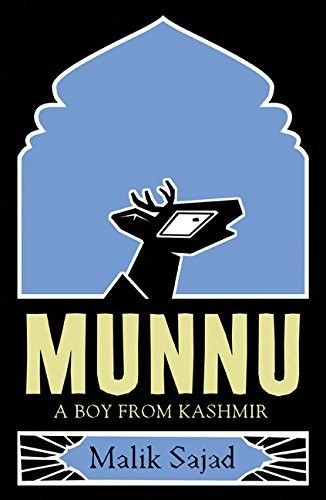
GRAPHIC MEMOIR
Munnu: A Boy From Kashmir
Malik Sajad2015
A graphic memoir in which every Kashmiri is drawn as a hangul, the valley's endangered deer, and a boy grows into a newspaper cartoonist.
Sajad draws his own childhood in Srinagar: a family of woodworkers, an older brother, school, and a city where soldiers, searches and funerals are ordinary weather. The device that carries the book is simple and strange, since every Kashmiri in it appears as a hangul, the endangered deer of the valley, which turns a political point into something you feel before you can argue with it. The art is dense black and white, closer to woodcut than to comics, and the boy grows up drawing cartoons for a newspaper that keeps getting into trouble.
Why it is at 5
Fifth, and this is the one I would hand a reader who says nonfiction bores them. Munnu covers a lot of the same ground as Curfewed Night in pictures, with more jokes, and a child narrator keeps it from turning into a sermon. Be warned that the density of the drawing means it takes far longer to read than its page count suggests.
Read it ifyou read comics or want the story in pictures
Skip it ifyou find dense black and white art hard going
inventive, bleak, funnyBest for: readers who avoid nonfictiongraphic memoirsrinagarart
Heads up: killings, searches, a child's view of violence
6
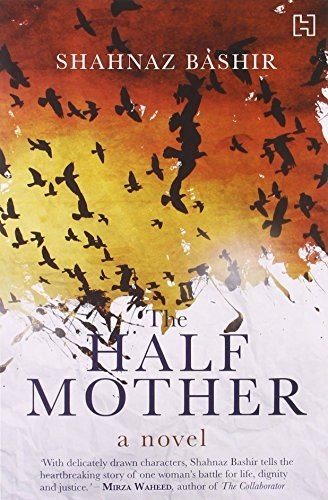
NOVEL, an enforced disappearance
The Half Mother
Shahnaz Bashir2014about 182 pages
A mother's son is taken in a night raid, and the novel follows the years she spends going from camp to jail to court looking for him.
Haleema loses her father in a raid and her son to a night pick-up, and the book follows her through the machinery that assembles itself around a disappearance: army camps, lawyers, police stations, and the associations of parents who meet holding photographs. Bashir writes it small and slow, with none of the flourishes the subject invites. The title comes from the half-widows of Kashmir, women whose husbands vanished and were never declared dead, so they can neither mourn properly nor start again, and the novel extends that idea to mothers.
Why it is at 6
Sixth because it is the clearest single book on enforced disappearance, which is the part of Kashmiri life that outsiders understand least and dismiss fastest. It is a first novel and it shows, with some flat dialogue and a few scenes that repeat their point. The restraint with which it handles the worst material is better than several better-known books manage.
Read it ifyou want one thread followed all the way down
Skip it ifyou need polished, confident prose
restrained, sorrowful, doggedBest for: readers who want one storynoveldisappearancemothers
Heads up: enforced disappearance, custodial violence, grief
7
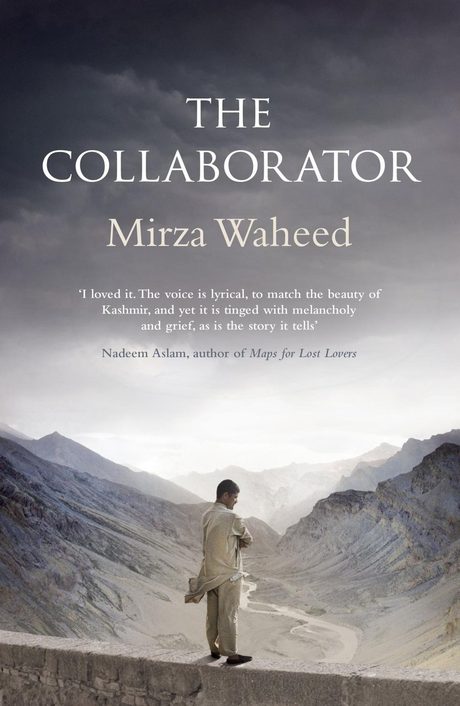
NOVEL, the villages on the Line of Control
The Collaborator
Mirza Waheed2011about 370 pages
A teenager in a border village is paid by an army captain to search the bodies in a meadow for identity cards.
The narrator's friends have crossed the mountains to train and have not come back. He stays behind and ends up with the worst job in the valley, walking through a field of the dead, going through pockets, reporting to a captain who drinks and talks and occasionally seems almost human. Waheed keeps the perspective locked to that boy, so the war arrives as smells, rumours and errands instead of strategy and dates. The book returns to the same meadow again and again, which is hypnotic or heavy going depending entirely on your patience.
Why it is at 7
Seventh in the route and the best novel on this list. It does what reportage cannot, which is to put you inside a choice with no clean option and keep you there for three hundred pages. The prose over-reaches in places, and the circling structure is deliberate but genuinely repetitive. If you want only fiction from this list, take this one.
Read it ifyou want fiction that stays with one impossible job
Skip it ifyou need a plot that moves forward steadily
haunted, circling, physicalBest for: readers who want the fiction firstnovelline of control1990s
Heads up: corpses, torture, war violence
8
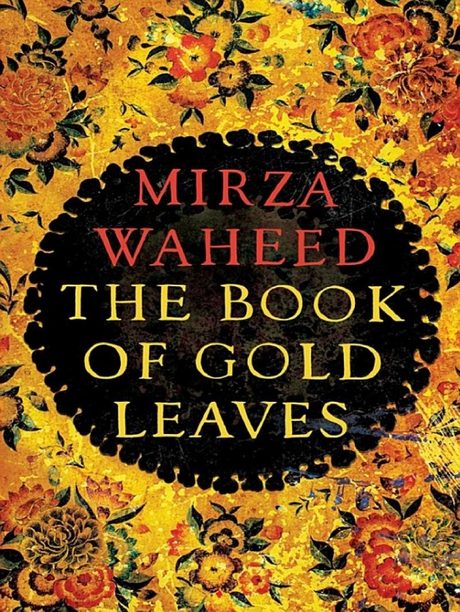
NOVEL, a love story in Srinagar
The Book of Gold Leaves
Mirza Waheed2014about 398 pages
A papier mache painter and a young woman fall in love in Srinagar exactly as the city stops being a place where anyone can meet safely.
Faiz paints pencil boxes for a living and dreams of finishing one large work in the old style. Roohi has decided she will marry him whatever her family thinks about it. Around them Waheed builds the Srinagar of the early 1990s: a shrine, a school, a bunker at the end of the lane, and the steady closing of every route the two of them might have used to live an ordinary life. It is a romance written against a city that has stopped permitting romances, and it knows what it is doing.
Why it is at 8
Eighth because it is the gentlest fiction here and the best reply to anyone who assumes books about Kashmir are only bodies and politics. It is looser than The Collaborator and the ending arrives in a rush. Read it when the earlier entries have left you needing a book with tenderness in it, and read it before the poetry rather than after.
Read it ifyou want a love story inside the conflict
Skip it ifyou want the politics examined head on
tender, warm, doomedBest for: readers who want a love storynovellove storysrinagar
Heads up: war violence and loss
9
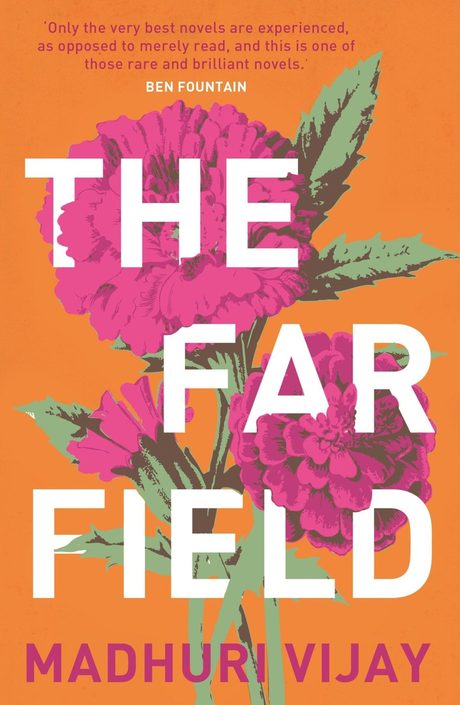
NOVEL, an outsider's journey from Bangalore
The Far Field
Madhuri Vijay2019about 429 pages
A rich, aimless woman from Bangalore goes looking for a salesman her dead mother liked, and does damage she never quite sees.
Shalini has money, grief and no plan, so she follows a thin lead to a village in the mountains and stays with a family who take her in without asking for much. Vijay is interested in the thing outsider narratives usually avoid, which is what a well-meaning visitor costs the people who host her. Shalini is often insufferable, and that is deliberate. The novel alternates between her Bangalore childhood with a mother who was brilliant and unwell and the village where her ignorance slowly acquires consequences.
Why it is at 9
Ninth because it is the outsider's book and it knows that about itself. Kashmiri readers have argued about whether an Indian novelist should be telling this story at all, and that argument is worth knowing before you begin. As a novel about privilege and the harm it does while meaning well, it is the sharpest thing here, and the most conventionally readable.
Read it ifyou want a novel about visiting other people's wars
Skip it ifyou want only Kashmiri voices at the centre
cool, self-aware, uncomfortableBest for: readers who like literary novelsnoveloutsidermountains
Heads up: grief, mental illness, a disappearance
10
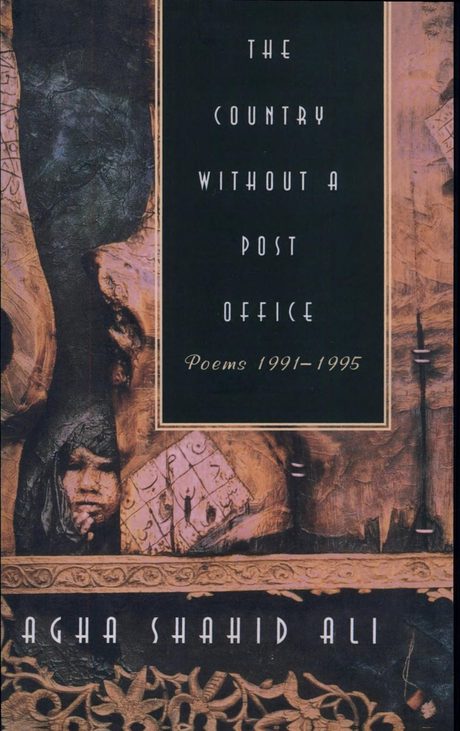
POETRY
The Country Without a Post Office
Agha Shahid Ali1997about 88 pages
The poems that gave the 1990s valley its images: a post office full of undelivered letters, a country of maps, a language for grief.
Agha Shahid Ali wrote these poems from America in the years when the mail from Kashmir stopped moving, and he built them out of that fact: letters nobody will ever read, addresses that no longer work, a burned post office, a minaret. He writes in strict forms, ghazals and canzones and villanelles, and he addresses friends by name inside the poems. If you have read only prose about Kashmir, these will change the pitch of everything else you read, because grief inside a form behaves differently from grief in a paragraph.
Why it is at 10
Tenth in the route, though this is the book people end up quoting for the rest of their lives. It runs to about eighty pages and you can read it in an evening, but most of it asks for a second pass before it opens. Put it after the memoirs, since the poems assume you already know what a crackdown is and will not stop to explain.
Read it ifyou like formal poetry and have read the prose
Skip it ifpoetry irritates you when it withholds facts
formal, elegiac, exiledBest for: one evening and a rereadpoetryexile1990s
11
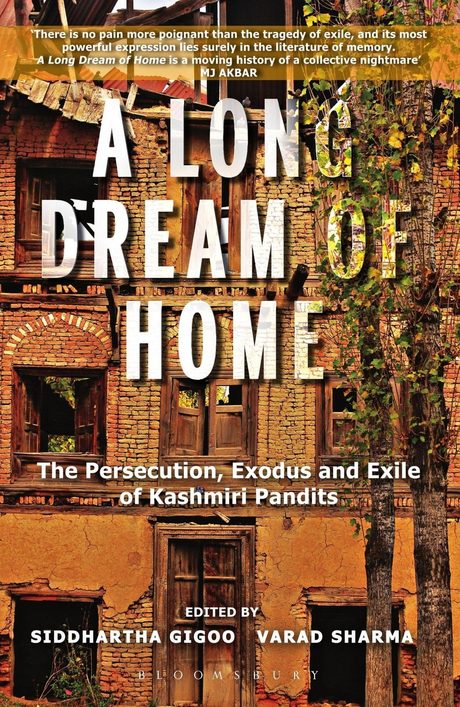
COLLECTED TESTIMONY, Kashmiri Pandit voices
A Long Dream of Home
Siddhartha Gigoo2015about 356 pages
Dozens of Kashmiri Pandits write their own accounts of leaving, of the camps in Jammu, and of what home means after twenty-five years away.
This is a collection rather than one narrative: memoirs, essays and short pieces by Kashmiri Pandits of several generations, edited by Siddhartha Gigoo and Varad Sharma. Some contributors are practised writers and some are not, and the unevenness is part of the value, because you get a community talking instead of one voice speaking for everybody. The camp years in Jammu come up again and again, the tin roofs and the heat and the schooling, and so does the argument about what should happen next and who owes whom.
Why it is at 11
Eleventh because it does what a single memoir cannot, which is to show a community disagreeing with itself about its own story. Read it after Pandita and Koul, once you have two Pandit accounts and want to see how much they differ from each other. As a book it is patchy, and you will skim some pieces to reach the ones that hold you.
Read it ifyou want many voices rather than one
Skip it ifyou want a single narrative to follow
collective, uneven, movingBest for: readers who like anthologiestestimonypanditsexile
Heads up: displacement, killings, camp conditions
12
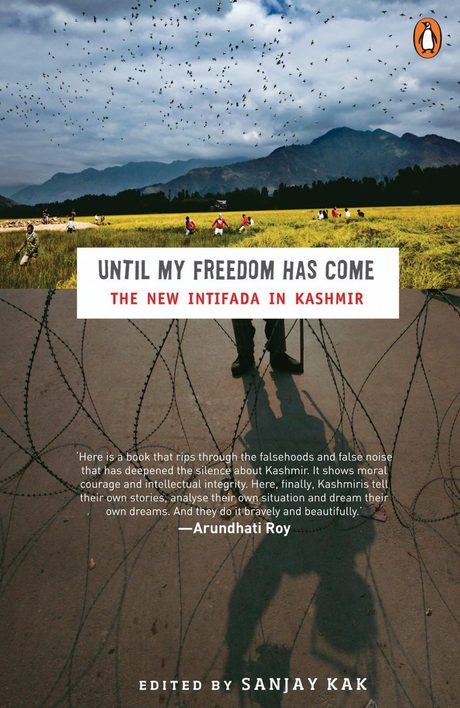
REPORTAGE ANTHOLOGY, the protest summers
Until My Freedom Has Come
Sanjay Kak2011about 324 pages
Essays, reporting and blog posts from the summers when a new generation fought the state with stones and the internet instead of guns.
Kak edited this after the protest summers of 2008 to 2010, when the street rather than the gun became the main form of resistance in the valley. The contributors are journalists, academics, poets and young Kashmiris who were writing online at the time, and the pieces run from cool analysis to raw first-person accounts written days after the events. The collection is openly sympathetic to the protesters and hostile to the state's response, and it says so rather than pretending to a neutrality it does not have.
Why it is at 12
Twelfth because nothing else here catches the shift from the 1990s militancy to mass street protest, which is the Kashmir most Indians under thirty have actually watched on television. Being an anthology, it repeats itself and the quality moves around. I would rather read a book that states its position than one that hides it inside a calm voice.
Read it ifyou want the 2010 generation in its own words
Skip it ifyou want a neutral survey of the period
urgent, partisan, youngBest for: readers who follow the newsessaysprotest2010
Heads up: protest deaths and injuries
13
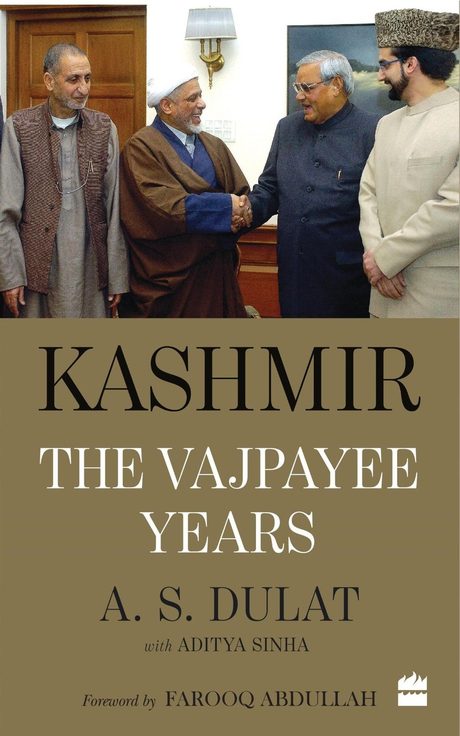
POLITICAL MEMOIR, Delhi's side of the file
Kashmir: The Vajpayee Years
A. S. Dulat2015about 418 pages
India's former intelligence chief on how Delhi handled Kashmir under Vajpayee, who it talked to, and which deals never closed.
Dulat ran the Intelligence Bureau's Kashmir desk, later headed the Research and Analysis Wing, and then advised the Prime Minister's Office on Kashmir. Written with the journalist Aditya Sinha, this is his account of the 1990s and early 2000s: which separatist leaders Delhi kept a line open to, how elections were handled, the hijacking of IC 814, and the outreach that Vajpayee attempted. It is chatty, indiscreet in some places and carefully evasive in others, and it was argued about loudly when it appeared.
Why it is at 13
Thirteenth because this is where the route leaves the valley and enters the offices where things get decided. Nothing else here shows how the Indian state itself thought about Kashmir, and it corrects any reading list where the state turns up only as a boot in a doorway. Treat it as testimony from an interested party, since that is exactly what it is.
Read it ifyou want the state's own version of events
Skip it ifyou have no appetite for insider political memoir
chatty, guarded, revealingBest for: readers who like politicspolitical memoirintelligencedelhi
14
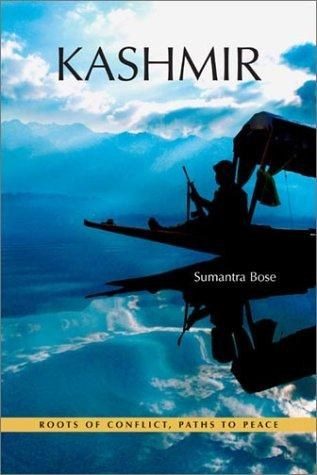
HISTORY AND ANALYSIS, both sides of the Line of Control
Kashmir: Roots of Conflict, Paths to Peace
Sumantra Bose2003about 307 pages
A political scientist sets out how the dispute reached this point, covers both sides of the line, and argues for a settlement rather than a winner.
Bose starts in 1947 and works forward through the accession, the wars, the 1987 election, the militancy and the counter-insurgency, and he does the thing most books skip, which is to give real attention to Azad Kashmir and the Northern Areas as well as the Indian side. Comparative politics is his field, so Northern Ireland and Bosnia turn up as working examples rather than decoration, and he uses them to argue that settlements come from arrangements between people rather than from anybody's total victory. Academic prose, but not walled off from ordinary readers.
Why it is at 14
Last because it is the widest frame and the least inviting at eleven at night, not because it matters least. Once you have read the memoirs and the fiction, this is where the names, dates and constitutional arguments finally sit down in order. It was written well before the 2019 change to Article 370, so the closing chapters are dated and you should read them as history.
Read it ifyou want the history and the constitutional argument
Skip it ifyou want people rather than politics
measured, structural, dryBest for: readers who want the full historyhistoryanalysispolitics
Worth knowing
Read them in pairs, because they contradict each other
The single most useful thing you can do with this list is to read it two books at a time, choosing pairs that disagree. Peer and Pandita are the obvious one: two journalists, one Muslim and one Pandit, both writing about the same valley in the same decade, both honest, both partial. Neither cancels the other out and neither is a rebuttal, which is the uncomfortable thing you learn by reading them together rather than picking one.
The other pairs I would suggest are Farah Bashir with Sudha Koul, since one is a girlhood inside the conflict and the other a girlhood before it, and Mirza Waheed with Madhuri Vijay, since one writes the valley from inside and the other writes a visitor doing harm. Then Sanjay Kak with A. S. Dulat, the street and the file, in that order. If you read one from each pair and stop, you have not saved time, you have only chosen a side and called it reading.
Worth knowing
What the labels mean and why they are here
A memoir is memory, and memory is loyal to the person remembering. A novel is invention working on real material, which lets it reach places reporting cannot and also lets it invent. Reportage is what a journalist could stand up at the time, which is more checkable and much narrower. Collected testimony gives you a group rather than an individual, with all the unevenness that brings. A political memoir by a former intelligence officer is testimony from a participant with a reputation to manage.
None of these forms is better than the others and all of them are on this list on purpose. What matters is that you know which one you are holding, because arguments about Kashmir usually go wrong at exactly the point where a novel gets quoted as proof, or a spy's memoir gets read as neutral history.
People also ask
Questions, answered
What is the best book to read about Kashmir?
Curfewed Night by Basharat Peer if you are reading only one, because it combines a memoir of growing up in the 1990s with reporting on what happened to ordinary families. If you can read two, add Rahul Pandita's Our Moon Has Blood Clots, which tells the same decade from a Kashmiri Pandit family's side. The two books disagree, and reading both is the closest a beginner gets to the actual shape of the argument.
Are books about Kashmir biased?
Every book on this list has a position, including the academic one, and the useful question is not whether a book is neutral but whether it tells you where it stands. Peer, Pandita, Kak and Dulat all write from clear vantage points and mostly admit it. My advice is to read in pairs that disagree, note who is speaking, and be suspicious of any book about Kashmir that sounds completely calm.
Which books cover the Kashmiri Pandit exodus?
Our Moon Has Blood Clots by Rahul Pandita is the best known account and the angriest. The Tiger Ladies by Sudha Koul gives you the same community decades earlier, when the valley was still ordinary, which is what makes the loss legible. A Long Dream of Home, edited by Siddhartha Gigoo and Varad Sharma, collects many Pandit voices instead of one, including people who spent years in the Jammu camps.
Is The Far Field a book about Kashmir?
Partly. Roughly half of Madhuri Vijay's novel takes place in a Kashmiri village and the rest in Bangalore, and its real subject is what an outsider costs the people she visits. Some Kashmiri readers object to an Indian novelist telling this story at all, which is a fair argument to know about before you start. As a novel it is excellent, and it is the most readable fiction on this list.
Do I need to know the history before reading these?
No. Start with a memoir and let the history arrive through one person's life, which is how the books at the top of this list work. Save Sumantra Bose for last, once the names and years mean something to you, because his book is the map and maps make more sense after you have walked around. Nothing on this list requires prior reading, though several assume ordinary attention.
Are there books from the Pakistani side of Kashmir?
Very few in English, and that gap is real rather than an oversight on my part. Sumantra Bose covers Azad Kashmir and the Northern Areas in his analysis, which is the main reason his book closes this list. Most English-language writing about Kashmir comes from the Indian side of the Line of Control, from Kashmiri writers, Indian journalists and academics, and a reading list can only work with what exists.
Before you go
What to read tonight
If you have one evening, read Rumours of Spring and let it stay small and personal. If you have a month, do it properly: Peer, then Pandita, then Waheed's novel, then the poems, and only then Bose to put the dates in order. Anybody who finishes those five and still finds the whole thing simple was not really reading.
One more suggestion. When a book on this list makes you angry, note the exact page, then find the entry here that disagrees with it and read that next. That is the whole method, and it is the only honest way to use a list like this one. The valley does not need another reader with a settled opinion, and you will be better company at dinner without one.
Keep going
Lists that pair with this one
Indian Fiction
14 Best Pakistani Novels in English, Ranked by How Easily You Get In
Fourteen novels from across the border, ordered from the easiest way in to the ones that ask more of you, with a city and a year on every entry.
Indian Fiction
14 Best Partition Novels and Books, Ranked by Where to Start
Fiction and first-hand testimony from both sides of the 1947 line, ordered so you begin with the one you can actually finish.
Indian Fiction
13 Books Set in the Himalayas, Ranked by Altitude
The list climbs. It starts in the hill towns where the road still goes and finishes above eight thousand metres, and every entry tells you whether the writer lived up there or was only passing through.
Indian Fiction
The 12 Best Indian Graphic Novels, and What the Art Actually Does
Twelve books where the drawing carries the story, ranked, with each art style named so you know what you are walking into.
Indian Fiction
16 Best Books to Understand India, Ranked by What They Explain
Sixteen books, ten doors into the same country: history, caste, the mega city, the village, money, and where to start tonight.