A friend once handed me Moth Smoke and said, read this, it is about Pakistan. He was wrong in a useful way. It is about a man who loses his job, wants his best friend's wife, and gets into money trouble he cannot climb out of, and the country is the weather around him rather than the subject.
That is the test I have used here. These are fourteen novels in English by Pakistani writers, ranked by how easily a reader with no background walks in, best entry first. They are not ranked by importance, because importance is a terrible reason to start a book at eleven at night. Where a lower-ranked book is the better novel, I say so on the entry instead of quietly moving it up.
Every entry carries a city and a period, so by the end the fourteen make a rough map: Lahore drawing rooms, Karachi traffic, the feudal estates of southern Punjab, a town near the Afghan border, a walled city that Partition emptied out. Each one also gets an Indian novel to read alongside it, since half the pleasure for us is hearing a literature that grew up next door with the same grandparents and different arguments.
I have kept the politics out of the reviewing. These writers go after their own state hard enough without a chorus from this side of the border, and a novel is a poor place to settle a border dispute anyway.
How I picked these
- Story first, country second. I ranked on how well each book works for someone who wants a novel, not a briefing.
- Set in Pakistan, mostly. Home Fire and Burnt Shadows are strong Kamila Shamsie books, but they spend most of their pages in London, Nagasaki and New York, so Kartography took the Shamsie place instead.
- Written in English, not translated. That is why Intizar Husain's Basti sits on my partition list rather than this one, and why the Urdu greats are a separate conversation.
- Two books of linked stories are here, by Daniyal Mueenuddin and Jamil Ahmad, because both read like novels of a place. I flag that on their entries rather than pretending they are novels.
- I left out Bapsi Sidhwa's Ice-Candy-Man, since it already sits on my partition list, and one Sidhwa per list is plenty.
- Every title checked through Google Books and Open Library with a real cover, so nothing here is a ghost edition you cannot actually buy.
The whole list at a glance
All 14 books, in order
| # | Book | Author | Year | Vibe | Best for |
|---|
| 1 | The Reluctant Fundamentalist | Mohsin Hamid | 2007 | quiet, controlled, unsettling | your first Pakistani novel |
| 2 | Moth Smoke | Mohsin Hamid | 2000 | hot, sour, fast | readers who like crime plots |
| 3 | A Case of Exploding Mangoes | Mohammed Hanif | 2008 | black comedy, deadpan | readers who like satire |
| 4 | The Scatter Here Is Too Great | Bilal Tanweer | 2013 | fragmented, tender, quick | one evening |
| 5 | In Other Rooms, Other Wonders | Daniyal Mueenuddin | 2009 | cool, precise, sad | rural Pakistan without the news |
| 6 | Our Lady of Alice Bhatti | Mohammed Hanif | 2011 | furious, funny, violent | readers who like dark comedy |
| 7 | The Wandering Falcon | Jamil Ahmad | 2011 | spare, austere, humane | readers who love short chapters |
| 8 | Between Clay and Dust | Musharraf Ali Farooqi | 2012 | formal, elegiac, still | readers who like fables |
| 9 | Kartography | Kamila Shamsie | 2002 | romantic, wounded, urban | readers who like family secrets |
| 10 | The Crow Eaters | Bapsi Sidhwa | 1978 | bawdy, warm, mischievous | readers who like family sagas |
| 11 | The Diary of a Social Butterfly | Moni Mohsin | 2008 | silly, sharp, gossipy | a bad day |
| 12 | The Golden Legend | Nadeem Aslam | 2017 | ornate, tense, bleak | patient readers with a strong stomach |
| 13 | The Shadow of the Crescent Moon | Fatima Bhutto | 2013 | tense, angry, hushed | readers who follow the region |
| 14 | Trespassing | Uzma Aslam Khan | 2003 | sprawling, sensual, patient | readers with a long weekend |
The list
The books, ranked
1

LAHORE AND NEW YORK, around 2001
The Reluctant Fundamentalist
Mohsin Hamid2007about 184 pages
A bearded Pakistani man buys tea for a nervous American in Lahore and talks him through the story of his Wall Street years.
The whole book is one conversation. Changez, a Princeton graduate who made good money valuing companies in New York, sits with an American stranger in Lahore and walks him through his rise, his half-love for a grieving girlfriend, and the morning the towers came down and changed how strangers read his face. You never hear the American speak. That single trick does the work, because you supply the other half of the conversation, which means you supply your own suspicion, and by the last page you get to notice what you assumed and when you started assuming it.
Why it is at 1
First because nothing else here is easier to start and harder to shake off. It is short, the sentences are clean, and it asks for no background at all. If you have read exactly one Pakistani novel, it is probably this one, and rather than being clever about that I would rather agree with the crowd for once.
Read it ifyou want one sitting, one voice, and an ending you argue about
Skip it ifyou need events and incident, since this is a man talking across a table
quiet, controlled, unsettlingBest for: your first Pakistani novelliterary fictionmonologuelahore
Pairs with: The Shadow Lines by Amitav Ghosh, another novel where borders live inside people rather than on maps
2
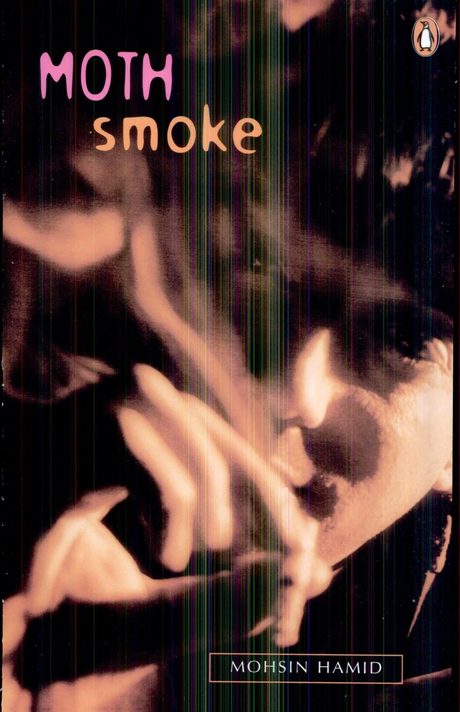
LAHORE, 1998
Moth Smoke
Mohsin Hamid2000about 260 pages
A banker gets sacked, falls for his rich best friend's wife, and slides into hash and petty crime while Lahore sweats through a nuclear summer.
Daru loses his bank job in the opening pages and the fall is quick: no air conditioning, no money, no patience left. His friend Ozi has all three, plus a wife called Mumtaz who is bored and curious. Hamid frames the whole thing as a trial and hands the microphone to different characters chapter by chapter, so you get to decide who is lying to you. The heat works like a third character, and the summer of 1998, when both countries tested their bombs, hums under the story without ever taking it over.
Why it is at 2
Second because it moves like a thriller while writing like literature, so almost nobody bounces off it. Of the two Hamid books here this is the one for readers who want incident rather than argument, and it is the sharpest portrait on the list of what money does to a friendship. It sits below the first only because the ending asks for a little patience.
Read it ifyou like noir with real class anger under it
Skip it ifyou need someone in the book to root for
hot, sour, fastBest for: readers who like crime plotsnoirclasslahore
Pairs with: The White Tiger by Aravind Adiga, for the same fury about who gets to have a life
3
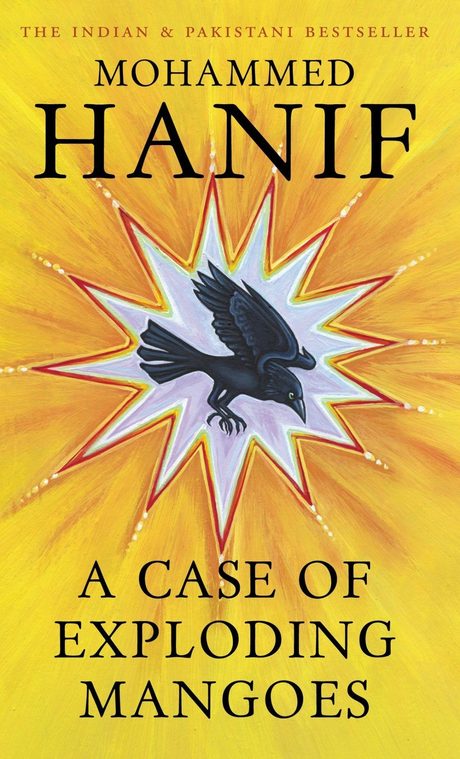
ISLAMABAD AND THE AIR FORCE ACADEMY, 1988
A Case of Exploding Mangoes
Mohammed Hanif2008about 289 pages
A comic novel about the plane crash that killed General Zia, narrated by a junior officer with a grudge and excellent timing.
In August 1988 a plane carrying Pakistan's military ruler fell out of the sky, and the cause has never been settled. Hanif, who trained as a pilot before he became a journalist, takes that hole in the record and fills it with farce: an under-officer plotting revenge, a general who consults his own horoscope, a crate of mangoes, a woman in a prison cell whose case says everything about the laws of that decade, and an American diplomat with wonderful teeth. It is very funny for two hundred pages and then, in a paragraph, not funny at all.
Why it is at 3
Third because comedy is the easiest door in the building and Hanif props it open. You need to know nothing going in, since the book teaches you the shape of the era while making jokes at everyone in uniform. It ranks below Moth Smoke only because the cast is large and a few threads take their time before they knot together.
Read it ifyou like political farce with teeth in it
Skip it ifyou want the history straight, because this is fiction built around a real crash
black comedy, deadpanBest for: readers who like satiresatiremilitary1980s
Heads up: torture and custodial violence, some of it played as black comedy
Pairs with: The Great Indian Novel by Shashi Tharoor, for the same trick of hiding a country's politics inside a joke
4
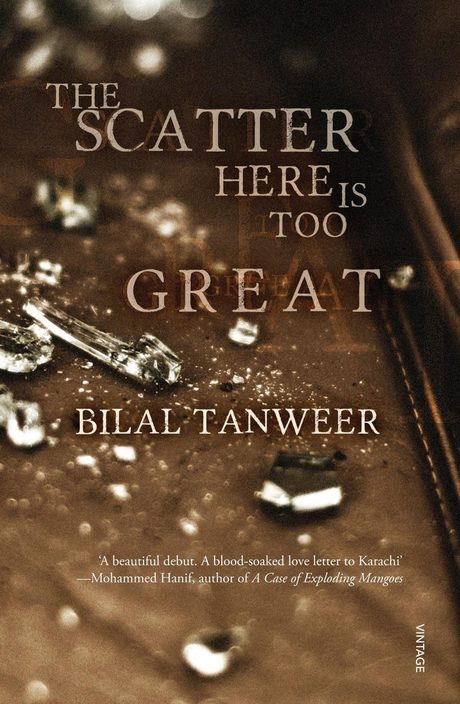
KARACHI, 2000s
The Scatter Here Is Too Great
Bilal Tanweer2013about 118 pages
A bomb goes off near the railway station and the novel follows the people scattered around it, one voice at a time.
Tanweer builds his Karachi out of linked chapters: a boy on a bus, an ambulance driver, a small-time hood, a writer trying to remember his father's poems. The blast at Cantt Station touches each of them at a different distance, and the pieces slowly turn into a single day seen from several heights. It is short, it never asks you to admire the writing, and the humour survives the subject. By the last chapter you realise the book has been assembling a city out of people who barely know each other, which is what cities are.
Why it is at 4
Fourth because it is the quickest real entry into Karachi here and the least demanding on your time. Where Kartography gives you the city across years, this gives it to you in an afternoon. The structure does mean the emotional payoff arrives late, so hold on for the last thirty pages before you decide what you think.
Read it ifyou have one evening and want a whole city
Skip it ifyou dislike novels told in separate voices
fragmented, tender, quickBest for: one eveningkarachilinked storiesdebut
Heads up: a bomb blast and its aftermath
5
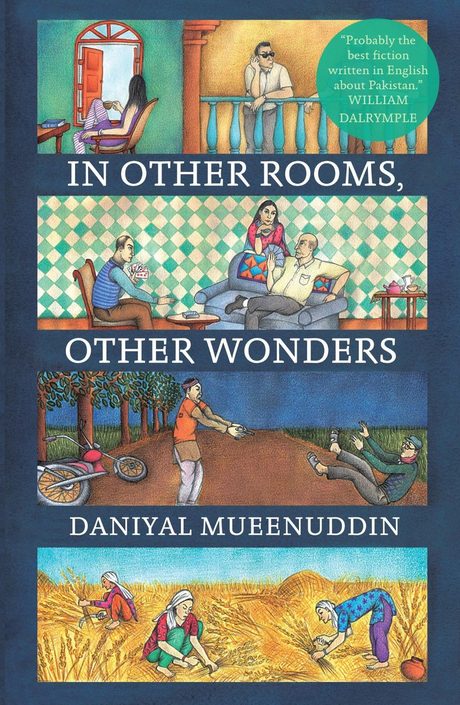
SOUTHERN PUNJAB ESTATES, 1970s to 1990s
In Other Rooms, Other Wonders
Daniyal Mueenuddin2009about 207 pages
Linked stories around one ageing Lahore landowner, from the drawing room to the servants' quarters, where the real negotiations happen.
Mueenuddin grew up on a farm in southern Punjab and the detail shows: a manager who skims, an electrician who steals current for the whole village, a maid who becomes a mistress and calculates every rung of the climb. K. K. Harouni, the landowner at the centre, barely does anything, and that is the design, because everyone around him spends a life arranging themselves in relation to his money. The prose is plain and cool and very good indeed. Almost every story ends with somebody losing, usually the person who had least to start with.
Why it is at 5
Fifth, and this is the book to read if you want the Pakistan that is not a city. Feudal Punjab looks a great deal like feudal India, so an Indian reader arrives already fluent in the rules. These are linked stories rather than a novel, which is the only reason it sits below the four above it.
Read it ifyou like Chekhov and stories about servants and masters
Skip it ifyou want an ending where the poor come out ahead
cool, precise, sadBest for: rural Pakistan without the newsshort storiesclasspunjab
Pairs with: Ghachar Ghochar by Vivek Shanbhag, for the same clear eye on what money does to people
6
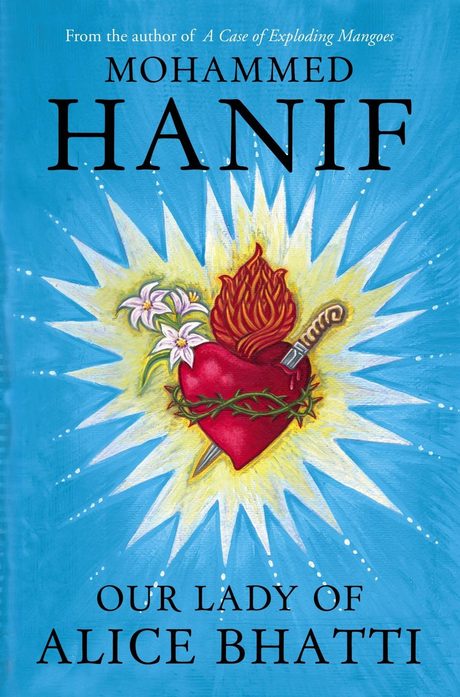
KARACHI, A PUBLIC HOSPITAL
Our Lady of Alice Bhatti
Mohammed Hanif2011about 200 pages
A Christian nurse from Karachi's sanitary workers' colony takes a hospital job in a city where everyone is armed with something.
Alice Bhatti has a nursing diploma, a prison record she does not explain, and the wrong surname in a place that reads surnames the way we read them here. Hanif follows her through wards where miracles are rumoured and the police are a bigger danger than any disease, and into a marriage with a bodybuilding policeman who loves her the way a man loves a trophy he expects to keep on a shelf. It is funnier than that description suggests and angrier than it first lets on, and the last twenty pages turn very cold.
Why it is at 6
Sixth because it is the one novel here about Pakistan's Christian minority, written by the funniest writer on the list, and because the sanitary workers' colony will feel uncomfortably familiar to any Indian reader who knows which jobs get reserved for which people. It is a rougher, angrier book than Exploding Mangoes, and the violence lands harder.
Read it ifyou want jokes and rage in the same paragraph
Skip it ifyou need a hopeful ending after a hard book
furious, funny, violentBest for: readers who like dark comedykarachiminoritiesdark comedy
Heads up: sexual violence and a brutal ending
7
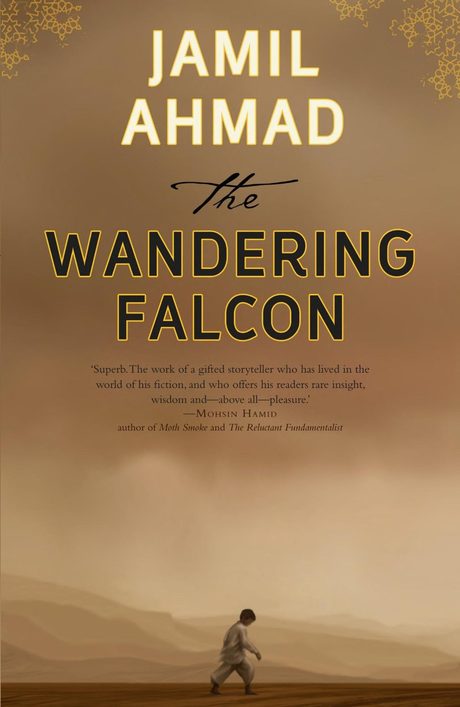
THE TRIBAL FRONTIER, 1950s to 1970s
The Wandering Falcon
Jamil Ahmad2011about 187 pages
Linked stories of the borderlands between Pakistan, Afghanistan and Iran, by a former civil servant who published his first book late in life.
Tor Baz, the falcon of the title, is a boy left alone after his parents are killed, and the book follows him loosely across the tribal belt. Each chapter stands on its own: a camel caravan turned back by a border that did not exist last year, a nomad family who cannot understand why lines on a map now decide where their goats may walk, a soldier at a lonely post, a girl traded between men. Ahmad served in these districts for decades and writes about them with neither pity nor tourism, which is rarer than it sounds.
Why it is at 7
Seventh on ease of entry, first on quality. Sentence for sentence this is the best written book on the list, and if it were ranked by prose alone it would open the page. The chapters are cold and episodic though, so a reader who needs a plot to hold onto will drift. Read it for a part of the world usually described only by armies and correspondents.
Read it ifyou want the frontier described by someone who lived there
Skip it ifyou need one continuous story and a hero to follow
spare, austere, humaneBest for: readers who love short chaptersfrontierlinked storiesnomads
Heads up: violence, including violence against women
8
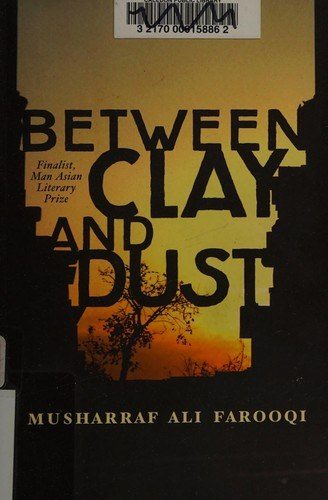
A WALLED CITY, AFTER PARTITION
Between Clay and Dust
Musharraf Ali Farooqi2012
A wrestler past his prime and a courtesan past hers, in an inner city whose old order was emptied out by Partition.
Ustad Ramzi is the champion of a wrestling akhara nobody comes to watch any more. Gohar Jan runs a kotha where the music still happens every evening for a hall with no listeners in it. Farooqi keeps the frame small and formal, close to a fable, and lets these two hold on to their disciplines while the city rearranges itself around them. Nothing loud happens for long stretches. The pleasure lies in watching two proud people work out, slowly and separately, exactly what they will not give up.
Why it is at 8
Eighth because the register is old-fashioned and quiet, which some readers love and others find slow going. If your idea of akharas and kothas comes from Hindi films, this is the corrective: the same world with the music cues removed and the dignity left in. It is also the shortest route on this list to the Pakistan that Partition hollowed out.
Read it ifyou like slow, formal, restrained storytelling
Skip it ifyou want incident and speed
formal, elegiac, stillBest for: readers who like fablespartition aftermathwrestlingmusic
Pairs with: Umrao Jan Ada by Mirza Muhammad Hadi Ruswa, for the other half of the kotha story
9
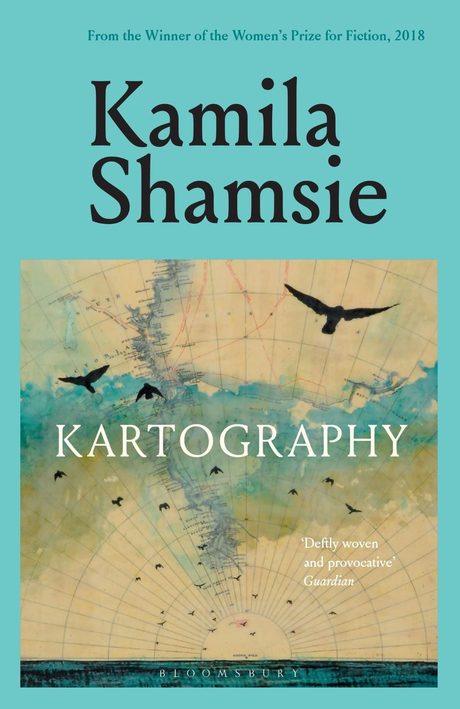
KARACHI, 1971 AND THE 1990s
Kartography
Kamila Shamsie2002about 353 pages
Two best friends grow up in rich Karachi and learn that their parents swapped partners during the 1971 war, for reasons nobody will explain.
Raheen and Karim have been inseparable since childhood, and the novel moves between their teenage years in a city sliding into ethnic violence and the year of the war, when their parents made a decision everyone has since agreed to bury. Karim wants to map Karachi street by street. Raheen wants the past left exactly where it is. Shamsie writes privilege from the inside, with generators humming while the city burns outside the gate, and she is clear-eyed about how much money protects these families and how little it protects them from each other.
Why it is at 9
Ninth because the plot lands with full force only if you know a little about 1971 and about Karachi's ethnic politics, and because the teenage wordplay in the first fifty pages is heavy going. Stay with it. The final third contains the most emotionally direct writing on this list, and the city itself is the best thing in the book.
Read it ifyou like friendship and family secrets more than politics
Skip it ifyou have no patience for clever privileged teenagers
romantic, wounded, urbanBest for: readers who like family secretskarachi1971friendship
10
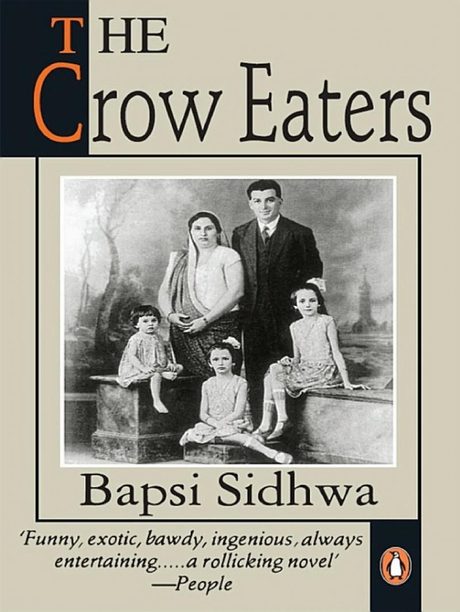
LAHORE, EARLY 1900s
The Crow Eaters
Bapsi Sidhwa1978about 335 pages
A Parsi family comedy about a shameless businessman who arrives in Lahore with a wife, a mother-in-law he wants dead, and no scruples whatsoever.
Faredoon Junglewalla walks into Lahore at the start of the twentieth century and sets about getting rich by every means the Raj permits, mostly flattery, insurance claims and charm. The comedy runs on his long war with a mother-in-law who refuses to die on schedule, and on a small community that is very funny about itself and not always kind. Sidhwa is bawdy in a way Indian family sagas rarely allow themselves, and underneath the jokes she is writing about how a minority learns to survive whoever happens to be ruling.
Why it is at 10
Tenth because it is a period comedy and the humour is broad, so the opening pages can feel like a museum. It earns its place because the Parsi Lahore in it is gone, and because Sidhwa is the funniest writer here. If you know Parsi Bombay through Rohinton Mistry, this is the same community two cities west and several decades earlier.
Read it ifyou want to laugh and you like family sagas
Skip it ifyou dislike broad comedy and crude jokes
bawdy, warm, mischievousBest for: readers who like family sagascomedyparsilahore
Pairs with: Family Matters by Rohinton Mistry, for the Parsi household on our side of the border
11
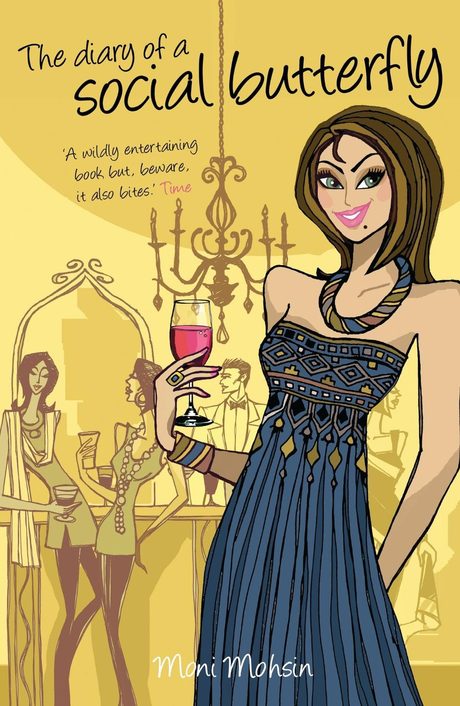
LAHORE DRAWING ROOMS, 2000s
The Diary of a Social Butterfly
Moni Mohsin2008about 183 pages
A rich Lahore socialite's diary, written in gloriously wrong English, in which coups and bombings mainly threaten her party planning.
Butterfly writes about her life: lunches, tailors, a husband she calls a bore, cousins with better connections, and a country going through dictatorship, assassination and emergency rule, all of which she registers as an inconvenience to her calendar. The joke is the voice. She mangles idioms with total confidence and never once doubts herself, and Mohsin lets you see everything her narrator does not, which is the servants, the class contempt and the fear humming under the parties. It works because the writer clearly likes her creation instead of despising her.
Why it is at 11
Eleventh because you have to enjoy voice comedy and a certain amount of Punjabi English before it works on you. If the aunties in Anuja Chauhan's novels make you laugh, this is their Lahore counterpart. If you want a story with a shape, be warned that these began as newspaper columns and the book never pretends otherwise.
Read it ifyou love voice-driven comedy and social satire
Skip it ifyou want a plot with an arc
silly, sharp, gossipyBest for: a bad daysatirelahorecomedy
Pairs with: Those Pricey Thakur Girls by Anuja Chauhan, for the same affection towards ridiculous families
12
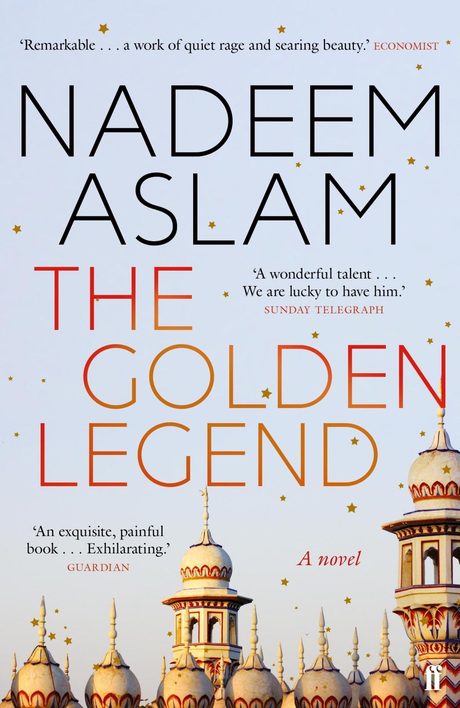
A PUNJAB CITY, PRESENT DAY
The Golden Legend
Nadeem Aslam2017about 364 pages
After a shooting in a market, a widow and a young Christian woman become targets in a city where anyone can make a blasphemy accusation.
Nargis loses her husband to a bullet fired by an American in a crowded street, and then loses her privacy to a state that wants her quiet about it. Around her, Aslam builds a city where a mosque loudspeaker can be used to accuse a neighbour, where a Kashmiri boy is hiding, and where a book about the city's history keeps being torn up and stitched back together. The style is heavily patterned, full of birds and paper and light, and the story underneath it is a chase. It is beautiful and it is bleak.
Why it is at 12
Twelfth on ease, not on merit. The prose is decorated and the cruelty is constant, so this asks a great deal more of you than anything above it. Read it when you want to see how a blasphemy law works as a weapon between neighbours rather than as a headline, and read something gentle immediately afterwards.
Read it ifyou want ornate prose and are not looking for comfort
Skip it ifyou are tired and need something kind
ornate, tense, bleakBest for: patient readers with a strong stomachblasphemy lawminoritieschase
Heads up: religious persecution, torture, violence against women
13
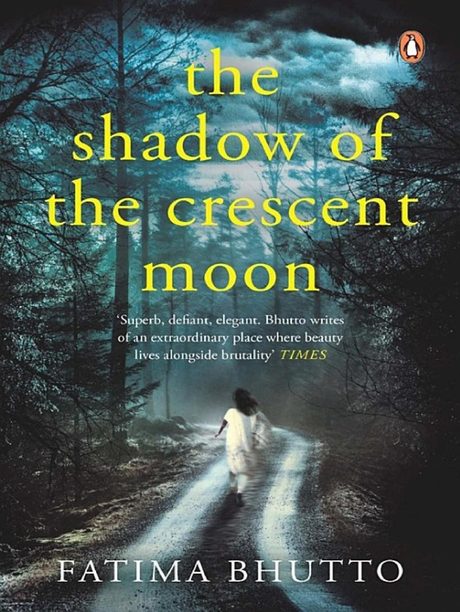
MIR ALI, NEAR THE AFGHAN BORDER
The Shadow of the Crescent Moon
Fatima Bhutto2013about 250 pages
On one Eid morning in a small border town, three brothers leave the same house by three different roads.
The novel opens at breakfast and then splits. One brother is a doctor who wants no part of the war, one runs with the resistance, one is stuck between them, and two women carry as much of the story as the men do. Bhutto sets everything in Mir Ali, a fictional town standing in for the tribal districts, across a single morning, with drones overhead and an army that treats the whole town as a suspect. The politics sits close to the surface throughout, and the book is not shy about its sympathies.
Why it is at 13
Thirteenth because it is the hardest entry point for an Indian reader: unfamiliar geography, a history that gets almost no coverage here, and a structure that keeps switching lives on you. It stays on the list because very little else in English puts you inside a household during the drone years, and because the sisters-in-law are better written than the brothers.
Read it ifyou want the war on terror from the ground up
Skip it ifyou want politics kept in the background of a novel
tense, angry, hushedBest for: readers who follow the regionwaziristanwarfamily
Heads up: war, drone strikes, torture
14
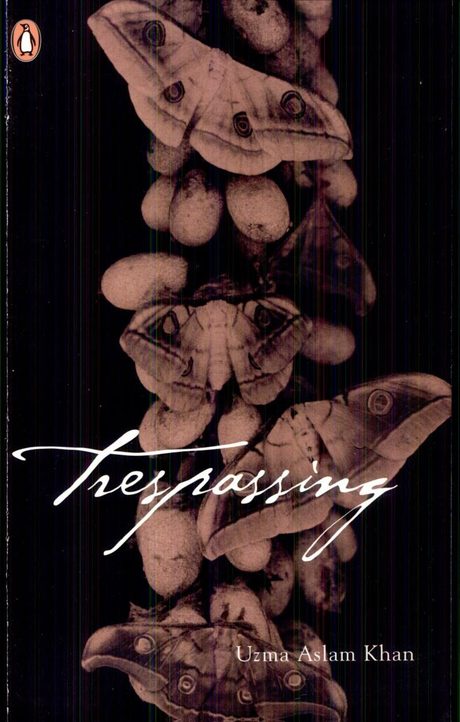
KARACHI AND THE SINDH COAST, 1990s
Trespassing
Uzma Aslam Khan2003about 468 pages
A silk farm, a fishing coast and a family funeral pull two people together in a novel that keeps widening past its love story.
Dia's family runs a silk farm outside Karachi. Daanish comes home from an American university for his father's funeral and finds the house smaller and stranger than he left it. Their affair is the spine, but Khan keeps opening side doors: silkworms described in loving detail, fishing villages losing their catch to trawlers, the first Gulf War playing on television in the background, and how fast a woman's reputation becomes public property. It is the longest book here and the most patient, and honestly the coast is written better than the romance.
Why it is at 14
Last on ease because it is long, slow to start and interested in a dozen things at once, so casual readers drift away around page hundred. It holds its place because it is the only novel here that puts working people, silkworms and fishermen at the centre of the frame, and because Indian readers have almost no fiction about the Sindh coast.
Read it ifyou like long novels that wander off the path
Skip it ifyou want a tight plot and a quick start
sprawling, sensual, patientBest for: readers with a long weekendkarachiromancesindh
Worth knowing
The map these fourteen make
Read the labels in order and you get a country rather than a headline. Lahore turns up four times and never looks the same twice: Parsi traders in 1905, a sacked banker in 1998, a socialite in the 2000s, a young man remembering it from New York. Karachi comes in four versions too, from Shamsie's protected drawing rooms to Tanweer's buses to Hanif's hospital wards to Khan's coast. The countryside arrives through Mueenuddin, the frontier through Jamil Ahmad and Fatima Bhutto, and the old walled-city world through Farooqi.
What is missing is worth naming. Balochistan is barely here, Gilgit-Baltistan not at all, and interior Sindh only in passing. English-language publishing in Pakistan is concentrated in two cities and one class, exactly as it is in India, so a list like this leans towards writers who studied abroad. If you want the other Pakistan, the way in is Urdu, Sindhi and Punjabi writing in translation, which is a different list and a longer project.
Worth knowing
Finding these in India
Most of this list is easy. Hamid, Hanif, Mueenuddin, Tanweer, Shamsie, Bhutto and Moni Mohsin have all had Indian editions from Indian publishers, so the paperbacks turn up in shops and on the usual sites at normal prices. Sidhwa and Nadeem Aslam are usually available too, sometimes as imports.
The awkward ones are Trespassing, Between Clay and Dust and older printings of The Crow Eaters, which go in and out of stock and occasionally appear at silly import prices. Check the ebook before you pay four figures for a used copy, and if a listing shows no publisher and a suspiciously blank cover, it is a print-on-demand reprint and not worth your money.
People also ask
Questions, answered
Which Pakistani novel should I read first?
The Reluctant Fundamentalist by Mohsin Hamid. It runs under two hundred pages, needs no background, and works as a conversation you can finish in one sitting. If you would rather have a plot with crime and money in it, start with Moth Smoke by the same writer instead. Both are widely available in India in Indian editions, so neither will cost you much to try.
Are Pakistani books available in India?
Most of the well-known ones are, and they are published here by Indian imprints such as Penguin India, Random House India and HarperCollins India rather than being imported. Availability changes with print runs, so a title can vanish from stock for a year and come back. The harder ones on this list are Trespassing and Between Clay and Dust, where the ebook is usually the sane option.
Who are the best known Pakistani writers in English?
Mohsin Hamid, Mohammed Hanif, Kamila Shamsie, Bapsi Sidhwa, Nadeem Aslam, Daniyal Mueenuddin, Fatima Bhutto, Uzma Aslam Khan and Moni Mohsin cover most of what an Indian reader will run into. Hamid and Shamsie are the ones you will see on international prize lists most often. Sidhwa is the elder of the group and the funniest of them by a distance.
Why is Home Fire not on this list?
Because it is set mostly in London and Raqqa rather than in Pakistan, and this list is about the country as a place you visit through fiction. It is a very good novel and worth reading, as is Burnt Shadows, which travels from Nagasaki to Delhi to Karachi to New York. Kartography took the Shamsie place here because it stays in Karachi and belongs to that city completely.
Do I need to know Pakistani history to read these?
Not for most of them. The top eight assume nothing beyond ordinary attention. Two ask for a bit of context: Kartography works better if you know roughly what happened in 1971, and The Shadow of the Crescent Moon assumes some familiarity with the tribal districts and the drone campaign. A single search before you start each of those two is enough preparation.
What about Pakistani novels translated from Urdu?
They are a separate pleasure and this list stays with books written in English. Intizar Husain's Basti is the one most people begin with, and it sits on my partition list. Saadat Hasan Manto, who moved to Lahore after 1947, has his own list on this site because the short stories deserve their own argument. Both are widely translated and easy to find in India.
Before you go
What to read tonight
If you want to start tonight, take The Reluctant Fundamentalist and finish it before you sleep, then decide in the morning whether Changez was warning you or recruiting you. If you are choosing between the two Hanifs, the rule is simple: Exploding Mangoes when you want to laugh at power, Alice Bhatti when you can take being angry for two hundred pages.
After three or four of these, read an Indian novel about the same decade back to back with its Pakistani neighbour. Mueenuddin next to Shanbhag, Shamsie next to Ghosh, Sidhwa next to Mistry. Two literatures raised in the same house, arguing about different things, using the same jokes about relatives. That comparison is the real reward of reading across the border, and no news channel will ever give it to you.
Keep going
Lists that pair with this one
Indian Fiction
14 Best Partition Novels and Books, Ranked by Where to Start
Fiction and first-hand testimony from both sides of the 1947 line, ordered so you begin with the one you can actually finish.
Indian Fiction
14 Books About Kashmir, Each Labelled Fiction, Memoir or Reportage
Every entry says plainly what kind of book it is and whose life it comes from, and the books disagree with each other on purpose.
Authors
10 Saadat Hasan Manto Books in English (And Which Translation to Buy)
Ranked as a buying order, not a greatness order, so each book you add repeats the least of the one before it.
Indian Fiction
The 20 Best Indian Books in Translation, Ranked by Where to Start
Twenty books from ten Indian languages, ordered from the easiest way in to the one that will fight you, with the translator named every time.
Genre
15 Literary Fiction Books for Beginners, Easiest First
Every book here asks one new thing of you that the book before it did not, so you climb instead of drowning.