A friend rang me in March, four months into a job search, and read out the titles stacked on his bedside table. Six career books. He had finished all six and applied none of it, because each one was answering a different question and he had never worked out which question was his. He did not need a seventh book. He needed to know whether his problem was getting interviews, deciding whether to quit, or having no idea what he was actually good at, because those three problems have almost nothing to do with each other.
So this list is grouped by the question rather than by quality. Four groups: you need a job soon, you have a job and you hate it, you cannot name what you are good at, and you want to understand why work feels the way it does. Find your group, read one book from it, and leave the rest alone until that one stops helping.
The second thing I do here is a transfer test. Most career writing is American, produced for a market with recruiters who reply to email, salary bands printed in the job post, and a culture where a stranger will give you half an hour over coffee. A lot of that advice lands in Ahmedabad or Pune as static. Every entry says how much of it survives the journey and what to do with the part that does not. Two famous titles on this list are mostly consultant fluff, and I say which pages to skip.
How I picked these
- Grouped by problem, not by quality. A brilliant book about quitting is no use to someone who needs interviews next week, so the four groups come first and the ranking runs inside them.
- Every book checked through Google Books and Open Library with a real cover, so there are no ghost editions and no titles I half remembered.
- Do What You Are is out. Its whole method rests on personality typing with a thin evidence base, and that is a lot of weight to put on a quiz when you could spend the same weekend on the Flower Exercise.
- Never Eat Alone and The Startup of You are out too. The second was written by one of LinkedIn's founders and reads like it in places, and the genuinely useful half of both sits inside Give and Take.
- Deep Work and Essentialism keep turning up on career lists where they do not belong. Both are about attention rather than about changing jobs, so neither is here.
- Where a book only really works in an American market, I say so in its entry instead of quietly recommending it anyway.
The whole list at a glance
All 14 books, in order
| # | Book | Author | Year | Vibe | Best for |
|---|
| 1 | Never Search Alone | Phyl Terry | 2022 | practical, communal, unglamorous | long searches that have stalled |
| 2 | What Color Is Your Parachute? | Richard N. Bolles | 1970 | old-fashioned, thorough, worksheet-heavy | people with no idea what they want |
| 3 | The Squiggly Career | Helen Tupper and Sarah Ellis | 2020 | brisk, friendly, workbook | busy people who hate long books |
| 4 | The First 90 Days | Michael D. Watkins | 2003 | corporate, structured, useful | the month after you accept |
| 5 | So Good They Can't Ignore You | Cal Newport | 2012 | contrarian, argued, tidy | passion-chasers about to jump |
| 6 | Quit | Annie Duke | 2022 | clear-eyed, argumentative, calm | the stay-or-go decision |
| 7 | Designing Your Life | Bill Burnett and Dave Evans | 2016 | playful, experimental, Californian | people frozen by too many options |
| 8 | Pivot | Jenny Blake | 2016 | coaching, steady, structured | restless but still employed |
| 9 | Working Identity | Herminia Ibarra | 2003 | research-led, calm, short | mid-career people mid-doubt |
| 10 | Range | David Epstein | 2019 | readable, wide, reassuring | late switchers carrying guilt |
| 11 | Give and Take | Adam Grant | 2013 | research-led, warm, practical | people who hate networking |
| 12 | The Pathless Path | Paul Millerd | 2022 | reflective, honest, unresolved | people questioning the default path |
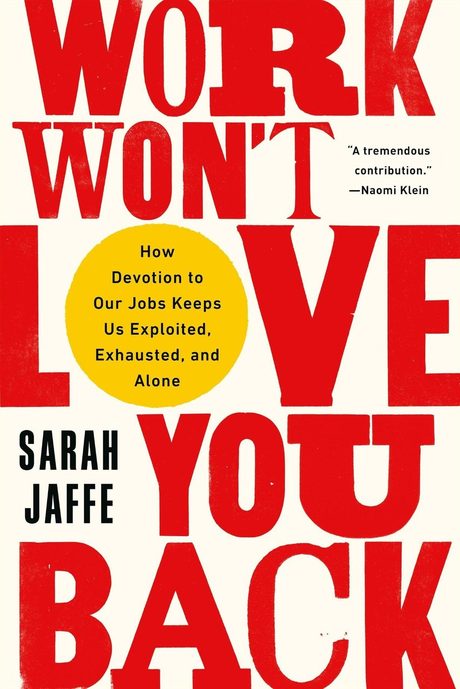
| 13 | Work Won't Love You Back | Sarah Jaffe | 2021 | reported, angry, patient | people in vocation jobs |
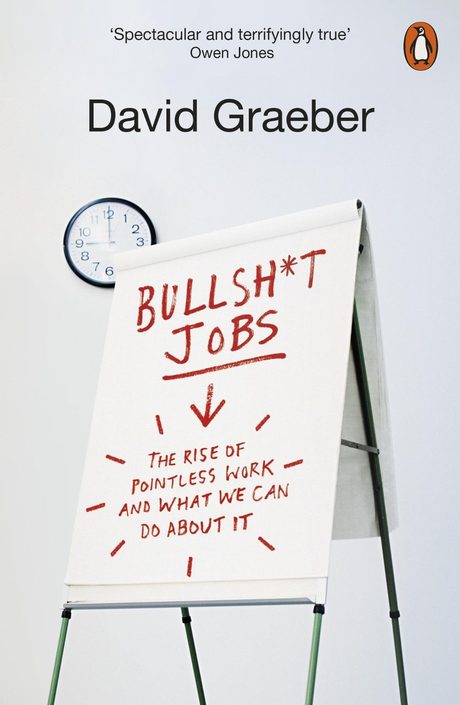
| 14 | Bullshit Jobs | David Graeber | 2018 | funny, furious, digressive | people who cannot name the problem |
The list
The books, ranked
1
Stuck on: getting hired
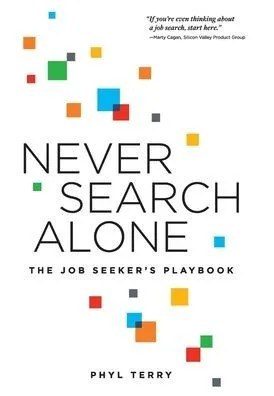
Never Search Alone
Phyl Terry2022
The only job-hunt book that says the real fix is other people, then hands you the exact format for the group.
Terry's argument is that searching alone is the reason searching breaks people, so the spine of the book is a Job Search Council: four or five other job seekers who meet every week, hold each other to a plan, and rehearse the parts everyone avoids. There is a full playbook for running one, down to what happens in the first meeting and how to tell whether a role genuinely fits you or is just flattering you. The tone is practical and a little evangelical. It reads less like a book and more like instructions written by someone who has watched hundreds of searches go wrong in the same three ways.
Why it is at 1
Rank one because it repairs the thing that actually breaks a search, which is the loneliness and the drift, and because the method costs nothing to run. It travels to India almost intact: a weekly call with four other people looking for work needs no recruiter, no budget, no network. The salary chapters assume American offer letters, so read those as background rather than as a script.
Read it ifyou are three months in and losing the will to open LinkedIn
Skip it ifyou want a resume-formatting manual, because this is about process and not paperwork
practical, communal, unglamorousBest for: long searches that have stalledjob searchaccountabilitypractical
2

Stuck on: getting hired
What Color Is Your Parachute?
Richard N. Bolles1970about 353 pages
Half museum piece, half the best self-inventory exercise anybody has written for confused people.
Bolles first put this out in 1970, for clergy leaving the church of all people, and it has been revised almost every year since, long enough that the early editions and the current one are barely the same book. The part worth your money is the Flower Exercise, a slow inventory where you map what you know, who you want to work with, where you want to live, what you need to be paid, and what you care about, then hunt for the overlap. Doing it properly takes a weekend and a notebook. Most readers skim it, then wonder why the book did nothing for them.
Why it is at 2
Second because the Flower is still unbeaten and because this is the only entry that forces you to write things down instead of think about them. The transfer splits neatly down the middle: the exercise is culture free, while the job-hunting tactics wrapped around it assume American career centres and hiring habits from another decade. Do the exercise. Ignore the chapters on approaching employers.
Read it ifyou will genuinely sit with a notebook for two evenings
Skip it ifyou want current tactics, because that half of the book has aged badly
old-fashioned, thorough, worksheet-heavyBest for: people with no idea what they wantself-inventoryclassicexercises
3

Stuck on: getting hired
The Squiggly Career
Helen Tupper and Sarah Ellis2020about 199 pages
A short British workbook for people whose careers refuse to go up in a straight line, which is most people now.
Tupper and Ellis run career workshops, and this reads like the handouts from a good one. Five areas, each worked through with exercises: your strengths described in your own words rather than in appraisal language, your values, the confidence problem they call gremlins, your networks, and the futures you have not let yourself consider. Very little of it is new, which the authors more or less concede. What it does well is make the work small enough to actually finish, since every chapter ends with something you can do in twenty minutes on a Sunday afternoon, and the whole thing runs under two hundred pages.
Why it is at 3
Third because it is the fastest route to getting the reflection done when you have no appetite for a three-hundred-page argument. It sits below Parachute because the exercises are lighter, and above the American titles because its framing around sideways moves and internal transfers fits an Indian corporate ladder better than the quit-and-freelance genre ever does.
Read it ifyou want exercises you can finish in one sitting
Skip it ifyou already journal about work and know your strengths cold
brisk, friendly, workbookBest for: busy people who hate long booksexercisesshortstrengths
4
Stuck on: getting hired
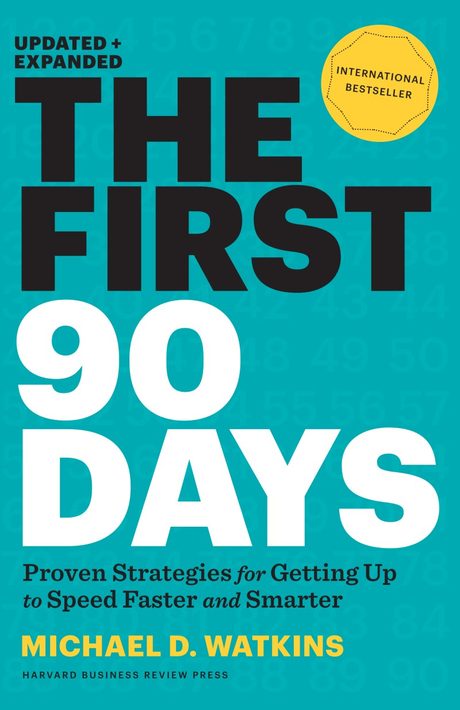
The First 90 Days
Michael D. Watkins2003about 301 pages
The book about the part nobody prepares you for, which is the three months after you get the job you wanted.
Watkins wrote this for executives moving into new roles, and the framing has since spread to almost every kind of transition. His central point is that the situation you are walking into should change what you do first, so a turnaround, a brand new team, and a healthy business that only needs steady hands each demand a different opening move. Around that sit the practical parts: how to have the conversation with your new boss about what success even means here, how to find early wins that are real rather than theatrical, and how to work out who actually holds power in a room you have just joined.
Why it is at 4
Fourth, and the odd one out on a job-hunting list, because a search does not end when you sign. The first three months decide whether the change was worth making, and this is the only book here that treats them as a skill you can learn. It transfers well, since office politics are not an American invention. Skip the chapters aimed at executive teams if you are joining as an individual contributor.
Read it ifyou have accepted an offer and start next month
Skip it ifyou are still applying, since none of this helps before you land
corporate, structured, usefulBest for: the month after you acceptonboardingtransitionsoffice politics
5

Stuck on: should I quit
So Good They Can't Ignore You
Cal Newport2012about 163 pages
Newport's case that following your passion is bad advice, and that skill has to come before the job you love.
Newport thinks the standard advice runs backwards. You do not locate a ready-made passion and then build a career on top of it. You get unusually good at something valuable, and the bargaining power that skill buys is what eventually makes work feel like a calling. He names the stored-up skill career capital and spends the book on how to build it, mostly through a craftsman's habit of practising the parts of your job that are hard rather than the parts that are pleasant. His examples are American knowledge workers, and to his credit he is honest that none of this rescues a job with no room left to grow.
Why it is at 5
Fifth because it is the best answer to the two in the morning question of whether to quit and chase something you love. Newport says find out what you are already good at first, and he is right often enough to be worth an evening. The catch is that career capital assumes you can move once you have it. Here a ninety day notice period and a rigid band structure slow that loop down, so budget two years rather than one.
Read it ifyou are about to quit for a dream with no plan behind it
Skip it ifyour current job has nothing left to teach you, since his advice needs runway
contrarian, argued, tidyBest for: passion-chasers about to jumpskillscareer capitalargument
6
Stuck on: should I quit
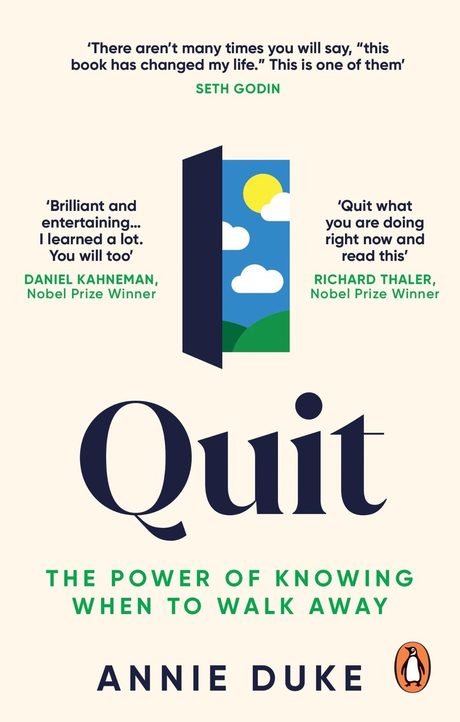
Quit
Annie Duke2022about 217 pages
A poker player's case that most of us quit far too late, plus a method for deciding in advance when to walk.
Duke played poker professionally before she started writing about decisions, and the useful transfer is that folding a hand is a skill you can practise. The book is about why quitting feels like failing even when the numbers say otherwise: sunk costs, the story you have already told your family, the identity you built on the thing you are now stuck inside. Her fix is kill criteria, which means writing down now, while you can still think clearly, the exact signal that will tell you to stop later. She is also good on why the people closest to you are poor advisers here, since most of them mainly want you to be consistent.
Why it is at 6
Sixth because it is the only book here that treats quitting as a technical decision rather than a moral one, which is exactly what you need at eleven at night with a resignation letter half drafted. It transfers as psychology and does not transfer as economics, since her examples assume a safety net most Indian households do not have. Set your kill criteria against your actual runway, not hers.
Read it ifyou have been about to quit for eight months and still have not
Skip it ifyou have already decided and want permission rather than analysis
clear-eyed, argumentative, calmBest for: the stay-or-go decisiondecisionsquittingpsychology
7
Stuck on: should I quit
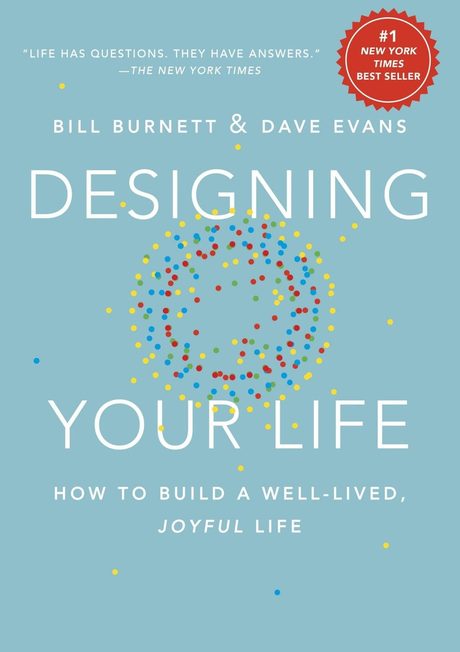
Designing Your Life
Bill Burnett and Dave Evans2016about 274 pages
Two Stanford design teachers turn career confusion into a prototyping problem you can run cheap experiments on.
Burnett and Evans teach a design course at Stanford and this is the book of that course. The premise is that you cannot think your way to the right career, so you build small tests instead: a conversation, a short project, a week shadowing someone whose job you fancy from a distance. The exercise everyone remembers is the one where you write three different five-year plans for three different lives, one of which has to ignore money and other people's opinions completely. There is also a sharp section on what they call gravity problems, meaning the constraints you keep trying to solve that are not problems at all, only conditions.
Why it is at 7
Seventh because the prototyping idea is genuinely freeing, and because it gives a bored thirty-year-old something to do on Saturday other than refresh job boards. It sits below Newport and Duke because it is softer about the hard trade-offs. Transfer is partial: the exercises are fine everywhere, but the assumption that a stranger will hand you half an hour works better through LinkedIn here than it does over coffee.
Read it ifyou think better by doing than by planning
Skip it ifdesign-thinking language irritates you, because there is a great deal of it
playful, experimental, CalifornianBest for: people frozen by too many optionsexercisesdesign thinkingexperiments
8
Stuck on: should I quit
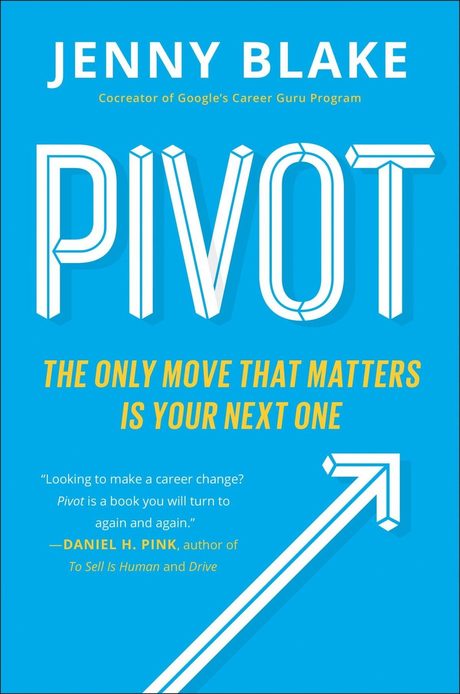
Pivot
Jenny Blake2016about 290 pages
A four-step method for changing direction from where you already stand, instead of blowing everything up first.
Blake's method has four moves: work out what is already working and worth keeping, scan for options and the gaps in your skills, run small pilots on the promising ones, then launch properly once a pilot has earned it. The idea underneath is that most career changes are lateral and gradual rather than a single dramatic leap, so the sensible unit of change is a pilot you can run while still employed. She writes for people in their late twenties and thirties who feel restless rather than desperate, and the register is coaching rather than research.
Why it is at 8
Eighth because the pilot idea is sound and the structure is easy to hold in your head, though there is real overlap with Designing Your Life and nobody needs both. Take this one if you prefer a checklist and that one if you prefer a story. It quietly assumes savings and a freelance market to pilot into, which is the assumption to sanity check before you follow any of it.
Read it ifyou want change without resigning first
Skip it ifyou need work now, because this is a slow method
coaching, steady, structuredBest for: restless but still employedmethodside projectsgradual change
9
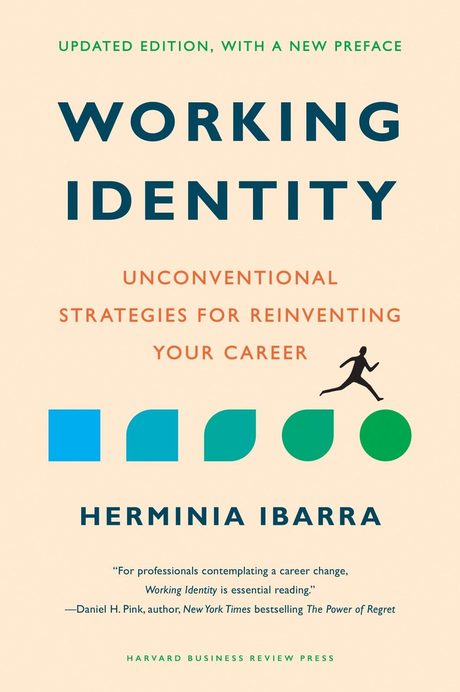
Stuck on: what am I good at
Working Identity
Herminia Ibarra2003about 125 pages
The research book that says you cannot think your way into a new career, you have to act your way into one.
Ibarra is a professor who followed professionals through real career changes, and what she found flatly contradicts the usual advice. The people who changed successfully did not sit down, work out their true self, and then execute a plan. They tried things, often badly and in public, and their sense of who they were shifted afterwards to fit what they had done. She calls the alternatives possible selves, and the book is about testing them through side projects, new circles, and transitional roles that look ridiculous on a resume while moving you sideways into a different world. It is short and reads closer to a study than to self help.
Why it is at 9
Ninth in position and honestly the most serious book on this list. It goes here because it hands you a diagnosis rather than a to-do list, so it works best after you have already tried and failed to plan your way out. Transfers well, though her subjects are mostly senior European and American professionals with the room to experiment, which is a privilege worth naming out loud.
Read it ifyou have made three plans and executed none of them
Skip it ifyou want steps tonight, because this offers a framework and not a checklist
research-led, calm, shortBest for: mid-career people mid-doubtresearchidentitycareer change
10
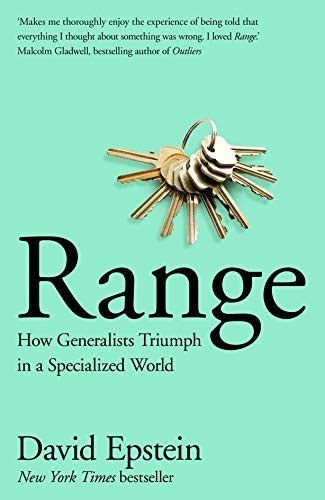
Stuck on: what am I good at
Range
David Epstein2019
The argument that switching fields late is a strength, written for anyone told they started too many things.
Epstein opens by setting two athletes against each other, one who specialised at three years old and one who tried everything until his twenties, then spends the book on why the second path is badly undervalued. He separates learning environments that give clean, quick feedback, like chess and golf, from the messy ones where most careers actually live and early specialisation stops paying. The section that matters for a career change is about sampling: the research suggesting people who switch fields later often end up with a better fit between what they are good at and what they do, and that the switching itself is the mechanism rather than a delay before real life starts.
Why it is at 10
Tenth because it will not tell you what to do on Monday, and I have ranked usefulness over enjoyment all the way down. What it does instead is remove one specific guilt, the one that says thirty-one is too late to begin again. If you carry that guilt around, this is your book. The argument travels fine, though the sampling advice is easier to act on where a gap on a resume is not read as a defect, which is not here.
Read it ifyou feel behind for having changed direction
Skip it ifyou want a method, because this is a case and not a plan
readable, wide, reassuringBest for: late switchers carrying guiltgeneralistsresearchreassurance
11
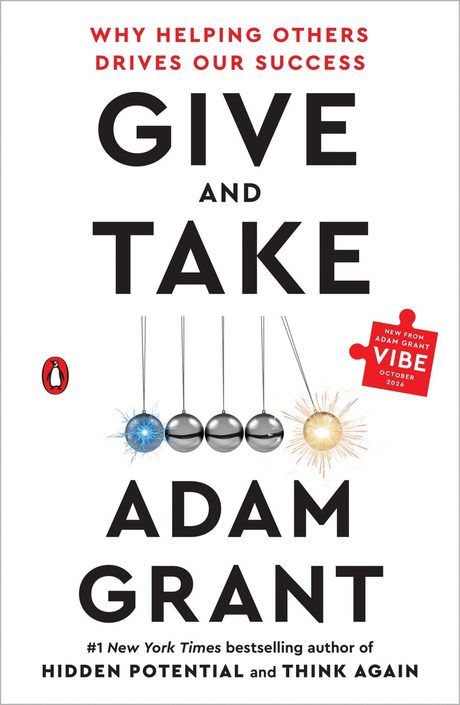
Stuck on: what am I good at
Give and Take
Adam Grant2013about 321 pages
Grant's research on why generous people cluster at the very bottom and the very top, and what separates the two.
Grant sorts working styles into givers, takers, and matchers who keep score, then shows that givers pile up at both ends of the success curve. The interesting question is what divides the exhausted giver from the successful one, and his answer is boundaries plus a habit of small, cheap help: an introduction, five minutes of advice, a name passed along. For a job hunt this matters because the standard networking advice, which is transactional and faintly humiliating, works nowhere near as well as being genuinely useful to people for a year before you need anything from them.
Why it is at 11
Eleventh because it is the networking book that does not make you feel like a salesman, and because the competition on that shelf is worse. It is not a career-change book, so it earns its slot only if your problem is that you have no network and no stomach for building one. Transfers well, since reciprocity is not an American invention and Indian professional life already runs on favours.
Read it ifthe word networking makes you want to lie down
Skip it ifyou want a job-hunt tactic for this week, because this is a long game
research-led, warm, practicalBest for: people who hate networkingnetworkingresearchreciprocity
12
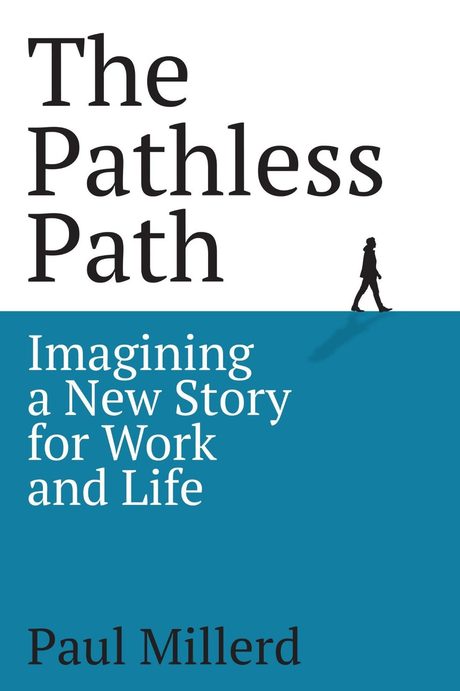
Stuck on: why work feels like this
The Pathless Path
Paul Millerd2022about 231 pages
A consultant walks away from the standard career and writes the honest version of what the years afterwards felt like.
Millerd left a strategy consulting job and spent the following years working out what a life looks like without the default track: the money anxiety, the loss of a job title to offer at weddings, the slow discovery that a good deal of his ambition had been borrowed from other people. It is part memoir and part argument, and the argument is that the standard path is a fairly recent invention we have started mistaking for nature. What makes it worth the time is that he does not pretend the years went smoothly. There are long stretches where he sounds lost, and he leaves every one of them in.
Why it is at 12
Twelfth because it is a mood rather than a method, and because it is the only book here that admits the alternative to a career is often just uncertainty in nicer weather. It ranks low on transfer rather than on quality: his runway came from consultant savings and dollar freelance rates, so reading it as a plan instead of as company would be a mistake.
Read it ifyou want honest company more than you want instructions
Skip it ifyou have dependents and no savings, because the maths here will not comfort you
reflective, honest, unresolvedBest for: people questioning the default pathmemoiralternative careersfreelance
13
Stuck on: why work feels like this
Work Won't Love You Back
Sarah Jaffe2021about 403 pages
Jaffe takes apart the idea that you should love your job, and shows exactly who profits from you believing it.
The argument is that do what you love became useful to employers long before it became useful to workers, because a job you love is a job you will do for less money and for longer hours. Jaffe works through the fields where this bites hardest: unpaid interns, teachers, nonprofit staff, artists, academics, game developers, all of them told that the work is its own reward. She is a labour journalist, so the chapters are built from interviews rather than theory, and the effect accumulates. By the last page the phrase labour of love sounds different than it did on the first.
Why it is at 13
Thirteenth because it will not help you get hired and may briefly make it harder to want to. Read it anyway if you are burnt out inside a job you were supposed to feel lucky to have. The reporting is American and British so the examples will not be yours, but the mechanism arrives intact in Indian startups, newsrooms, and the whole habit of calling an internship an opportunity rather than work.
Read it ifyou feel guilty for wanting to be paid properly
Skip it ifyou need morale right now, because this book is not in the morale business
reported, angry, patientBest for: people in vocation jobslabourreportingcritique
Heads up: sustained accounts of exploitation and financial precarity
14
Stuck on: why work feels like this
Bullshit Jobs
David Graeber2018about 396 pages
The anthropologist who asked why so many people privately believe their own job should not exist at all.
Graeber began with an essay and then gathered hundreds of accounts from people who thought their own work was pointless, which is where the five categories come from: flunkies who exist to make somebody look important, goons employed only because a rival firm employs one, duct tapers patching problems that ought to be fixed properly, box tickers producing evidence of activity, and taskmasters supervising people who need no supervision. Finding your own square on that grid is unpleasant and clarifying at once. The final third widens into a looser argument about work and value that never quite matches the first two.
Why it is at 14
Fourteenth because it is the least practical thing here by a distance and I would rather keep the ranking honest about that. It earns its place because one specific reader needs it badly: the person who cannot say what is wrong when the pay is fine, the hours are fine, and the work is nothing. It transfers to Indian service and back-office work almost too neatly, which is its own quiet horror.
Read it ifyour job pays well and appears to produce nothing
Skip it ifyou need practical help this month
funny, furious, digressiveBest for: people who cannot name the problemcritiqueanthropologymeaning
Worth knowing
The four questions, and why the grouping beats a ranking
Career books get bought in a panic and read in the wrong order, which is why so many of them fail. The four labels on this list are the four questions people are actually stuck on. Ranks one to four are for getting hired, and they assume you already know roughly what you want. Ranks five to eight are for the stay-or-go decision, where the search has not started because you cannot decide whether it should. Ranks nine to eleven are for people who cannot name their own strength, which is a slower and more painful place to be. Ranks twelve to fourteen are not advice at all, they are books about why work feels like this, and they are at the bottom because a reader who needs rent money is not helped by an anthropologist.
One book from your group. That is the whole instruction. Reading four books about quitting is a very sophisticated way of not quitting, and I say that as someone who has done it.
Worth knowing
The transfer test
Almost every book here was written for an American or British reader, and the parts that break in India break in predictable places. Anything that depends on recruiters replying, on salary ranges being public, on a stranger granting an informational interview, or on savings that cover a year of experimenting is the part to treat as theory. What does transfer is everything about your own head: the self-inventory, the decision rules, the identity research, the argument about skill before passion. Those work in any market, because they are about you and not about the market.
Two structural facts change the maths here more than any book accounts for. Notice periods of two or three months make a quiet job hunt long and awkward, and fixed salary bands mean the negotiation advice in half these books simply has nothing to grip. Plan for a slower loop than any of these authors assume, and you will not feel like the failure their timelines imply.
Worth knowing
The book that does not exist yet
I went looking for an Indian equivalent of Never Search Alone or Parachute, something written for someone in Indore deciding whether to leave a service company, and I did not find one worth putting on this list. There is plenty of Indian writing about entrepreneurship and quite a lot about cracking placements, but the middle of a career, the part where you are thirty-two and stuck and not about to found a startup, is close to unwritten here. If you know of one I missed, I would genuinely like to read it.
Until it exists, the workaround is the one Terry describes. Four people from your own industry, a call every week, and honest notes. That gets you the local knowledge no imported book can carry.
People also ask
Questions, answered
What is the best book for someone changing careers?
Working Identity by Herminia Ibarra, if you can only read one. It is built on research with people who actually changed, and its central finding is useful precisely because it is annoying: you cannot reason your way to a new career from your sofa, you find out who you are by trying things. If you want something warmer and more practical alongside it, add Designing Your Life for the exercises.
Which career books are genuinely useful and which are consultant fluff?
Useful: Never Search Alone, Working Identity, Quit, The First 90 Days, and the Flower Exercise inside What Color Is Your Parachute. Fluff or close to it: the networking-as-strategy genre, most personality-quiz books, and anything promising a formula for finding your purpose. A quick test that works surprisingly well is whether the book asks you to do something specific this week. Books that only rearrange how you feel about work rarely change what you do about it.
Do American career books work in the Indian job market?
The thinking transfers, the tactics often do not. Self-inventory exercises, decision rules for quitting, and the argument that skill comes before passion all work anywhere. Advice about informational interviews, public salary ranges, recruiter behaviour, and a year of savings to experiment with assumes a market that does not look like ours. Read those chapters as background, then build your own tactics around notice periods, referrals, and salary bands, which is how hiring actually moves here.
What should I read if I need a job in the next month?
Never Search Alone, and only that. Start the weekly group in the first week rather than after you finish the book, because the group is the intervention and the reading is the manual. If you also need to sharpen how you talk about your strengths, take two hours with The Squiggly Career. Everything else on this list is for a calmer month than the one you are in.
Is What Color Is Your Parachute still worth reading?
For the Flower Exercise, yes. For the job-hunting tactics, no. The book has been revised nearly every year since 1970 and the self-inventory has stayed the strongest thing in it, while the sections on approaching employers keep aging out faster than they can be updated. Borrow a recent edition, spend a weekend on the exercise with a real notebook, and let the rest of the pages go.
Should I read a career book or just apply to more jobs?
Apply, unless applying has already stopped working. Volume fixes an early search. It does nothing for a search that is six months old, because the problem by then is usually your story, your target, or your isolation rather than your application count. That is the point where one book from the right group earns its evening. Reading three books instead of applying is procrastination wearing a very respectable disguise.
Before you go
What to read tonight
If you only have tonight, pick by symptom rather than by title. No interviews at all means your story or your targeting is off, so go to the Flower Exercise. Interviews that go nowhere means the fit is off, so go to Never Search Alone and start the group. Cannot make yourself apply at all means the decision underneath is unmade, so read Quit before anything else.
One more thing, from a friend rather than from a list. Books are excellent at making you feel that progress is happening, which is exactly why a stalled job hunt attracts so many of them. Set a rule before you start: one book, two weeks, and one thing you do differently at the end of it. If nothing changes in your actual week, the book was entertainment, and there is no shame in that as long as you notice.
Keep going
Lists that pair with this one
Mood & Life
16 Self-Help Books That Actually Work (And 4 That Do Not)
I judged every one of these by a single test: six months after you finish, does anything change on an ordinary Tuesday?
Mood & Life
13 Books About Burnout, Sorted by How Little Energy You Have
Gentlest first, because the person who needs this list cannot start with a 400 page argument.
Mood & Life
18 Books to Read in Your 30s, Not the 20s List Again
Grouped under the six questions this decade actually asks, with a line on every book about what changes if you read it at 35 instead of 25.
Mood & Life
20 Best Books to Read in Your 20s, Grouped by the Problem
Four problems run this decade, work, love, money and meaning, so the list is sorted that way instead of pretending one book fixes all four.
Mood & Life
14 Best Money Books for Indians, First Salary to First Crore
Sorted by where you are and by how much of each book you have to translate into Indian conditions before it is any use.