In my hostel there were two boys, one from Imphal and one from Guwahati, and the rest of us asked them the same three questions and assumed they came from the same place. They were about as similar as a Gujarati and a Tamil, which is to say they shared a country and not much else. That is the mistake this list is built to avoid.
Northeast India is eight states and a long list of languages, and its books do not agree with each other about anything. A Naga novel about the years of the underground movement and an Assamese novel about a temple town are not two chapters of one story. So every book here carries the state it comes from, and the language it was written in when that language was not English.
The order runs in two tiers. The first six are doors: you can walk into them with zero background, no history homework, no map. The last seven are rooms, which ask more of you and give more back. Two states are missing from the list and I say exactly why near the bottom, because pretending otherwise would be the same lumping-together problem in a nicer shirt.
If you have ten seconds, the quick picks below will get you out of here with one title and a reason.
How I picked these
- The writer had to be from the region or have grown up in it. Books about the northeast by visitors got cut, however well meant.
- Every title was checked against Google Books and Open Library, with a real cover, so nothing here is a phantom edition you cannot buy.
- Doors before rooms: I ranked by how easily a reader with no background can get in, not by which book a literature department would rank first.
- One book per writer, except Janice Pariat, who gets two because her second book is a completely different animal from her first.
- I left out anthologies of northeast writing. They are useful, but you never remember a single story from them the next morning.
The whole list at a glance
All 13 books, in order
| # | Book | Author | Year | Vibe | Best for |
|---|
| 1 | Boats on Land | Janice Pariat | 2012 | misty, quiet, unnerving | your first book from the region |
| 2 | These Hills Called Home | Temsula Ao | 2006 | restrained, sad, clear | readers who want the human cost |
| 3 | The Legends of Pensam | Mamang Dai | 2006 | oral, circling, unhurried | readers tired of plot machinery |
| 4 | The Collector's Wife | Mitra Phukan | 2005 | domestic, tense, adult | readers who like character over plot |
| 5 | Lunatic in My Head | Anjum Hasan | 2007 | wry, restless, tender | fans of quiet small-town fiction |
| 6 | The Gurkha's Daughter | Prajwal Parajuly | 2012 | sharp, funny, unsparing | readers who like social observation |
| 7 | Bitter Wormwood | Easterine Kire | 2011 | steady, grieving, humane | readers who finished These Hills Called Home |
| 8 | Chinatown Days | Rita Chowdhury | 2010 | epic, angry, mournful | readers who like historical fiction |
| 9 | The House with a Thousand Stories | Aruni Kashyap | 2013 | humid, gossipy, dread-filled | readers who like slow-burn dread |
| 10 | The Man from Chinnamasta | Indira Goswami | 2005 | severe, argumentative, physical | readers who want a serious classic |
| 11 | The Princess and the Political Agent | Binodini | 1976 | stately, intimate, sorrowful | historical fiction readers |
| 12 | Everything the Light Touches | Janice Pariat | 2022 | expansive, botanical, patient | readers who finished Boats on Land |
| 13 | Strangers of the Mist | Sanjoy Hazarika | 1994 | reported, dense, useful | readers who want context |
The list
The books, ranked
1

Door 1: Meghalaya, Khasi hills
Boats on Land
Janice Pariat2012about 199 pages
Fifteen stories from the Khasi hills where the everyday and the uncanny share a bus seat, and nobody in the story blinks.
The stories move through the Khasi and Jaintia hills, from the colonial years to Shillong as it is now. A girl dreams of being a firebird. A man walks home through rain that has opinions about him. Rumour, folklore and a matter of fact belief in things that cannot be seen sit inside otherwise ordinary lives: a school, a shop, a family argument. Pariat never stops to explain Khasi custom to an outsider, which is exactly why it works. You pick it up the way you pick up a language, by staying in the room.
Why it is at 1
First because it is the easiest way in and the least likely to be forgotten. Fifteen entry points instead of one, no prior history needed, and prose that gives you the weather, the gossip and the fear in the same paragraph. If you read one book from the region and never return, this is the one that will still be with you next year.
Read it ifyou want short stories you can read one a night and still think about
Skip it ifyou need every story to close cleanly, because several end mid-breath
misty, quiet, unnervingBest for: your first book from the regionshort storiesmeghalayakhasi
Pairs with: Everything the Light Touches at rank 12, the same writer with a much bigger canvas
2
Door 2: Nagaland, Ao Naga
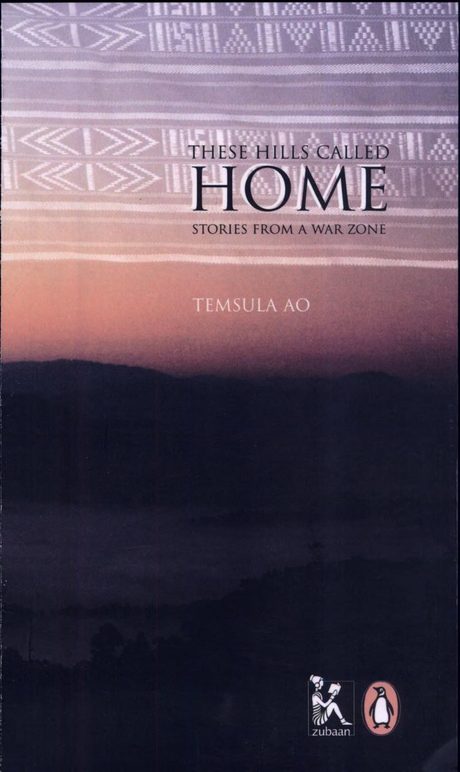
These Hills Called Home
Temsula Ao2006about 164 pages
Ten stories about ordinary Naga families living inside a conflict that came to their door and never left.
Temsula Ao was an Ao Naga writer and professor, and these stories sit with the villagers caught between the underground fighters and the Indian army during the long Naga conflict. A woman feeds men from both sides on the same day. A boy learns what a checkpoint means. The telling is plain, almost patient, and that restraint is what makes the violence land when it comes. Nobody here is a hero of a movement. They are people who wanted a harvest and a school year, and got neither.
Why it is at 2
Second because it is the cheapest history lesson you will ever get, ten short stories long, and because so much later Naga fiction assumes you already know this ground. Kire at rank 7 goes deeper into how the movement changed over decades. Ao gets you the human cost faster, which is why she comes first.
Read it ifyou want to understand what decades of conflict do to ordinary families
Skip it ifyou are looking for a neutral history of the Naga movement, because this is fiction told from inside it
restrained, sad, clearBest for: readers who want the human costshort storiesnagalandconflict
Heads up: sexual violence, army and militant violence
3

Door 3: Arunachal Pradesh, Adi
The Legends of Pensam
Mamang Dai2006about 210 pages
Linked stories from the Adi country of the Siang valley, told the way memory tells things rather than the way plots do.
A journalist returns to the hills she comes from and gathers what people there say: a boy called Hoxo who is said to have fallen from the sky, a road the British cut through the Siang valley and the world that arrives with it, missionaries, spirits who are treated as neighbours rather than as metaphors. The book moves in circles across generations of one valley instead of running along a plot. Mamang Dai writes from inside the Adi world rather than translating it for a Delhi reader, and she trusts you to keep up. What you have by the end is less a story than a place you would recognise if you landed in it.
Why it is at 3
Third because Arunachal barely exists on the English shelf, and Dai is the writer who put it there. It sits below the first two only because its shape, stories inside stories with no single narrator, takes a chapter or two to settle into. Stay past that and it opens.
Read it ifyou like books that feel like listening to elders talk
Skip it ifyou need one narrator and a straight timeline
oral, circling, unhurriedBest for: readers tired of plot machinerylinked storiesarunachal pradeshadi
4

Door 4: Assam
The Collector's Wife
Mitra Phukan2005about 360 pages
A lecturer married to a district collector finds out how small her life is, while the state outside her bungalow stops being safe.
Rukmini teaches English at a college in a small Assam town and is married to the district collector, which makes her important to everyone and known to nobody. Years of marriage have brought no child, and the town has opinions about that. Around this very domestic story sits the Assam of agitation, strikes, curfews and the men who have gone underground. Mitra Phukan keeps the politics as weather rather than plot, so the fear arrives the way it does in real life, through a phone call, a rumour, a road you no longer take.
Why it is at 4
Fourth because it is the most readable Assam novel here and the best at showing how insurgency feels to a person who is not part of it. The domestic and the political share a house without either becoming a lecture. Kashyap at rank 9 takes the same years and stands much closer to the killing.
Read it ifyou want a quiet marriage novel with a state on fire outside the window
Skip it ifyou want thriller pace or a political explainer
domestic, tense, adultBest for: readers who like character over plotnovelassammarriage
Heads up: an affair, and violence reported at a distance
5
Door 5: Meghalaya, Shillong
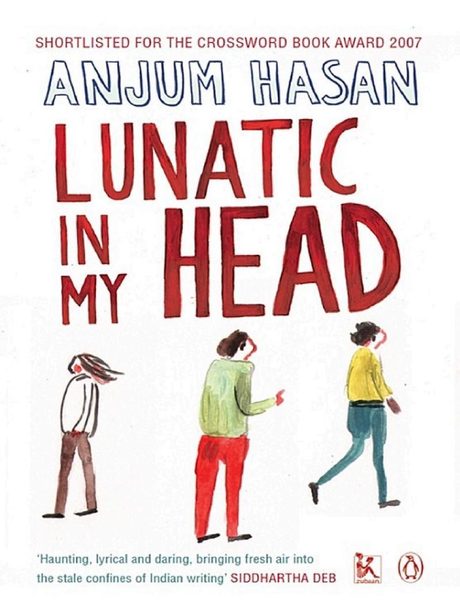
Lunatic in My Head
Anjum Hasan2007about 358 pages
Three people in 1990s Shillong who all want out of their own lives, written with a comic touch that never makes fun of them.
A young man preparing for the civil services would rather listen to rock music, a college lecturer is stuck in the swamp of her own thesis, and a small girl is quietly certain her real story lies somewhere else. Their paths cross in a Shillong where the question of who belongs and who is an outsider is in the air of every shop and classroom. Anjum Hasan grew up in that town and writes it with affection and no sugar. The comedy is in the detail, the ache is in the wanting.
Why it is at 5
Fifth because it is the only book here that sits on the seam between local and outsider and refuses to make either side simple. It is also the funniest, in a low key way. It ranks below Phukan because less happens: this is a mood with three people inside it, and some readers want more engine than that.
Read it ifyou like slow character novels about small towns and thwarted people
Skip it ifyou need a plot that moves in a clear direction
wry, restless, tenderBest for: fans of quiet small-town fictionnovelmeghalayashillong
6
Door 6: Sikkim, Nepali speaking
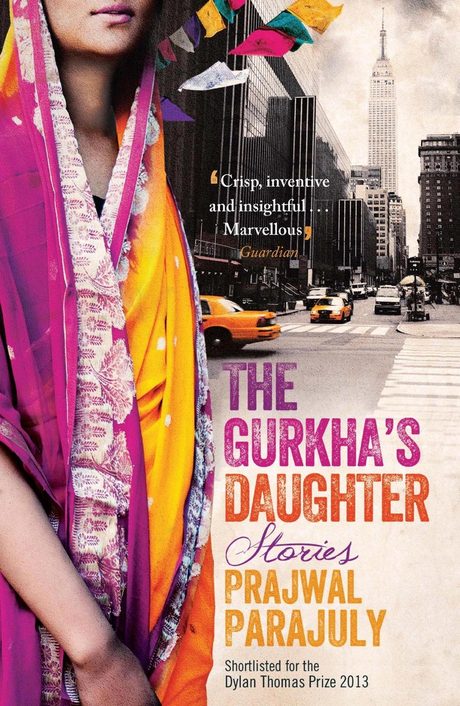
The Gurkha's Daughter
Prajwal Parajuly2012about 230 pages
Eight stories about Nepali speakers scattered across Sikkim, Darjeeling, Bhutan and further, with nothing sentimental about hill life.
Parajuly was born in Gangtok and writes about the Nepali speaking world that spreads across state and national borders. Eight stories: a thirteen year old servant girl with a cleft palate travelling with the mistress who torments her, a Kalimpong shopkeeper stuck with a problem he cannot solve politely, a Nepali Bhutanese refugee pinning everything on getting to the West, two young immigrants meeting in Manhattan. He is sharp about class and caste inside a community that outsiders treat as one cheerful block, and he is funny in places, though the funniest lines usually cost somebody something.
Why it is at 6
Sixth and the last of the doors, because it travels furthest from the region while staying about its people, which makes it a good bridge if you already read diaspora fiction. Sikkim gets almost no space in Indian publishing, and this is the book that fills it. The collection was shortlisted for the Dylan Thomas prize.
Read it ifyou want stories about class and caste inside hill communities
Skip it ifyou want warm nostalgia about mountain life
sharp, funny, unsparingBest for: readers who like social observationshort storiessikkimnepali speaking
7
Room 1: Nagaland, Angami
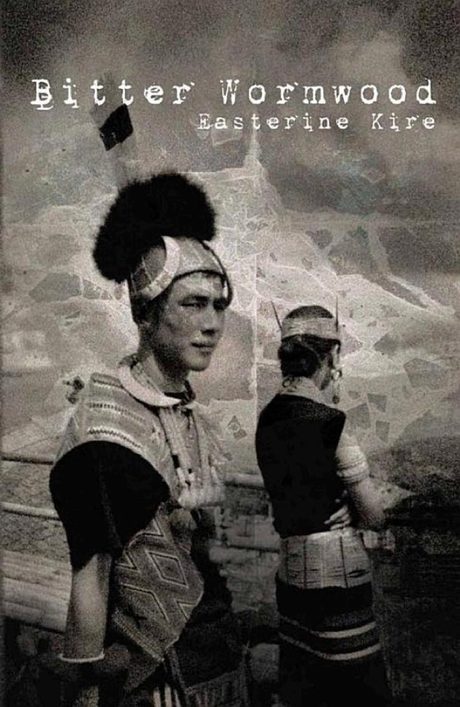
Bitter Wormwood
Easterine Kire2011about 238 pages
One Naga man's life from 1937 to the present, which is also the story of how a movement hardened into a habit of violence.
Kire follows a single life from a childhood in the years before the Naga national movement, through the decades of underground groups, army operations and factional killing, to an old age in a Kohima where young men still carry guns for reasons nobody can fully explain any more. It is a family story first: grandmothers, sons, a neighbourhood. The politics enter the way they enter a household, through a missing person and a curfew rather than a speech.
Why it is at 7
Room one because it needs Ao's stories, or some background, to land at full weight. What it adds is time. You watch a cause become an industry across seventy years, and Kire refuses to let either the Indian state or the factions off the hook. Her ending is gentler than the book earns, which is the one place I would argue with her.
Read it ifyou want the long arc of the Naga conflict inside one family
Skip it ifyou want a book that takes a clear political side
steady, grieving, humaneBest for: readers who finished These Hills Called Homenovelnagalandconflict
Heads up: political killings, factional violence
Pairs with: These Hills Called Home at rank 2, same conflict, shorter form
8
Room 2: Assam, from Assamese
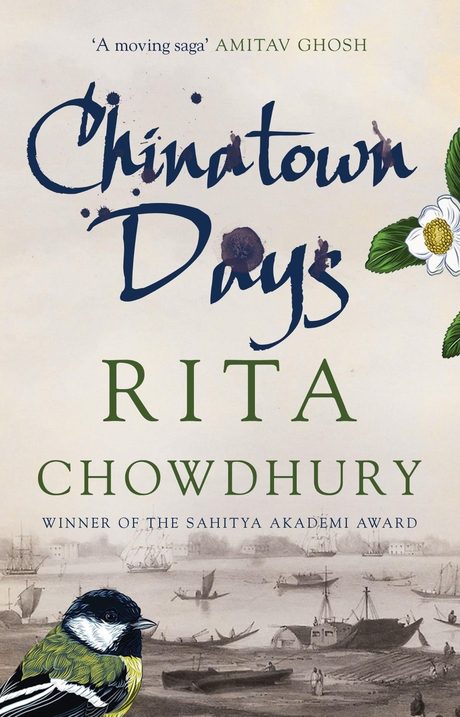
Chinatown Days
Rita Chowdhurytranslated by Rita Chowdhury2010about 426 pages
The Chinese Indians of Assam, taken from their homes after the 1962 war and deported to a country they had never seen.
Makum in upper Assam had a Chinese community that had been there for generations, working in tea, carpentry and shops, marrying local families. After the war with China in 1962 they were rounded up, held in a camp in Rajasthan, and many were sent to China. Rita Chowdhury wrote it in Assamese as Makam after years of tracing survivors, then translated it into English herself. The novel is long, and it earns the length: you meet the town before you watch it disappear.
Why it is at 8
Room two because the history is unfamiliar to almost every Indian reader, so you need patience for the first hundred pages of world building. Stay. This is the single most surprising book on the list, and the only one that made me go and read the record afterwards to check whether it really happened. It did.
Read it ifyou want history you were never taught, inside a novel
Skip it iflong books with big casts put you off
epic, angry, mournfulBest for: readers who like historical fictionnovelassamtranslatedhistory
Heads up: internment, deportation, families separated
9
Room 3: Assam
The House with a Thousand Stories
Aruni Kashyap2013about 245 pages
A wedding in a village in Mayong, and underneath the wedding, the years when families of suspected militants were quietly being killed.
A young man comes from Guwahati to his family's village for an aunt's wedding, and the house fills with relatives, rumours and old grudges. Outside it, in the late 1990s, the secret killings are going on: people connected to militants turning up dead with nobody claiming responsibility. Kashyap keeps the camera on the household, on cousins and jokes and food, which is precisely what makes the dread work. The fear arrives at a wedding, wearing a good shirt.
Why it is at 9
Room three because it assumes you know roughly what ULFA was and what the state was doing. Phukan at rank 4 gives you the same period from a safer distance. Kashyap stands inside the village where the bodies turn up, and the book is angrier and less polished for it. The last fifty pages are the reason to read it.
Read it ifyou want a family novel with a political horror underneath
Skip it ifyou dislike books where the plot stays offstage until late
humid, gossipy, dread-filledBest for: readers who like slow-burn dreadnovelassampolitical violence
Heads up: extrajudicial killings
10
Room 4: Assam, from Assamese
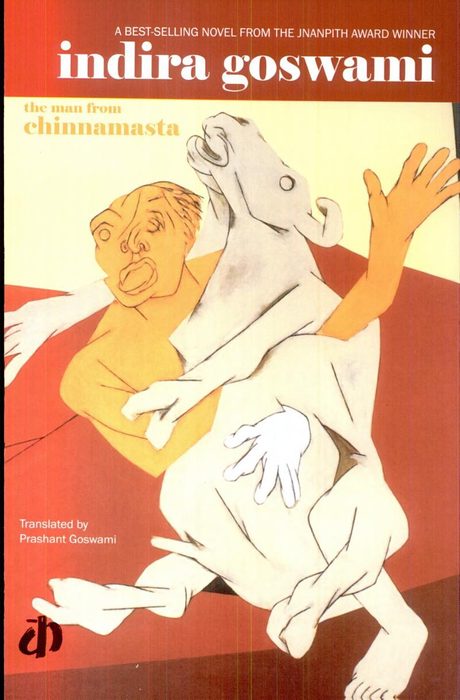
The Man from Chinnamasta
Indira Goswamitranslated by Prashant Goswami2005about 204 pages
At the Kamakhya temple, a devotee argues that the goddess never asked for blood, and the town does not want to hear it.
Goswami sets her novel in and around the great temple on the hill at Kamakhya in Assam, where animal sacrifice is part of worship. Her central figure campaigns to end it and finds that faith, money, priests and habit are all standing in his way. Around that argument she writes women who have been abandoned to the temple economy and men who profit from it. The book caused a public row in Assam when it appeared, which tells you it was aimed at something real rather than at literature.
Why it is at 10
Room four because it is the most demanding book here and the one where the translation shows its seams. What you get is Assam's most important modern novelist arguing with her own religious culture in public, which is rarer than it should be. Read it after Chinatown Days if translated Assamese fiction is new to you.
Read it ifyou want a novel that takes on religious practice directly
Skip it ifdescriptions of animal sacrifice will stop you reading
severe, argumentative, physicalBest for: readers who want a serious classicnovelassamtranslatedreligion
Heads up: animal sacrifice described in detail
11
Room 5: Manipur, from Meiteilon
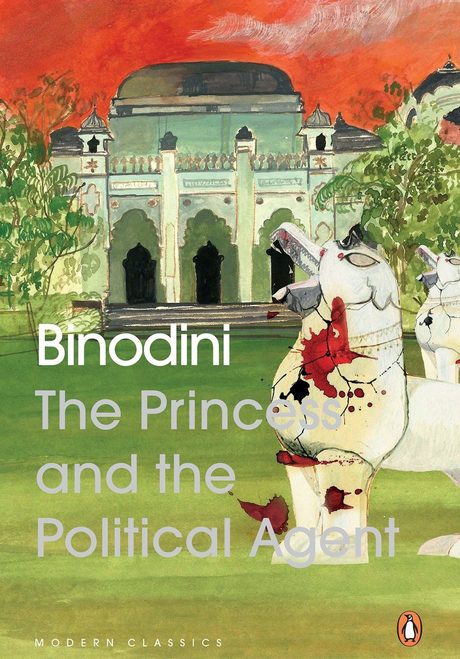
The Princess and the Political Agent
Binodinitranslated by L. Somi Roy1976about 301 pages
A Manipuri princess and the British officer who ran her defeated kingdom, written decades later by her own niece.
After the Anglo-Manipur war of 1891, the kingdom is under British control and a political agent sits at the centre of the palace world. Sanatombi, a daughter of the royal house, becomes his companion, and the court, the town and her family decide what that makes her. Binodini was Sanatombi's niece and wrote the novel in Meiteilon in 1976, so the book carries family memory as well as history. L. Somi Roy, her son, brought it into English in 2020.
Why it is at 11
Room five because it is the one book here that lets you inside Manipur at the moment the state lost its independence, and because the English edition is recent enough to actually find. It is slower than anything above it and the court detail can crowd the page. The reward is a woman judged by everybody around her, drawn by someone who loved her.
Read it ifyou want Manipur's history through one woman's life
Skip it ifperiod court politics bore you
stately, intimate, sorrowfulBest for: historical fiction readersnovelmanipurtranslatedhistory
Heads up: colonial violence and its aftermath
12
Room 6: Meghalaya, and three centuries elsewhere
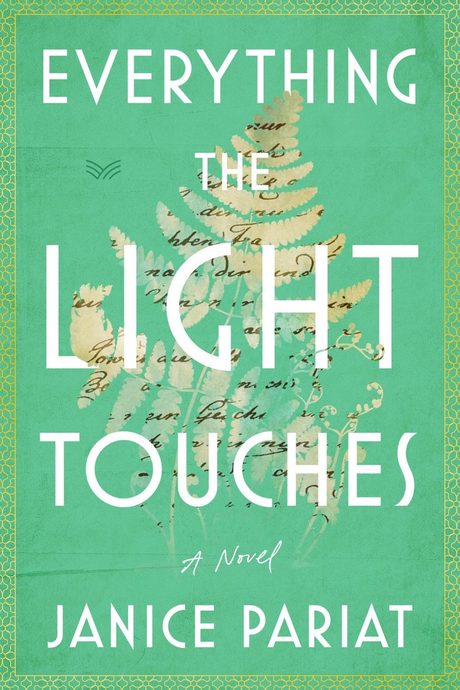
Everything the Light Touches
Janice Pariat2022about 456 pages
Four travellers across three hundred years, all trying to name the living world, with a young woman heading home to Meghalaya at the centre.
Shai leaves Delhi and goes back to Meghalaya, where the villages have their own way of knowing plants and hills. Her strand is braided with an Englishwoman travelling to the Khasi hills in the early 1900s, with Goethe going to Italy, and with Linnaeus going north to Lapland. The argument underneath is about two ways of looking at nature: one that sorts and labels everything, and one that watches things change. It is long, it wanders on purpose, and it is the most ambitious book here.
Why it is at 12
Room six because the Meghalaya sections are the best thing in it and you have to earn them by walking through three other centuries first. Boats on Land at rank 1 is the better introduction to Pariat. This one is for the reader who finished that and wanted her to try something enormous, which she then did.
Read it ifyou like braided novels about science, travel and belonging
Skip it ifyou want a fast story, because this is a long walk by design
expansive, botanical, patientBest for: readers who finished Boats on Landnovelmeghalayahistorical
13
Room 7: the whole region, nonfiction
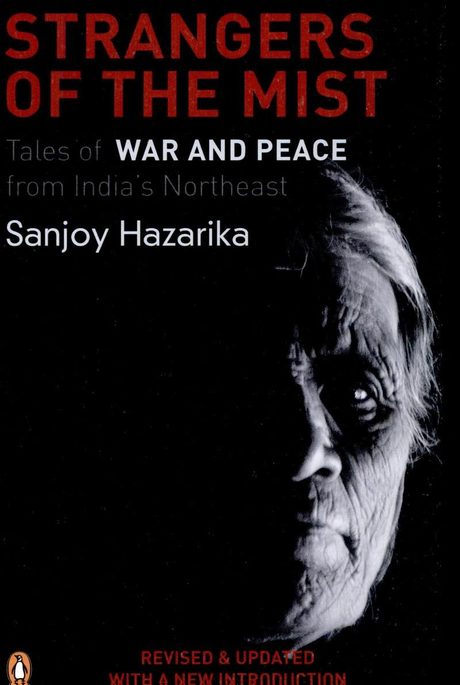
Strangers of the Mist
Sanjoy Hazarika1994about 442 pages
The reporting book that supplies the history the novels assume you already have, from a journalist who covered the region for years.
Hazarika works through insurgency in Nagaland and Mizoram, the Assam movement of the 1980s and the long fight over who counts as a foreigner in Assam, the pressure of the border with Bangladesh, and the way Delhi has handled all of it. He was reporting on these stories as they happened, so the book is full of rooms he sat in and people he met rather than only documents. It stops in the early 1990s, which is both its limit and its use.
Why it is at 13
Last because it is the homework, not the pleasure, and because a 1994 book cannot tell you about the region now. Read it after two or three of the novels above, when you want to know why a checkpoint, a camp or a foreigners tribunal keeps appearing. It answers questions the fiction leaves lying around.
Read it ifyou want the political history behind the fiction
Skip it ifyou only read fiction, or you need a current account
reported, dense, usefulBest for: readers who want contextnonfictionhistoryreportage
Worth knowing
Doors and rooms, and why the order is not a quality ranking
The first six books ask nothing of you in advance. You can open Boats on Land or The Gurkha's Daughter cold, on a train, with no idea what AFSPA stands for, and still get everything the writer put there. That is what I mean by a door.
The last seven assume something: a rough sense of the Naga movement, of what the Assam agitation was about, of who was in power in Manipur in 1891. They are not harder sentences, they are books with a step at the entrance. If you read one door from a state and then the room next to it, the room opens much wider: Ao and then Kire, Phukan and then Kashyap, Boats on Land and then Everything the Light Touches.
Worth knowing
The two states missing from this list, and why I am not pretending otherwise
There is no book from Mizoram here and none from Tripura. It is not because nothing is written there. It is because I could not find a title from either state in English, in a real edition, with a cover that Google Books or Open Library could even show me.
The closest I came was Zorami by Malsawmi Jacob, a Mizo novel in English published in 2015 about a woman living with what the years of the Mizo uprising did to her. It is real and it is by a Mizo writer, and neither database has so much as a cover image for it. That gap is not a literary judgement on Mizoram. It is a distribution fact, and it is the same fact that keeps Kokborok writing from Tripura off every list including this one. If you know a Tripura or Mizoram title in print in English, that is the sort of correction I actually want.
People also ask
Questions, answered
Which book from Northeast India should I read first?
Boats on Land by Janice Pariat. It is a short story collection from the Khasi hills of Meghalaya, so you can read one story a night, and it needs no background at all. If you would rather start with a novel, take The Collector's Wife by Mitra Phukan, which is set in Assam and reads like a good domestic drama with a state coming apart outside the window.
Is there one literature of Northeast India?
No, and that is the main thing to get right. Eight states, dozens of languages, and very different histories sit under that one label. A Naga novel about the underground years, an Assamese novel about a temple town and a Sikkimese story about caste in a Nepali speaking household have almost nothing in common except a postal region. Every book on this list is tagged with its state for that reason.
Which books explain the Naga conflict?
Start with These Hills Called Home by Temsula Ao, ten short stories about villagers caught between the underground fighters and the Indian army. Follow it with Bitter Wormwood by Easterine Kire, which tracks one man's life from 1937 to the present and shows how a movement changed over seventy years. Both are fiction written from inside Nagaland, not neutral histories, and they are honest about that.
Are these books in English or translated?
Both. Pariat, Ao, Kire, Dai, Phukan, Hasan, Parajuly, Kashyap and Hazarika wrote in English. Three are translations: Chinatown Days from Assamese, which Rita Chowdhury translated herself, The Man from Chinnamasta from Assamese by Prashant Goswami, and The Princess and the Political Agent from Meiteilon by L. Somi Roy. The year on each entry is the year the book first appeared in its original language.
What about Easterine Kire's When the River Sleeps?
It is real, it came out in 2014, and plenty of readers name it as her best: a hunter walks alone into the forest after a stone from a sleeping river. I left it off because no edition I checked had a cover I could verify, and everything on this list had to clear that bar. If you can find a copy, read it after Bitter Wormwood.
Are there books from Northeast India for someone who does not like heavy reading?
Yes. The Gurkha's Daughter by Prajwal Parajuly is funny and fast, eight stories about Nepali speakers across Sikkim, Darjeeling and beyond. Lunatic in My Head by Anjum Hasan is gentle and comic about three people stuck in 1990s Shillong. Neither one asks you to know any history before you start, and both are short enough to finish in a couple of sittings.
Before you go
What to read tonight
If you take one thing from this list, take the habit of naming the state. It changes how you read: a Kohima writer and a Guwahati writer are answering different questions, and once you hear that, the books stop blurring into one grey category called northeast writing.
Tonight, open Boats on Land and read two stories. If they land, go to These Hills Called Home next and you will have covered two states and two very different griefs inside a week. If you want the ground under both, keep Strangers of the Mist on the desk and read it in pieces, the way you would use a map. And if you find a Mizo or a Tripura novel in English that is actually in print, that is the book I want to hear about.
Keep going
Lists that pair with this one
Indian Fiction
The 20 Best Indian Books in Translation, Ranked by Where to Start
Twenty books from ten Indian languages, ordered from the easiest way in to the one that will fight you, with the translator named every time.
Indian Fiction
16 Best Indian Short Story Collections (Where to Start in Each)
Sixteen collections worth your evening, ranked by how much patience each one asks for, with the exact story to read first in every book.
Indian Fiction
13 Novels Set in Small Town India, Ranked by How Tight the Grip Is
The metros are banned from this page, so what is left is thirteen towns with one college, one cinema, one bus out, and a grip score each.
Indian Fiction
16 Best Books to Understand India, Ranked by What They Explain
Sixteen books, ten doors into the same country: history, caste, the mega city, the village, money, and where to start tonight.
Indian Fiction
13 Books Set in the Himalayas, Ranked by Altitude
The list climbs. It starts in the hill towns where the road still goes and finishes above eight thousand metres, and every entry tells you whether the writer lived up there or was only passing through.