My grandfather kept an inland letter card in his shirt pocket for two days before posting it, because he wanted to add a line if something happened. That habit is the whole reason this form works. A letter is written by somebody who does not yet know how the story ends, to somebody who will read it later, and both of those facts do damage in the right hands.
There are two ways to make a list like this. Put the famous ones in order of fame, or ask the only question that separates a real epistolary novel from a novel wearing an envelope. I went with the second. For each book I imagined it rewritten as a normal third person story and asked how much would be lost, and then I ranked by the size of the hole.
Rank one collapses completely without its form. Rank fourteen is a book most people finish without remembering there were letters in it at all. Tiers are marked, so if you only want the ones where the form is doing real work, stop after rank five.
One entry is not a novel and is labelled as such, because leaving it out would have been dishonest and slipping it in unmarked would have been worse.
How I picked these
- The rewrite test decides the order. Not fame, not sales, not how much I enjoyed it. How much of the book dies if you convert the letters into ordinary chapters.
- Letters, diaries, emails, transcripts and hacked files all count as the form, since a chat log in 2026 does what a bundle of letters did in 1897.
- 84, Charing Cross Road is real correspondence between two people who existed, not fiction, and it is marked in its entry. It stays because the form question is impossible to discuss without it.
- Cut Letters to a Young Poet: it is advice going one way, and without a story on the other end it belongs on a different list.
- Cut Dear Mrs Bird, which I like, because it is a first person novel with letters inside it rather than a novel made of letters, and this list is about the form doing the work.
- Every title checked through Google Books and Open Library with a real cover, and a first publication year I can stand behind.
The whole list at a glance
All 14 books, in order
| # | Book | Author | Year | Vibe | Best for |
|---|
| 1 | Ella Minnow Pea | Mark Dunn | 2001 | playful, sly, alarming | readers who love language games |
| 2 | The Color Purple | Alice Walker | 1982 | raw, tender, furious | readers who want weight |
| 3 | Dracula | Bram Stoker | 1897 | gothic, patient, creeping | your first classic horror |
| 4 | We Need to Talk About Kevin | Lionel Shriver | 2003 | cold, articulate, exhausting | readers who want an argument |
| 5 | 84, Charing Cross Road | Helene Hanff | 1970 | warm, funny, understated | one evening and a cup of tea |
| 6 | The Screwtape Letters | C. S. Lewis | 1942 | witty, dry, pointed | readers who like arguments |
| 7 | Illuminae | Amie Kaufman | 2015 | loud, kinetic, inventive | readers in a slump |
| 8 | The White Tiger | Aravind Adiga | 2008 | sardonic, angry, propulsive | readers who want an Indian entry |
| 9 | Where Rainbows End | Cecelia Ahern | 2004 | breezy, wistful, bittersweet | a plane or a sick day |
| 10 | Attachments | Rainbow Rowell | 2011 | cosy, funny, low stakes | a comfort read |
| 11 | The Perks of Being a Wallflower | Stephen Chbosky | 1999 | quiet, aching, sincere | readers aged fifteen to twenty |
| 12 | Bridget Jones's Diary | Helen Fielding | 1996 | chaotic, funny, self-aware | when you need to laugh |
| 13 | The Guernsey Literary and Potato Peel Pie Society | Mary Ann Shaffer | 2008 | warm, cosy, quietly sad | readers who like gentle books |
| 14 | Frankenstein | Mary Shelley | 1818 | romantic, grieving, argumentative | classics you were assigned |
The list
The books, ranked
1

Tier A: no form, no book
Ella Minnow Pea
Mark Dunn2001about 165 pages
On an island that worships a famous pangram, letters of the alphabet start getting banned, and the novel loses them too.
Nollop is a small island nation off the coast of America that reveres the man who wrote the sentence about the quick brown fox. When tiles bearing letters fall off his memorial statue, the council rules that the fallen letters must never be used again, in speech or in writing. The story is told entirely in letters between islanders, so as each ban lands, the book itself loses that letter and the characters have to write around the hole. It becomes funnier and more frightening at the same rate.
Why it is at 1
Rank one and it is not close. Every other book here would still exist in some diminished form as a normal novel. This one physically cannot, because the plot happens in the alphabet the letters are written with, and there is no way to show a language being confiscated except by confiscating it on the page in front of you.
Read it ifyou want a small clever book about censorship that never lectures you
Skip it ifyou dislike wordplay or want characters with deep inner lives
playful, sly, alarmingBest for: readers who love language gamessatirewordplayshort
Heads up: authoritarian punishment, exile, an escalating campaign against ordinary people
2

Tier A: no form, no book
The Color Purple
Alice Walker1982
A girl in rural Georgia writes to God because there is nobody else she is allowed to tell.
Celie starts writing at fourteen, in her own spelling, about things being done to her by her father and later by the husband she is handed to. Her letters are short and flat because she has been taught that she is worth very little. Over years, other voices arrive, including her sister's letters from a mission in Africa, and Celie's own sentences begin to lengthen and turn and eventually to argue back. Nobody tells you she is changing. You watch the writing change.
Why it is at 2
Second because the form is the character. Convert this to third person and you get a summary of a life instead of the life itself, since the entire measure of what has been done to Celie and what she takes back is visible only in how she writes. It also earns the top tier the hard way, with a first fifty pages that are genuinely difficult to sit through.
Read it ifyou want the form used for a life rather than a plot
Skip it ifyou cannot read sustained sexual and domestic violence, even written plainly
raw, tender, furiousBest for: readers who want weightclassicletters to godcoming of age
Heads up: rape, incest, domestic violence and racist violence, described directly in the early chapters
3
Tier A: no form, no book
Dracula
Bram Stoker1897about 500 pages
Journals, letters, telegrams and a ship's log, assembled by people who each hold one piece of a monster.
A young solicitor travels to Transylvania on business and writes home about it in a diary he never expects anybody to read. From there the book becomes a bundle of documents: Mina's journal, Lucy's letters, a doctor's phonograph recordings, newspaper clippings, and the log of a ship that arrives in Whitby with a problem. Nobody in the novel has the full picture until they physically sit down and put their papers in order, which is when the hunt actually begins.
Why it is at 3
Third because the dread comes from the gaps between documents. You read Lucy's cheerful letter knowing what the previous entry said, and the horror is entirely in the distance between the two. A normal third person version tells you what is in the house, which is not scary. This version lets you know something the writer does not, which is.
Read it ifyou want to see the form invented and used at full stretch
Skip it ifVictorian sentences and long stretches of paperwork exhaust you
gothic, patient, creepingBest for: your first classic horrorgothicdiariesvictorian
Heads up: period xenophobia and some very dated attitudes to women, both left intact
Pairs with: Illuminae at rank six, which is the same document trick run on a spaceship a century later
4

Tier A: no form, no book
We Need to Talk About Kevin
Lionel Shriver2003about 480 pages
A mother writes to her absent husband about their son, two years after the thing their son did at his school.
Eva writes letter after letter to Franklin, going back over her pregnancy, her ambivalence about motherhood, her career, and a boy who she says was difficult from the first week. She is arguing a case, and she is arguing it to the one person whose opinion she needs. Shriver keeps you inside that argument for four hundred pages without ever giving you a second witness, so the book becomes a test of how much you are willing to take on trust from a very articulate woman in pain.
Why it is at 4
Fourth because the letters are the lie machine. Everything you know comes from somebody with a reason to shape it, and the form is what makes that inescapable rather than merely interesting. Rewrite it in third person and you get a family tragedy with an answer at the end. As it stands, you get an accusation, and you have to decide what to do with it.
Read it ifyou want the form used to make you distrust the only voice you have
Skip it ifschool violence and a mother's ambivalence about her child are too much right now
cold, articulate, exhaustingBest for: readers who want an argumentliterarylettersmotherhood
Heads up: a school massacre and its aftermath, child cruelty, sustained emotional violence
5
Tier A: real letters, not a novel
84, Charing Cross Road
Helene Hanff1970
A broke New York writer orders secondhand books from a London shop for twenty years and slowly befriends the man who answers.
In 1949 Helene Hanff writes to Marks and Co on Charing Cross Road asking for cheap used editions of English classics. Frank Doel replies with the formality of a bookshop clerk. The correspondence runs for two decades, through postwar rationing that she answers with food parcels, through her constant lack of money and her running complaints about the books she is sent. Nothing dramatic happens. Two people simply become important to each other by post, at a distance neither of them closes.
Why it is at 5
Fifth, and marked plainly: this is genuine correspondence between people who lived, not fiction, so the rewrite test is unfair to it. There is nothing to rewrite, the letters are the event. It sits in the top tier because it is the clearest proof of what the form does that a novel cannot, which is to let you watch affection accumulate in the margins of routine business.
Read it ifyou want to finish something lovely in a single sitting
Skip it ifyou need plot, because there is almost none by design
warm, funny, understatedBest for: one evening and a cup of teanonfictionreal lettersbooks about books
6

Tier B: form does half the work
The Screwtape Letters
C. S. Lewis1942
A senior devil writes career advice to his nephew, who has been assigned one ordinary Englishman to ruin.
Screwtape is an administrator in hell, and his nephew Wormwood is a junior tempter working on a young man in wartime London. The book is thirty-one letters of coaching: how to keep the patient distracted, how to make prayer feel embarrassing, how to turn small vanities into a habit. Every value is inverted, so love and courage are described as tactical problems. Lewis is writing theology, but it reads as workplace correspondence between two people who consider human beings a quarterly target.
Why it is at 6
Sixth because the whole comedy lives in the inversion, and the inversion needs somebody to be writing to somebody. As an essay it becomes a sermon, and Lewis knew it, which is why he chose the form. Faith is not required to enjoy it. The advice about procrastination and low-grade self-pity works whether or not you believe there is anybody in the office receiving reports.
Read it ifyou want moral argument delivered as office memos from hell
Skip it ifexplicit Christian framing puts you off entirely
witty, dry, pointedBest for: readers who like argumentsclassicsatireletters
7
Tier B: form does half the work
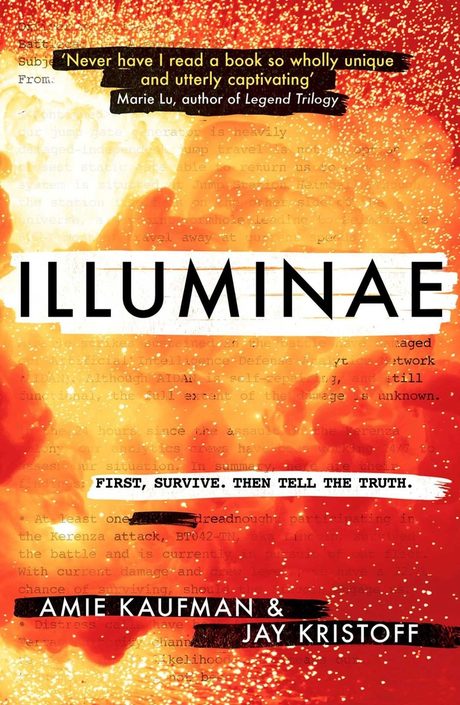
Illuminae
Amie Kaufman2015about 590 pages
A teenage couple break up on the morning their planet is attacked, and the whole disaster reaches you as a hacked file dump.
The story arrives as chat logs, incident reports, ship schematics, interview transcripts, casualty lists and pages where the text falls apart across the paper. Kady and Ezra are on separate ships in a fleet running from a corporation that wants no witnesses, there is an artificial intelligence that has started making its own decisions, and everything you learn is something an analyst has redacted or a hacker has stolen. Jay Kristoff co-wrote it, and the pair keep the pace brutal.
Why it is at 7
Seventh because the format is genuinely doing work rather than decorating a normal book. The casualty lists land harder than any death scene would, and the redactions make you fill in what was cut. It drops out of the top tier because the underlying story is a straightforward space chase, and a plain telling would still hold together, just with far less oxygen.
Read it ifyou want the form pushed as far as a printed page allows
Skip it ifyou plan to read on a phone or an e-reader, where the layout falls apart
loud, kinetic, inventiveBest for: readers in a slumpsci-fiyadocuments
Heads up: mass casualties, a viral outbreak with body horror, military violence
8

Tier B: form does half the work
The White Tiger
Aravind Adiga2008about 319 pages
A driver turned Bangalore businessman writes to the Chinese premier over seven nights to explain how he got there.
Balram Halwai grew up in a village he calls the Darkness, drove a car for a landlord's family in Delhi, and now runs a taxi company in Bangalore. He addresses his account to Wen Jiabao, who is due to visit India and would apparently like to learn about Indian entrepreneurship. The choice of reader lets Balram explain his own country to somebody who does not know it, which means explaining the parts nobody says out loud, and lets him confess a crime while presenting it as a business case study.
Why it is at 8
Eighth because the address is doing the heavy lifting. The letters are one-way and nobody replies, so the form is closer to a monologue with a stamp on it, but the choice of recipient is the entire joke and the entire alibi. Written as a plain first person memoir it loses the nerve of a man explaining himself to a foreign head of government at three in the morning.
Read it ifyou want the form used for class rage and very black comedy
Skip it ifyou dislike a narrator who is proud of the worst thing he did
sardonic, angry, propulsiveBest for: readers who want an Indian entryindian fictionsatireletters
Heads up: violence, caste and class contempt voiced by the narrator without correction
9

Tier B: form does half the work
Where Rainbows End
Cecelia Ahern2004about 584 pages
Rosie and Alex miss each other for thirty years, and you watch it happen in notes, letters, emails and instant messages.
They meet as children in Dublin and the book is built from everything they send each other after that: school notes passed in class, letters when he moves to America, emails, chat windows, invitations, hospital cards. Other people's messages get mixed in, so you often learn about a decision from a third party before the two of them discuss it. Decades pass in a few pages because the form lets Ahern skip whole years without a summary chapter. It is published as Love, Rosie in some editions.
Why it is at 9
Ninth because the form buys the thing the story most needs, which is time. Thirty years of near misses would be unbearable told scene by scene, and here it moves at the speed of a life. What keeps it out of the top tier is that the emotional beats are conventional. Take away the format and you have a familiar friends to lovers story, but you would still have a story.
Read it ifyou want a romance you can read in an afternoon with a lump in your throat
Skip it ifyou find repeated misunderstandings frustrating rather than sad
breezy, wistful, bittersweetBest for: a plane or a sick dayromanceemailsirish
10
Tier B: form does half the work
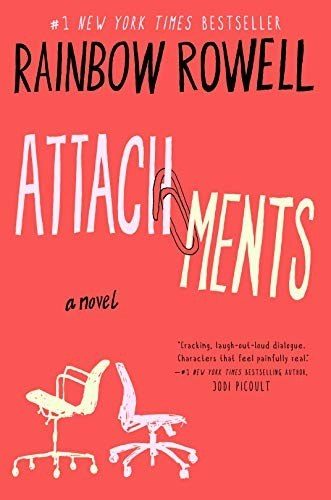
Attachments
Rainbow Rowell2011about 357 pages
It is 1999, a newspaper hires a man to read staff email flagged by the filter, and he starts looking forward to two women's threads.
Lincoln works nights in IT at a Nebraska paper, monitoring messages that trip the company system, which mostly means Beth and Jennifer talking about their lives at length on the office network. He knows he should send them a warning. He does not. The book alternates between their email chains, which are very funny, and ordinary third person chapters about Lincoln, who is twenty-eight, lives with his mother, and is not built for this situation. The year matters: everything hinges on a moment when work email still felt private.
Why it is at 10
Tenth because it is an honest hybrid and says so. The emails carry the charm and the plot, since the whole premise is a man reading correspondence he has no business enjoying, but half the book is standard narration around them. Compared with Where Rainbows End above it, the letters here are the situation rather than the structure.
Read it ifyou want an office romance with an unusual and slightly uncomfortable setup
Skip it ifa man reading a woman's private messages is not something you can find charming
cosy, funny, low stakesBest for: a comfort readromanceemailsnineties
11
Tier C: the form is the frame
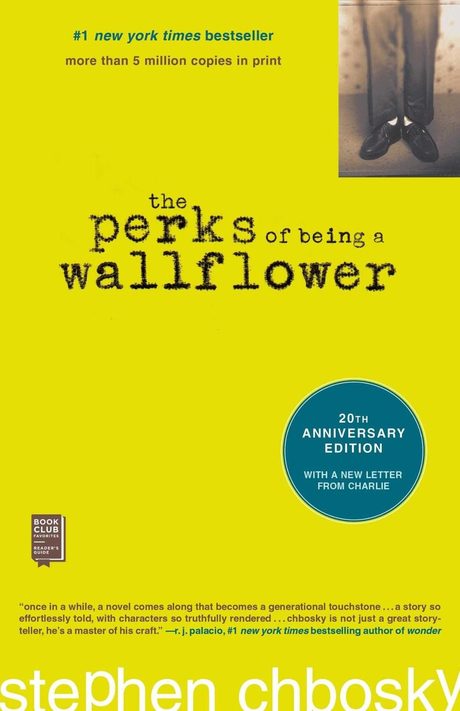
The Perks of Being a Wallflower
Stephen Chbosky1999about 230 pages
A fifteen year old writes to a stranger he has never met, because the whole point is that nobody can trace him.
Charlie starts high school after a friend's death and writes letters to an anonymous someone he has heard is kind. He describes his sister, his English teacher, the two seniors who adopt him, mixtapes, parties, and things from his childhood that he does not seem able to look at directly. The letters are plain and slightly younger than his age, and the gap between the flatness of the writing and the size of what he is describing is where the book does its damage.
Why it is at 11
Eleventh because the letters give Charlie a listener who cannot answer, judge or intervene, which is the only reason he can write any of it down. That is a real gain. It sits in the bottom tier because the story would survive as a diary novel or a plain first person account with most of its power intact, since the recipient never becomes a character.
Read it ifyou want the form used for teenage loneliness without any performance
Skip it ifyou are past twenty-five and impatient with earnest teenagers
quiet, aching, sincereBest for: readers aged fifteen to twentycoming of agelettersya
Heads up: child sexual abuse, suicide of a friend, drug use, an abusive relationship
12

Tier C: the form is the frame
Bridget Jones's Diary
Helen Fielding1996about 337 pages
A London thirty-something logs her weight, cigarettes and alcohol units every morning, then fails to follow her own plan.
Bridget works in publishing, then television, and keeps a diary that opens each entry with a tally of her failures in numbers. She wants Daniel Cleaver, who is bad for her, and is repeatedly seated next to Mark Darcy at dinner parties by a mother who has views. Fielding wrote it as a newspaper column first, which shows in the best way: each entry is built to land, and the comedy comes from the distance between the resolutions at the top and the events underneath.
Why it is at 12
Twelfth because the diary is a joke delivery system more than a structure. The numbers at the top of each entry are genuinely funny and would not survive a rewrite, so the form earns its place, but the story itself is a straight romantic comedy that a third person telling would handle without breaking a sweat. Read it for the voice, which nobody has really matched since.
Read it ifyou want the funniest diary novel in English and do not mind the nineties
Skip it ifconstant calorie counting and dated body talk will spoil it for you
chaotic, funny, self-awareBest for: when you need to laughcomedydiaryromance
Heads up: relentless dieting and weight monitoring played for laughs, which has aged unevenly
13
Tier C: the form is the frame
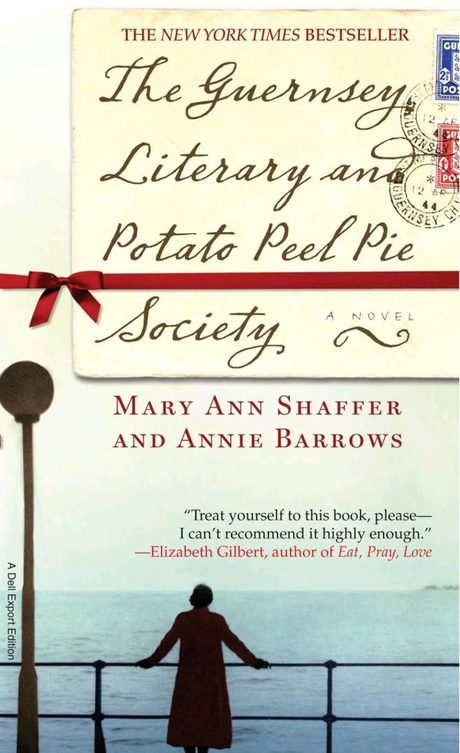
The Guernsey Literary and Potato Peel Pie Society
Mary Ann Shaffer2008about 322 pages
A London writer in 1946 gets a letter from a stranger on Guernsey about a book club invented as an excuse to a German patrol.
Juliet is casting about for her next subject when a Guernsey farmer writes to her about a secondhand book with her address inside it. He mentions a reading society that the islanders made up on the spot during the German occupation to explain why they were out after curfew, and which then turned into a real one. More islanders write in. What starts as charming correspondence about books becomes an account of five years of occupation, told by people who lived through it and are not being dramatic about it.
Why it is at 13
Thirteenth because the letters are a lovely delivery mechanism for an oral history, and the multiple correspondents do let a dozen voices report the same years differently. Still, this is the most rewritable book in the top ten of any list like this. As a straight novel with the islanders interviewed in person, you would lose the postal charm and keep the substance. Annie Barrows finished it after her aunt died.
Read it ifyou want warmth and wartime history in the same book
Skip it ifyou find whimsical charm in period settings a bit much
warm, cosy, quietly sadBest for: readers who like gentle bookshistoricalletterswartime
Heads up: occupation, a labour camp, and the disappearance of an islander
14
Tier C: the form is the frame
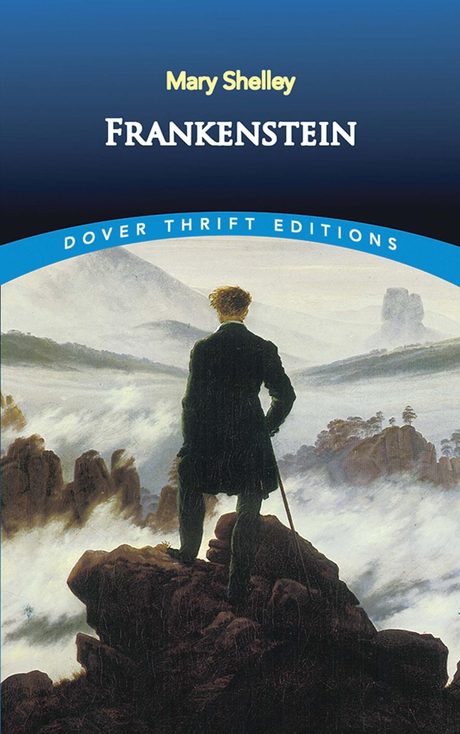
Frankenstein
Mary Shelley1818about 180 pages
An Arctic explorer writes to his sister about the half-dead scientist he pulled onto his ship, and the story inside that story.
Captain Walton is pushing north towards the pole and writing home to Margaret, and his letters carry everything else: Victor Frankenstein rescued off the ice, telling his own history, which in turn contains the creature telling his. Three narrators nested inside each other, each one arguing for himself. Most readers remember the laboratory and the creature learning to speak, and forget entirely that a man on a ship is writing all of it down for a sister who never replies on the page.
Why it is at 14
Fourteenth, last, and this is the honest verdict rather than a slight. The frame is removable. Adaptations drop Walton every time and lose nothing that most audiences notice, which tells you how little structural work those letters do. They matter thematically, since Walton is another man risking other people for glory and Shelley wants you to see the rhyme, but the story stands without them.
Read it ifyou want the origin of a hundred later frame narratives
Skip it ifyou want the horror film, because the book is a long moral argument
romantic, grieving, argumentativeBest for: classics you were assignedclassicframe narrativegothic
Heads up: grief, child death, and a creature described in openly cruel terms
Worth knowing
What the form actually buys a writer
Four things, and every book above is using at least two of them. The first is a reason for the writing to exist. A normal narrator is talking into empty air, while a letter writer has a person in mind, and that person shapes every sentence. Eva writes differently because Franklin is the reader. Balram writes differently because a foreign premier is.
The second is the gap. Between one letter and the next, days pass that nobody reports, and the reader fills them in wrongly, which is exactly what Stoker uses for two hundred pages of dread. The third is built-in doubt: a letter is a version of events sent by somebody with an interest in how it lands, so unreliability arrives free with the format instead of having to be engineered.
The fourth is the least discussed and the most fun. You are reading somebody else's post. The form turns the reader into a person going through a drawer they were not invited to open, and that faint guilt is doing more work in these books than most people notice.
Worth knowing
How the rewrite test works, and which ones fail it
Take the book, convert every letter into an ordinary scene, and put a narrator in charge. Then count the losses. Ella Minnow Pea stops existing, because its plot is a set of rules about which letters may appear on the page you are holding. The Color Purple stops existing, because a summary of Celie's growth is not the same as watching her sentences grow. Dracula becomes a normal monster hunt with all the fear moved offstage.
At the other end, three books survive the operation almost intact. Frankenstein loses a sea captain nobody remembers. Guernsey loses postal charm and keeps its history. Bridget Jones loses her opening tallies, which is a real loss to comedy but not to structure. That is not a criticism of any of the three, it is just the honest answer to the question this list is asking, and it is the answer you rarely get from a list that ranks by fame.
If you want a single takeaway to carry into your next book: when the letters are load-bearing, the writer is using them to hide something. When they are decoration, everybody in the book already knows what you know.
People also ask
Questions, answered
What is an epistolary novel?
A novel told through documents rather than narration, which usually means letters, diaries, journals or now emails, chat logs and files. The reader gets the story only through what the characters wrote down and kept, so gaps and bias are built into the form instead of being added by the author. Dracula and The Color Purple are the standard examples, and the modern version swaps envelopes for inboxes without changing the mechanics at all.
Which epistolary novel should I read first?
84, Charing Cross Road, if you have an evening and want to understand why people love this form. It is about a hundred pages of real letters and it will explain itself faster than any argument I could make. If you want fiction, start with The Color Purple for the serious version or Ella Minnow Pea for the playful one. Save Dracula until you have some patience banked, because the first hundred pages are slow on purpose.
Is Frankenstein an epistolary novel?
Technically yes, and functionally barely. The whole book sits inside letters from Captain Walton to his sister in England, with Victor's account and the creature's account nested inside that. Most readers forget Walton exists by chapter five and almost every adaptation removes him. It is a frame rather than a structure, which is why it sits last on this list even though it is the most famous title here.
Are there modern epistolary novels with emails and texts?
Yes, and the form is healthier now than it has been in a century. Attachments runs on office email from 1999, Illuminae is built from hacked files, chat logs and casualty reports, and Where Rainbows End moves through notes, letters and instant messages across thirty years. The mechanics have not changed since Stoker. A message written by somebody who does not know the ending still creates the same gap for a reader to fall into.
Why do writers still use letters when nobody writes letters?
Because the form solves a problem that has nothing to do with the postal service. It gives the writing a reason to exist, an audience inside the story, and a built-in excuse for everything the reader is not being told. Swap the paper for a group chat and every one of those advantages survives. The only thing that has really changed is speed, which mostly makes the gaps shorter and the misunderstandings faster.
Which epistolary novel is best for a book club?
The Guernsey Literary and Potato Peel Pie Society, for obvious reasons, since a club reading about an invented book club produces an easy first twenty minutes. For a group that wants to argue instead, take We Need to Talk About Kevin, where the entire discussion becomes whether you believe the woman writing the letters. Both are widely available in India in cheap paperback editions, which matters when eight people have to buy the same book.
Before you go
What to read tonight
If you want one tonight, take 84, Charing Cross Road and read the whole thing before bed, then start The Color Purple tomorrow when you have the energy for it. If you are choosing between the two heavyweights, the tiebreak is simple: Kevin if you want to be unsettled and argued with, Purple if you want to be moved.
And when you finish one of these, notice what your own inbox looks like. Threads that stop for months, half-explanations, a message you rewrote four times before sending. Every writer above understood that people are more honest in writing than in a room and less honest with themselves at the same time, which is the strange bargain the form runs on. It is the reason a novel made of letters can feel closer to real life than a novel made of scenes.
Keep going
Lists that pair with this one
Genre
15 Novels With Unreliable Narrators, Ranked by How Late You Catch On
Ordered from the narrator who tips his hand in the first paragraph to the one readers are still arguing about, with nothing said past the setup.
Mood & Life
Classic Books for Beginners: 21 Ranked Easiest to Hardest
Twenty one classics arranged on a four rung ladder, easiest first, so you finish the first one instead of abandoning it at page thirty.
Mood & Life
19 Best Coming of Age Novels, and the Right Age to Read Each
Every one of these has a window when it lands hardest, so I marked all nineteen and ranked them by how long that window stays open.
Mood & Life
20 Best Short Novels Under 200 Pages, Ranked by Length
Every book here is under 200 pages in the edition we link, and the list runs shortest first, so you can pick by the hours you actually have left tonight.
Genre
16 Horror Novels for Beginners, Ordered Gentlest to Most Brutal
This is a ladder, not a ranking: number one will not cost you any sleep, number sixteen might, and every entry tells you which kind of fear it uses.