The first time a book did this to me I was nineteen, on the top bunk in a hostel room, and I went back forty pages to check whether I had misread something. I had not. The narrator had simply been giving me a version, and I had believed him for the same reason anybody believes anybody: he was the only person in the room talking.
So this list runs on one question. How far in do you get before the ground moves. Rank one is the narrator who shows you what he is in the opening paragraph, rank fifteen is the one nobody has agreed about in sixty years, and the twelve in between are ordered by feel rather than page count, because no two readers catch on at the same moment.
Nothing here goes past the setup. No twist, no reveal, no clever hint that is really a reveal wearing a hat. What you get instead is the tell, meaning the habit of speech or thought you can watch for while you read, which costs you nothing now and makes the second read much better.
New to the device? Start around rank six and work outward in both directions. If you have already read most of these, the last four are where the arguments live.
How I picked these
- The narrator had to be the problem. A hidden identity, a second timeline or a late plot reveal did not qualify, because a twist is not the same thing as a liar.
- One book per trick. There are a dozen thrillers doing what The Girl on the Train does, so only the one that did it best got a slot.
- Every title verified through Google Books and Open Library with a real cover, and a first publication year I am willing to defend.
- Cut The Silent Patient, which lands on every list of this kind. The trick is the only load-bearing wall in the building, and once you know it there is nothing to come back to.
- Cut The Wasp Factory for the opposite reason. The narration is superb and the cruelty to animals in it is more than most readers signed up for.
- Lolita is here and it was the hardest call on the list. I have said plainly what the book is and who it hurts, so you can skip rank one and lose nothing.
The whole list at a glance
All 15 books, in order
| # | Book | Author | Year | Vibe | Best for |
|---|
| 1 | Lolita | Vladimir Nabokov | 1955 | elegant, sickening, brilliant | readers who argue with books |
| 2 | My Sister, the Serial Killer | Oyinkan Braithwaite | 2018 | dry, quick, quietly awful | readers short on time |
| 3 | Notes on a Scandal | Zoe Heller | 2003 | cold, funny, controlling | fans of character studies |
| 4 | The Girl on the Train | Paula Hawkins | 2015 | grimy, fast, sad | a flight or a long train |
| 5 | Em and the Big Hoom | Jerry Pinto | 2012 | tender, funny, unflinching | readers who want an Indian entry |
| 6 | Gone Girl | Gillian Flynn | 2012 | slick, nasty, addictive | your first unreliable narrator |
| 7 | Rebecca | Daphne du Maurier | 1938 | gothic, jealous, atmospheric | a rainy weekend |
| 8 | Fight Club | Chuck Palahniuk | 1996 | wired, violent, deadpan | readers who liked the film |
| 9 | Shutter Island | Dennis Lehane | 2003 | stormy, paranoid, pulpy | a two day binge |
| 10 | Never Let Me Go | Kazuo Ishiguro | 2005 | still, gentle, devastating | readers who cry quietly |
| 11 | Atonement | Ian McEwan | 2001 | grand, guilty, formal | readers who like literary fiction |
| 12 | The Remains of the Day | Kazuo Ishiguro | 1989 | restrained, formal, heartbreaking | readers who like slow burns |
| 13 | The Sense of an Ending | Julian Barnes | 2011 | dry, English, unsettling | one evening |
| 14 | The Murder of Roger Ackroyd | Agatha Christie | 1926 | cosy, tidy, sly | puzzle lovers |
| 15 | Pale Fire | Vladimir Nabokov | 1962 | playful, dazzling, maddening | readers who like puzzles |
The list
The books, ranked
1

Tilt: the first paragraph
Lolita
Vladimir Nabokov1955
A man who has done unforgivable things to a child asks you, in gorgeous sentences, to see it his way.
Humbert Humbert is a European academic in America who fixates on a twelve year old girl, marries her mother to stay near her, and then takes her across the country by car. He narrates all of it himself, from a cell, in prose so good that generations of readers have caught themselves admiring a man describing his own crimes. That is the design, not an accident of it. The book is not on his side, and Nabokov leaves enough evidence lying around to convict him, but he hands you that evidence in the voice of the defence.
Why it is at 1
Rank one because there is no reveal to wait for. He tells you what he is almost immediately, and the only thing that shifts across the book is your own tolerance for his charm. Reading it is a test of whether beautiful sentences can buy sympathy for a child abuser, and the honest answer for most of us is that they can for a while.
Read it ifyou want the device at its most extreme and are ready to argue with the book
Skip it ifyou do not want a child abuser narrating three hundred pages, which is a fair position
elegant, sickening, brilliantBest for: readers who argue with booksclassicthe seducermoral problem
Heads up: child sexual abuse throughout, narrated by the abuser and never named as abuse by him
2

Tilt: chapter one
My Sister, the Serial Killer
Oyinkan Braithwaite2018
Korede keeps cleaning up after her younger sister, who keeps killing boyfriends, and the cleaning is the easy part.
Korede is a nurse in Lagos. Her sister Ayoola is beautiful, careless and on her third dead boyfriend, and Korede is the one who arrives with bleach and gloves. The chapters run two or three pages, the jokes are dry, and the horror creeps in sideways when you notice how calmly the narrator describes what she is doing at two in the morning. She is not lying about the facts of the night. She is lying about the family, about what she owes it, and about how much of this she has already decided to keep doing.
Why it is at 2
Second because the unreliability is moral rather than factual and it starts on page one. Korede reports everything accurately and understands almost none of it, which is a harder trick to pull off than a hidden twist. It also moves faster than anything else here, so it works as a set of training wheels: you can watch a narrator manage you and still enjoy the ride.
Read it ifyou want the device in a short, funny, mean little book
Skip it ifyou need a mystery with a tidy solution at the end
dry, quick, quietly awfulBest for: readers short on timecontemporarythe self-deceiverlagos
Heads up: murder, and a childhood with a violent father recalled in fragments
3

Tilt: about thirty pages in
Notes on a Scandal
Zoe Heller2003
A lonely schoolteacher writes the true account of her colleague's affair with a student and cannot stop putting herself in it.
Barbara Covett teaches history at a London state school and is near the end of a career nobody noticed. When Sheba, the new art teacher, begins an affair with a fifteen year old boy, Barbara appoints herself the friend, the witness and eventually the author of the record. The book is that record. Heller lets her be funny and exact about everybody else, which is precisely how you stop noticing what she is doing to the one person who trusts her.
Why it is at 3
Third because the tilt comes early but arrives as a slow leak rather than a bang. Somewhere in the first fifty pages you work out that the narrator is not reporting a scandal, she is auditioning for a role inside it. Set against Korede at number two, Barbara knows exactly how she is performing, which makes her funnier and much colder.
Read it ifyou like a narrator whose loneliness has curdled into appetite
Skip it ifa story built around a teacher and a fifteen year old is not for you
cold, funny, controllingBest for: fans of character studiescontemporarythe seducerschool
Heads up: a sexual relationship between a teacher and a fifteen year old student
4
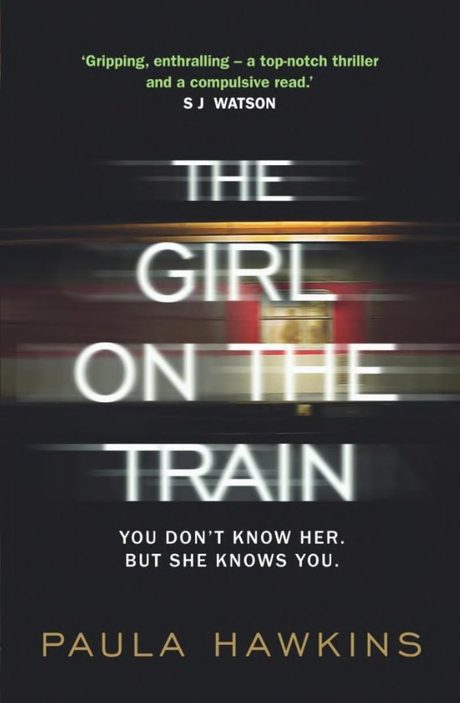
Tilt: the first missing evening
The Girl on the Train
Paula Hawkins2015about 323 pages
A woman who drinks through her own memory watches a couple from the morning train, and then one of them goes missing.
Rachel rides the same commuter service past the same row of houses, invents a perfect life for a couple she can see from the window, and gets off at a station she has no business using. She also drinks until entire evenings are gone. When a woman disappears, Rachel might have seen something, might have done something, and cannot get the hours back to check. Hawkins treats the missing time as a structural problem rather than a personality quirk, which is why the book works better than its imitators.
Why it is at 4
Fourth because it is honest about its own unreliability from the start. Rachel tells you the tape is damaged, so you spend the book doing forensic work alongside her instead of being conned. It is the most copied version of the device in the last decade and still the best of that wave, though the two other narrators are thinner than she is and you will feel it in the middle third.
Read it ifyou want a fast thriller where the narrator's memory is the mystery
Skip it ifyou need a likeable protagonist or find drinking scenes hard to sit with
grimy, fast, sadBest for: a flight or a long trainthrillerthe broken instrumentmodern
Heads up: alcoholism, domestic abuse, a partner rewriting a woman's version of events
5

Tilt: no trick, only the gaps
Em and the Big Hoom
Jerry Pinto2012about 212 pages
A son in a one bedroom Mahim flat tries to assemble his mother's life out of her stories, which change every time.
Em is bipolar, brilliant, filthy in her humour and often in hospital. Her son narrates, and his sources are his mother on a good day, his mother on a bad one, a father who says very little, and his own memory of a childhood spent inside all of it. Every account of how his parents met comes out differently. Pinto never resolves them into one official version. The book stays inside a small Bombay flat and gets more honest the less certain it becomes.
Why it is at 5
Fifth, and the entry I argued with myself about, because Pinto is not playing a trick on anybody. His narrator is trying hard to be accurate and cannot be, since the person he is documenting rewrites herself daily and loves him while doing it. That is the commonest kind of unreliable narrator in real life and one of the rarest in fiction.
Read it ifyou want this device used for love rather than suspense
Skip it ifyou are not up for a book that sits inside mental illness without tidying it
tender, funny, unflinchingBest for: readers who want an Indian entryindian fictionthe broken instrumentfamily
Heads up: bipolar illness, suicide attempts, hospital wards. A novel is not treatment, and this one is a son's account rather than a guide to anything.
6
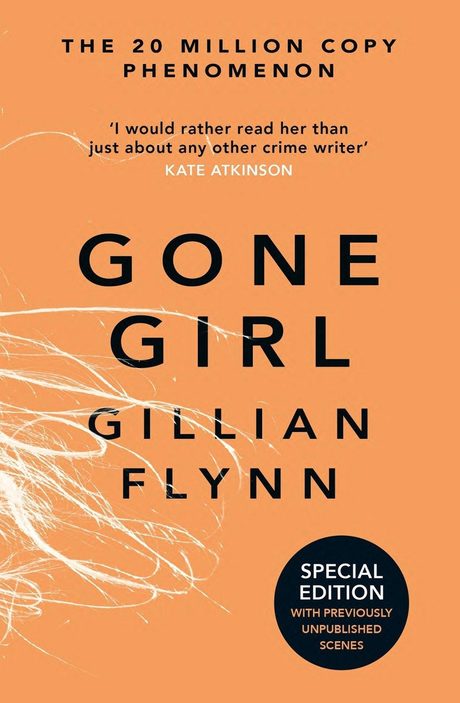
Tilt: the exact halfway line
Gone Girl
Gillian Flynn2012about 478 pages
A wife vanishes on her fifth anniversary, her husband is the obvious suspect, and her diary is extremely persuasive.
Nick Dunne comes home to a wrecked living room and no wife. Chapters alternate between his account of the week and Amy's diary running back to the day they met, and Flynn writes both voices so cleanly that you can hold two contradictory marriages in your head at once. Everything around them is doing work too: the dead Missouri town, the recession, the television coverage, the in-laws who wrote children's books about their daughter. Then the novel hits its midpoint and quietly becomes a different kind of book.
Why it is at 6
Sixth because the tilt is engineered to the page and lands exactly halfway, which makes it the best pure demonstration of the device to hand a beginner. It is also the sharpest book here on marriage as performance. What it lacks is the moral weight carried by the top of this list, and the ending splits readers harder than the turn does.
Read it ifyou want the device done with maximum craft and speed
Skip it ifyou need somebody in the book to root for
slick, nasty, addictiveBest for: your first unreliable narratorthrillerthe liarmarriage
Heads up: sustained psychological cruelty inside a marriage
7

Tilt: around the two thirds mark
Rebecca
Daphne du Maurier1938about 390 pages
A shy second wife arrives at Manderley and finds the first Mrs de Winter still running the house, though she is dead.
The narrator is never given a first name. She is young, poor and married to a widower she hardly knows, and she moves into a house where the staff, the furniture and the daily timetable are all still arranged around Rebecca. Du Maurier has her narrating from years later, older and apparently calm, which ought to be reassuring and does the opposite. Almost everything she believes about the dead woman is information handed to her by people with reasons to shape it.
Why it is at 7
Seventh because this narrator is not lying to you, she is starved of information and fills the hole with her own fear. That is the gentlest version of the device and the one closest to ordinary life, which is why it still works on readers who have seen every modern thriller. The turn arrives about two thirds in and rearranges every scene behind it.
Read it ifyou want gothic atmosphere and a narrator who doubts herself
Skip it ifa passive protagonist for the first half will annoy you
gothic, jealous, atmosphericBest for: a rainy weekendclassicthe limited witnessgothic
Pairs with: Atonement, for another English house where a girl's version of events becomes the official one
8
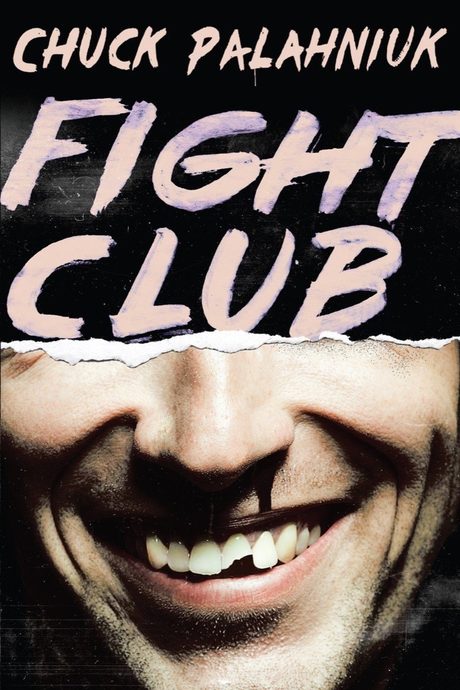
Tilt: roughly two thirds in
Fight Club
Chuck Palahniuk1996
An insomniac with a support group habit meets a soap salesman named Tyler Durden and stops sleeping for new reasons.
The narrator audits car crash settlements for a living and has not slept properly in months. He starts crying at cancer support groups because it works. Then he meets Tyler, they open a club in a bar basement, and the club stops being about fighting. Palahniuk writes in flat short declaratives that read like a man reciting a manual he has memorised, which is less a style choice than a symptom. The film is the famous one, the book is meaner and funnier, and the last pages go somewhere else entirely.
Why it is at 8
Eighth because the narration hides in plain sight. Everything is stated and nothing is explained, so the gaps are where the book actually lives. If you already know the turn from the film, read it anyway for the voice, since the same sentences carry the same information a second time and behave completely differently once you can see what they are doing.
Read it ifyou want the device welded to a style you can hear out loud
Skip it ifgraphic violence and nihilist speeches are not your idea of a good time
wired, violent, deadpanBest for: readers who liked the filmcultthe broken instrumentnineties
Heads up: graphic violence, self-harm, suicidal talk
9

Tilt: the last act
Shutter Island
Dennis Lehane2003about 269 pages
Two US marshals reach a hospital for the criminally insane to find a missing patient, and a hurricane cuts the island off.
Teddy Daniels lands on an island off Boston in 1954 to investigate a woman who has walked out of a locked room. The staff are polite and useless, the doctors are far more interested in him than in her, and the storm keeps everybody in place. Lehane writes it as a pulp detective story with every dial turned up, so the weather and the dread carry you past questions you should be asking. Underneath the machinery there is grief, and the grief is doing more work than the plot is.
Why it is at 9
Ninth because the book plays fair and hands you the evidence early, then buries it under storm and menace. It is the most cinematic entry on this list, which also means the turn sits closer to a magic trick than to a moral reckoning. Read it for how well the misdirection is staged rather than for what it finally has to say.
Read it ifyou want a gothic thriller that rewards a second reading
Skip it ifyou have seen the film, because this one does not survive knowing
stormy, paranoid, pulpyBest for: a two day bingethrillerthe broken instrumentfifties
Heads up: psychiatric institutions, violence, bereavement
10

Tilt: it arrives in instalments
Never Let Me Go
Kazuo Ishiguro2005about 279 pages
Three friends grow up at an English boarding school that is teaching them something nobody will say out loud.
Kathy narrates in her thirties, looking back at Hailsham and at two friends she has never managed to untangle herself from. She is calm, orderly, slightly pedantic about the sequence of events, and she never once raises her voice. Ishiguro gives you the situation in pieces, mostly through things the children half heard from adults and then repeated wrongly to each other. Very little happens loudly. By the time you understand the arrangement, you have accepted it the way they did, which is the cruel part.
Why it is at 10
Tenth because the unreliability is not in the facts, it is in the temperature. Kathy tells you terrible things in the voice of a woman describing a school timetable, and your job as a reader is to notice the mismatch and feel it. Next to Rebecca at seven, whose narrator is frightened, this one has been trained out of fear, which is worse.
Read it ifyou want quiet devastation instead of a bang
Skip it ifyou need a plot that moves or characters who fight back
still, gentle, devastatingBest for: readers who cry quietlyliterarythe limited witnessboarding school
Heads up: mortality, medical themes, a premise some readers find upsetting
11

Tilt: the final section
Atonement
Ian McEwan2001about 500 pages
On a hot English day in 1935 a thirteen year old writer sees something she does not understand, and says so anyway.
Briony Tallis wants to be an author, which mostly means she wants the world to have a shape she can recognise. During one long summer day at her family's house she watches her sister and the housekeeper's son, misreads a scene between them, and gives her version to adults who are ready to believe a clever child. The novel then follows what her sentence costs, through the retreat to Dunkirk and a wartime London hospital, in some of the best prose McEwan has written.
Why it is at 11
Eleventh because the whole book is an argument about who gets to write the official record, and the closing section sends you back to re-examine your own reading rather than the plot. The war chapters are heavy going for some readers, which is why it is not higher for a beginner. The idea underneath it is the largest one on this list.
Read it ifyou want the device used to ask what fiction owes real people
Skip it iflong war sequences and country house scenes lose your attention
grand, guilty, formalBest for: readers who like literary fictionliterarythe liarwar
Heads up: sexual assault, war injuries described in detail
12

Tilt: it completes very late, very quietly
The Remains of the Day
Kazuo Ishiguro1989about 281 pages
An English butler takes a motoring holiday in 1956 and tells you, extremely politely, a story he has never admitted to himself.
Stevens has served Darlington Hall for decades and believes his life adds up to something he calls dignity. He drives west to visit a former housekeeper, and along the way he recalls the great years of the house, the conferences, the standards, the staff plans. What he does not say is where he was standing during the political business of the nineteen thirties, or what he felt about Miss Kenton while she was still there. Ishiguro writes him in careful mannered sentences that keep clearing their throat.
Why it is at 12
Twelfth on the tilt scale and first on merit. Nothing here is a trick. Stevens is hiding nothing from you and everything from himself, and the distance between what he reports and what you can see is the entire novel. If you read one book off this list, make it this one, and then read the last few pages again before you put it down.
Read it ifyou want the finest version of a narrator lying to himself
Skip it ifyou need incident, because the plot is a man driving to the West Country
restrained, formal, heartbreakingBest for: readers who like slow burnsliterarythe self-deceiverengland
Pairs with: Never Let Me Go, the same author training you to hear what a calm voice is stepping around
13
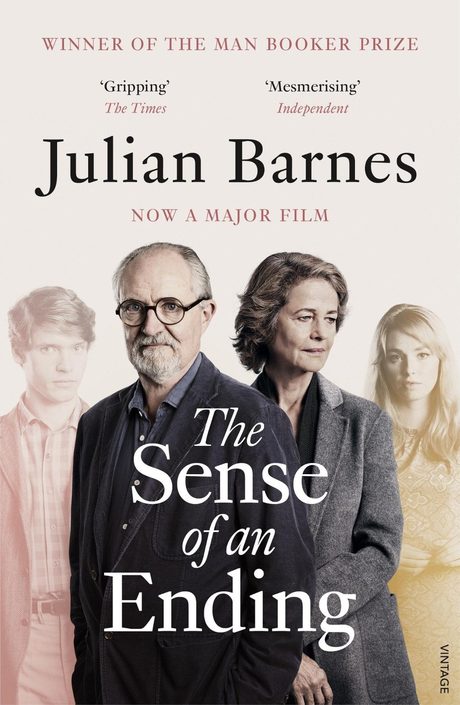
Tilt: the last twenty pages
The Sense of an Ending
Julian Barnes2011about 164 pages
A retired man in London gets a strange bequest and starts revisiting a school friendship and a girl from university.
Tony Webster is comfortable, divorced, mildly pleased with how reasonable he has been about everything. A solicitor's letter concerning a diary sends him back through his friendship with Adrian and his awkward first relationship with Veronica. Barnes writes him in the tone of a man giving evidence he has rehearsed in the car on the way over. The book runs under two hundred pages without a spare paragraph, which is why I hand it to people who tell me they have no time to read.
Why it is at 13
Thirteenth because the ground stays flat for almost the whole book and then moves right at the end, and the movement is entirely retrospective. Nothing changes in the present, everything changes in what you thought the past had been. It is also the cleanest illustration of the idea that memory is not a recording, it is an argument you keep winning against people who are not in the room.
Read it ifyou want a short literary novel that rearranges itself in the last pages
Skip it ifmiddle aged men reflecting on their own decency put you off
dry, English, unsettlingBest for: one eveningliterarythe self-deceivermemory
14

Tilt: the last chapter
The Murder of Roger Ackroyd
Agatha Christie1926about 212 pages
A wealthy man is killed in a quiet village, Poirot has retired next door to grow marrows, and the local doctor writes it all down.
Christie gives you a country house murder, a retired Belgian detective with a new interest in vegetable marrows, and a narrator who is the village doctor and Poirot's assistant through the investigation. For most of its length the pleasure is standard Christie: everybody has a secret, the timings matter enormously, the servants know more than they say. Then the final chapter arrives and turns the book into an argument that crime writers have been having with each other ever since.
Why it is at 14
Fourteenth because the tilt is the last chapter, and it is a genuine cheat that also plays completely fair. Everything you need has been on the page the whole time. The prose is plain and the suspects are thin by modern standards, so read it as a machine rather than as a novel, and admire the engineering, which nothing since has really improved on.
Read it ifyou want the trick that started the whole argument
Skip it ifyou want psychological depth from your suspects
cosy, tidy, slyBest for: puzzle loversclassic mysterythe liarpoirot
15

Tilt: it never fully lands
Pale Fire
Vladimir Nabokov1962about 322 pages
A long poem by a dead American poet, plus footnotes by a neighbour who is certain the poem is secretly about him.
The book is arranged as a foreword, a poem in four cantos, and a very long commentary. The commentator, Charles Kinbote, is supposed to be explaining John Shade's poem and instead uses each line as a doorway into his own story about a deposed king of a country called Zembla. You can read the poem straight through, or hop between the notes the way he instructs, and the two routes give you different books. Nabokov never comes in to settle who is inventing whom.
Why it is at 15
Fifteenth because there is no moment where the ground moves, only a slowly growing suspicion that the floor was never installed. It is the most demanding book here and the most fun once you stop waiting for it to resolve. Save it until you have read four or five of the others, and start it knowing that nobody has ever agreed on what happens in it.
Read it ifyou enjoy a book that asks you to do half of the work
Skip it ifyou want a story told in order by somebody sane
playful, dazzling, maddeningBest for: readers who like puzzlesclassicthe seducerexperimental
Worth knowing
The four kinds of liar, and how to tell which one you are holding
Not every unreliable narrator is lying, and knowing which kind you have picked up changes how you read. Four categories cover almost everything on this list, and each book carries its kind in its tags.
The liar knows the truth and keeps it from you, usually because they need you on their side before the facts arrive. The self-deceiver lies to himself first and to you only as a side effect, which is why Stevens and Tony Webster never sound like men who are hiding anything. The broken instrument is honest but faulty, through drink, illness, trauma or a mind that has rearranged the furniture without filing a report. The limited witness is the most ordinary of the four, someone who reports accurately on the small part of the room they can see and guesses at the rest, which is what the second Mrs de Winter does for four hundred pages and what the rest of us do on a normal Tuesday.
The best books run two kinds at once, and the very best make you wonder which one you are.
Worth knowing
The tell, and why the second read is the real one
Every narrator here has a habit that gives them away without giving anything away, and hunting for it is free entertainment on a first read. Stevens reaches for the word dignity whenever the subject is something he refuses to feel. Barbara describes everybody else's motives with total confidence and her own with none. Rachel tells you what she must have done rather than what she did. Kinbote explains lines that need no explaining and walks straight past the ones that do.
When you finish, go back to the opening chapter with the ending in your hand. In a well built one you will find the writer was never hiding anything at all, only counting on you to behave like a normal reader, which means believing the person who is talking. That second read is the actual pleasure of this form, and it is the reason I have kept every entry above free of reveals. You cannot get a first read back once somebody has spent it for you.
People also ask
Questions, answered
What is an unreliable narrator?
A narrator whose account you cannot fully trust, either because they are lying to you, because they are lying to themselves, or because their memory and mind are not supplying accurate material. You end up assembling a second story out of the holes in the first one. A twist by itself does not make a narrator unreliable. In the good ones the gap between what is said and what happened is the point of the book, and the version you build in your head is the one the writer wanted you to have.
Which novel has the best unreliable narrator?
The Remains of the Day, if you want the device at its most controlled. Stevens hides nothing from the reader and everything from himself, and Ishiguro never once steps in to explain. If you mean the most enjoyable, Gone Girl is the finest piece of engineering. If you mean the most difficult, Pale Fire has still not been settled by anybody. Different books win under different definitions of best, which is why this list is ranked on when the ground moves instead of on quality.
Are there spoilers in this list?
No. Nothing above goes past what you would learn in the first chapter or from the back cover, and no entry names the twist, the identity, the diagnosis or the final line. Each book is described so you can decide whether it is for you without losing your first read, since a first read of one of these happens exactly once. Search results and reviews elsewhere are often much less careful, so be a little cautious about what you click before you start.
Which unreliable narrator novel should I read first?
Gone Girl, unless thrillers put you off. It shows you what the device does without asking you to work for it, and the turn lands somewhere you cannot possibly miss. After that try Rebecca for the softer version and The Remains of the Day for the serious one. If you would rather have something Indian and quiet than something engineered, start with Em and the Big Hoom, which uses the same idea for love instead of suspense.
Should I read Lolita?
Only with your eyes open. It is narrated by a man who abuses a child and then spends three hundred pages defending himself in extraordinary prose, and it is built to make you notice that you are enjoying the defence. The book is not on his side and Nabokov leaves the evidence in plain view. If that experiment sounds like something you do not want in your head for a fortnight, skip it. You lose nothing else on this list by doing so.
Is an unreliable narrator the same thing as a plot twist?
No. A plot twist changes what happened in the story. An unreliable narrator changes who was telling it to you, which means every page before the turn now reads differently. That is why these books survive a second read while most twist thrillers do not, and it explains why the titles near the bottom of this list feel bigger than the ones near the top even when far less actually happens in them.
Are there Indian novels with unreliable narrators?
Em and the Big Hoom is the one on this list, and it earns the place because Jerry Pinto uses the device without any showmanship. The narrator is a son trying to fix his mother's life into a single accurate account and failing, because her illness keeps revising the source material. Aravind Adiga's The White Tiger is another good one, narrated by a murderer writing letters to a foreign premier, though there the unreliability is closer to boasting than to confusion.
Before you go
What to read tonight
If you want to start something tonight, the honest answer is Gone Girl for fun and The Remains of the Day for keeps, and there is no shame in reading the first to earn the second. Give the Ishiguro three chapters before you decide about the pace. Butlers take a while to get going.
Once you have three or four of these behind you, try the exercise that makes the whole form worthwhile: pick the one that fooled you hardest, open it at page one, and read the first chapter with the ending in your hand. You will find the writer was playing straight the entire time and simply counted on you to be a decent listener who believes the voice in front of them. That is the joke sitting inside every book above, and it is also a fair description of how most of us get through a normal week.
Keep going
Lists that pair with this one