In school, war reached me as arrows on a map. Third arrow from the left, dates on the blackboard, casualty numbers rounded off, then the bell. Nobody told us what a man does with his hands while he waits for the shelling to stop.
That gap is the whole brief for this list. Every book here is written from inside the thing, by soldiers, by a reporter who spent months at Stalingrad, by a novelist whose family lived through Biafra, by a writer whose relatives were in Dhaka in 1971. Generals do appear. They appear the way generals appear to the people they spend, as a voice on a radio ordering another climb up the same hill.
The order is unusual and I would rather explain it than have you guess. These sixteen run from close range outward: first the books that sit inside the body, then the ones standing at the level of the machine that runs a war, then the ones watching from the houses a war walks into. Rank one is not my favourite book here, it is the closest. My favourite sits at twelve. The quick picks below tell you where to start depending on how much time and stomach you have.
Two warnings before you scroll. Several of these contain violence that stays with you for a week, and I have marked those in the content notes. And nothing on this shelf is neutral about war, so if you want a book that finds it thrilling, you are in the wrong aisle.
How I picked these
- Ordered by range, not by greatness. The quality verdicts live in the quick picks, so a book at fourteen is not a book I think less of.
- Ten of the sixteen were written by people who were in the war they describe, as soldiers or as a reporter attached to an army. That was a thumb on the scale and I am not apologising for it.
- Vietnam shows up four times on purpose: the American platoon, the American memory, the North Vietnamese soldier, and the exile. One war, four seats.
- Cut: books where the war is wallpaper behind a romance, and books written entirely from the map room. Also cut Partition fiction, which is its own shelf and its own kind of violence.
- Every book verified through Google Books and Open Library with a real cover and a real edition, so nothing here is a ghost listing.
- One nonfiction entry is included and clearly labelled, because no novel covers what it covers.
The whole list at a glance
All 16 books, in order
| # | Book | Author | Year | Vibe | Best for |
|---|
| 1 | All Quiet on the Western Front | Erich Maria Remarque | 1929 | plain, cold, unforgettable | your first war novel |
| 2 | The Things They Carried | Tim O'Brien | 1990 | quiet, tricky, devastating | readers who like short stories |
| 3 | Matterhorn | Karl Marlantes | 2010 | heavy, grinding, exact | patient readers |
| 4 | The Sorrow of War | Bao Ninh | 1990 | circling, haunted, bleak | readers who finished the American Vietnam books |
| 5 | Redeployment | Phil Klay | 2014 | dry, profane, exact | commute reading |
| 6 | A Farewell to Arms | Ernest Hemingway | 1929 | spare, wet, doomed | readers who like plain sentences |
| 7 | Catch-22 | Joseph Heller | 1961 | circular, funny, then not | readers who like satire |
| 8 | Slaughterhouse-Five | Kurt Vonnegut | 1969 | short, dazed, deadpan | one-sitting reading |
| 9 | The Sympathizer | Viet Thanh Nguyen | 2015 | sardonic, double-voiced, brutal | readers who want the aftermath |
| 10 | Regeneration | Pat Barker | 1991 | quiet, clinical, angry | readers who like ideas |
| 11 | The Naked and the Dead | Norman Mailer | 1948 | sprawling, blunt, ambitious | readers who want scale |
| 12 | Life and Fate | Vasily Grossman | 1980 | vast, humane, unsparing | your next long-book slot |
| 13 | Half of a Yellow Sun | Chimamanda Ngozi Adichie | 2006 | warm, then unsparing | readers who love family novels |
| 14 | A Golden Age | Tahmima Anam | 2007 | domestic, tender, tense | readers new to the genre |
| 15 | Suite Française | Irène Némirovsky | 2004 | sharp, observant, unfinished | readers who like social novels |
| 16 | Farthest Field | Raghu Karnad | 2015 | reported, elegiac, precise | Indian readers finishing this list |
The list
The books, ranked
1

Knife range: First World War, Western Front
All Quiet on the Western Front
Erich Maria Remarque1929about 258 pages
A German schoolboy is talked into the trenches by his teacher, and the book records what is left of him afterwards.
Paul Baumer and his classmates enlist because a schoolmaster tells them it is the honourable thing, and within weeks the honour has been replaced by lice, shellfire, and the arithmetic of who is still alive at breakfast. Remarque was there, and it shows in the small things: the quarrel over a dead friend's boots, the way a rumour about extra rations matters more than any general's plan. The famous scene, where Paul shares a shell hole with a man he has just stabbed, still does exactly what it did in 1929. It refuses to let the enemy stay a stranger.
Why it is at 1
It opens the list because it stands closest of all, and because every later book on this shelf is in conversation with it. If you have read one war novel it is probably this one, and it survives rereading. It is also short and unornamented, which makes it the easiest door into a genre that can look forbidding from outside.
Read it ifyou want the war at eye level and you want it fast
Skip it ifyou need a plot that travels somewhere, because this one accumulates instead
plain, cold, unforgettableBest for: your first war novelww1classicgermany
Heads up: sustained description of wounds, gas, and death
2
Knife range: Vietnam, and the years after
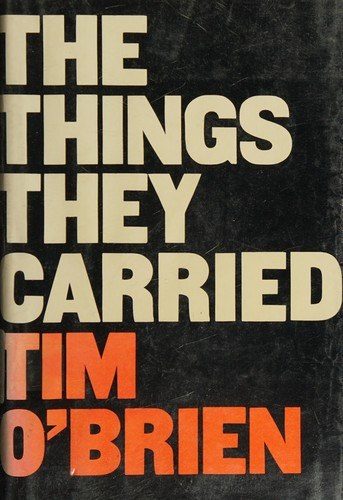
The Things They Carried
Tim O'Brien1990about 260 pages
Linked stories about one platoon in Vietnam, and about how a true war story lies to you on purpose.
O'Brien served in Vietnam and then spent two decades writing around it. These are linked stories about a single platoon: what each man hauls in his pack, who dies and how the survivors rearrange the death into something they can repeat at a bar, and a narrator called Tim O'Brien who keeps admitting he invented parts of it. That sounds like a gimmick until you read it. The lying is the argument he is making. He is showing you how memory edits a war down to a size a person can keep carrying.
Why it is at 2
Second because it is the most useful book here for a reader who has never been near a uniform. It teaches you how to read everything else on this list, including the entries that present themselves as reporting. Shorter than Matterhorn and harder to shake off, though it asks you to accept a narrator who moves the furniture while you watch.
Read it ifyou like short stories and want the war and the memory of it in one book
Skip it ifyou get annoyed when a narrator admits a scene did not happen
quiet, tricky, devastatingBest for: readers who like short storiesvietnamshort storiesmemory
Heads up: graphic deaths, and one scene of prolonged animal cruelty
3

Knife range: Vietnam, near the DMZ
Matterhorn
Karl Marlantes2010about 759 pages
Six hundred pages of one company taking a jungle hill, losing it, and taking it again, by a man who was there.
Marlantes fought as a Marine lieutenant in Vietnam and worked on this novel for decades, which you can feel in its density. A young officer arrives to lead a company building a firebase on a hill near the demilitarised zone, and the book stays with them through leeches, jungle rot, racial fault lines inside the platoon, supplies that do not arrive, and orders that make sense only to someone far away with a map. It is the most procedural book on this list. You come out knowing how a company eats, digs, argues, and dies.
Why it is at 3
Third because it earns its length, though I will not pretend it is a smooth ride. Where O'Brien gives you memory, Marlantes gives you logistics, and the horror lives inside the logistics. Read it after a shorter book rather than before, or the first hundred pages of radio jargon will beat you before the hill does.
Read it ifyou want the daily mechanics of a war and have patience for a long book
Skip it ifmilitary acronyms make your eyes slide off the page
heavy, grinding, exactBest for: patient readersvietnammarineslong read
Heads up: graphic injury, racist conflict between soldiers, and a leech scene people remember for years
4

Knife range: Vietnam, from the northern side
The Sorrow of War
Bao Ninh1990about 226 pages
The war from the other side of the wire: a North Vietnamese soldier collects the dead and cannot reassemble his own life.
Kien survives ten years of fighting and ends up in a unit gathering bodies from a jungle where most of his platoon died. The novel moves the way a damaged memory moves, forward into a scene, sideways into a childhood, back into one night that will not close, circling a love story the war ate. Bao Ninh fought in a brigade that was almost wiped out, and this is the book that answers the American shelf. The official reception at home was cold for years, which tells you it is not propaganda in either direction.
Why it is at 4
Fourth because it completes Vietnam. Read it against O'Brien and Marlantes and you get what no single-country shelf can offer: the same jungle, the same years, three different griefs. It is the hardest of the three to read, partly because the English is plain rather than beautiful, which honestly suits a narrator whose job was collecting corpses.
Read it ifyou want the side of that war we almost never read in India
Skip it ifyou need a timeline you can follow, because this one loops by design
circling, haunted, bleakBest for: readers who finished the American Vietnam booksvietnamtranslationmemory
Heads up: suicide, sexual violence, and corpses described in detail
5
Knife range: Iraq, and the flat weeks after
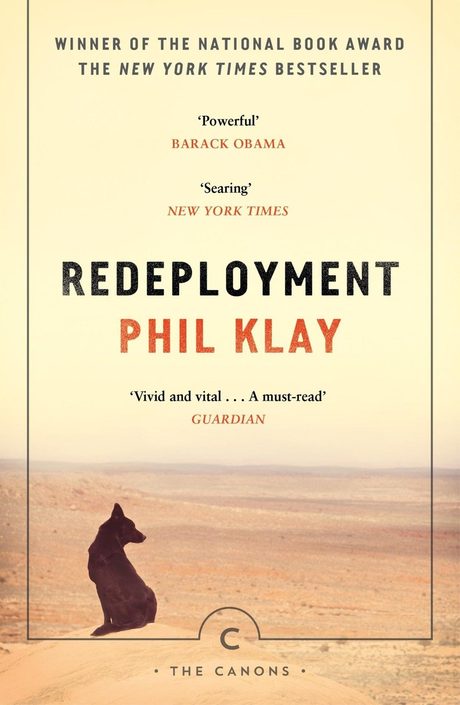
Redeployment
Phil Klay2014about 240 pages
Twelve stories from Iraq and from the strange quiet of coming home to a country that has moved on.
Klay served as a Marine officer in Anbar, and his stories move around the war rather than straight through it. A man who shot dogs on deployment now has to make a decision about his own dog at home. A chaplain loses his footing. A mortuary affairs clerk keeps count. A foreign service officer tries to fund a baseball programme in a province with no interest in baseball. The voice changes completely from story to story, and the funniest pieces are also the ugliest, which is a hard trick to land and he lands it more than once.
Why it is at 5
Fifth because it is the closest thing here to the wars of our own lifetime, and because it treats coming home as part of the war rather than the end of it. Easier to pick up than Matterhorn since you can read one story a night. Fair warning, the first story opens in dense Marine slang and does not stop to explain itself.
Read it ifyou want a recent war and you like collections you can read one piece at a time
Skip it ifyou want one continuous story, or you want the politics argued out
dry, profane, exactBest for: commute readingiraqshort storiescoming home
Heads up: graphic violence, animal deaths, heavy profanity
6
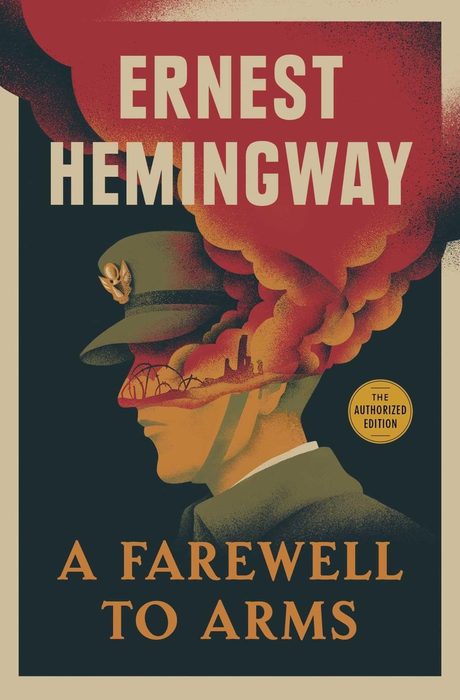
Knife range: First World War, the Italian front
A Farewell to Arms
Ernest Hemingway1929about 352 pages
An American ambulance driver on the Italian front falls in love, deserts, and finds out that the war charges him anyway.
Frederic Henry drives ambulances for the Italian army, gets badly hit, falls in love with a nurse named Catherine Barkley, and eventually walks away from the whole business during a retreat. Hemingway did drive ambulances in Italy and was wounded there, and the retreat chapters are the best thing in the book: rain, mud, jammed roads, officers shooting other officers for the crime of having lost their units. The love story has aged less kindly. Catherine can read as a wish rather than a person, and I would rather say that than pretend the book is flawless.
Why it is at 6
Sixth, and it is the classic here I have the most mixed feelings about. The sentences taught half a century how to write, and the retreat sequence is superb reporting turned into fiction. But the romance at the centre is thinner than the war around it, so it ranks below books whose full weight holds up.
Read it ifyou want the prose style everyone copied plus one great retreat sequence
Skip it ifyou want women written as full people, because this is not that book
spare, wet, doomedBest for: readers who like plain sentencesww1italyclassic
Heads up: a difficult childbirth scene near the end
7
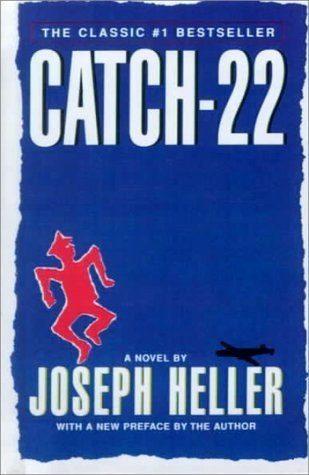
Radio range: Second World War, an American air base in Italy
Catch-22
Joseph Heller1961
A bomber crewman tries to get himself declared insane so he can stop flying, and meets the rule that will not allow it.
Yossarian wants to stay alive, which everyone around him treats as the one unreasonable position available. The rule of the title holds that a man who asks to be grounded for insanity has proved his sanity by asking, so the required number of missions keeps rising and an entire economy of colonels, syndicates and paperwork grows around that joke. Heller flew sixty missions as a bombardier. The novel is very funny for a long stretch and then stops being funny in one specific chapter, and that chapter is why people file it under war rather than comedy.
Why it is at 7
Seventh, and the first book in the middle range, because its subject is the machine rather than the mud. The repetition irritates some readers for two hundred pages before the pattern starts paying off, so let me be plain: if it is not working for you by page one fifty, it is not going to.
Read it ifyou want the absurdity of an institution more than the fighting itself
Skip it ifyou dislike repetition or you want characters who grow
circular, funny, then notBest for: readers who like satireww2satireabsurd
8
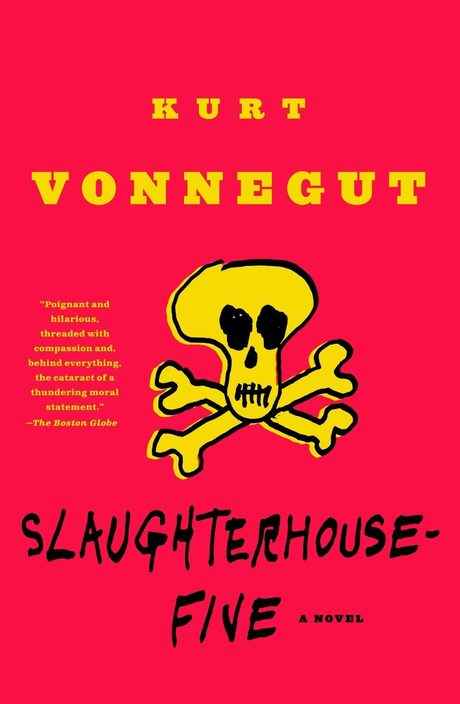
Radio range: Second World War, Dresden
Slaughterhouse-Five
Kurt Vonnegut1969about 286 pages
A man comes unstuck in time and keeps landing back inside the firebombing of Dresden.
Billy Pilgrim is captured in the Ardennes, held in a Dresden slaughterhouse, and survives the firebombing in a meat locker, which is precisely what happened to Vonnegut. The book keeps sliding off that night into aliens, a zoo on another planet, and a chapter about the author's own failed attempts to write the thing straight. The sliding is the point. He spent over twenty years unable to tell it directly, so he published the failure instead, and the short phrase he repeats after every death does more work than most novels manage in a chapter.
Why it is at 8
Eighth because it sits beside Catch-22 and does the opposite job in half the pages. Heller builds an elaborate system to trap you in; Vonnegut refuses to build anything at all. This is the entry to choose if long books frighten you, and it is best read in one sitting, ideally not right before bed.
Read it ifyou want a short strange book that leaves a permanent dent
Skip it ifyou want realism, because the science fiction detour will read like dodging
short, dazed, deadpanBest for: one-sitting readingww2dresdentime travel
Heads up: mass civilian death and a body recovery detail
9
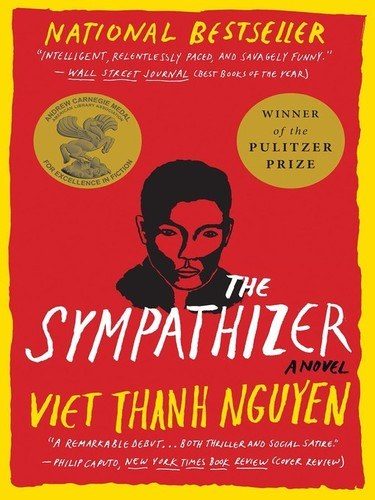
Radio range: Vietnam, the fall of Saigon and after
The Sympathizer
Viet Thanh Nguyen2015about 384 pages
A communist mole inside a defeated South Vietnamese general's circle writes his confession, and it is far funnier than that sounds.
The narrator is a captain of two minds about everything, half Vietnamese and half French, reporting to the North while serving as aide to a South Vietnamese general in exile. The book opens with the evacuation of Saigon, moves into refugee California, detours onto a Hollywood set where an American director shoots a Vietnam epic using Vietnamese extras as scenery, and then turns very dark in its final section. The comedy is real and the anger beneath it is real, and the argument running under both is about who gets to narrate a war.
Why it is at 9
Ninth because it is the aftermath book. Every other Vietnam entry ends when the war does; this one starts with the losing side's evacuation and follows the people that war exported. The last hundred pages are the most difficult reading on this list, and the earlier comedy makes them land harder, which the author clearly intends.
Read it ifyou want political comedy with a knife underneath it
Skip it iftorture on the page is a hard no for you right now
sardonic, double-voiced, brutalBest for: readers who want the aftermathvietnamrefugeesdouble agent
Heads up: torture and sexual violence in the final section
10
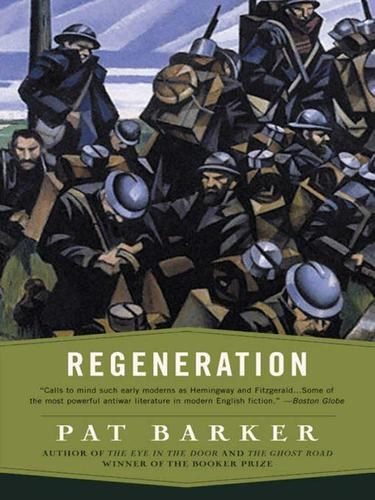
Radio range: First World War, a military hospital in Edinburgh
Regeneration
Pat Barker1991about 260 pages
An army psychiatrist repairs shell-shocked officers so the army can send them back, and starts to wonder what he is for.
Craiglockhart hospital, 1917. W. H. R. Rivers treats officers suffering from what was then called shell shock, among them Siegfried Sassoon, who has just published a public declaration against continuing the war, and Wilfred Owen, who is about to write the poems everyone quotes on Remembrance Day. Barker keeps the medicine specific, the stammers, the mutism, the nightmares that repeat one image, and lets the ethical problem stand in plain view: this doctor's job is to make broken men well enough to be broken again.
Why it is at 10
Tenth because it is the only book here standing where a war is administered rather than fought, and that vantage is rare enough to be worth a slot. It is the calmest thing on this list, which lets the horror arrive sideways. Real historical figures share pages with invented ones, and Barker is careful about which is which.
Read it ifyou want the psychology and the ethics rather than combat
Skip it ifyou want action, because much of this is two men talking in a room
quiet, clinical, angryBest for: readers who like ideasww1psychiatryhistorical fiction
Heads up: detailed trauma symptoms and one recurring image of a corpse
11

Radio range: Second World War, a Pacific island
The Naked and the Dead
Norman Mailer1948about 525 pages
A platoon on a Pacific island and a general who thinks of them as material, written by a soldier barely out of the war.
Mailer served in the Philippines and wrote this almost immediately afterwards, in his twenties, which gives it a rawness the later classics sand away. A reconnaissance platoon is sent on a near-pointless patrol across a Japanese-held island while, above them, a general and his lieutenant argue about power, fear, and what men are for. Mailer keeps stopping the story for flashbacks that hand each soldier a full American life before the war, so the platoon becomes a cross section of a country. It is long, uneven, and full of the prejudices of the men it records.
Why it is at 11
Eleventh because it is the least comfortable inclusion here. The general's chapters are still the sharpest writing I know about how command thinks about the men it spends. The prose does not always keep up with the ambition, and the racism and misogyny in the dialogue are period-accurate, which is not the same thing as bearable.
Read it ifyou want the Pacific war and the politics of command in one book
Skip it ifslurs in dialogue will stop you reading, because they are frequent
sprawling, blunt, ambitiousBest for: readers who want scaleww2pacificcommand
Heads up: racist and misogynist language throughout the dialogue
12
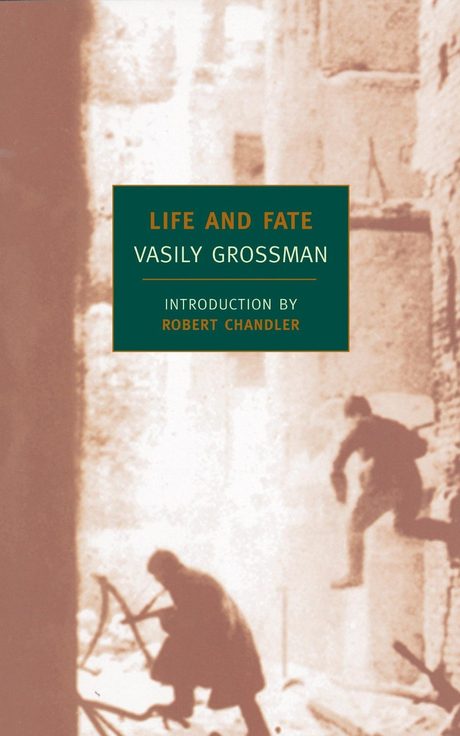
Home range: Second World War, Stalingrad and everything around it
Life and Fate
Vasily Grossmantranslated by Robert Chandler1980about 906 pages
Stalingrad, a physicist's family, a Soviet camp and a German one, in one enormous novel by the reporter who was there.
Grossman covered Stalingrad for a Soviet army newspaper and was among the first journalists to write about an extermination camp, and after the war he put everything he knew into a novel the state seized. It follows one extended family across the battle, the physics institutes, the camps on both sides, and a long chain of ordinary decisions about who to inform on and who to protect. There is a letter from a mother inside a Jewish ghetto that I will not describe, because describing it does it damage. The book argues, calmly and at length, that the two systems fighting each other had started to resemble one another.
Why it is at 12
Twelfth, and my pick for the best book here, placed at this distance because it stands furthest back and therefore sees the most. It is also very long with a Russian cast list that demands attention, so it is not where a newcomer should begin. Read it after two shorter books, with the family tree bookmarked.
Read it ifyou want the largest book on this list and you have three unhurried weeks
Skip it ifyou need momentum, because it walks through fifty lives at its own pace
vast, humane, unsparingBest for: your next long-book slotww2stalingradtranslation
Heads up: the Holocaust, camps on both sides, and a chapter written from inside a gas chamber
13
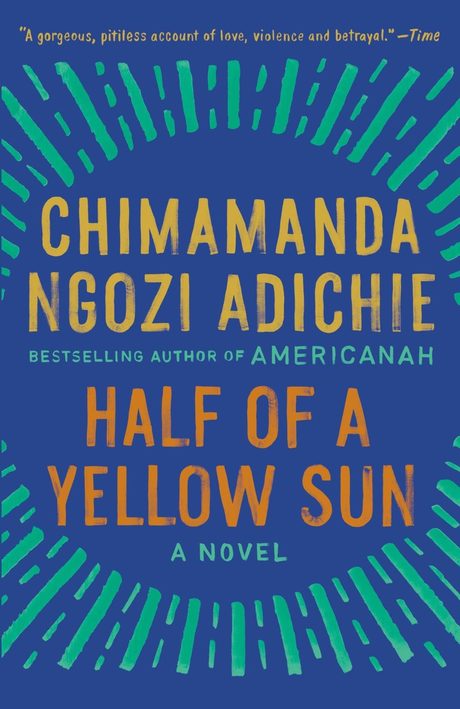
Home range: the Biafran war, Nigeria
Half of a Yellow Sun
Chimamanda Ngozi Adichie2006about 433 pages
Nigeria's Biafran war through a houseboy, a professor's lover, and an Englishman who believes he is helping.
The novel opens in the early 1960s with a university town, servants, affairs and dinner-table politics, and it takes its time, because Adichie wants you comfortable before the coups, the killings and the blockade arrive. Then a region secedes, a war begins, and the same characters are measuring out garri and burying people they love. Ugwu, the teenage houseboy, is the spine of the book. Adichie has written that both her grandfathers died in that war, and the novel carries the weight of a story told at home long before it was written down.
Why it is at 13
Thirteenth because it is the best entry point in the home range, and because it covers the one war here that almost no Indian reader has studied. Easier going than Grossman, and it pulls the same trick: the politics reaches you through people you already care about, so the second half hurts.
Read it ifyou want a war you know nothing about, told through one family
Skip it iffamine and a very hard late scene would be too much for you right now
warm, then unsparingBest for: readers who love family novelsbiafranigeriafamily
Heads up: famine, massacre, and a sexual assault late in the book
14

Home range: the 1971 war, Dhaka
A Golden Age
Tahmima Anam2007about 267 pages
A widow in Dhaka in 1971 learns that keeping her children safe and keeping her children are opposite projects.
Rehana Haque is a widow with two grown children who join the fight for Bangladeshi independence, and the war reaches her in the most domestic way possible: a guerrilla hidden in the garden, a son who stops coming home, a daughter who has stopped asking permission. Anam comes from a family that lived through that year, and she writes the war as a sequence of household decisions, what to cook, what to bury, who to lie to at the gate. The politics of 1971 sit in the background, roughly where a mother would keep them.
Why it is at 14
Fourteenth, and it is here because 1971 reshaped this subcontinent and almost nobody puts it on a war list. It is the gentlest book in this range, which makes it a good first step before Grossman or Adichie. It is a small book and it knows that, and it never pretends to explain the whole war.
Read it ifyou want the 1971 war from inside a home rather than a briefing
Skip it ifyou want military detail or a full history of that war
domestic, tender, tenseBest for: readers new to the genrebangladesh1971family
Heads up: torture is referred to rather than shown, and one death lands hard
15
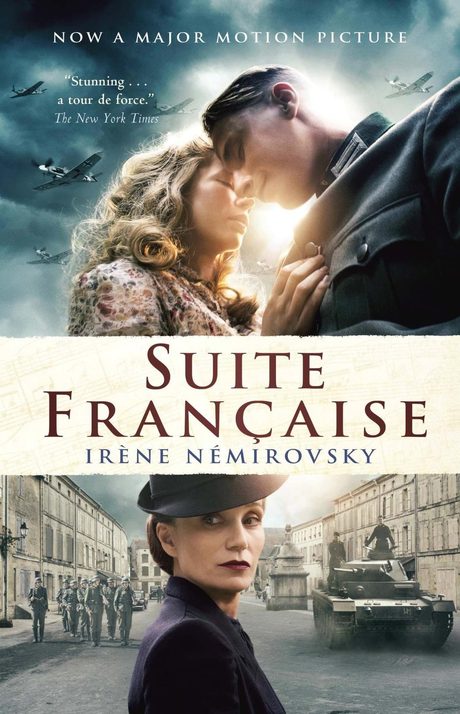
Home range: Second World War, France under occupation
Suite Française
Irène Némirovskytranslated by Sandra Smith2004about 450 pages
Two novellas about ordinary French people fleeing Paris and then living with the occupiers, written while it was happening.
The first part follows a set of Parisians on the roads out of the city in June 1940, snobs and clerks and a self-satisfied writer, all of them behaving about as badly as you would expect. The second settles into a village where German officers are billeted in French homes and something like an attraction grows between a soldier and the woman whose house he lives in. Némirovsky wrote this in a notebook as the events happened, before she was deported and killed at Auschwitz in 1942. Her daughter kept the manuscript for decades without reading it.
Why it is at 15
Fifteenth because it is the only book here written inside the event by someone with no idea how it would end, and that changes the temperature of every page. It is unfinished, so it stops rather than concludes. Read the appendix material afterwards, never first, because it will flatten the fiction if you know everything going in.
Read it ifyou want civilians, occupation, and cold social comedy
Skip it ifunfinished books frustrate you more than they intrigue you
sharp, observant, unfinishedBest for: readers who like social novelsww2franceoccupation
Heads up: the author's own deportation and death are described in the end matter
16
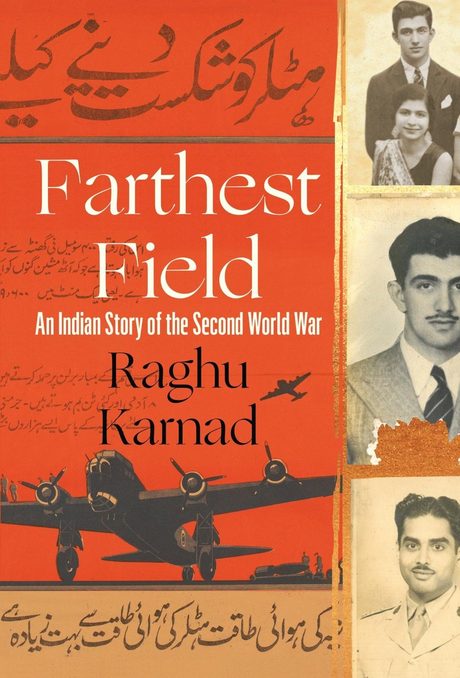
Home range: Second World War, India (nonfiction)
Farthest Field
Raghu Karnad2015about 283 pages
The one nonfiction book here: three young Indians in uniform in a war we are taught to remember as somebody else's.
Karnad grew up with photographs of three relatives who died in the Second World War and reconstructs their lives from letters, service records and the places themselves: an engineer, an air force pilot, a doctor. Around them he tells the larger story of the roughly two and a half million Indians who served, the retreat from Burma, the famine in Bengal, and the awkward arithmetic of an army fighting for an empire that was ruling its own soldiers' country. It reads like a novel and is sourced like history, and the last section is quietly furious.
Why it is at 16
Sixteenth and last because it is not fiction, and I would rather flag that than smuggle it in at number four. It earns its place because no novel here covers this ground, and because it answers the question Indian readers reach at the end of every war shelf: where were we while all of this was happening.
Read it ifyou want the Indian side of the Second World War
Skip it ifyou only want fiction on a fiction list
reported, elegiac, preciseBest for: Indian readers finishing this listww2indianonfiction
Heads up: the Bengal famine chapters are grim
Worth knowing
How the three ranges work
Knife range means the book stands where the body is: mud, packs, wounds, the hour before an attack. Radio range means it stands at the level of the machine, the orders and the paperwork and the language that turns a person into a unit. Home range means it stands in the houses a war walks into, where the fighting arrives as a rumour, a shortage, a knock at the gate, a son who has stopped writing letters.
The ranges are not a quality ladder. Rank one and rank twelve are both extraordinary, they simply stand at different distances from the same event. Use the ranges to pick by mood: knife range when you want war physical, radio range when you want to be furious at an institution, home range when you want people rather than soldiers. Most readers who bounce off war novels bounced off the wrong range, not the wrong book.
Worth knowing
A note on the translated ones
Three books here reached English through a translator and the choice of edition matters more than the cover does. Life and Fate in the New York Review Books edition is Robert Chandler's translation, and it reads as English rather than as a transcript of Russian. Suite Française came into English through Sandra Smith. The Sorrow of War is the exception where I would call the English plain rather than lovely, and I still think you should read it, because plainness suits a narrator whose job was collecting bodies. If you are buying online, check the translator's name before you check the price.
Worth knowing
If you only read three
Take All Quiet on the Western Front for what a war does to a body, Catch-22 for what it does to language and rules, and Half of a Yellow Sun for what it does to a family. Those three cover the whole shape of this list in about a thousand pages between them, and each one reads completely differently from the other two, so you will not burn out halfway. Add Farthest Field if you want the version with Indians in it.
People also ask
Questions, answered
What is the best war novel of all time?
Life and Fate by Vasily Grossman, if you have the weeks it asks for. It covers Stalingrad, the Soviet camps and the German ones, and a hundred private decisions about courage, and it was written by a reporter who saw a great deal of it himself. If best means the one most readers actually finish and never forget, that is All Quiet on the Western Front, which does its work in a third of the pages and none of the difficulty.
Which war novel should I read first?
All Quiet on the Western Front. It is short, the prose is plain, and it sets the terms every later book argues with. If the First World War feels too remote, start instead with The Things They Carried, a book of stories you can take one at a time, or Slaughterhouse-Five, which you can finish in an evening. Leave Matterhorn and Life and Fate for later, since both reward a reader who already knows the genre's moves.
Are there Indian war novels or books about Indian soldiers?
Fewer than there should be, which is why two books here carry that weight. Farthest Field by Raghu Karnad is nonfiction and follows three young Indians who died in the Second World War, alongside the millions who served in it. A Golden Age by Tahmima Anam covers the 1971 war from inside a Dhaka household. Partition fiction is a separate shelf and I have kept it separate on purpose, because a riot and a front line are not the same event.
Why is War and Peace not on this list?
Because this list promised the view from inside a war, and Tolstoy spends most of his book elsewhere: salons, estates, marriages, and a long argument with historians about causation. The battle chapters are superb and Borodino belongs in any conversation about writing about war. But roughly three quarters of the novel is the peace half of the title, so handing it to someone who asked for war novels would be a small con.
Which of these books are too graphic?
Matterhorn, The Sorrow of War, and the final section of The Sympathizer are the three I would not hand to someone squeamish or currently fragile. Life and Fate contains a chapter written from inside a gas chamber. Half of a Yellow Sun has famine and an assault scene near the end. Every entry here carries a content note where one is warranted, so read those first and pick accordingly.
Do I need to know the history before I start?
No. Each book teaches you what you need as it goes, which is what good historical fiction does. A short search beforehand helps with two of them, the Biafran war in Half of a Yellow Sun and the 1971 Bangladesh war in A Golden Age, since Indian schoolbooks skip the first entirely and squeeze the second into a paragraph. Ten minutes of reading is plenty for both, and you can do it after chapter one.
Before you go
What to read tonight
If you are starting tonight, pick up All Quiet on the Western Front and read the first forty pages before you sleep. It is short and unadorned and it will tell you within the hour whether this genre is yours. If it is, your next step depends on appetite: Slaughterhouse-Five for strange and quick, The Things They Carried to understand why war stories lie, A Golden Age if you want the subcontinent in it.
Save Life and Fate for a stretch when you have three unhurried weeks, and keep Farthest Field for last, because after all those foreign fronts you will want to know where our own grandfathers were standing. Then take a week off and read something silly. I mean that seriously, this shelf is heavy and nobody hands out medals for reading it in one go.
Keep going
Lists that pair with this one
Genre
16 Best Spy Thrillers, Split Into Desk Books and Chase Books
Half of these are about paperwork and half are about running, and getting handed the wrong half is why most people quit the genre.
Indian Fiction
14 Best Partition Novels and Books, Ranked by Where to Start
Fiction and first-hand testimony from both sides of the 1947 line, ordered so you begin with the one you can actually finish.
Indian Fiction
16 Best Books to Understand India, Ranked by What They Explain
Sixteen books, ten doors into the same country: history, caste, the mega city, the village, money, and where to start tonight.
Comedy
16 Best Satirical Novels That Are Still Funny and Still Right
Satire has an expiry date, so every book here is scored on two things: is it still funny, and is its target still standing.
Mood & Life
Classic Books for Beginners: 21 Ranked Easiest to Hardest
Twenty one classics arranged on a four rung ladder, easiest first, so you finish the first one instead of abandoning it at page thirty.