History in school was a list of years I rented until the exam and returned by Friday. Then somebody handed me a novel about a girl in a Korean fishing village who makes one decision about a pregnancy, and four generations later I understood more about what Japan did to Korea than any chapter had managed to teach me. That is the trick of this genre when it works. You come for one person and you leave carrying a century.
So the ranking here runs on a single axis: the story-to-homework ratio. How quickly does the book stop feeling like research and start feeling like a story, and how much real history does it slip into you while you are busy following a person. Quality is the tiebreak, not the axis, which means this is not a greatness ranking and I will tell you where the two disagree. The two best books on the page sit at thirteen and fourteen, because both charge admission before they give you anything.
Every entry also carries its era, its part of the world, and one of three doors: walk in cold, a map helps, or earn the first fifty pages. Seven of these need nothing from you except attention. Four will make you work, and are worth the work. Three are Indian, set in three different centuries. Nothing on this list is non-fiction, though I point you to the good non-fiction at the end.
How I picked these
- Ranked by the story-to-homework ratio, not by literary greatness. Wolf Hall and Beloved are the two best books here and they sit at thirteen and fourteen, because both make you earn the opening.
- Every book gets a door in its label: walk in cold, a map helps, or earn the first fifty pages. That is the one thing I want to know before I buy a historical novel, and nobody ever puts it on the back cover.
- Fiction only. The Anarchy, The Last Mughal and City of Djinns turn up on lists like this constantly and all three are non-fiction. Good books, wrong page, and I name them at the end for when you want the real thing.
- One novel per era and per war, so this does not turn into five books about occupied France. All the Light We Cannot See stayed and The Nightingale went, because the second one leans on sentiment where the first one leans on the world.
- Three Indian entries, deliberately from three different centuries: the Mughal court, the opium trade of 1838, and twentieth century Kerala. Partition novels have their own list, which is why Train to Pakistan is not sitting here.
- Every title verified through Google Books and Open Library with a real cover, and the year on each entry is first publication, not the edition you will buy.
The whole list at a glance
All 16 books, in order
| # | Book | Author | Year | Vibe | Best for |
|---|
| 1 | Pachinko | Min Jin Lee | 2017 | generational, steady, quietly angry | anyone starting the genre |
| 2 | The Book Thief | Markus Zusak | 2005 | tender, dread-soaked, readable | first-time historical fiction readers |
| 3 | Homegoing | Yaa Gyasi | 2016 | propulsive, wide, unsparing | readers who like linked stories |
| 4 | Hamnet | Maggie O'Farrell | 2020 | sensory, grieving, close | readers who like interior novels |
| 5 | All the Light We Cannot See | Anthony Doerr | 2014 | cinematic, gentle, engineered | readers who like short chapters |
| 6 | A Gentleman in Moscow | Amor Towles | 2016 | witty, warm, contained | readers who think they hate history |
| 7 | Girl with a Pearl Earring | Tracy Chevalier | 1999 | quiet, tactile, tense | art lovers and short-book readers |
| 8 | Sea of Poppies | Amitav Ghosh | 2008 | salty, crowded, alive | readers ready for one hard opening |
| 9 | The Covenant of Water | Abraham Verghese | 2023 | immersive, watery, humane | readers who love long sagas |
| 10 | Shogun | James Clavell | 1975 | epic, addictive, dated | long-haul flights and holidays |
| 11 | The Pillars of the Earth | Ken Follett | 1989 | soapy, propulsive, blunt | readers who want plot above all |
| 12 | The Twentieth Wife | Indu Sundaresan | 2002 | courtly, romantic, brisk | readers new to Mughal history |
| 13 | Wolf Hall | Hilary Mantel | 2009 | cold, brilliant, immediate | readers who want the genre's ceiling |
| 14 | Beloved | Toni Morrison | 1987 | haunted, dense, overwhelming | patient readers ready for the hardest book |
| 15 | The Name of the Rose | Umberto Eco | 1980 | scholarly, sly, gothic | patient readers who like puzzles |
| 16 | I, Claudius | Robert Graves | 1934 | dry, gossipy, ruthless | readers who like political intrigue |
The list
The books, ranked
1
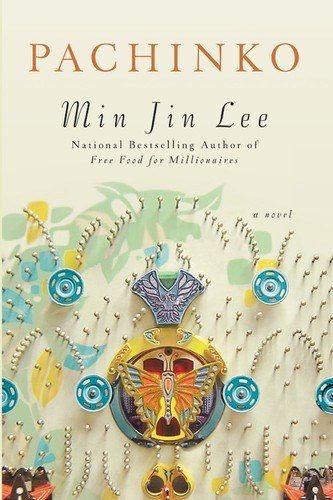
Korea and Japan, 1910 to 1989 (door: walk in cold)
Pachinko
Min Jin Lee2017about 480 pages
A pregnant girl from a Busan boarding house marries a stranger, moves to Japan, and starts a family that Japan will never quite allow to exist.
Sunja is the daughter of a woman who runs a boarding house on an island near Busan when Korea is a Japanese colony. She gets pregnant by a rich man who turns out to be married, and a sick young minister offers her a way out by marrying her and taking her to Osaka. From there the book follows her sons and grandsons through war, poverty, the Korean ghettos of Japanese cities, and the pachinko parlours that were one of the few businesses open to people with Korean names. It moves fast for a book that covers eighty years.
Why it is at 1
First because it does the whole job. You never once feel taught, and you come out understanding that Japan built a permanent underclass out of its Korean colony, that identity papers followed people into the third generation, and why a family would change its name to survive. The prose is plain rather than beautiful, which is exactly why the history goes down so easily.
Read it ifyou want one family novel that explains an entire national relationship
Skip it ifyou need a tight plot, because this is eighty years of ordinary life
generational, steady, quietly angryBest for: anyone starting the genrekoreajapanfamily saga
Heads up: suicide, wartime hardship, and sustained racism
2
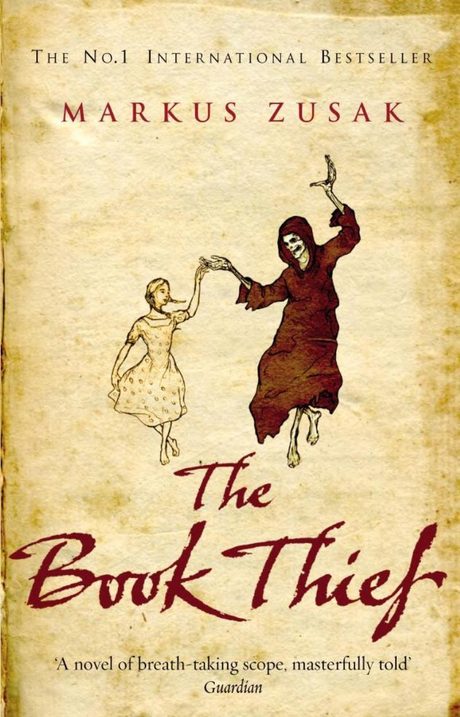
Small-town Germany, 1939 to 1943 (door: walk in cold)
The Book Thief
Markus Zusak2005
A girl in a German town steals books during the war, and Death narrates her story because Death is the one keeping count.
Liesel arrives outside Munich carrying one stolen book she cannot read, at the house of a couple who are paid to take her in. The man of the house teaches her to read at night in the basement, and later that basement hides a young Jewish man whose life depends on the household staying ordinary. The narrator is Death, which sounds like a gimmick until you notice he is bored, kind and busy, and that he tells you who dies well before it happens so you spend the book dreading it. Written for teenagers and read mostly by adults, which tells you something.
Why it is at 2
Second because it is the easiest door on this page and it still leaves you with the thing most war novels miss: what ordinary Germans did, avoided doing, and told themselves. You learn how a household hides a person, what a book burning looks like from a crowd, and how a currency of small favours works under a regime.
Read it ifyou want the war at street level with a narrator who is oddly good company
Skip it ifyou find whimsical narration in a Holocaust story hard to accept
tender, dread-soaked, readableBest for: first-time historical fiction readerssecond world wargermanyyoung adult crossover
Heads up: the Holocaust, air raids, the death of children
3
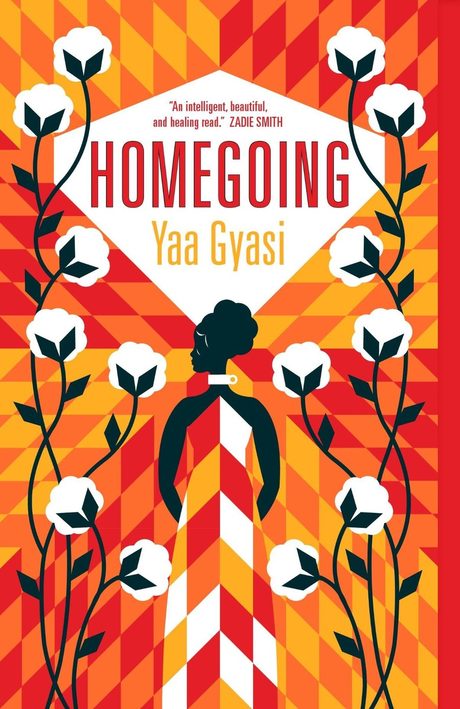
Ghana and America, 1700s to now (door: walk in cold)
Homegoing
Yaa Gyasi2016about 311 pages
Two half sisters in eighteenth century Ghana, one married to a slave trader upstairs, one held in the dungeon below, and then seven generations each.
Effia and Esi never meet. One is married to the British governor of Cape Coast Castle and lives above the dungeons. The other is sold through them. After that the book gives every descendant a single chapter, alternating between the Ghanaian line and the American one, from the Asante wars and Fante slave raiding down through plantations, convict leasing in Alabama coal mines, the Great Migration, Harlem and a university lab in the present. Fourteen chapters, fourteen lives, one bloodline.
Why it is at 3
Third because the structure teaches you something no single narrative can. Each chapter drops you into a new decade with no explanation, and you feel history moving because you keep having to catch up. You leave knowing the trade had African partners as well as European ships, and that American slavery did not end so much as change its paperwork.
Read it ifyou like short chapters and can handle saying goodbye to people fast
Skip it ifyou want to stay with one character, because nobody gets more than a chapter
propulsive, wide, unsparingBest for: readers who like linked storiesslaveryghanagenerational
Heads up: slavery, rape, racial violence, addiction
4
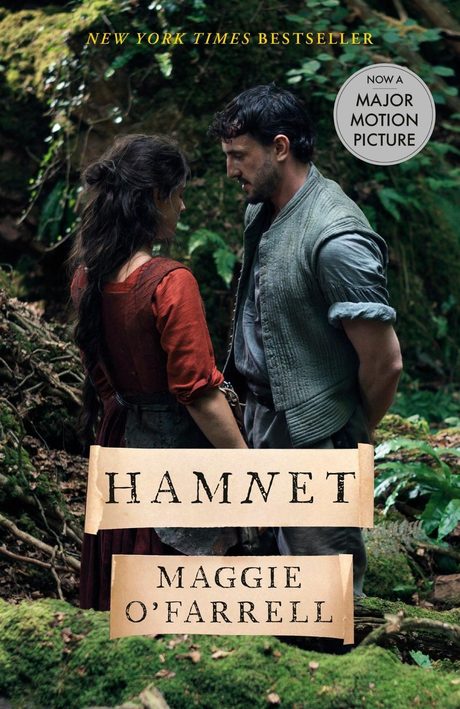
Stratford, England, the 1580s and 1590s (door: walk in cold)
Hamnet
Maggie O'Farrell2020about 321 pages
Shakespeare's son dies of plague at eleven, his wife is left with it, and four years later his father writes a play with the boy's name on it.
The famous man is never named in this book. It belongs to Agnes, his wife, a woman with a way with plants and a reputation in the town, and to the household in Stratford where the son falls ill while his father is away in London. O'Farrell writes the domestic world with unusual attention: the glover's workshop, the herbs, the illiterate servants, the way a fever moves through rooms. There is a chapter that follows the plague itself from a flea in Alexandria to a Warwickshire street, and it is the best thing in the book.
Why it is at 4
Fourth because it is the finest written of the easy entries and because it puts you inside a household rather than a court. You come out knowing how plague actually travelled, how an Elizabethan marriage was negotiated, and how a working family in a market town lived. The grief is the point and it does not let up in the last third.
Read it ifyou want the domestic side of a period usually written as kings and battles
Skip it ifyou are not up for a whole novel about the death of a child
sensory, grieving, closeBest for: readers who like interior novelsshakespeareplaguegrief
Heads up: the death of a child, plague, sustained grief
5
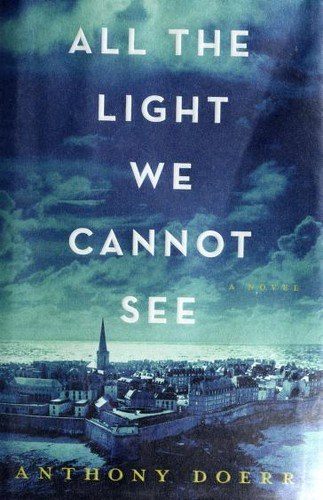
France and Germany, 1934 to 1944 (door: walk in cold)
All the Light We Cannot See
Anthony Doerr2014about 771 pages
A blind French girl and a German orphan with a gift for radios move toward the same walled town on the same bombed morning.
Marie-Laure leaves Paris with her father, a locksmith at the natural history museum, and ends up in Saint-Malo with a great uncle who has not left the house in twenty years. Werner grows up in a mining town, teaches himself radio repair, and is taken into a brutal Nazi school because the skill is useful. The chapters are two or three pages long, the timeline jumps back and forth from 1944, and the whole thing is engineered to bring two people into one street.
Why it is at 5
Fifth for the radio. Most war novels give you tanks; this one gives you the war as signals, broadcasts, jamming trucks and the terrible usefulness of a clever boy. Deduct something for the cursed diamond subplot, which belongs in a different book, and for prose so polished it occasionally admires itself. The history underneath is solid.
Read it ifyou want short chapters and a war story you can read in ten minute bursts
Skip it ifyou dislike very pretty sentences or convenient plotting
cinematic, gentle, engineeredBest for: readers who like short chapterssecond world warfranceradio
Heads up: war violence, the abuse of children in a Nazi school
6

Moscow, 1922 to 1954 (door: walk in cold)
A Gentleman in Moscow
Amor Towles2016about 545 pages
A count is sentenced to spend the rest of his life inside a Moscow hotel, and thirty years of Soviet history walk through the lobby.
Count Rostov is declared a former person by a Bolshevik tribunal and confined to the Metropol Hotel, where he is moved from a suite to an attic room and told he will be shot if he steps outside. He becomes a waiter, a friend to a child who knows the building's secrets, and an observer of everyone the new regime sends through the dining room. The book is warm, funny and formally clever, since the world has to come to him for thirty years.
Why it is at 6
Sixth because it is the most charming book here and the one I hand to people who say history bores them. Be clear about the trade: the purges, the famine and the camps stay outside the hotel doors by design, so you get Soviet manners, menus and hierarchies rather than Soviet terror. Read it for the texture, not the reckoning.
Read it ifyou want elegance, comedy and a confined stage
Skip it ifa cosy Soviet novel strikes you as a contradiction, which is a fair position
witty, warm, containedBest for: readers who think they hate historyrussiahotelcomedy
7

Delft, Netherlands, the 1660s (door: walk in cold)
Girl with a Pearl Earring
Tracy Chevalier1999about 248 pages
A maid in Vermeer's house grinds his pigments, learns to see the way he sees, and ends up on the canvas.
Griet is sent to work in the Vermeer household when her father, a tile painter, goes blind. She cleans the studio without moving anything, which is how she starts to understand what he is doing, and she is gradually pulled into mixing colours and then into sitting for him. The tension is entirely domestic: a jealous wife, a mother in law running the money, a patron with appetites, a butcher's son who wants to marry her. Under 250 pages and it never drags.
Why it is at 7
Seventh because it is the cheapest entry on the list in time and the richest in one specific thing: how a painting was actually made. Bone black, lapis, the cost of a pigment, the economics of a patron, the Catholic household inside a Protestant town. It is a small book with a small ambition, met completely.
Read it ifyou want one evening, one household, one painting
Skip it ifyou need scale, because nothing here leaves the street
quiet, tactile, tenseBest for: art lovers and short-book readersartnetherlandsshort
8

Bihar, Calcutta and the Indian Ocean, 1838 (door: a map helps)
Sea of Poppies
Amitav Ghosh2008about 565 pages
A former slave ship is refitted to carry indentured Indians across the sea, and everyone aboard is running from something the Company did.
On the eve of the first Opium War, the Ibis picks up a cargo of people instead of opium. Among them: a widow from a Bihar poppy village escaping her husband's pyre, a bankrupted raja convicted of forgery, a mixed race American sailor passing as white, and a French orphan girl raised in a Calcutta botanist's house. Ghosh writes the sailors in lascar English, the villagers in Bhojpuri rhythms and the Company men in their own cant, so the first fifty pages feel like standing in a port and hearing six languages at once.
Why it is at 8
Eighth, and the highest Indian entry, because of what it puts in your hands: the British ran opium as an industrial monopoly in Bihar, forced it into China, and when slavery ended shipped indentured labour in the same hulls. Once your ear adjusts to the language it reads like an adventure novel. The glossary at the back is a pleasure rather than a chore.
Read it ifyou want the nineteenth century Indian Ocean written from below deck
Skip it ifunfamiliar dialect on the page makes you close a book
salty, crowded, aliveBest for: readers ready for one hard openingopiumindentureindia
Heads up: opium addiction, flogging, sexual violence
Pairs with: read The Glass Palace next if you want the same century in Burma
9

Kerala, 1900 to 1977 (door: a map helps)
The Covenant of Water
Abraham Verghese2023
In one Kerala family, someone in every generation drowns, and a doctor's eye follows the mystery for three quarters of a century.
A twelve year old girl is married to a widower more than twice her age and sent by boat to a house in the Kerala backwaters, where she becomes the matriarch of a Saint Thomas Christian family carrying an inherited condition that kills by water. Verghese is a physician, and the medicine is the best part: a Scottish surgeon's training in Madras, hands ruined and rebuilt, leprosy treated when treatment barely existed. It runs past seven hundred pages and earns most of them.
Why it is at 9
Ninth because the reward is enormous and the entry price is real: you need patience for the first hundred pages and a tolerance for coincidence throughout. What you take away is a century of Kerala from the inside, the arrival of modern medicine in south India, and how caste and Christianity sit together there in a way most Indian fiction never bothers to explain.
Read it ifyou want a long family novel with real medicine in it
Skip it ifseven hundred pages and a slow start are a hard no
immersive, watery, humaneBest for: readers who love long sagaskeralamedicinefamily saga
Heads up: drownings, leprosy, child marriage, surgical detail
10
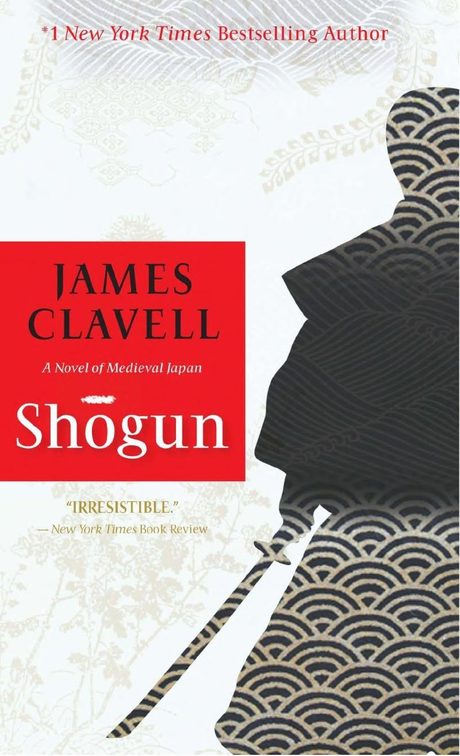
Japan, 1600 (door: a map helps)
Shogun
James Clavell1975about 1152 pages
An English pilot is wrecked on the coast of Japan at the exact moment its warlords are deciding who will rule for the next 250 years.
Blackthorne arrives with a Dutch ship, a Protestant grudge against the Portuguese Jesuits already established there, and no idea that the small courtesies he keeps getting wrong are matters of life and death. He is picked up by Lord Toranaga, who is modelled on Tokugawa Ieyasu and is playing a much longer game than anyone around him. Over a thousand pages you get sieges, earthquakes, a translator named Mariko who does the real work of the novel, and politics conducted entirely through manners.
Why it is at 10
Tenth because it is the most entertaining big book on this list and the fastest thousand pages you will ever read. The lens is dated: it is a Western outsider's Japan written in the seventies, and the exoticism shows. What survives is the political mechanics of how the shogunate was won, and the Portuguese trade that Europe has mostly forgotten.
Read it ifyou want one enormous book for a long holiday
Skip it ifa white outsider as the reader's guide to Asia irritates you
epic, addictive, datedBest for: long-haul flights and holidaysjapansamuraidoorstop
Heads up: executions, torture, casual cruelty
11

England, roughly 1120 to 1174 (door: a map helps)
The Pillars of the Earth
Ken Follett1989about 1158 pages
A town spends fifty years trying to build a cathedral while a civil war, a bishop and a psychopathic lord keep knocking it down.
A builder wants to raise a cathedral in a fictional town called Kingsbridge, and the novel follows the prior who funds it, the family who builds it, and the nobles who would rather it failed. Around them is the Anarchy, the war between Stephen and Matilda, and the church and crown quarrel that ends with a murder in Canterbury. Follett is not a stylist, and the villains twirl their moustaches, but nobody has ever made vaulting, wool prices and quarry rights this exciting.
Why it is at 11
Eleventh because the engineering is genuinely educational and the soap opera is genuinely fun, in that order. You finish it knowing how a cathedral was financed, why a flying buttress exists, and how the wool trade paid for medieval England. Deduct for the repeated use of rape as a plot device, which is the book's real problem, not its prose.
Read it ifyou want a thousand pages of building, scheming and revenge
Skip it ifbroad villains and blunt sentences ruin a book for you
soapy, propulsive, bluntBest for: readers who want plot above allmedievalcathedralengland
Heads up: repeated sexual violence, torture, hangings
12

Mughal India, 1577 to 1611 (door: a map helps)
The Twentieth Wife
Indu Sundaresan2002about 386 pages
A merchant's daughter born on a roadside grows up to marry the emperor Jahangir and then to rule beside him.
Mehrunnisa, later called Nur Jahan, is born to a Persian family so poor that her parents almost leave her behind on the road to Agra. She sees Prince Salim at court as a child, decides on him, is married off to a soldier, widowed, and finally becomes the emperor's twentieth wife at thirty four. Sundaresan writes the harem as a political institution rather than a fantasy, with women running networks, finances and access to the throne.
Why it is at 12
Twelfth because it delivers the court, though the romance drives harder than the history and the prose is serviceable rather than fine. It stays on the list because almost no other novel in English shows you how Mughal succession actually worked, or how much power moved through the zenana. The sequel, The Feast of Roses, covers her years in charge and is the better book.
Read it ifyou want Mughal court politics with a love story running through it
Skip it ifyou want the prose to match the period's grandeur
courtly, romantic, briskBest for: readers new to Mughal historymughalcourtindia
13
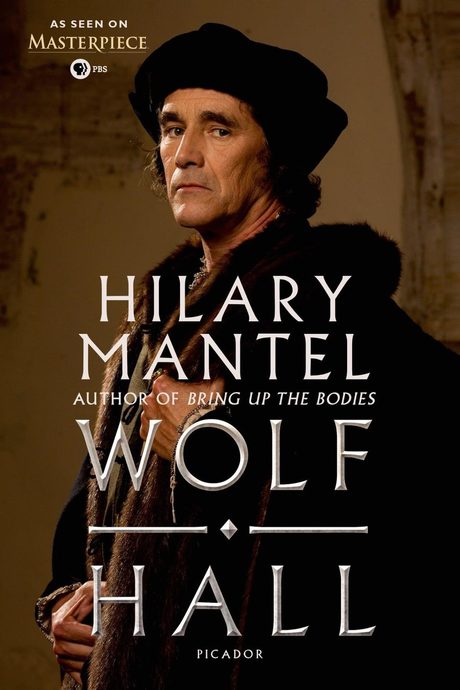
England, 1500 to 1535 (door: earn the first fifty pages)
Wolf Hall
Hilary Mantel2009about 657 pages
The blacksmith's son who became Henry VIII's fixer, told from inside his head while he takes the country apart and puts it back together.
Thomas Cromwell has been history's villain for four centuries, and Mantel puts you behind his eyes as he rises from a beaten child in Putney to the man who manages Henry's divorce, the break with Rome and the fall of Anne Boleyn. It is written in the present tense, and the pronoun he almost always means Cromwell, which is the wall readers hit on page one. Push through and it becomes the most immediate historical novel in English: the deals, the money, the letters, the timing.
Why it is at 13
Thirteenth on the ratio and first on quality, which is the whole reason this ranking has two axes. Nothing else here shows you how power actually operated: patronage, cash flow, law used as a weapon, and religion as a hostile takeover. It costs you fifty confusing pages. It gives back the Tudor century as a working machine.
Read it ifyou want the best written book on this list and will pay for it
Skip it ifpresent tense and ambiguous pronouns make you put books down
cold, brilliant, immediateBest for: readers who want the genre's ceilingtudorpoliticstrilogy
Pairs with: Bring Up the Bodies follows it and is tighter and even better
14
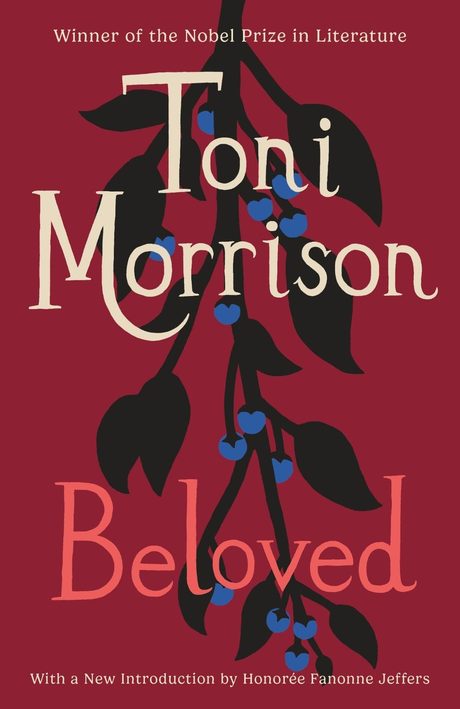
Ohio and Kentucky, 1850s and 1873 (door: earn the first fifty pages)
Beloved
Toni Morrison1987about 294 pages
A woman who escaped slavery is haunted, literally, by the daughter she killed to keep her from being taken back.
Sethe lives in a house outside Cincinnati eight years after the war with her surviving daughter and a ghost that everyone in the neighbourhood knows about. Then a young woman arrives at the gate with the name of the dead child and no history of her own. Morrison tells it in fragments, circling the event at the centre and refusing to explain it until you have earned it. The prose does things English does not usually do, and the book is short, which makes the density hit harder.
Why it is at 14
Fourteenth on the story-to-homework ratio and the greatest book on this page. It is here rather than higher because it withholds by design and because the horror is unrelieved. What it gives you is the part the textbooks skip: not the system, but what the system did to the inside of a person, and what it kept doing after it was abolished.
Read it ifyou want the one book here that changes how you read everything else
Skip it ifyou need chronology and clarity, or cannot take the subject right now
haunted, dense, overwhelmingBest for: patient readers ready for the hardest bookslaveryamericaghost story
Heads up: infanticide, slavery, sexual violence
15

Northern Italy, 1327 (door: earn the first fifty pages)
The Name of the Rose
Umberto Ecotranslated by William Weaver1980about 595 pages
A monk with a detective's mind investigates deaths in an abbey where the library is a labyrinth and one book is worth killing over.
William of Baskerville arrives at a wealthy abbey to prepare for a theological meeting and finds a body. Seven days, several more deaths, and a young novice narrating it all fifty years later. Eco was a scholar of the medieval period and he does not simplify: there are pages on whether Christ owned his clothes, on the politics between pope and emperor, on heretical movements and the Inquisition that hunted them. There is also a first rate murder mystery in there, and a burning library.
Why it is at 15
Fifteenth because the digressions are long and some Latin goes untranslated, so the story keeps stopping to teach. Stay with it and you get the fourteenth century as a live argument: who controls books, who decides what is heresy, how an abbey made money. The William Weaver translation is the one to read, and skipping a theological page or two costs you nothing.
Read it ifyou want a murder mystery with a full medieval education attached
Skip it ifyou resent a novel that stops for a lecture on poverty and doctrine
scholarly, sly, gothicBest for: patient readers who like puzzlesmedievalmysterytranslated
Heads up: torture by the Inquisition, a graphic death or two
16
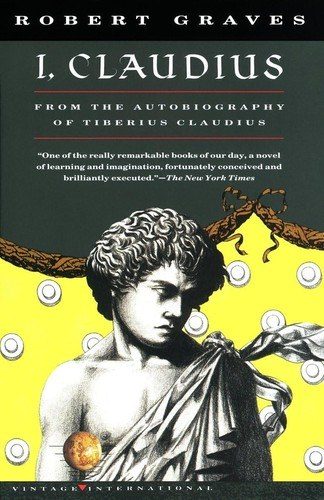
Rome, 10 BC to AD 41 (door: earn the first fifty pages)
I, Claudius
Robert Graves1934
The stammering, limping member of the imperial family that everyone dismissed writes down what he saw, which is everything.
Claudius pretends to be a fool because fools survive, and from that safe corner he narrates the reigns of Augustus, Tiberius and Caligula as a family history: marriages arranged and dissolved, adoptions used as weapons, heirs dying at convenient moments, and his grandmother Livia at the centre of it. Graves wrote it as a memoir found long after the fact, and the voice is gossipy and dry rather than grand. Once you have the family straight it reads like the best group chat in history.
Why it is at 16
Sixteenth because of the names, which repeat until they blur: Drusus after Drusus, Julia after Julia, and the family tree printed at the front is not decoration. Give it fifty pages and one chart and you will understand the early Roman empire as a family business better than any documentary can show you. Fair warning: Graves makes Livia a poisoner well beyond what the evidence supports.
Read it ifyou like political gossip and can keep a family tree open
Skip it ifa cast of fifty with four names between them defeats you
dry, gossipy, ruthlessBest for: readers who like political intrigueromeempireclassic
Heads up: murder, incest and cruelty reported in a calm voice
Worth knowing
The three doors, and how to use them
Every book here carries one of three doors in its label, and it is the only thing you need before buying. Walk in cold means the novel supplies everything: no prior knowledge, no chart, no patience required beyond ordinary attention. Seven of the sixteen are like this, and they are not the lesser books, they are the ones written to carry a stranger.
A map helps means you will get more out of it if you know roughly who ruled what, or that you will spend fifty pages learning a vocabulary before the story runs. Sea of Poppies and Shogun both work like this. Earn the first fifty pages is the steepest door: the book withholds on purpose, whether through pronouns, structure or theology. Those four are where the greatest writing on this page lives, which is the annoying part of the deal.
Worth knowing
The sixteen by era, if you would rather read chronologically
Rome, 10 BC to AD 41: I, Claudius. Northern Italy, 1327: The Name of the Rose. England, 1120 to 1174: The Pillars of the Earth. England, 1500 to 1535: Wolf Hall. Stratford, the 1580s and 1590s: Hamnet. Mughal India, 1577 to 1611: The Twentieth Wife. Japan, 1600: Shogun. Delft, the 1660s: Girl with a Pearl Earring.
West Africa and America, 1700s onward: Homegoing. India and the Indian Ocean, 1838: Sea of Poppies. Ohio, 1873, remembering the 1850s: Beloved. Kerala, 1900 to 1977: The Covenant of Water. Korea and Japan, 1910 to 1989: Pachinko. Moscow, 1922 to 1954: A Gentleman in Moscow. France and Germany, 1934 to 1944: All the Light We Cannot See. Germany, 1939 to 1943: The Book Thief. Read in this order and you get a rough world history in sixteen novels, with enormous gaps that I would fill with the non-fiction below.
Worth knowing
When you want the real history afterwards
A good historical novel leaves you wanting the facts, and the facts are a different shelf. For the Company that runs quietly behind Sea of Poppies, read The Anarchy by William Dalrymple. For 1857 and the last Mughal emperor, The Last Mughal by the same author. For Delhi as a living city with its layers showing, City of Djinns. All three are non-fiction, which is why none of them are ranked above.
One more thing worth saying plainly. Every novel on this page compresses time, invents conversations and gives real people motives no record can prove. That is the deal you are making, and the good ones are honest about it in an author's note at the back. Read the note. It usually tells you exactly where the novelist stopped following the evidence and started driving.
People also ask
Questions, answered
What is the best historical fiction book of all time?
Beloved by Toni Morrison, if the question is which is the greatest novel. Pachinko by Min Jin Lee, if the question is which one to actually start with tonight, because it asks nothing of you and gives back a century. The honest answer is that they are doing different jobs: Morrison is rewriting what a novel can hold, and Lee is telling you a family story so well that the history arrives without an argument.
What actually counts as historical fiction?
The usual working rule is that the book is set at least fifty years before it was written, in a period the author had to research rather than remember. That is why Pachinko counts even though it reaches 1989, and why a novel set in 2005 and written now does not. Real events and real people can appear, but the story belongs to invented characters or to invented interiors of real ones.
Is historical fiction accurate?
Partly, and the good ones tell you where they stopped being accurate. Wolf Hall, Hamnet and Beloved stay close to the documented record and invent the inner life, which no record holds anyway. Shogun and The Twentieth Wife move real events around for the story, and The Pillars of the Earth invents its whole town. Read the author's note at the back, which is where the honest ones draw the line for you.
Which historical fiction should I read if I get bored easily?
Start with The Book Thief for short chapters and a narrator who keeps you company, or Girl with a Pearl Earring if under 250 pages is the deciding factor. If it is plot you want rather than brevity, The Pillars of the Earth is a thousand pages that read like a soap opera with cathedrals. Avoid Wolf Hall, Beloved and The Name of the Rose until you have a couple of these behind you.
Which Indian historical fiction novel should I start with?
Sea of Poppies by Amitav Ghosh, once you accept that the first fifty pages are a language lesson. It gives you the opium trade, the indenture ships and the world just before the first Opium War, all from below deck. If you want something gentler, The Twentieth Wife takes you into the Mughal court, and The Covenant of Water gives you a century of Kerala if you have the patience for seven hundred pages.
Do I have to read Wolf Hall as a trilogy?
You can stop after one, but almost nobody does. Wolf Hall covers Cromwell's rise, Bring Up the Bodies covers the fall of Anne Boleyn and is the tightest of the three, and The Mirror and the Light runs to the end and is much longer. Read them in order, because the pleasure is cumulative and the third book assumes you remember minor characters from the first.
Before you go
What to read tonight
If you have one evening and no history in your head at all, start with The Book Thief or Girl with a Pearl Earring and finish something tonight. If you have a week and want to come out of it changed, read Pachinko, then follow it with Homegoing, because the two of them together make the point that a family is the smallest unit history acts on.
And when a book on this list makes you angry about something that happened two hundred years ago, do the thing the genre is really for: go and read forty pages of the non-fiction about it. You will find the novelist bent a date, moved a battle, gave a woman a voice she was never allowed. You will also find that the feeling was accurate, which is the part the dates could never give you.
Keep going
Lists that pair with this one
Indian Fiction
14 Best Partition Novels and Books, Ranked by Where to Start
Fiction and first-hand testimony from both sides of the 1947 line, ordered so you begin with the one you can actually finish.
Authors
The 12 Best Amitav Ghosh Books, Ranked (With the Ibis Reading Order)
Three doors into his work, twelve books ranked, and an honest warning about the first eighty pages of Sea of Poppies.
Trending
14 Booker Prize Winners Worth Reading (And 3 That Are Homework)
Ranked by what each book gives back for the hours it takes, with the cost of entry printed on every entry.
Genre
15 Literary Fiction Books for Beginners, Easiest First
Every book here asks one new thing of you that the book before it did not, so you climb instead of drowning.
Nonfiction
16 Best Books on Indian History for Beginners, in Order
Not a ranking but a route: one or two books per era, from the Indus valley to the news you read this morning.