The first time I read One Hundred Years of Solitude I was nineteen and I kept waiting for somebody in the book to react. A priest drinks hot chocolate and rises a few inches off the ground, and the villagers treat it as proof of something rather than as a problem. A young woman ascends into the sky while folding sheets, and her family's main worry afterwards is the sheets. That refusal to be astonished is not a quirk of style. It is the whole genre, and it is why most lists of magical realism books are quietly wrong.
So this list runs one test on every book. Something impossible happens, and I watch how the people standing nearest to it react. If a character says this cannot be happening, or a wizard explains the rules, or the book opens with a map of a second world, that is fantasy and it left the list. If the villagers simply adjust their afternoon around it, the way you adjust around a power cut, that is magical realism. The books run from the ones that pass completely down to four that only half pass, and I say exactly where the doubt sits.
This order is not a quality ranking, so the last four are not the worst books here, they are the most argued about. Most of the top is Latin American because that is where the form was built, though Nigeria, Russia, Germany, India and Japan are all on this list too. If Garcia Marquez is the only name you know, start at one, ignore anybody's advice about reading order, and give the first fifty pages your full attention.
How I picked these
- One test, run on every book: when the impossible arrives, does anybody in the story treat it as impossible? If the answer is yes, the book is fantasy and it is not here.
- Ranked by how completely each book passes that test, not by how good it is. The bottom four are borderline and each entry says where the doubt lies.
- Every book verified through Google Books and Open Library with a real cover, so nothing here is a ghost edition.
- Cut for being fantasy wearing the label: The Night Circus, Piranesi and The Starless Sea, all of which build worlds with rules instead of bending this one.
- Cut for a different reason: Love in the Time of Cholera, which is a wonderful novel and almost entirely realist, and which lands on these lists because of the name on the cover rather than what is inside it.
- Two books by Garcia Marquez, because he set the register and the short one shows it working at a completely different speed. Everybody else gets one.
The whole list at a glance
All 14 books, in order
| # | Book | Author | Year | Vibe | Best for |
|---|
| 1 | One Hundred Years of Solitude | Gabriel Garcia Marquez | 1967 | sprawling, humid, mythic | the full genre experience |
| 2 | Chronicle of a Death Foretold | Gabriel Garcia Marquez | 1981 | sunlit, fatal, precise | one sitting |
| 3 | The House of the Spirits | Isabel Allende | 1982 | green, generational, fierce | readers who love family sagas |
| 4 | Like Water for Chocolate | Laura Esquivel | 1989 | hot, sensual, domestic | a first magical realism book |
| 5 | Beloved | Toni Morrison | 1987 | haunted, physical, unsparing | readers who want difficulty |
| 6 | Midnight's Children | Salman Rushdie | 1981 | loud, punning, historical | readers who love wordplay |
| 7 | The Master and Margarita | Mikhail Bulgakov | 1967 | wicked, funny, blasphemous | readers who want comedy |
| 8 | The Famished Road | Ben Okri | 1991 | hallucinatory, dense, teeming | patient readers |
| 9 | Nights at the Circus | Angela Carter | 1984 | bawdy, baroque, gleeful | readers who love excess |
| 10 | The Tin Drum | Gunter Grass | 1959 | grotesque, sardonic, cold | readers who want a challenge |
| 11 | Red Earth and Pouring Rain | Vikram Chandra | 1995 | exuberant, layered, mischievous | readers bored of one plot |
| 12 | Kafka on the Shore | Haruki Murakami | 2002 | dreamlike, cool, unresolved | readers who like the unexplained |
| 13 | Exit West | Mohsin Hamid | 2017 | spare, tender, current | readers who want something modern |
| 14 | The Ocean at the End of the Lane | Neil Gaiman | 2013 | small, eerie, sad | one evening, adults only |
The list
The books, ranked
1
Nobody blinks at: a girl who rises into the sky with the laundry
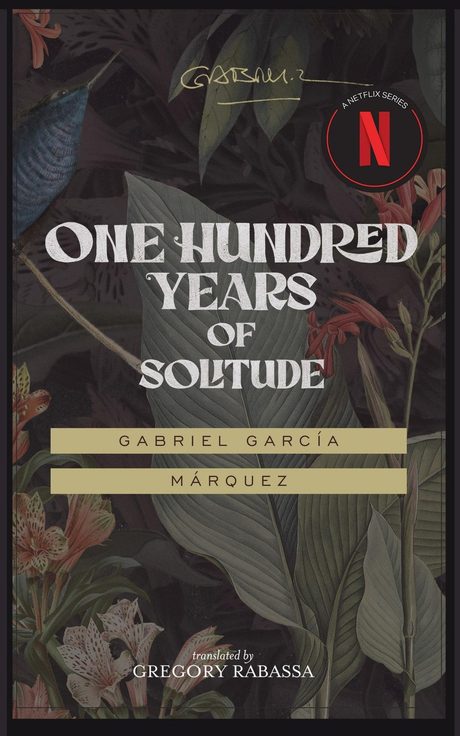
One Hundred Years of Solitude
Gabriel Garcia Marqueztranslated by Gregory Rabassa1967about 448 pages
Seven generations of one family in a town at the edge of a swamp, where miracles arrive on the same bus as the traders.
The Buendias found a town called Macondo in the middle of nowhere, and the novel follows their descendants until the family runs out of them. A ghost moves back into the house and complains about being lonely. A plague of insomnia strips the town of its memory, so people begin labelling every object with its own name. A man is followed everywhere by yellow butterflies and this is accepted as a fact about him, like a limp. Names repeat across generations on purpose, so keep the family tree at the front open and stop trying to hold the plot. The book is a river, not a staircase.
Why it is at 1
Number one because it set the register everybody after it borrowed, and because it passes the test on every page without once winking at you. The miraculous and the municipal get exactly the same tone of voice, so a levitation and a massacre are reported with identical calm. It is also the hardest of these to finish, which is why the two books below it are better places to begin.
Read it ifyou want the source, and you can survive a hundred years of repeated names
Skip it ifyou need a plot you can follow in a straight line
sprawling, humid, mythicBest for: the full genre experiencecolombiafamily sagatranslated
Pairs with: Pedro Paramo by Juan Rulfo, the short Mexican novel that showed Garcia Marquez how this could be done
2
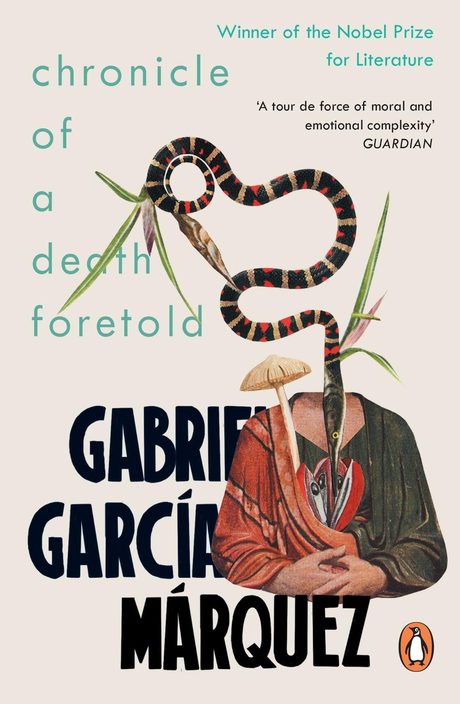
Nobody blinks at: dreams the whole town agrees were a warning
Chronicle of a Death Foretold
Gabriel Garcia Marqueztranslated by Gregory Rabassa1981about 117 pages
An entire town knows a man is about to be murdered, and every single person assumes somebody else will stop it.
The narrator comes back to his town decades later to reconstruct the morning Santiago Nasar was killed, and the murder is announced in the opening line, so there is no suspense to protect. What follows is closer to a reconstruction than a story: contradictory witnesses, a bishop who will not get off the boat, twin brothers who announce their intentions to everybody they meet because what they want is to be stopped. The dreams, the omens and the smell that will not leave the house are all treated as evidence by the people involved, which is exactly the trick.
Why it is at 2
Second because it passes the test in a completely different key from the book above it. There are no levitations here, only a town where a premonition counts as information and nobody finds that strange. At around a hundred and twenty pages it is also the best door into Garcia Marquez, which is why so many readers who bounced off Macondo love this one instead.
Read it ifyou want one perfect evening and a short book you will reread
Skip it ifyou need suspense, because the ending is the first sentence
sunlit, fatal, preciseBest for: one sittingcolombiashorttranslated
Heads up: an honour killing described in clinical detail
3

Nobody blinks at: a child who moves the furniture without touching it
The House of the Spirits
Isabel Allendetranslated by Magda Bogin1982about 512 pages
Three generations of women with green hair, prophetic notebooks and telekinesis, inside a century of family and political violence.
Clara del Valle is clairvoyant, silent for nine years by choice, and keeps notebooks that record everything that happens to her family. Her relatives treat her abilities roughly the way you would treat a cousin who is good with numbers. Around this domestic magic, Allende builds the history of an unnamed South American country through one landowning family and the man at its centre, Esteban Trueba, who is both the patriarch you dislike and the narrator you end up half understanding. The final third turns hard and political, and the magic quietly withdraws as the violence arrives.
Why it is at 3
Third because the household passes the test perfectly, and because Allende does something the two books above her do not: she lets the magic drain out of the novel as the state violence rises, which is an argument rather than a mood. It sits below Chronicle only because that last section reads more like a different book than a continuation of this one.
Read it ifyou want a family saga with real politics underneath the magic
Skip it ifyou want the magic to hold until the last page, because it deliberately does not
green, generational, fierceBest for: readers who love family sagaschilefamily sagatranslated
Heads up: political torture and sexual violence in the final section
4

Nobody blinks at: a wedding cake that makes every guest weep at once
Like Water for Chocolate
Laura Esquiveltranslated by Carol Christensen and Thomas Christensen1989about 227 pages
The youngest daughter is forbidden to marry, so she cooks, and whatever she feels while cooking goes straight into whoever eats it.
Tita is bound by a family rule that the last daughter stays unmarried and looks after her mother, so she watches the man she loves marry her sister and takes it out on the kitchen. Her tears in the batter make an entire wedding party sick with longing. A dish made with rose petals sets her other sister alight, more or less literally. The novel is arranged as twelve monthly instalments, each opening with a recipe you could genuinely cook, and the whole thing runs on one idea: feeling is a physical ingredient and it travels.
Why it is at 4
Fourth, and the gentlest way into this genre. The book never once stops to justify itself. The food does what it does, the family adjusts around it, and the recipes keep arriving. It sits below the three above because it is a smaller novel with less on its mind, though nothing here is better designed. Start with this if the Latin American classics have defeated you before.
Read it ifyou want the genre at its warmest, with recipes attached
Skip it ifromantic melodrama is difficult for you to take seriously
hot, sensual, domesticBest for: a first magical realism bookmexicofoodromance
5
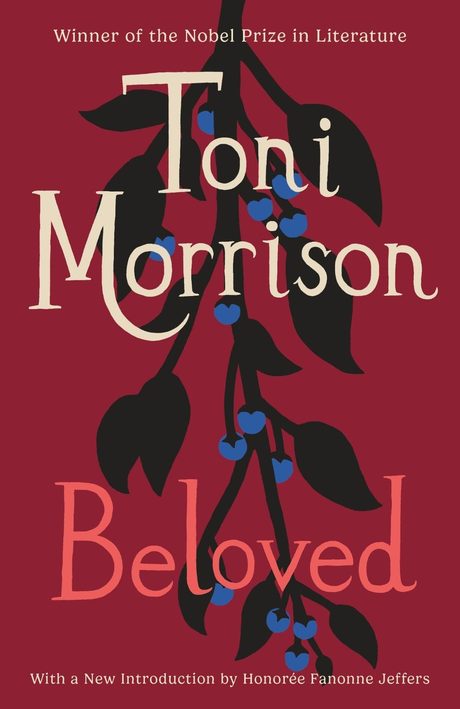
Nobody blinks at: a house that shakes with a baby's rage
Beloved
Toni Morrison1987about 294 pages
A woman who escaped slavery lives in a house haunted by the child she lost, and then a young woman walks up the road.
Sethe lives outside Cincinnati in 1873 in a house the whole neighbourhood avoids, because the house is furious. The spite in it is treated as a household fact, like damp in a monsoon wall. Then a young woman arrives with no history and the name from the gravestone, and Sethe's life rearranges itself around her. Morrison writes the haunting with no explanation and no rules, because in this book the past is not a metaphor that visits, it is a person who moves in and eats your food. This is the hardest book here and the one I would defend the longest.
Why it is at 5
Fifth because the test is passed absolutely, and by a whole community rather than one family. Nobody in the book argues about whether the haunting is real. Some readers file this as gothic instead, and I understand the objection, but the rule holds: the impossible arrives and the response is practical rather than amazed. It is at five and no higher because it is the least forgiving book on the list.
Read it ifyou want the most serious novel here and will give it your full attention
Skip it ifyou are reading in short distracted bursts, because it will not survive that
haunted, physical, unsparingBest for: readers who want difficultyusaslaveryghost
Heads up: slavery, infanticide, sexual violence
6
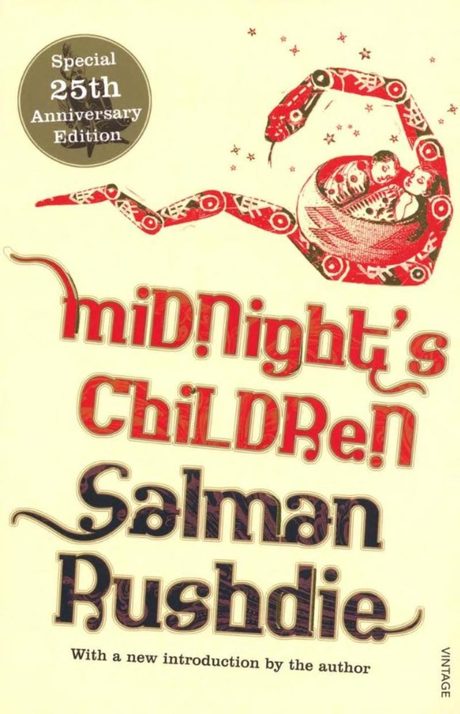
Nobody blinks at: a nose that can hear a thousand children thinking
Midnight's Children
Salman Rushdie1981
Born at the exact moment of Indian independence, Saleem discovers he can hold a nightly conference inside his head with everyone born that hour.
Saleem Sinai is born at midnight on 15 August 1947 and spends the novel insisting that his life and the country's are the same event, which he very nearly proves. The thousand and one children born in that first hour each have a gift, and Saleem's enormous dripping nose lets him convene them telepathically after dark. The book runs from Kashmir to Bombay to Karachi to the Sundarbans across three generations, and the history is real even when the telling is not. His narration is boastful, unreliable, and constantly interrupted by the woman he is telling it to.
Why it is at 6
Sixth, and the highest Indian entry, because the register is right: nobody in Saleem's family treats his telepathy as more remarkable than his school results. It is the loudest book here, which is a matter of taste. The reason it is not higher is that Rushdie shows his hand more often than the writers above him, and the performance gets tiring somewhere around the middle.
Read it ifyou want the Indian novel that changed how Indian novels sound
Skip it ifyou dislike a narrator who refuses to stop performing
loud, punning, historicalBest for: readers who love wordplayindiapartitionpostcolonial
Heads up: the Emergency and forced sterilisation appear in the later sections
7
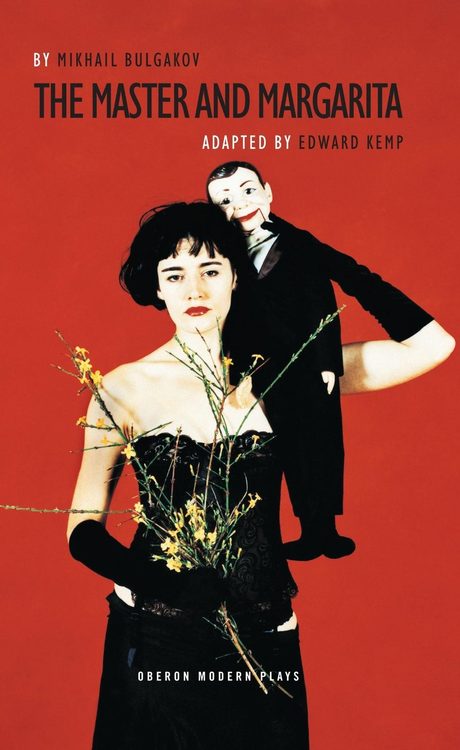
Nobody blinks at: a giant black cat trying to buy a tram ticket
The Master and Margarita
Mikhail Bulgakov1967about 141 pages
The devil arrives in Soviet Moscow with a retinue including a talking cat, and the city's chief concern is the paperwork.
A literary bureaucrat and a young poet meet a foreign professor on a park bench who calmly predicts how one of them will die that afternoon, and the prediction is correct. The professor is Satan, his entourage includes a fanged cat the size of a hog who rides trams and argues with conductors, and over a few days they take apart the Moscow literary establishment mostly by giving people exactly what they ask for. Threaded through it is a second novel about Pontius Pilate on the day of the crucifixion, written in a completely different register: quiet, hot and grave.
Why it is at 7
Seventh because the reactions are perfect. Moscow's answer to the devil is administrative: forms, committees, a psychiatric clinic filling up ward by ward. Bulgakov wrote it in secret under Stalin and it could not be published in his lifetime, which gives the comedy its edge. It is the funniest book here by a distance, and it ranks at seven only because the Pilate chapters ask you to hold two novels in your head at once.
Read it ifyou want satire, the devil, and a cat with a pistol
Skip it ifyou want one continuous story, because there are two braided together
wicked, funny, blasphemousBest for: readers who want comedyrussiasatiretranslated
8
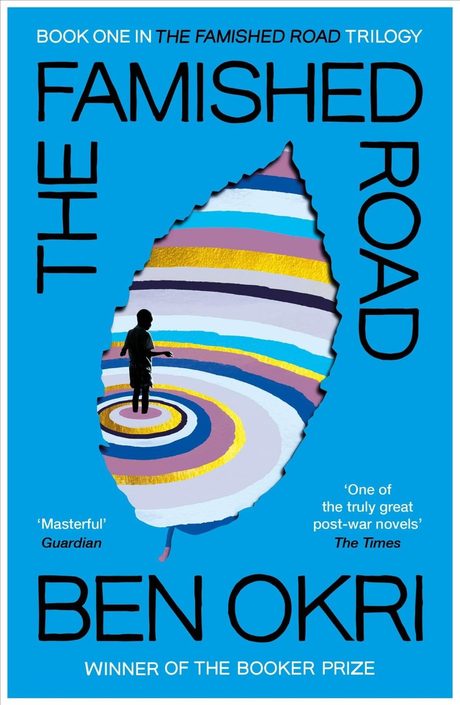
Nobody blinks at: a boy whose dead companions keep coming to fetch him
The Famished Road
Ben Okri1991about 641 pages
Azaro is a spirit child who chose to stay born, and the spirit world keeps sending delegations to bring him back.
Azaro is an abiku, a child who is born, dies and is born again to the same mother, and he has broken the agreement by deciding to stay alive this time. His days are ordinary and poor: a father who unloads cargo and fights at night, a mother who hawks goods, a landlord, a bar run by Madame Koto, an election coming with thugs attached to it. His nights are crowded with spirits who follow him home from the market. The family treats the spirit traffic as weather and Nigerian politics as the real emergency, which is the entire point.
Why it is at 8
Eighth because it passes the test on Yoruba terms rather than Latin American ones, and that distinction matters: this is not a European idea of enchantment, it is a cosmology the characters already hold. It ranks here because the book is repetitive by design, a long river of vision after vision, and plenty of readers stall around page two hundred. The ones who do not stall never forget it.
Read it ifyou want this genre outside Latin America and you are patient
Skip it ifyou need forward motion, because this circles instead of advancing
hallucinatory, dense, teemingBest for: patient readersnigeriaspiritspostcolonial
9
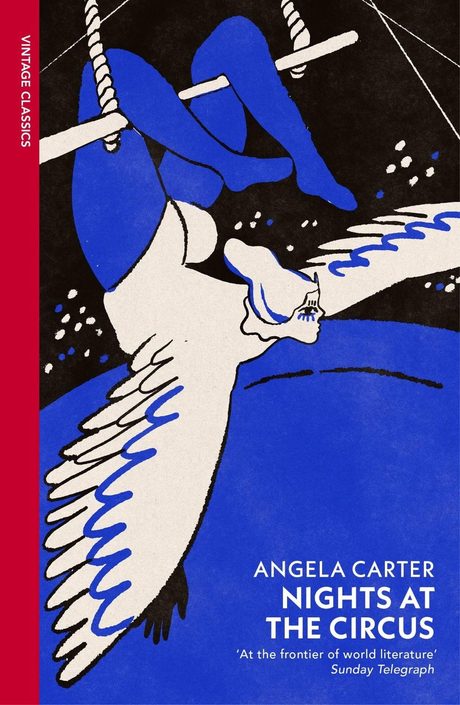
Nobody blinks at: an aerialiste with real wings, on tour
Nights at the Circus
Angela Carter1984about 370 pages
A six-foot Cockney trapeze artist has wings, and the only question anybody bothers to ask is whether she is a fraud.
Fevvers is a music hall aerialiste who claims she was hatched from an egg and has the wings to prove it, and the novel opens with an American journalist in her dressing room trying to catch her out. He fails, joins the circus to keep investigating, and the three of them, Fevvers, her guardian Lizzie and the reporter, travel from London to St Petersburg to Siberia through a series of increasingly strange encounters. Carter writes sentences stuffed to the brim, with more comedy and more filth than most people expect from a literary classic.
Why it is at 9
Ninth because the reaction is the joke: the wings are genuine and the world's response is to debate the marketing. That is the test passed with a wink, which is why it sits under the eight above rather than beside them. Carter is also the best pure sentence writer here after Morrison, so if you read for language above all, move this one up several places.
Read it ifyou want prose that shows off and a heroine who enjoys herself
Skip it ifyou prefer clean, spare writing
bawdy, baroque, gleefulBest for: readers who love excessenglandcircusfeminist
Heads up: sexual content, and a violent section set in a Siberian prison
10
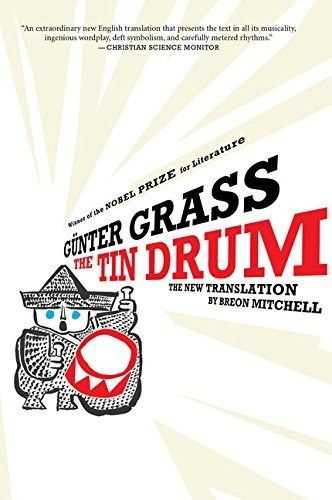
Nobody blinks at: a three-year-old who decides to stop growing
The Tin Drum
Gunter Grass1959
Oskar decides on his third birthday never to grow again, keeps his tin drum, and screams glass into pieces for the next thirty years.
Oskar Matzerath narrates from a mental institution, beginning with his grandmother's four skirts in a potato field and moving through Danzig before, during and after the war. He claims he chose to stop growing at three and threw himself down the cellar stairs to give the adults an explanation they could live with. He keeps a tin drum he will not surrender and a scream that shatters glass at will. The family response to a son who does not grow is embarrassment and management, never wonder, which is precisely the register this list is about.
Why it is at 10
Tenth because it passes the test coldly. Nobody in Danzig treats Oskar as a miracle, they treat him as a household problem, and the war proceeds around him regardless. It ranks below the books above because the narrator is genuinely unpleasant company for six hundred pages, and because the strangeness here is closer to grotesque comedy than to enchantment. It remains one of the great novels of the last century.
Read it ifyou want the German answer to this whole tradition
Skip it ifan unpleasant narrator across a very long book is not what you want now
grotesque, sardonic, coldBest for: readers who want a challengegermanywartranslated
Heads up: wartime violence and disturbing sexual content
11
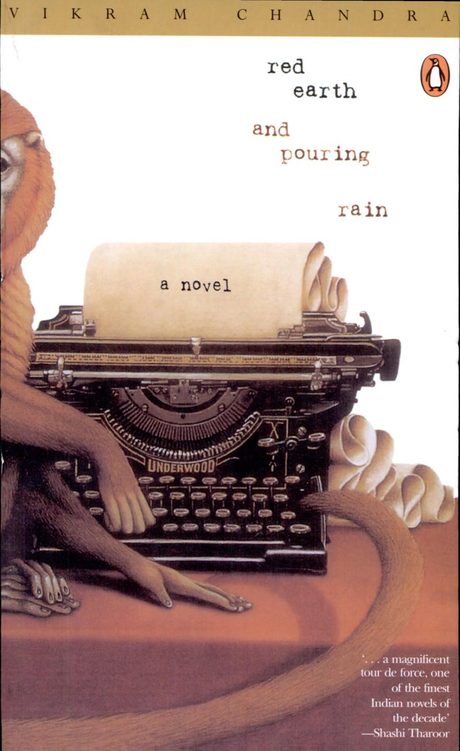
Nobody blinks at: a typewriting monkey bargaining for his life
Red Earth and Pouring Rain
Vikram Chandra1995about 692 pages
A monkey shot in a Delhi garden turns out to be a reincarnated poet, and he types stories nightly to keep death waiting.
A student home from America shoots a monkey with an air rifle. The monkey survives, discovers he is the reincarnation of a nineteenth century poet named Sanjay, and strikes a deal with Yama, the god of death: he lives as long as he keeps his audience entertained. So he types, the household gathers to listen, and the tale runs back into the wars and intrigues of nineteenth century India while a road trip through America runs alongside it. It is a first novel written with the confidence of a fifth.
Why it is at 11
Eleventh, and the Indian pick I would push hardest, because the entire neighbourhood accepts the typing monkey within a day and starts turning up with snacks. The reason it is not higher is that the two braided stories are unequal, and the American road trip is the weaker half. When Chandra is in the nineteenth century, though, nothing on this list is more fun to read.
Read it ifyou want Indian storytelling with the brakes off
Skip it ifyou dislike stories nested inside other stories
exuberant, layered, mischievousBest for: readers bored of one plotindiastorytellingdebut
12

Borderline: fish fall from the sky and people reach for an umbrella
Kafka on the Shore
Haruki Murakamitranslated by Philip Gabriel2002about 514 pages
A teenage runaway and an old man who talks to cats move towards each other through a Japan where the impossible stays oddly polite.
Kafka Tamura runs away from his father's house at fifteen and hides in a private library in Shikoku. In a second line of the story, Nakata, an old man who lost his memory and his literacy after a childhood incident, can talk to cats and follows instructions he does not understand. Fish rain out of the sky. A figure calling himself Johnnie Walker turns up doing something unforgivable. Murakami explains none of it, and his characters mostly accept the rules of whatever they have walked into, although they do occasionally stop to say that this is not normal.
Why it is at 12
Twelfth, and the first of the borderline four. Murakami's mode is closer to dream logic than to magical realism proper, and his people do sometimes register that something is wrong, which is the one thing this genre never does. He is here because the reaction is still nine parts calm to one part alarm, and because half the readers searching for magical realism are in fact looking for exactly this.
Read it ifyou want strangeness with a hypnotic pull and no explanations offered
Skip it ifunanswered questions annoy you, because almost nothing here is resolved
dreamlike, cool, unresolvedBest for: readers who like the unexplainedjapansurrealtranslated
Heads up: an incestuous premise and violence towards animals
13
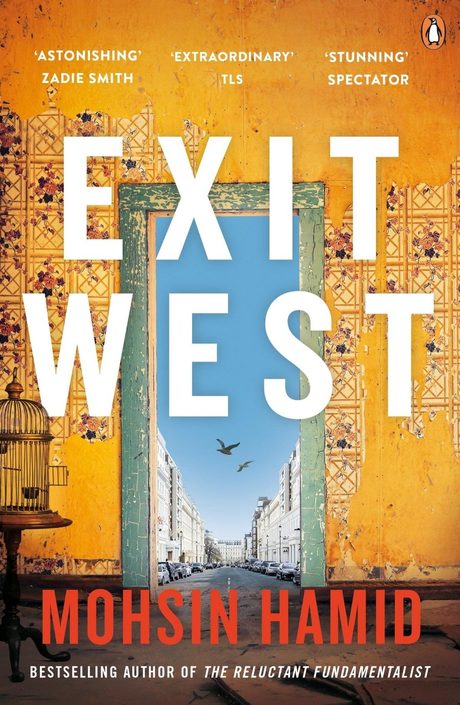
Borderline: doors that open onto other countries, and a queue forms
Exit West
Mohsin Hamid2017about 242 pages
Two young people in a city sliding into war find doors that lead straight to other continents, and the world rearranges around the doors.
Saeed and Nadia meet at an evening class in an unnamed city, and their courtship happens as the war closes in around them, with checkpoints, curfews and a militant faction taking the neighbourhood street by street. Then rumours start about doors that open somewhere else, and the couple pays an agent for access to one. Hamid makes the doors completely banal: a black rectangle in a closet, a fee, a queue, a man guarding it. The novel is really about what migration does to a relationship, and the device exists to remove the journey and leave only the arriving.
Why it is at 13
Thirteenth, borderline, because the doors are a device rather than a world. Nobody in the book is astonished by them, which passes the test, but Hamid uses them the way a fabulist changes one rule, not the way Garcia Marquez lets a levitation sit inside an ordinary afternoon. It earns its place as the best book here about the present, and because the calm around those doors is unnervingly exact.
Read it ifyou want the most contemporary book on this list
Skip it ifyou want immersion, because the style keeps you at arm's length on purpose
spare, tender, currentBest for: readers who want something modernmigrationwarcontemporary
Heads up: war, displacement and violence in the early chapters
14
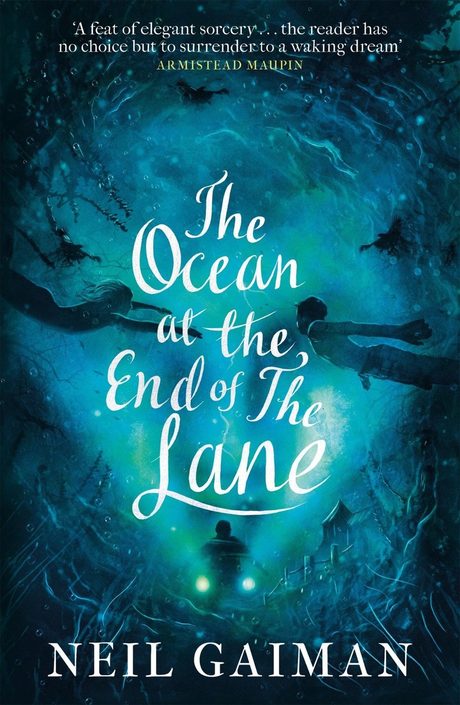
Borderline: a duck pond that a girl insists is an ocean
The Ocean at the End of the Lane
Neil Gaiman2013about 180 pages
A man returns for a funeral, sits by a pond he was once told was an ocean, and remembers the year he was seven.
A seven-year-old boy, bookish and friendless, meets Lettie Hempstock down the lane, who is eleven and has been eleven for a very long time. Her family, three generations of women on an old farm, deal with something that comes through into this world after a lodger dies in the family car. The boy accepts everything he is shown, because he is seven and children accept. It is short, it is far more frightening than the cover suggests, and the sadness in it is the adult kind rather than the childhood kind.
Why it is at 14
Fourteenth and the most borderline pick here. By a strict definition this is fantasy: there are rules, there are creatures, and there is a family who fights them. It stays on the list because the narration passes the test completely, since a child does not sort events into possible and impossible, he simply reports them. If you want only the strict form, stop reading at rank eleven.
Read it ifyou want the shortest and most emotional book on this list
Skip it ifyou want strict magical realism with no creatures anywhere in it
small, eerie, sadBest for: one evening, adults onlyenglandchildhoodfantasy edge
Heads up: a suicide, and frightening scenes involving a child
Worth knowing
The nobody-blinks test, and why most lists get this wrong
Magical realism is not a measure of how much magic a book contains. It is a measure of the narrator's tone of voice. In fantasy, the impossible is the event: somebody discovers it, somebody explains the rules, and the plot is about what the rules allow. In magical realism the impossible is the furniture. It has always been there, everybody already knows, and the plot is about a marriage, a farm, an election, a murder. That is why a book with one levitation can qualify and a book stuffed with dragons cannot.
The test also explains the shape of this list. Ranks one to eleven pass without argument, because nobody inside those books ever stops to be amazed. Ranks twelve to fourteen half pass, and each of those entries says where the crack is. If a friend tells you The Night Circus is magical realism, run the test on it: the circus is a world with rules and the characters treat it as extraordinary, which makes it very good fantasy and something else entirely.
Worth knowing
A note on translations
Half this list was written in another language, and the translator changes the reading more than most people expect. One Hundred Years of Solitude and Chronicle of a Death Foretold are both usually read in Gregory Rabassa's English, and his versions are the reason the register travelled at all. Like Water for Chocolate comes through Carol and Thomas Christensen, and The House of the Spirits through Magda Bogin.
Two here have competing versions worth knowing about. The Master and Margarita exists in several English translations, including ones by Michael Glenny, by Richard Pevear and Larissa Volokhonsky, and by Diana Burgin and Katherine Tiernan O'Connor, and the jokes land differently in each. The Tin Drum has the older Ralph Manheim translation and a newer one by Breon Mitchell. Sample a page of two versions before you commit, because with these two books that choice is most of the experience.
People also ask
Questions, answered
What is magical realism, exactly?
It is realist fiction in which impossible things happen and nobody in the story treats them as impossible. The setting is a real place with real politics, the characters have jobs and debts and in-laws, and the magic is folded in with no explanation and no rules. The tone of voice is the whole definition: a ghost and a grocery bill get reported in the same register, so the reader accepts both because the characters already have.
What is the difference between magical realism and fantasy?
Fantasy builds a second world and tells you how it works, usually through a character who is learning the rules alongside you. Magical realism keeps this world and refuses to explain the strange parts. Run one test: does anyone in the book react as though something impossible has occurred? If yes, it is fantasy. If the villagers just shift their afternoon around the miracle, it is magical realism.
Which magical realism book should I read first?
Chronicle of a Death Foretold if you have one evening, since it is short, sharp and complete. Like Water for Chocolate if you want warmth and a genuinely easy read. One Hundred Years of Solitude only when you have a clear week, because the repeated names defeat people who read it in ten-minute bursts on a commute. Whichever you pick, read the first fifty pages in one go so the tone of voice can settle in your ear.
Is Harry Potter magical realism?
No. Harry Potter has a hidden second world with institutions, rules and a school that teaches those rules, and every new arrival reacts with amazement, which is the opposite of what this genre does. It is portal fantasy, and a good one. If a list of magical realism books includes it, the writer of that list is sorting by how much magic is present rather than by how the characters respond to it.
Are there Indian magical realism books?
Several, and two are on this list. Midnight's Children at rank six is the famous one, and Red Earth and Pouring Rain at eleven is the one more people should read. Beyond those, look at The Moor's Last Sigh by Salman Rushdie and The Last Song of Dusk by Siddharth Dhanvant Shanghvi. Indian fiction has a long habit of letting the supernatural sit in the room without comment, so the register will feel familiar to anyone raised on family stories.
Is One Hundred Years of Solitude hard to read?
Moderately, and for one specific reason: the family reuses the same handful of names across seven generations, on purpose, so readers lose track of who is who. Keep the family tree at the front of the book open beside you and check it whenever a name reappears. Beyond that the sentences are clear and often funny. Give it fifty uninterrupted pages before you decide, because the first chapter is doing setup that the rest of the novel spends four hundred pages paying off.
Before you go
What to read tonight
If you are starting tonight, start with Chronicle of a Death Foretold. It is short enough to finish before you sleep and it will train your ear in the register faster than any essay about the genre can. Then go to Like Water for Chocolate if you want warmth, or straight into Macondo if you want the whole cathedral. Keep the family tree open, stop trying to keep the names straight, and let the book carry you.
Once the register is in your ear you will start catching it everywhere, including in Indian fiction that nobody files under this label, where a grandmother knows things she has no way of knowing and the family simply works around her. That is the useful thing this genre gives you. Not a reading list, a way of hearing what a story is doing when it declines to be surprised.
Keep going
Lists that pair with this one
Genre
15 Literary Fiction Books for Beginners, Easiest First
Every book here asks one new thing of you that the book before it did not, so you climb instead of drowning.
Indian Fiction
The 20 Best Indian Books in Translation, Ranked by Where to Start
Twenty books from ten Indian languages, ordered from the easiest way in to the one that will fight you, with the translator named every time.
Authors
Haruki Murakami Books, Where to Start: 13 Picks Behind Two Doors
Most people are handed the wrong first Murakami and decide he is not for them, so pick a door before you pick a book.
Authors
12 Salman Rushdie Books Ranked: Where to Start, What to Skip
Ranked in three tiers by what a reader actually gets from each one, with the honest note that my number one is not where I would start.
Genre
16 Fantasy Books for Beginners, Ranked by Homework
Ordered by how many names you have to hold in your head before chapter five, lightest load first.