Ask most Indian readers about Salman Rushdie and you get news instead of novels: the fatwa, the years in hiding, the attack on a stage in New York in 2022. Then somebody borrows Midnight's Children because it is the famous one, stalls around page forty, and quietly decides that literary fiction is not for them.
My position, after fifteen years of reading him and a few arguments with people who love him more than I do, is this. Rushdie at his best writes the biggest, funniest, most crowded sentences anyone has written in Indian English, and Rushdie at his weakest writes those same sentences about very little. The gap is wide enough that picking the wrong book first can put you off the good ones for life.
So this list runs in three tiers. Tier one is the four novels that earn the reputation. Tier two is the three books tied to the fatwa and the attack, which I have kept factual rather than dramatic. Tier three is the five you read once you already like him, ranked honestly, which means the last two get a caveat instead of a sales pitch.
It is ranked one to twelve, best first, and the book at number one is not the one I would tell you to buy tonight. That sounds like a contradiction, so I settle it in the quick picks and again in the first two entries.
How I picked these
- Twelve books out of roughly twenty, chosen by what I would put in a real person's hands. Grimus, Fury, Luka and the Fire of Life, Two Years Eight Months and Twenty-Eight Nights and The Golden House are left out because I would not recommend them to a new reader, and saying that is more useful than padding the list.
- Three tiers instead of one flat ranking, because a reader who wants a weekend novel and a reader who wants his masterpiece need different answers to the same question.
- Both memoirs are in. With Rushdie the life and the fiction feed each other, and Joseph Anton is a better book than half his late novels.
- Every edition was checked through Google Books and Open Library, so the covers and ISBNs are real, and the year on each entry is the first publication year rather than the reprint you will find on a shopping app.
- Fame got nobody a bump. The Satanic Verses sits at six on the reading, not on the noise, and the two late novels at the bottom stay at the bottom.
The whole list at a glance
All 12 books, in order
| # | Book | Author | Year | Vibe | Best for |
|---|
| 1 | Midnight's Children | Salman Rushdie | 1981 | crowded, comic, historical | readers ready for a long book |
| 2 | Haroun and the Sea of Stories | Salman Rushdie | 1990 | playful, quick, sly | first-time Rushdie readers and kids |
| 3 | The Moor's Last Sigh | Salman Rushdie | 1995 | lush, angry, funny | readers who liked Midnight's Children |
| 4 | Shame | Salman Rushdie | 1983 | savage, compact, fabular | readers who like satire with teeth |
| 5 | Joseph Anton | Salman Rushdie | 2012 | tense, detailed, defensive | readers who want the full record |
| 6 | The Satanic Verses | Salman Rushdie | 1988 | restless, hallucinatory, uneven | patient readers with time |
| 7 | Knife | Salman Rushdie | 2024 | plain, raw, short | readers who want him unadorned |
| 8 | Shalimar the Clown | Salman Rushdie | 2005 | tender, then brutal | readers interested in Kashmir |
| 9 | The Enchantress of Florence | Salman Rushdie | 2008 | ornate, slow, dreamy | readers who love Mughal settings |
| 10 | Victory City | Salman Rushdie | 2023 | mythic, calm, wry | readers trying late Rushdie |
| 11 | The Ground Beneath Her Feet | Salman Rushdie | 1999 | romantic, sprawling, indulgent | music obsessives with stamina |
| 12 | Quichotte | Salman Rushdie | 2019 | hectic, clever, hollow | completists only |
The list
The books, ranked
1
Tier 1: the case for Rushdie
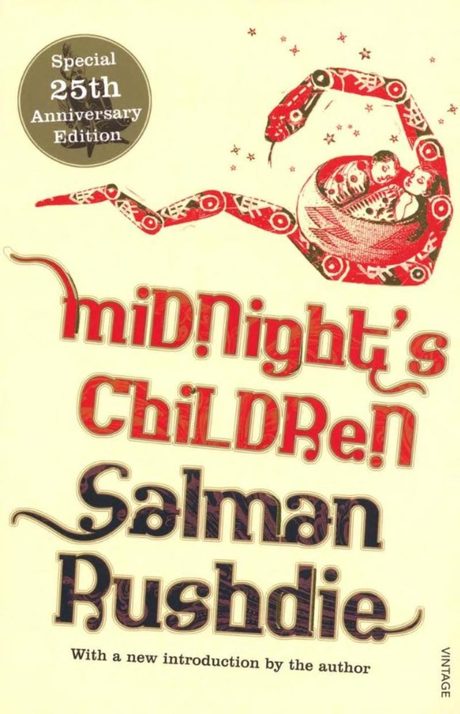
Midnight's Children
Salman Rushdie1981about 674 pages
A boy born at the stroke of Independence gets telepathy, a leaking nose, and a country that keeps happening to him.
Saleem Sinai is born in Bombay at midnight on 15 August 1947, the same minute India becomes independent, and the coincidence hands him a life that runs alongside the new country's. He also gets a telepathic link to the other children born in that hour, a nose that drips, and a family history that begins in Kashmir two generations before he exists. Saleem tells all of it out loud to Padma while working in a pickle factory, so he interrupts himself, races ahead, contradicts what he said forty pages ago, and admits when he has a date wrong. The pleasure is the crowd: six things are happening on every page.
Why it is at 1
Number one because nothing in Indian English fiction has replaced it. It won the Booker in 1981, and more usefully, every novelist who came after has borrowed something from its grammar. This is still not where I would start you. The first hundred pages are the story of Saleem's grandparents, so the payoff sits behind a wall of setup that stops a lot of readers.
Read it ifyou want the big Indian novel and have two clear weeks
Skip it ifyou want a straight plot and a narrator who stays out of the way
crowded, comic, historicalBest for: readers ready for a long bookmagical realismpartitionbombay
Heads up: the final section covers the Emergency, including forced sterilisation
Pairs with: Shame, if you want the same engine at half the length
2

Tier 1: the easiest door in
Haroun and the Sea of Stories
Salman Rushdie1990about 178 pages
A storyteller loses his gift, so his son goes up to a second moon to get it back.
Rashid Khalifa can hold any crowd with any story until the day the words stop coming. His son Haroun goes looking for the source of the supply, which turns out to be an ocean of stories on a hidden moon, currently being poisoned by somebody who wants silence. Rushdie wrote it for his own son during the first years in hiding, and you can feel that in it: a children's adventure with a mechanical hoopoe and a water genie, which is also the clearest argument for storytelling he has made anywhere. Under two hundred pages, and funny the way a good uncle is funny.
Why it is at 2
Second on quality, first on where to begin. It hands you the whole kit, the wordplay, the tales inside tales, the political anger under the fun, in a book you can finish on a Sunday. It ranks below Midnight's Children only on ambition, and as a first purchase it beats everything else here by a distance.
Read it ifyou want to test Rushdie without committing a fortnight
Skip it ifyou refuse to read anything shelved under children's fiction
playful, quick, slyBest for: first-time Rushdie readers and kidsfablestorytellingshort
Pairs with: Midnight's Children, once you know you like the voice
3

Tier 1: the one his fans defend hardest
The Moor's Last Sigh
Salman Rushdie1995about 458 pages
A Bombay family saga narrated by a man who ages at double speed and knows exactly how little time he has.
Moraes Zogoiby, called Moor, is born into a Cochin spice-trading family with Portuguese, Jewish and Christian branches all fighting one another, then moves into Bombay's art world in the shadow of his mother Aurora, a painter big enough to bully the city. His body ages twice as fast as everybody else's, which puts a clock inside the narration. The novel starts as a family comedy and turns, as Bombay turns, into something colder: a city that was proud of its mixing curdles into a city of strongmen and lists of who really belongs.
Why it is at 3
Sentence for sentence this is Rushdie at his best, and the first two hundred pages are funnier than anything in Midnight's Children. It sits third because the last section leaves India for Spain and the energy leaves with it. If the Bombay chapters had been the whole book, this would be number one and I would not have to argue about it.
Read it ifyou love family sagas and can take a narrator who shows off
Skip it ifyou want a tight plot, because the digressions here are the point
lush, angry, funnyBest for: readers who liked Midnight's Childrenbombayfamily sagaart
Heads up: communal violence in the later Bombay chapters
4
Tier 1: the short, mean one
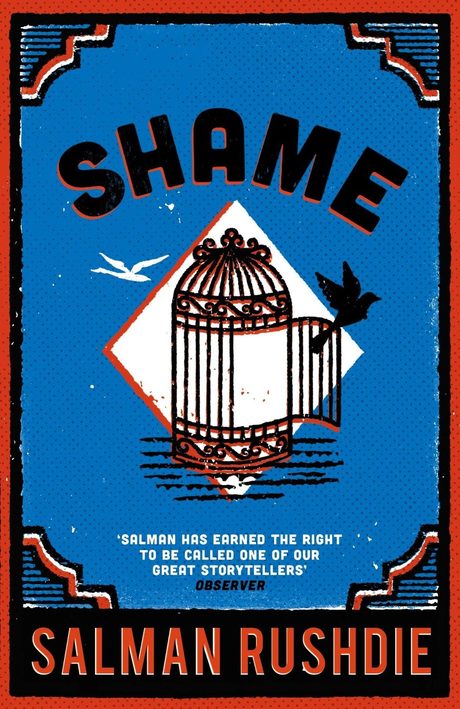
Shame
Salman Rushdie1983about 290 pages
A fable set in a country that is almost Pakistan, where shame collects inside a girl until it turns into something violent.
Omar Khayyam Shakil is born to three sisters who share one pregnancy between them and refuse to say which of them is the mother, and that is the least strange thing in this novel. The country is never called Pakistan, though Rushdie says plainly that it sits at a slight angle to the real one, and its politics run on a feud between a smooth aristocrat and a pious general. The heart of it is Sufiya Zinobia, a girl who absorbs the shame nobody else will carry. Under three hundred pages, and the comedy has teeth in it.
Why it is at 4
Fourth because it is the most controlled of his big novels: the same fireworks as Midnight's Children, half the running time, no sagging middle. It ranks under the first three only because the satire pays off best if you know Pakistan in the 1970s and 1980s, and plenty of readers arrive without that and miss half the jokes.
Read it ifyou want political satire running on a fairytale engine
Skip it ifyou need somebody to root for, because everyone here is complicit
savage, compact, fabularBest for: readers who like satire with teethsatirepakistanfable
Heads up: violence against women runs through the second half
5
Tier 2: the three books people argue about
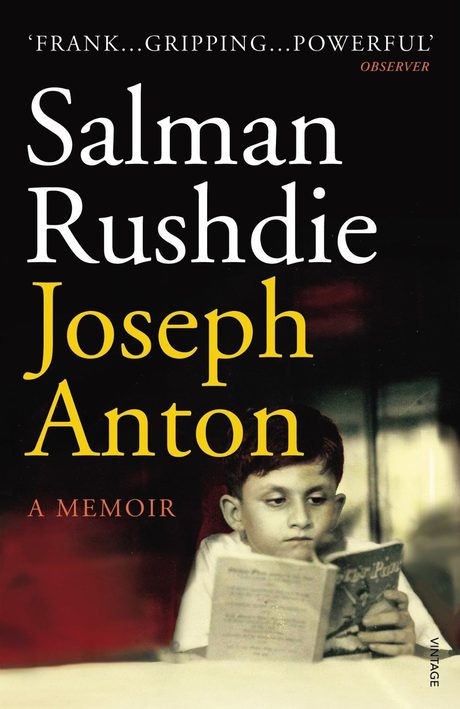
Joseph Anton
Salman Rushdie2012about 660 pages
His own account of the decade he spent living under a false name with armed police in the spare room.
In February 1989 Rushdie stopped being a novelist and became a security problem, and this is his record of what followed: safe houses, aliases, a borrowed name assembled from Joseph Conrad and Anton Chekhov, publishers who wobbled, friends who did not, marriages coming apart under the pressure. He writes it in the third person, which stops it becoming a wallow and also keeps him at arm's length from himself. Six hundred and sixty pages is long, and a stretch of grievance in the middle is the price you pay for the parts that are genuinely frightening.
Why it is at 5
Fifth, and the best non-fiction he has written. If you only ever read one book about those years, take this over any biography, because the daily texture is here: how you buy groceries when you cannot be seen, how you parent a child through a police rota. Marked down for its length and for the score-settling, which is human and still slows the book.
Read it ifyou want the story behind the headlines from the person inside it
Skip it ifyou dislike memoirs that keep score with old enemies
tense, detailed, defensiveBest for: readers who want the full recordmemoirfree speech1990s
Heads up: describes the killing of the novel's Japanese translator and attacks on others connected to the book
6
Tier 2: the three books people argue about
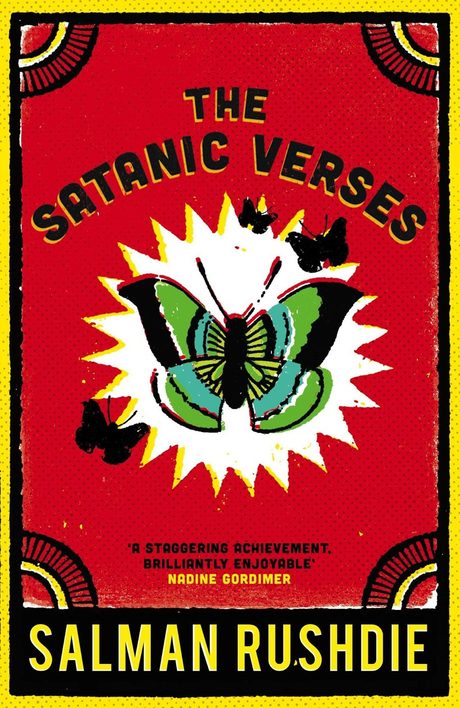
The Satanic Verses
Salman Rushdie1988about 562 pages
Two Indian actors fall out of an exploding plane and wash up in England, one with a halo and one with hooves.
Gibreel Farishta, a Bombay film star who plays gods for a living, and Saladin Chamcha, a voice actor who has made himself as English as he can manage, survive the destruction of their plane and land on a beach changed. From there the novel is about migration, what England does to the people who arrive in it, and what those people do to themselves in order to be let in. Running between those chapters are dream sequences set in a desert city called Jahilia, where a merchant becomes a prophet, and those are the pages the arguments have always been about.
Why it is at 6
Sixth, ranked on the reading rather than the noise. The Jahilia chapters and the London immigration chapters hold some of his strongest writing, and the rest is baggy enough that most readers stall somewhere in the middle. India banned the import in 1988 and the Delhi High Court set that ban aside in November 2024 after the government could not produce the original notification, so it sits on shelves here again.
Read it ifyou would rather read the actual book than argue about it
Skip it ifyou want a tight novel, or dream chapters test your patience
restless, hallucinatory, unevenBest for: patient readers with timemigrationlondon1980s
Heads up: religious controversy, and violence that followed publication
7
Tier 2: the three books people argue about
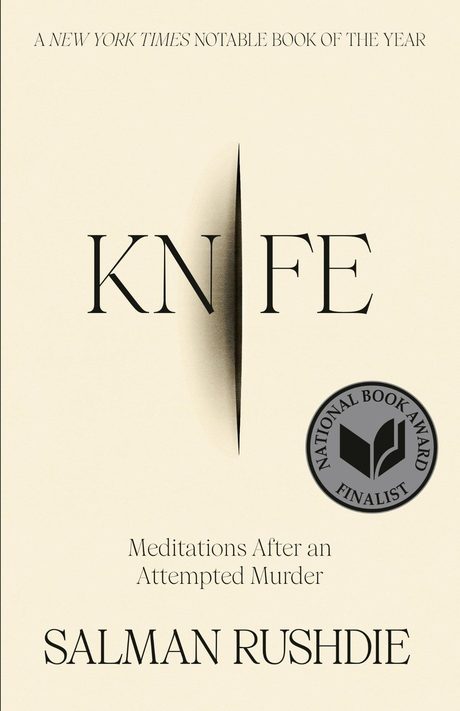
Knife
Salman Rushdie2024about 225 pages
The short, plain book he wrote after a man stabbed him on stage and he lost an eye.
In August 2022 a man ran onto a stage in western New York and stabbed Rushdie in front of an audience that had come to hear him talk about keeping writers safe. Knife covers the attack, the hospital months, the loss of his right eye, and the slow return to ordinary life with his wife, the poet Rachel Eliza Griffiths. One long section is an imagined conversation with the attacker, whom he refuses to name in the book. The prose is the plainest he has written in decades, short chapters at the pace of a man with limited energy.
Why it is at 7
Seventh, and the best thing he has published since 2015. It is honest, it is short, and the love story running underneath the violence is the part nobody expects. It sits below Joseph Anton because it is a book about one event rather than a life, and because the invented dialogue with his attacker does not always come off.
Read it ifyou want recent Rushdie with none of the ornament
Skip it ifdetailed violence and hospital description are hard for you to read
plain, raw, shortBest for: readers who want him unadornedmemoirrecovery2020s
Heads up: graphic description of a stabbing, surgery and recovery
8
Tier 3: once you already like him
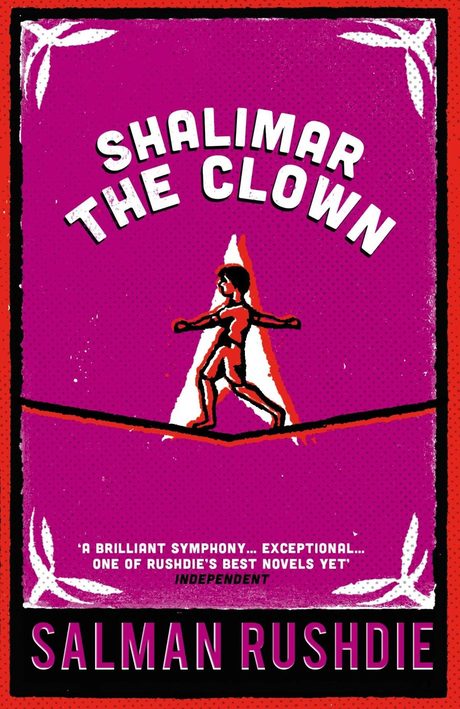
Shalimar the Clown
Salman Rushdie2005about 418 pages
A Kashmiri village performer becomes an assassin, and the novel takes three hundred pages to show you why.
The book opens in Los Angeles with the killing of a former American ambassador by his own driver, then travels back to the Kashmir both men came out of: a village of actors and cooks where a Muslim tightrope walker and a Hindu dancer marry with the whole village standing behind them. What happens to that village across the next three decades is the real subject. Rushdie writes those early Kashmir chapters with a tenderness he rarely allows himself, and the revenge plot is only the frame he hangs them on.
Why it is at 8
Eighth because half of it is as good as anything he has written and the other half is a Los Angeles thriller that keeps interrupting. If Kashmir matters to you, read it for the village chapters and put up with the rest. If it does not, there are four better books above it and you should start there.
Read it ifyou want a novel that treats Kashmir as a place, not a headline
Skip it ifyou want a clean thriller, because the plot keeps stopping for history
tender, then brutalBest for: readers interested in Kashmirkashmirrevengehistory
Heads up: massacre, torture and sexual violence in the Kashmir chapters
9

Tier 3: once you already like him
The Enchantress of Florence
Salman Rushdie2008about 370 pages
A yellow-haired stranger reaches Akbar's court claiming to be the emperor's relative through a hidden Mughal princess.
A traveller turns up at Fatehpur Sikri with a story he wants to sell to the emperor: that a forgotten Mughal princess left India, ended up in Renaissance Florence, and that he is the result. The novel moves between Akbar's court, where the emperor argues with a queen he has imagined into being and with his own doubts about God, and a Florence of soldiers and schemers where Machiavelli turns up as a minor character. It is the most beautiful surface Rushdie has produced, built on visible research, and it is also the book where the least happens.
Why it is at 9
Ninth. The prose deserves a better place on this list and the story deserves a worse one. Nothing in it pulls you forward, so you finish chapters admiring the furniture instead of wondering what comes next. Read it when you trust the writer enough to sit still for him, which is not a state a new reader is in.
Read it ifyou like historical fiction where the setting is the pleasure
Skip it ifyou need narrative drive, because this one drifts by design
ornate, slow, dreamyBest for: readers who love Mughal settingsmughalrenaissancehistorical
10
Tier 3: once you already like him
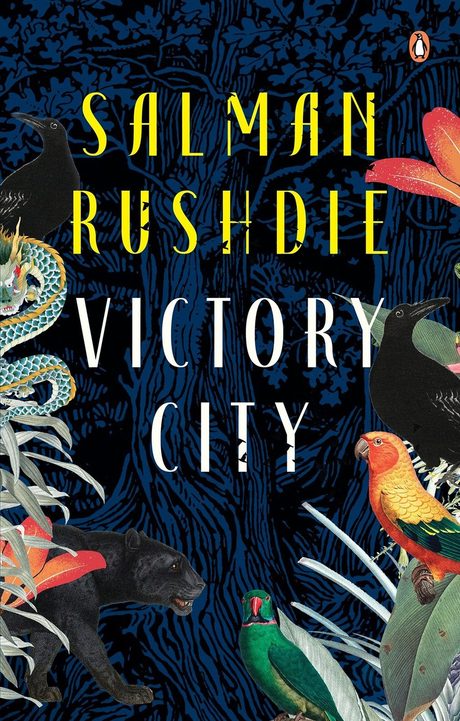
Victory City
Salman Rushdie2023about 364 pages
A woman grows a city out of a handful of seeds and then lives long enough to watch it betray everything she built it for.
Pampa Kampana receives a gift after watching her mother die, and uses it to grow an empire called Bisnaga from seeds, whispering histories into the ears of its first citizens so they wake up with pasts they never lived. She then survives more than two centuries while her city hardens into exactly the kind of place she did not want, priest-run and suspicious of women. Rushdie frames the whole novel as a modern retelling of a found Sanskrit epic, so the voice is calm and summarising, closer to myth than to his usual racket.
Why it is at 10
Tenth, and the best of the late novels by a clear margin. The sentences are simpler than his old ones, the pace holds, and the central idea, that whoever tells the story owns the city, is worth the trip. It is not higher because the middle settles into a cycle of kings arriving and leaving, and the fable voice keeps you at a polite distance from everyone in it.
Read it ifyou want recent Rushdie that actually moves
Skip it ifyou want characters you can get close to
mythic, calm, wryBest for: readers trying late Rushdiemythvijayanagarafable
11
Tier 3: once you already like him
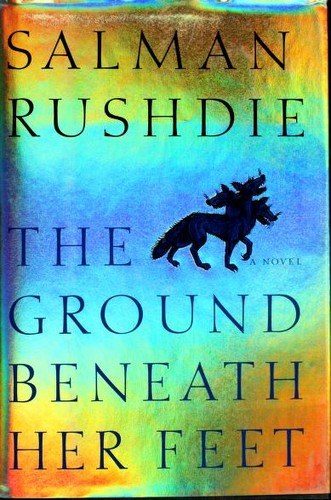
The Ground Beneath Her Feet
Salman Rushdie1999about 606 pages
Orpheus and Eurydice retold as a Bombay rock band that takes over the world while the ground keeps splitting open.
Ormus Cama and Vina Apsara meet in Bombay, make music that conquers the planet, and are watched throughout by Rai, a photographer who loves Vina and gets to hold both the camera and the story. Rushdie runs the Orpheus myth underneath, so love, loss and a journey after somebody who has gone are built into the shape, and he keeps tilting reality: earthquakes arrive on cue, history goes slightly wrong on purpose. It has his most enjoyable premise and it is one of his baggiest books, six hundred pages about a band you can never actually hear.
Why it is at 11
Eleventh. There is a superb three hundred page novel inside it about Bombay, migration and fame, wrapped in another three hundred pages of alternative history and rock trivia. U2 turned the title lyric into a song in 2000, which tells you how badly the book wants to be music and how little the page can do about that.
Read it ifyou like rock mythology and do not mind the length
Skip it ifyou lose patience with alternative-history detours
romantic, sprawling, indulgentBest for: music obsessives with staminamusicmythbombay
12
Tier 3: only if you are completing the shelf
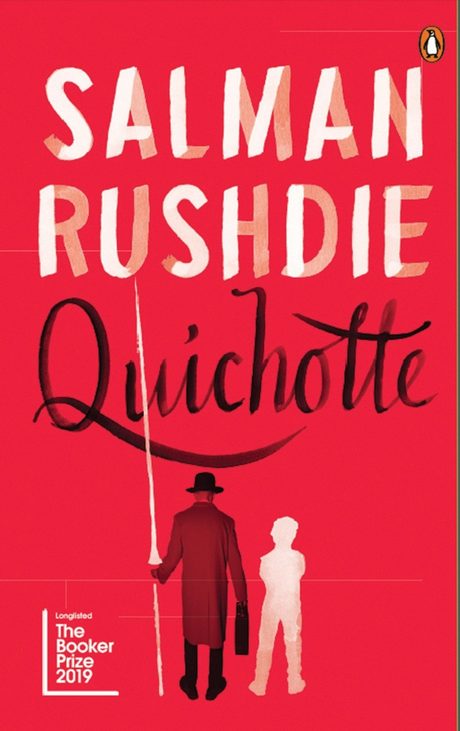
Quichotte
Salman Rushdie2019about 382 pages
A retired salesman drives across America to win a talk-show host he has only ever seen on screen, with an imaginary son riding shotgun.
Ismail Smile, a travelling pharmaceutical salesman soaked in television, decides a famous talk-show host is his destiny and sets off across America to reach her, accompanied by a son he has wished into existence. Around that sits a second story: the spy novelist writing Quichotte's tale, whose own life keeps rhyming with it. Rushdie pours in the opioid trade, racism on the highway, cable news, mastodons and the end of the world, which is a great deal for one novel to carry, and this one does not carry it.
Why it is at 12
Last, and I would not hand it to anybody as a first, second or fifth Rushdie. The Don Quixote frame is clever and the nested writer is a neat trick, but the book refers to far more than it feels, and the ending gives up on the world it built. Read it only if you want the complete shelf.
Read it ifyou are working through his whole shelf in order
Skip it ifyou want a novel that commits to its own story
hectic, clever, hollowBest for: completists onlyamericasatirelate rushdie
Worth knowing
The sixty-page rule
Rushdie novels are front-loaded with difficulty. The opening of any of them sets up three generations, four jokes you cannot get yet, and a narrator who will not sit still, so page thirty feels like homework you did not sign up for.
My rule is to give any Rushdie sixty pages before deciding. By then the machine is running and you know what you are holding. If you are still bored at sixty, stop, because he does not change gear later and that book is not the one for you. This is also why Haroun works so well as a first purchase: the entire novel is shorter than most of his setups.
Worth knowing
Reading the fatwa books without the noise
Three books here are tied to one sequence of events, and reading them in order helps. The Satanic Verses came out in 1988. India banned its import that year and other countries followed, and in February 1989 Ayatollah Khomeini issued a fatwa calling for Rushdie's death, which put him under police protection for roughly a decade.
Joseph Anton is his account of that decade, written twenty years later. Knife is what happened after a man stabbed him on a stage in New York in August 2022. Novel first, then the two memoirs, and you get to form an opinion about the fiction before the history buries it.
One practical note for Indian readers: the Delhi High Court set aside the 1988 import ban in November 2024 after the government could not produce the original notification, so buying a copy here is now an ordinary bookshop transaction.
People also ask
Questions, answered
Which Salman Rushdie book should I read first?
Haroun and the Sea of Stories, unless you have a free fortnight and real appetite, in which case go straight to Midnight's Children. Haroun is under two hundred pages, it is funny, and it contains everything people mean when they praise Rushdie: the wordplay, the stories inside stories, the anger under the jokes. If you enjoy it, Midnight's Children will not frighten you. If you do not enjoy it, you have lost one evening instead of one month.
Is Midnight's Children hard to read?
The first hundred pages are, and it gets easier after that. The difficulty is density rather than vocabulary: long sentences, a narrator who interrupts himself, and a family tree that starts two generations before he is born. Read the opening slowly, stop trying to hold every name in your head, and let the pickle factory scenes carry you along. Most people who abandon the book quit in the grandparents section, which is one chapter before it takes off.
Is The Satanic Verses banned in India?
Not any more. India banned the import of the book in 1988. In November 2024 the Delhi High Court set that ban aside after the government could not produce the original notification, and the court said it had no option but to presume no such order existed. Copies are sold in Indian bookshops again, so if you want to read it, buying one is now a normal transaction and not a smuggling operation.
What order should I read Salman Rushdie in?
Start with Haroun, then Midnight's Children, then either Shame or The Moor's Last Sigh depending on whether you want short and sharp or big and Bombay. After those four you have earned an opinion and can decide whether the fatwa books interest you as reading rather than as history. Save the late novels for the end, with Victory City first among them. Publication order does not matter here because the novels do not connect to each other.
Are Salman Rushdie's recent books worth reading?
Some of them. Victory City moves and Knife is honest and short, so both earn their place. Quichotte and The Golden House are for readers who already know the early work and want the complete shelf. The pattern in the late fiction is that references pile up while the feeling thins out, so if a recent novel is your first Rushdie, you will probably decide he is overrated, and you will be judging him on his weakest evidence.
Did Salman Rushdie win the Booker Prize?
Yes, for Midnight's Children in 1981. That is also the weakest reason to pick the book up. Prizes tell you what a jury liked in one year, and they cannot tell you whether you will enjoy four hundred pages of a narrator who argues with himself. The better reason is that the novel is genuinely funny, and that most Indian English fiction written since carries some of its DNA.
Before you go
What to read tonight
If you take one thing from this list, take the gap between rank one and rank two. Midnight's Children is the better book and Haroun is the better first book, and there is no contradiction in that.
Buy Haroun tonight and finish it this weekend. Fifty pages in, you will know whether you and Rushdie are going to get along. If you are, go to Midnight's Children with two clear weeks and the sixty-page rule in your pocket, and read Shame after it while the voice is still in your ear. If you are not, stop with my blessing, and tell people you tried the one he wrote for his son and it was not for you, which is a far more interesting thing to say than repeating what everybody already knows about the fatwa.
Keep going
Lists that pair with this one
Trending
14 Booker Prize Winners Worth Reading (And 3 That Are Homework)
Ranked by what each book gives back for the hours it takes, with the cost of entry printed on every entry.
Genre
14 Magical Realism Books Where Nobody Acts Surprised
The rule of the genre is not that impossible things happen, it is that nobody inside the book thinks they are impossible.
Indian Fiction
16 Best Books to Understand India, Ranked by What They Explain
Sixteen books, ten doors into the same country: history, caste, the mega city, the village, money, and where to start tonight.
Authors
13 Satyajit Ray Books: Feluda, Shonku and the Film Writing
Most of us met Ray on screen and never on the page, so here is the whole shelf ranked, plus a map of which volumes quietly repeat each other.
Indian Fiction
The 20 Best Indian Books in Translation, Ranked by Where to Start
Twenty books from ten Indian languages, ordered from the easiest way in to the one that will fight you, with the translator named every time.