Two friends read their first Murakami in the same month. One got Norwegian Wood and cried on a bus. The other got Kafka on the Shore, reached the part where fish fall out of the sky, put it down forever, and has been telling people ever since that Murakami is overrated nonsense. They read the same author in the same fortnight and might as well have read two different men.
That is the whole problem with starting him. There are two Murakamis, and everybody recommends both without saying which is which. One writes quiet realist novels about lost people, jazz records and love that arrived too late. The other writes books where a man climbs into a dry well to think properly, cats hold conversations, and a second moon turns up in the sky while nobody at the office mentions it.
So this list is built as two doors. Door A is the realist route, Door B is the surreal route, and three books stand in the corridor between them. Pick your door first, then take its steps in order. I have named the translator on every entry, because Alfred Birnbaum, Jay Rubin and Philip Gabriel hand you noticeably different English, and I have been straight about the criticism that follows him around, which is how he writes women.
How I picked these
- Sorted by door, not by greatness. Every entry says whether it is realist, surreal or standing between the two, and which step of that route it belongs to.
- Thirteen books, all available in English and all checked through Google Books and Open Library, so the editions and covers here are real ones.
- Years are Japanese first publication, which is why some of them look older than the paperback you will buy. The English editions often arrived years later.
- I left out Hear the Wind Sing and Pinball, 1973. They read like apprentice work and they did not get a proper international release for decades.
- One non-fiction book made it, at thirteen, because it explains how he works better than any of the novels do.
The whole list at a glance
All 13 books, in order
| # | Book | Author | Year | Vibe | Best for |
|---|
| 1 | A Wild Sheep Chase | Haruki Murakami | 1982 | deadpan, noir, strange | your first surreal Murakami |
| 2 | Norwegian Wood | Haruki Murakami | 1987 | melancholy, tender, physical | readers who want the sad one |
| 3 | Hard-Boiled Wonderland and the End of the World | Haruki Murakami | 1985 | cerebral, split, wintry | readers who like clever structure |
| 4 | The Wind-Up Bird Chronicle | Haruki Murakami | 1994 | hypnotic, sprawling, dark | readers ready for the big one |
| 5 | South of the Border, West of the Sun | Haruki Murakami | 1992 | restrained, adult, cold | readers who liked Norwegian Wood |
| 6 | Kafka on the Shore | Haruki Murakami | 2002 | dreamlike, mythic, unsettling | your fourth or fifth Murakami |
| 7 | Colorless Tsukuru Tazaki and His Years of Pilgrimage | Haruki Murakami | 2013 | lonely, plain, searching | readers who like quiet novels |
| 8 | Sputnik Sweetheart | Haruki Murakami | 1999 | yearning, spare, uncanny | testing your tolerance for weird |
| 9 | After Dark | Haruki Murakami | 2004 | nocturnal, cool, drifting | one free evening |
| 10 | Dance Dance Dance | Haruki Murakami | 1988 | funny, eighties, haunted | fans of A Wild Sheep Chase |
| 11 | Men Without Women | Haruki Murakami | 2014 | wistful, adult, restrained | sampling before you commit |
| 12 | 1Q84 | Haruki Murakami | 2009 | immersive, uneven, strange | committed fans with time |
| 13 | What I Talk About When I Talk About Running | Haruki Murakami | 2007 | plain, disciplined, honest | writers and runners |
The list
The books, ranked
1

Door B, step one
A Wild Sheep Chase
Haruki Murakamitranslated by Alfred Birnbaum1982about 305 pages
An ad man is given two months to find one specific sheep with a star on its back, or his life is over.
A bored copywriter in Tokyo prints a photograph of a meadow in a company newsletter. A man in a black suit arrives, working for somebody very powerful, and sets a deadline: find the sheep in that photograph, the one with a star-shaped mark on its back, or lose everything you have. So the narrator and his girlfriend, who has the most beautiful ears in Japan, go north to Hokkaido to look for a sheep. It is a hardboiled detective novel where the case is absurd and the sadness under it is not.
Why it is at 1
The best door into the surreal Murakami and the one I put in people's hands first. It is short, it moves like a thriller, and the strangeness arrives in a shape you already know how to read from detective fiction, so your head has somewhere to put it. Kafka on the Shore asks for far more, far sooner, which is why it sits later on this route instead of first.
Read it ifyou want the strange Murakami with a plot pulling you forward
Skip it ifyou need every mystery in a book explained by the last page
deadpan, noir, strangeBest for: your first surreal Murakamisurrealhokkaidoearly murakami
Pairs with: Dance Dance Dance, which picks up the same narrator six years later
2

Door A, step one, and the wrong first book for half of you
Norwegian Wood
Haruki Murakamitranslated by Jay Rubin1987about 340 pages
A student in 1960s Tokyo loves two women, one of whom is not well, and there is no version of this where nobody gets hurt.
Toru Watanabe hears a Beatles song on a plane and falls back into his twenties. His closest friend killed himself at seventeen, and afterwards Toru and the dead boy's girlfriend Naoko circle each other through a Tokyo of student protests and cheap rented rooms. Naoko goes away to a retreat in the hills to get better. Meanwhile Midori, loud and alive and thoroughly unimpressed by his self-pity, walks into his life at university. Nothing supernatural happens anywhere in this book. It is a straight, sad, very physical novel about being twenty while people you love slip out of reach.
Why it is at 2
Second because it is the book most people are handed first, and it is a lovely novel that misrepresents his entire career. Read it as the front door to the realist route rather than as an introduction to Murakami. If you loved this and then bounced off Kafka on the Shore, you did not fail at reading. You walked through the wrong door and nobody had told you there were two.
Read it ifyou want a sad realist novel about being twenty
Skip it ifyou came for talking cats, because there are none here
melancholy, tender, physicalBest for: readers who want the sad onerealistgrieftokyo
Heads up: suicide, depression and a psychiatric retreat run through the book, and the sex is explicit
3
Door B, step two
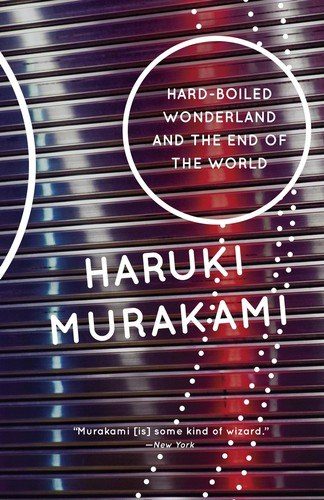
Hard-Boiled Wonderland and the End of the World
Haruki Murakamitranslated by Alfred Birnbaum1985about 420 pages
Two stories alternate chapter by chapter: a data courier in a cyberpunk Tokyo, and a man reading old dreams in a walled town.
Odd chapters follow a man who encrypts data inside his own subconscious for a living, takes a job from a scientist living under Tokyo, and finds that his head has become the site of a much larger fight. Even chapters sit in a walled town where new arrivals give up their shadow at the gate, golden beasts wander the streets, and the narrator's work is to read dreams out of old skulls in the library. You know the halves will meet. Working out how they meet is the pleasure, and the last fifty pages are the finest ending he has written.
Why it is at 3
Third because it is the most tightly built thing he has made, and the structure holds you steady while the strangeness turns serious. You get the surreal Murakami with an engineer's discipline, which is exactly what you want before attempting Wind-Up Bird. The cyberpunk half has aged into period charm rather than embarrassment.
Read it ifyou like two-track structures that lock together at the end
Skip it ifyou dislike science fiction furniture, because half of this is that
cerebral, split, wintryBest for: readers who like clever structuresurrealtwo narrativessci-fi
4
Door B, step three, the summit
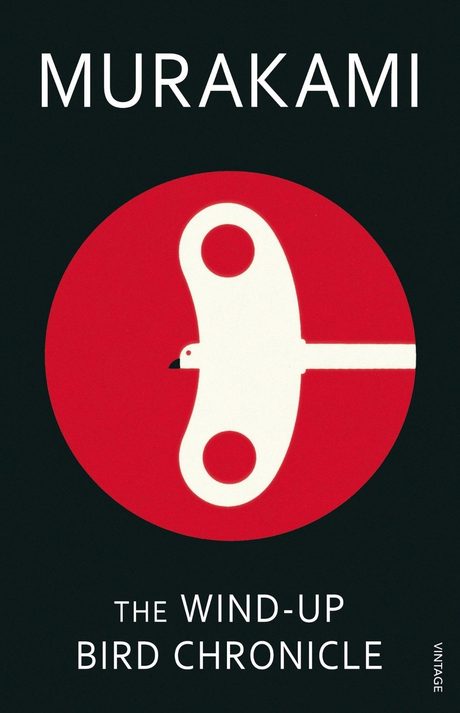
The Wind-Up Bird Chronicle
Haruki Murakamitranslated by Jay Rubin1994about 825 pages
A man loses his cat, then his wife, then his footing, and ends up at the bottom of a dry well trying to think clearly.
Toru Okada is unemployed and cooking spaghetti in a quiet suburb when the cat disappears. Then his wife does. Looking for both, he meets a teenage neighbour who treats death as a hobby, two sisters with unexplained gifts, and a veteran who tells him what he saw in Manchuria in 1939. The war chapters are the heart of it and they are as hard and clear as anything he has written. The rest circles a dry well in an empty garden, where sitting in the dark turns out to be a way of getting somewhere.
Why it is at 4
The best book he has written, and fourth here only because it makes a poor first one. It runs long, it wanders on purpose, and several threads never close, so you have to already trust him. Once you do, this is the one that stays. Worth knowing that the English edition is shorter than the Japanese original, which is unusual and occasionally comes up in arguments.
Read it ifyou are ready for a long strange book that refuses to tie off
Skip it ifyou need every thread resolved, because several simply are not
hypnotic, sprawling, darkBest for: readers ready for the big onesurrealwarmarriage
Heads up: one chapter describes wartime torture in graphic detail
5

Door A, step two
South of the Border, West of the Sun
Haruki Murakamitranslated by Philip Gabriel1992about 228 pages
A married man with a comfortable life meets the girl he loved at twelve, and quietly starts taking everything apart.
Hajime is an only child in a country full of siblings, which he has decided shaped him. He grows up, marries well, runs two jazz bars in Tokyo, has two daughters and no complaint he can say out loud. Then Shimamoto, the girl he used to listen to records with when they were twelve, walks into his bar in the rain and will not say where she has been for twenty-five years. The book is short, controlled and much crueller than its surface, and it is mostly about what a comfortable man will risk for an old feeling.
Why it is at 5
Fifth because it is the second step on the realist route and the natural next stop for anyone who loved Norwegian Wood. It is his most adult book about love, in the sense that the damage lands on people who never chose any of it. It ranks under the surreal ones for scope rather than quality. Two hundred pages and not a wasted paragraph.
Read it ifyou want a short realist novel about a man wrecking his own life
Skip it ifyou have no patience for a narrator who keeps excusing himself
restrained, adult, coldBest for: readers who liked Norwegian Woodrealistaffairjazz
6

Door B, step four, the famous wrong first book
Kafka on the Shore
Haruki Murakamitranslated by Philip Gabriel2002about 514 pages
A fifteen-year-old runs away to a private library while an old man who talks to cats travels in the opposite direction.
Kafka Tamura leaves home at fifteen to get away from a prophecy his father laid on him, and ends up living in a small private library in Takamatsu. In alternating chapters, Nakata, an old man who lost his memory and his literacy in a wartime incident and can hold conversations with cats, sets off across Japan without knowing why. Fish fall from the sky. A character shaped like a whisky mascot turns up and starts giving orders. The two stories never quite touch, and most of the questions the book raises are handed to you to carry out of it.
Why it is at 6
Sixth, and this placement is the argument of the whole list. Kafka on the Shore is the book search results push at beginners, and it is his hardest novel to enter cold, because you must accept a great deal in the first fifty pages with nothing solid under you. Read it after Wild Sheep Chase and Wind-Up Bird and it is wonderful. Read it first and it looks like nonsense delivered with confidence.
Read it ifyou enjoy dream logic and can leave questions open
Skip it ifthis would be your first Murakami, in which case go to number one
dreamlike, mythic, unsettlingBest for: your fourth or fifth Murakamisurrealrunawaymyth
Heads up: cruelty to cats in one section, and Oedipal material including sexual content involving a teenager
7
Door A, step three
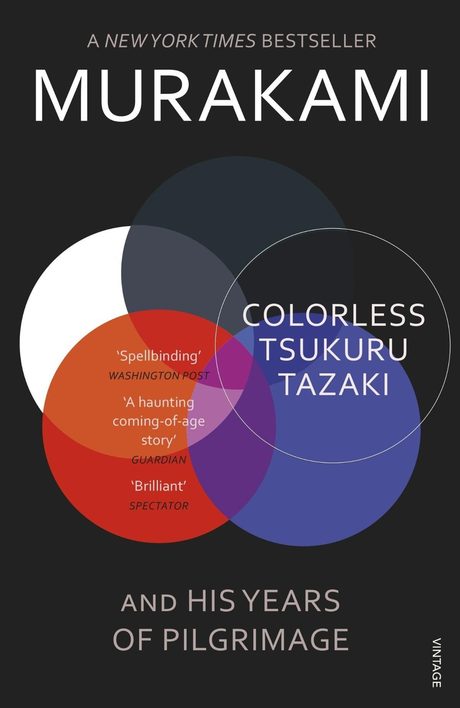
Colorless Tsukuru Tazaki and His Years of Pilgrimage
Haruki Murakamitranslated by Philip Gabriel2013about 290 pages
Four school friends cut a fifth out of the group with no explanation, and sixteen years later he finally goes to ask why.
Tsukuru Tazaki had four close friends in Nagoya, all of whom carried a colour in their surnames while he carried none. In his second year at university they told him never to contact any of them again and refused to say why. He barely survived that year. He is thirty-six now, builds railway stations for a living, and a woman he is seeing tells him plainly that he cannot love anybody properly until he goes and asks each of them what happened. So he does, one at a time, across Japan and then in Finland.
Why it is at 7
Seventh because it is the most straightforward novel of his late period and a good rest stop after the big surreal ones. Being dropped by a friend group is a specific wound that fiction mostly ignores, and he takes it seriously for three hundred pages. It is thinner than the classics and one late revelation is handled clumsily, but the loneliness in it is exact.
Read it ifyou were ever cut out of a group and never got a reason
Skip it ifyou want the full surreal machinery, because this stays grounded
lonely, plain, searchingBest for: readers who like quiet novelsrealistfriendshiplate murakami
Heads up: suicidal thoughts in the early chapters, and an allegation of rape inside the plot
8
The corridor between the doors
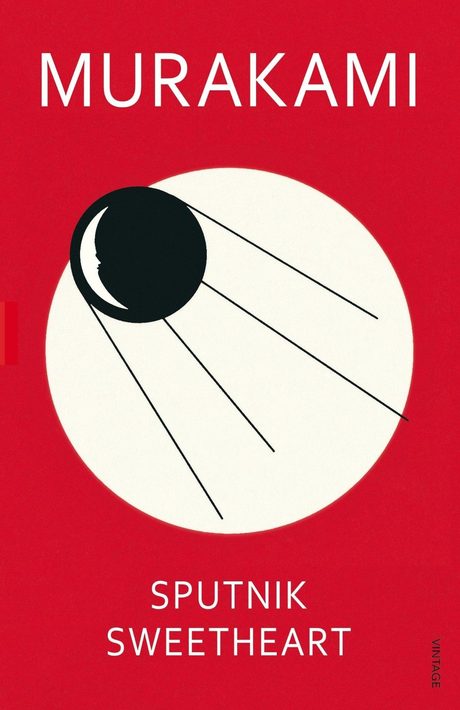
Sputnik Sweetheart
Haruki Murakamitranslated by Philip Gabriel1999about 242 pages
A young writer falls in love with an older woman, goes to a Greek island with her, and vanishes from a locked room.
Sumire wants to be a novelist and has never wanted a person, until she falls hard for Miu, a married woman seventeen years older who hires her as an assistant. K, the schoolteacher quietly in love with Sumire, tells the story from outside it and gets a phone call from Greece: Sumire has disappeared from a small island, leaving her clothes folded. Something that happened to Miu years earlier on a Ferris wheel in Switzerland explains part of it. The rest is left standing open, and the whole thing is short enough for one sitting.
Why it is at 8
Eighth because it stands exactly in the corridor between the two doors, realist for most of its length and then it steps sideways. It is the cheapest way to test whether you can live with an ending that refuses to close. It is also his clearest book about wanting somebody who is not available, which is a bigger part of his work than the cats are.
Read it ifyou want to test the surreal turn inside a short book
Skip it ifan unexplained disappearance will annoy you for weeks afterwards
yearning, spare, uncannyBest for: testing your tolerance for weirdhingeunrequitedgreece
9
The corridor between the doors
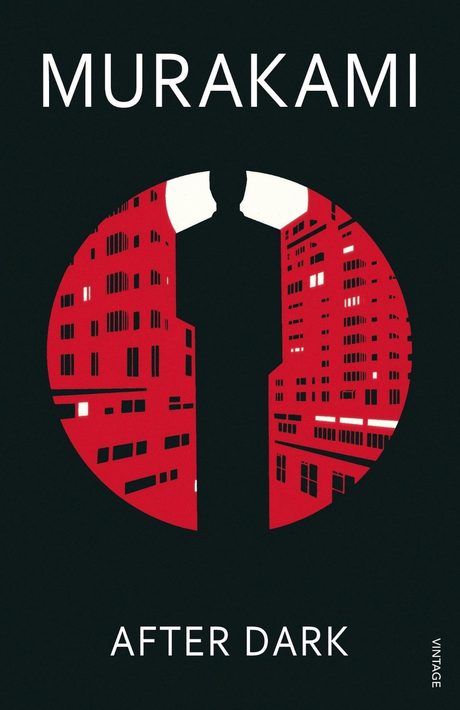
After Dark
Haruki Murakamitranslated by Jay Rubin2004about 210 pages
One night in Tokyo, from just before midnight to sunrise, watched by a narrator who behaves like a camera that cannot intervene.
Mari sits in a Denny's at midnight with a book, avoiding home. Her sister Eri has been asleep for two months, and something is watching her through a television set that is not plugged in. In between there is a trombone player, a former wrestler who now manages a love hotel, and a Chinese sex worker who has been beaten by a client. The narration is deliberately odd, a plural we that hovers overhead and admits it can only look. The book covers about seven hours and reads like a film shot in one long take.
Why it is at 9
Ninth because it is the quickest way to see what his prose can do, and the obvious pick if you have exactly one free evening. It is minor Murakami and I am not going to pretend otherwise, but the mood is unlike anything else here. Nothing gets resolved, which is more or less the point of a night that ends at sunrise.
Read it ifyou want one night of Tokyo and three hours of reading
Skip it ifyou want plot, because this is mostly mood and camera work
nocturnal, cool, driftingBest for: one free eveninghingeone nighttokyo
Heads up: an off-page assault on a sex worker and its aftermath
10
Door B, the sequel nobody mentions
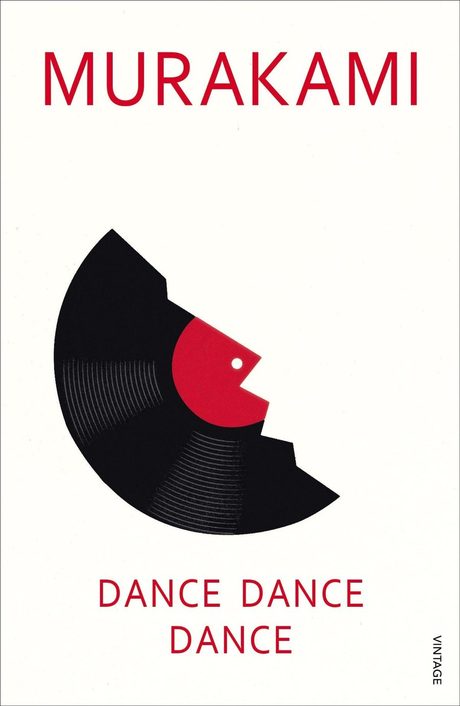
Dance Dance Dance
Haruki Murakamitranslated by Alfred Birnbaum1988about 402 pages
The narrator of A Wild Sheep Chase returns to the hotel that ruined him and finds it rebuilt, glossy and still haunted.
Our narrator writes filler for magazines and calls it shovelling cultural snow, which remains the best description of content work anybody has managed. He goes back to Sapporo looking for a woman he lost, finds the shabby Dolphin Hotel replaced by a glass tower, and discovers that one floor of it still belongs to the old building and to the Sheep Man, who tells him to keep dancing. A teenager with a difficult mother, a film-star schoolfriend and a police investigation follow. Underneath it is late-eighties Japan, money, and what money hollows out.
Why it is at 10
Tenth because it only works after A Wild Sheep Chase, so it can never be a starting point, and because it is the funniest book he has written. The middle sags and the crime plot is not really the point. Read it when you want more time with that narrator rather than when you want his best work.
Read it ifyou have read A Wild Sheep Chase and want more of that voice
Skip it ifyou have not read A Wild Sheep Chase yet, because this follows it
funny, eighties, hauntedBest for: fans of A Wild Sheep Chasesurrealsequeleighties japan
11
The sampler
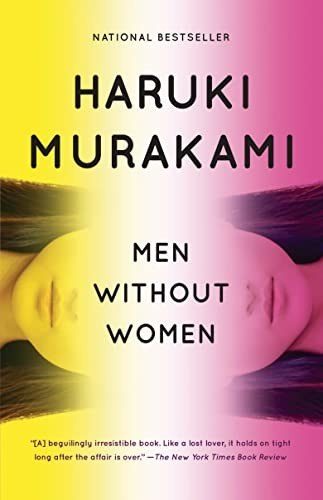
Men Without Women
Haruki Murakamitranslated by Philip Gabriel and Ted Goossen2014
Seven stories about men who have lost a woman and are left holding the shape she used to fill.
An ageing stage actor hires a young woman as his driver and slowly tells her about his dead wife and the man she slept with. A plastic surgeon with a carefully arranged bachelor life comes apart in a way he cannot explain to himself. A bartender listens to a friend confess about a woman they both knew. Seven stories, sharing a theme rather than a world, all circling men who have been left. The first of them was later filmed as Drive My Car. Two translators split the collection and you can feel the handover if you look for it.
Why it is at 11
Eleventh because a story collection is the safest way to sample a writer and the worst way to judge one. If you are unsure about committing three hundred pages, read two of these and you will know. It also shows the criticism about his women in miniature, since nearly every woman in the book exists as something that happened to a man.
Read it ifyou want to sample him before committing to a novel
Skip it ifyou want a novel, because these are seven separate pieces
wistful, adult, restrainedBest for: sampling before you commitstorieslate murakamiloss
12
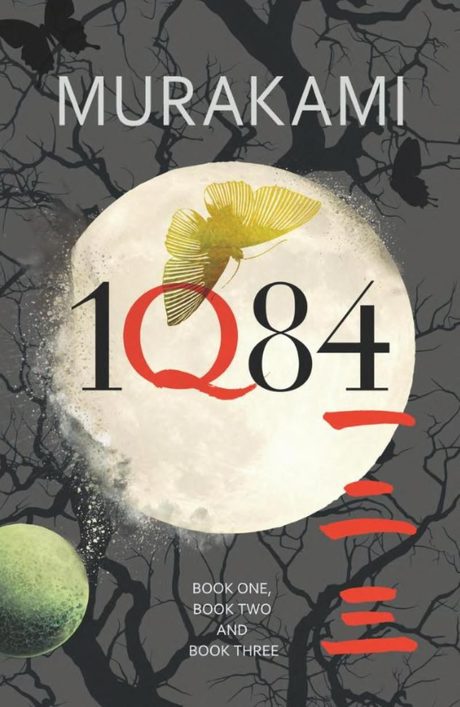
The long one
1Q84
Haruki Murakamitranslated by Jay Rubin and Philip Gabriel2009about 948 pages
A woman climbs down an emergency stairway off a Tokyo expressway and arrives in a year that is almost 1984, with two moons in it.
Aomame is a fitness instructor with a second job nobody should have. Tengo teaches maths and is quietly rewriting a strange manuscript by a seventeen-year-old girl for a publisher's scam. Their chapters alternate, they have not spoken since they were ten, and the world they are both standing in has acquired a second moon that only some people can see. Behind all of it sit a religious cult, a set of beings called the Little People, and a love story stretched over roughly a thousand pages that takes its own sweet time getting anywhere.
Why it is at 12
Twelfth on the route rather than on merit, because length changes the question being asked. A thousand pages is a month of your life, and the third book repeats a good deal of what the first two set up. If you already love him, it is a world you can live inside for weeks. If you are still deciding, this is the worst place to decide.
Read it ifyou already love him and want a month inside one book
Skip it ifyou are still deciding whether this writer is for you
immersive, uneven, strangeBest for: committed fans with timesurrealcultdoorstopper
Heads up: sexual violence, a cult, and sexual content involving a teenage character
13
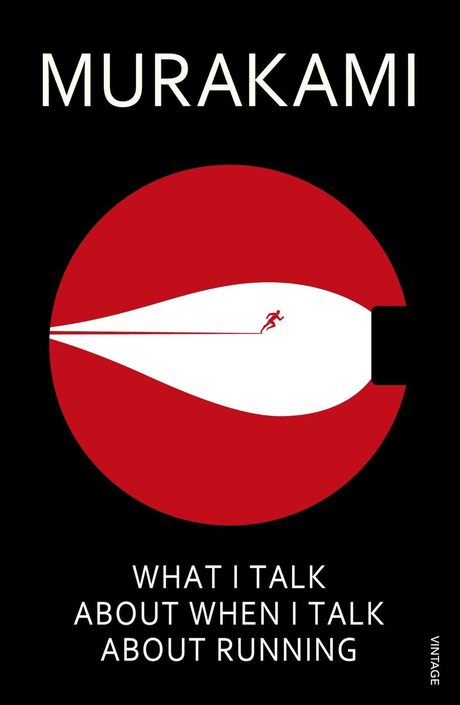
The non-fiction one
What I Talk About When I Talk About Running
Haruki Murakamitranslated by Philip Gabriel2007about 194 pages
A novelist explains that running a lot every day and writing a lot every day are the same job.
Murakami ran a jazz bar in Tokyo, sold it in his early thirties to write full time, took up running at about the same point, and has done both ever since. This is a short, plain book about that: marathon training, an ultramarathon that nearly finished him, and what he thinks about while running, which is largely nothing. Underneath sits the clearest description of professional discipline I have read from any writer. He is honest about ageing, about his times getting slower, and about talent being worth very little without the boring part.
Why it is at 13
Thirteenth because it is not fiction and nobody should start here, and yet it explains the novels better than the novels do. Everything readers find odd about him, the fixed hours, the cooking, the ironing, the refusal to be interesting in public, shows up here as a working method. It is also the only book on this list where he sounds like an ordinary man instead of a narrator.
Read it ifyou want a writer's working method in plain language
Skip it ifyou came for fiction, because there is none of it here
plain, disciplined, honestBest for: writers and runnersnonfictionmemoirdiscipline
Worth knowing
Pick your door before you pick a book
Door A is the realist Murakami. Nothing supernatural happens. People fall for the wrong person, listen to records, cook, remember, and lose each other slowly. Norwegian Wood, South of the Border and Colorless Tsukuru live behind this door, and if that is what you want, those three in that order will not let you down.
Door B is the surreal Murakami, which is most of his career. A man goes down a well, a sheep issues orders, a second moon appears, an old man negotiates with cats. The rules are never explained and several questions are never answered, and that is deliberate rather than sloppy. A Wild Sheep Chase, then Hard-Boiled Wonderland, then The Wind-Up Bird Chronicle, then Kafka on the Shore is the route.
The test is simple. If an unexplained event in a story makes you lean forward, you are Door B. If it makes you feel cheated, you are Door A, and there is nothing wrong with that. Plenty of readers take four realist Murakamis, enjoy every one, and never touch the rest of the shelf.
Worth knowing
A note on the translators, and on the years
Three men have done most of Murakami in English and they do not sound alike. Alfred Birnbaum, who handled the early books, reads loose and slangy and quick, and some of that eighties looseness belongs to him. Jay Rubin is precise and a degree cooler. Philip Gabriel is plainer and warmer. That is my impression as a reader rather than a scholarly verdict, but if one Murakami novel feels different in the mouth from the last, check the translator credit before you blame the author.
The year on each entry is the Japanese first publication, which is why the numbers look older than the paperback in your hand. English editions often arrived years later. The Wind-Up Bird Chronicle came out in Japan across 1994 and 1995 and in English in 1997, and the English text is shorter than the Japanese, which is useful to know before somebody describes a scene you never read.
Worth knowing
The criticism, and one honest note
The recurring complaint about Murakami is how he writes women, and it is a fair complaint. Women in these novels are often mysterious, sexually available and positioned to move a passive male narrator forward, and they have a habit of disappearing so that he can go looking for them. The novelist Mieko Kawakami put this to him directly in a long published interview, and he engaged with it rather than sliding away. Knowing it in advance does not ruin the books. It stops the tenth vanishing girlfriend feeling like an accident.
One more thing, since Norwegian Wood, Colorless Tsukuru and 1Q84 all sit close to suicide, depression and assault. These are novels about those things and not treatment for them, and a book is a poor substitute for a doctor or a helpline if you are in the middle of it. Read them when you have the room for them.
People also ask
Questions, answered
Which Murakami book should I read first?
A Wild Sheep Chase if you want the strange Murakami, and Norwegian Wood if you want the realist one. Wild Sheep Chase is short, it moves like a detective novel, and the weirdness arrives in a shape you already know how to read. Norwegian Wood has no supernatural element at all, which makes it a poor introduction to his career and a very good novel on its own terms. Choose by which of those two you actually want tonight.
Is Kafka on the Shore a good place to start?
For most readers, no, even though it is the title search results recommend most often. It asks you to accept fish falling from the sky, an old man who talks to cats, and a prophecy, all inside fifty pages, with no realist ground under your feet. People who begin there frequently decide he is nonsense and stop. Read A Wild Sheep Chase and The Wind-Up Bird Chronicle first and Kafka turns into one of his best.
Do I need to read Murakami in order?
Almost never. The novels stand alone, so you can take them in whatever order suits you. The one real exception is Dance Dance Dance, which follows the narrator of A Wild Sheep Chase and loses most of its point without it. Some readers also treat Hear the Wind Sing and Pinball, 1973 as a trilogy with A Wild Sheep Chase, and you can skip both of those without missing anything that matters.
Which Murakami translation is best?
There is rarely a choice to make, since most of his books exist in a single authorised English version. What changes is who did the work. Alfred Birnbaum handled the early novels and reads loose and fast, Jay Rubin is more precise, and Philip Gabriel is plainer and warmer. If you loved one book and found the next one flat, look at the translator credit before deciding the writer went off.
Why do people say Murakami writes women badly?
Because his female characters are frequently mysterious, sexually available and built to move a passive male narrator forward, and because so many of them vanish and leave him searching. The criticism has been made carefully and at length, including by the novelist Mieko Kawakami in a published interview with him. You can hold that criticism and still find the books worth your time. Going in aware of it beats being ambushed by it in your fourth novel.
What is the shortest Murakami book?
Of the ones here, After Dark and Sputnik Sweetheart are the shortest novels and either can be finished in an evening. What I Talk About When I Talk About Running is short as well, though it is non-fiction. If you want a real test of whether he suits you without giving up a week, take After Dark for the mood or Sputnik Sweetheart for the strange turn near the end.
Before you go
What to read tonight
If you have twenty minutes and no idea which door is yours, read the first ten pages of A Wild Sheep Chase and the first ten of Norwegian Wood, standing in a bookshop if you have to. One of them will feel like a room you want to stay in. Follow that one and take its steps in the order above.
If both feel fine, you are lucky, and the route is Wild Sheep Chase, then Hard-Boiled Wonderland, then The Wind-Up Bird Chronicle, then Kafka on the Shore, with Norwegian Wood dropped in whenever you need to come back to earth. And if you reach the middle of Wind-Up Bird and feel lost somewhere in the war chapters, keep going. That feeling is the book working, not you failing at it.
Keep going
Lists that pair with this one
Genre
14 Magical Realism Books Where Nobody Acts Surprised
The rule of the genre is not that impossible things happen, it is that nobody inside the book thinks they are impossible.
Mood & Life
14 Books About Loneliness, Sorted by Where It Actually Lives
Alone in a crowd is a different condition from alone in a room, and these fourteen books know the difference.
Mood & Life
19 Best Coming of Age Novels, and the Right Age to Read Each
Every one of these has a window when it lands hardest, so I marked all nineteen and ranked them by how long that window stays open.
Genre
15 Literary Fiction Books for Beginners, Easiest First
Every book here asks one new thing of you that the book before it did not, so you climb instead of drowning.
Mood & Life
20 Best Books to Read in Your 20s, Grouped by the Problem
Four problems run this decade, work, love, money and meaning, so the list is sorted that way instead of pretending one book fixes all four.