At a cousin's wedding last winter, a man I had known for ten minutes explained to me that holding a warm cup of tea makes you judge a stranger as a warmer person. He had read it somewhere. He was extremely sure about it. That particular finding has spent the last decade failing to show up when other labs run it properly at scale, and nobody had told him, because the fun version travels and the correction does not.
This is the problem with starting psychology through bestsellers. Many of the famous studies you have absorbed through Instagram carousels and corporate slide decks came out of small experiments that later teams could not reproduce. Psychologists call it the replication crisis and it has been running since roughly 2011. Any beginner list that hands you fifteen books without mentioning it is selling you confidence you have not earned.
So this list does two things at once. It ranks fifteen books best first for somebody with no background, and for each one it names the single claim that book pushed into the world, then says where that claim stands now. Some of it held up completely, some of it got weaker, and one author had a paper retracted. That is not a reason to avoid these books. It is a reason to read them the way a good reader reads anything, which is with one eyebrow slightly raised.
How I picked these
- Books about how minds work, not books about fixing your morning routine. Habit and productivity titles belong on the self help list, not this one.
- I ranked by what a beginner can trust and enjoy on day one, which is why the neurology and clinical books sit high and the clever lab studies sit lower.
- Every book had to rest on at least one findable claim whose current status I could check, so nothing here is vague enough to be unfalsifiable.
- I kept two badly damaged bestsellers instead of cutting them, because watching a famous idea get oversold teaches a beginner more than never meeting it would.
- All fifteen verified through Google Books and Open Library with real covers and real editions, no print on demand ghosts.
The whole list at a glance
All 15 books, in order
| # | Book | Author | Year | Vibe | Best for |
|---|
| 1 | The Man Who Mistook His Wife for a Hat | Oliver Sacks | 1985 | curious, humane, quietly strange | absolute beginners |
| 2 | Thinking, Fast and Slow | Daniel Kahneman | 2011 | dense, precise, humbling | readers who like being argued with |
| 3 | Mistakes Were Made (But Not by Me) | Carol Tavris and Elliot Aronson | 2007 | sharp, unsparing, readable | anyone who apologises badly |
| 4 | Feeling Good | David D. Burns | 1980 | practical, dated, effective | readers who will do the exercises |
| 5 | Influence | Robert B. Cialdini | 1984 | practical, streetwise, quotable | anyone who negotiates |
| 6 | Behave | Robert M. Sapolsky | 2017 | vast, funny, exhausting | readers who finish long books |
| 7 | Quiet | Susan Cain | 2012 | warm, argumentative, validating | quiet people in loud jobs |
| 8 | An Unquiet Mind | Kay Redfield Jamison | 1995 | lucid, intense, honest | readers who want lived experience |
| 9 | Attached | Amir Levine and Rachel Heller | 2010 | practical, popular, simplified | people decoding their dating patterns |
| 10 | The Righteous Mind | Jonathan Haidt | 2012 | provocative, generous, contested | people tired of arguing online |
| 11 | Stumbling on Happiness | Daniel Gilbert | 2006 | funny, wry, unsettling | people at a crossroads |
| 12 | The Body Keeps the Score | Bessel van der Kolk | 2014 | urgent, compassionate, overclaimed | readers who will also read critics |
| 13 | Predictably Irrational | Dan Ariely | 2008 | chatty, clever, compromised | readers who want the history |
| 14 | Grit | Angela Duckworth | 2016 | warm, motivating, oversold | parents, coaches and teachers |
| 15 | Mindset | Carol S. Dweck | 2006 | simple, useful, oversold | parents and teachers |
The list
The books, ranked
1

Status: holds up. Case histories, not lab statistics.
The Man Who Mistook His Wife for a Hat
Oliver Sacks1985about 274 pages
Twenty four neurology patients whose brains failed in very specific ways, written up by a doctor who sees the person before the condition.
Sacks was a neurologist in New York and this is a collection of his short case histories. A music teacher loses the ability to recognise objects and reaches for his wife's head thinking it is his hat. A sailor wakes every morning believing it is 1945. A woman loses the internal sense that tells her where her own limbs are. Each story runs a few pages. You end up learning how a working brain is assembled by watching what happens when one component drops out, and Sacks writes about these people with an affection that most science writing never bothers with.
Why it is at 1
First because it is the firmest ground on the list. A case history cannot fail to replicate the way a clever priming experiment can, so a beginner starts on something that will not be pulled out from under them later. The claim it planted, that identity sits in specific circuits and can be edited by damage to them, has only got stronger since 1985.
Read it ifyou want the brain explained through people rather than percentages
Skip it ifreading about people living with severe illness is not something you can sit with now
curious, humane, quietly strangeBest for: absolute beginnersneurologycase studiesclassic
Heads up: detailed accounts of neurological illness and disability
Pairs with: Behave, if you then want the biology running underneath the anecdotes
2
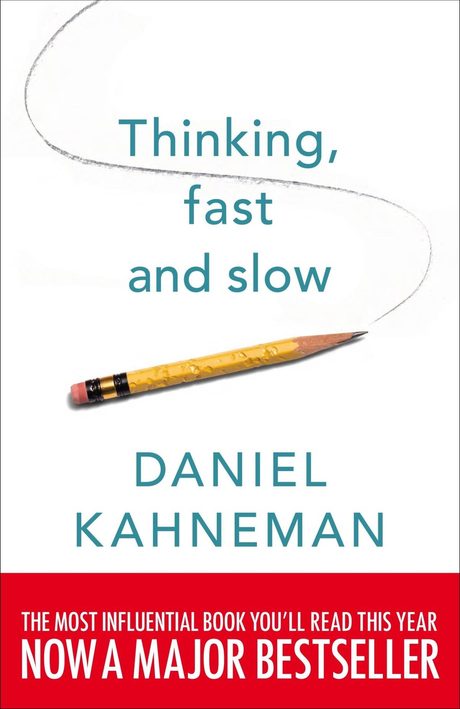
Status: mixed. The author himself flagged one chapter.
Thinking, Fast and Slow
Daniel Kahneman2011about 611 pages
The two speed model of the mind, from the psychologist who spent fifty years cataloguing exactly how badly humans judge things.
Kahneman splits thinking into a fast automatic system that jumps to answers and a slow effortful one that does arithmetic and doubts itself. Most of the book tours the errors that follow. Anchoring, where a number you just saw drags your estimate towards it. Loss aversion, where losing five hundred rupees stings more than winning it pleases. The way you remember a holiday by its best moment and its ending rather than its length. It is long, it is dense in places, and it repays a slow read with a permanent upgrade to how you watch yourself decide things.
Why it is at 2
Second because the core work on judgment under uncertainty is some of the most tested material in the field, and because Kahneman did the honest thing. In 2017 he replied in public that he had placed too much faith in underpowered priming studies, which is the chapter on the associative machine. Read that section as history and the rest as the working manual it still is.
Read it ifyou want to catch your own reasoning in the act of cheating
Skip it ifyou want short chapters and quick wins, because this book takes its time
dense, precise, humblingBest for: readers who like being argued withdecision makingbiaseconomics
3

Status: holds up. Dissonance is one of the most tested ideas in the field.
Mistakes Were Made (But Not by Me)
Carol Tavris and Elliot Aronson2007about 416 pages
Why nobody ever casts themselves as the villain, and how small self justifications grow into ruined marriages and wrongful convictions.
Tavris and Aronson take one old idea, cognitive dissonance, and follow it everywhere. The idea is simple. Holding a good opinion of yourself alongside evidence that you did something bad is uncomfortable, so the mind quietly rewrites the evidence instead of the self image. Then they show what that costs. Prosecutors who cannot admit they jailed the wrong man. Therapists who keep using a discredited method. Couples where each person remembers a fight in which they alone behaved reasonably. It reads like a detective story where the culprit is a mechanism sitting inside your own head.
Why it is at 3
Third because it is the most useful book here for your actual life, and because dissonance has survived sixty years of re-testing in a way that most flashy effects have not. It ranks below Kahneman only because it works one idea rather than mapping the whole territory. Fair warning, you will recognise yourself in chapter two and it will not be a pleasant morning.
Read it ifyou have ever been in an argument where both people were certain
Skip it ifyou want tidy advice at the end of each chapter, because this one only diagnoses
sharp, unsparing, readableBest for: anyone who apologises badlycognitive dissonanceself justificationsocial psychology
4
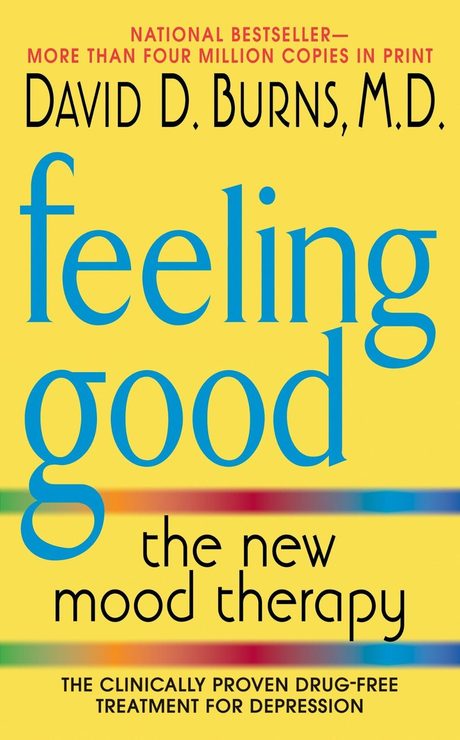
Status: holds up. CBT is among the best tested therapies there is.
Feeling Good
David D. Burns1980about 738 pages
The workbook that turned cognitive therapy into something you can practise with a pen, still handed out by therapists forty years on.
Burns takes the central move of cognitive therapy, which is catching a thought and testing it rather than believing it, and turns it into exercises. You learn to spot the standard distortions: all or nothing thinking, mind reading, catastrophising, the should statements that make an ordinary Tuesday feel like a verdict. Then you write them down in columns and argue with them on paper. The prose is dated and the tone is relentlessly upbeat, which some readers find grating. The method underneath it is the real thing, and it is boring in the way effective things usually are.
Why it is at 4
Fourth because it is the one book here that might change a week of your life rather than a dinner conversation. Cognitive behavioural therapy has been tested more heavily than almost any other psychological treatment. A book is not treatment, and reading is no substitute for seeing a professional if you are in real difficulty, but as a first tool this is honest work.
Read it ifyour own thoughts talk to you like a hostile boss
Skip it ifcheerful American self help tone makes you close a book
practical, dated, effectiveBest for: readers who will do the exercisescbtdepressionworkbook
Heads up: depression and suicidal thinking are discussed throughout; this is a self help book, not treatment
5
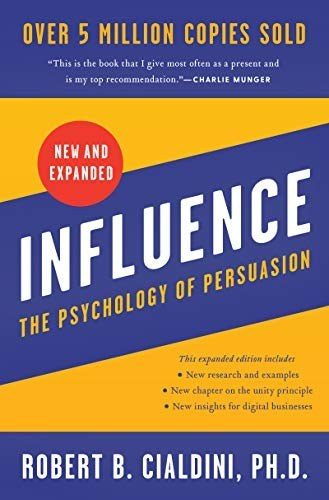
Status: mixed. The six principles are sturdier than the stories around them.
Influence
Robert B. Cialdini1984about 608 pages
The six levers people pull to make you say yes, documented by a professor who went undercover selling cars and encyclopedias.
Cialdini wanted to know why he kept buying things he did not need, so he spent three years training inside sales operations to watch professionals work. What he came back with is a short list: reciprocity, commitment and consistency, social proof, liking, authority, scarcity. Each gets a chapter of examples from car showrooms, cults, restaurant tipping and charity mailers, plus a section on how to refuse. Once you have read it you cannot unsee the free sample at the supermarket or the countdown timer on a booking site, and rishta season conversations start to look like structured negotiations.
Why it is at 5
Fifth because it is the most immediately usable book here and the one most often used against you. The six principles have held up broadly, though several individual studies from that era are exactly the size and vintage that struggled in later re-tests. Treat the framework as solid and the anecdotes as illustration rather than proof, and you get the value without the overreach.
Read it ifyou sell, buy, negotiate or get talked into things
Skip it ifyou want pure science with no business school flavour
practical, streetwise, quotableBest for: anyone who negotiatespersuasionmarketingsocial proof
6
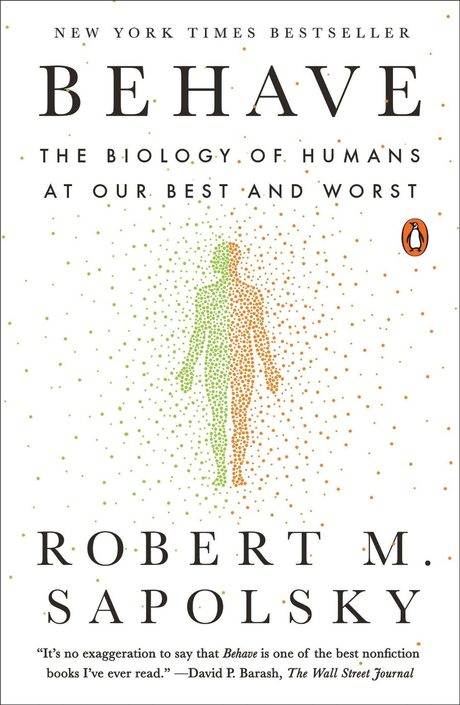
Status: holds up, broadly. Biology ages better than lab priming.
Behave
Robert M. Sapolsky2017about 801 pages
One question, why did that person just do that, answered backwards from one second before all the way to evolution, across seven hundred pages.
Sapolsky takes a single act of human behaviour and asks what caused it, then keeps rewinding the clock. One second earlier the answer is neurons, minutes earlier it is hormones, days earlier it is the brain rewiring itself, years earlier it is childhood and adolescence, and further back still it is culture, ecology and evolution. By stacking those layers he shows why any single explanation of aggression or kindness is always a lie of omission. He is also very funny in the footnotes, which is the only reason a book this heavy is readable on a train.
Why it is at 6
Sixth on a beginner list because it is genuinely long and the first hundred pages are neuroscience homework. Stay with it and you get the most complete picture of human behaviour available in one volume. Hormones, brain biology and primate research have weathered the last decade far better than social priming did, so the ground under this one is firm.
Read it ifyou want the full stack answer and you have three weeks
Skip it iflong books defeat you, because this one is a proper commitment
vast, funny, exhaustingBest for: readers who finish long booksneurosciencebiologybehaviour
7
Status: argument, not finding. Read it as a case.
Quiet
Susan Cain2012about 362 pages
A case that Western workplaces are built for talkers, and that the quiet third of the room is being systematically wasted.
Cain argues that somewhere in the twentieth century we swapped a culture of character for a culture of personality, and built schools and offices around whoever speaks first. She walks through research on temperament, high reactivity in infants, the finding that group brainstorming often produces worse ideas than the same people working alone, and the daily cost of performing extroversion. Much of the book is reporting rather than experiment. The chapter on open plan offices and forced collaboration has aged into something close to prophecy for anyone who has worked in an Indian startup.
Why it is at 7
Seventh because it is the most personally useful book here for a lot of readers and the least experimental. Introversion as a temperament is well established. The larger cultural claims are Cain's argument, backed by studies of varying strength, and she is clearer about which is which than her imitators are. Read it for the frame rather than the citations.
Read it ifyou dread the group activity portion of every training programme
Skip it ifyou want hard experimental evidence rather than a well argued case
warm, argumentative, validatingBest for: quiet people in loud jobspersonalityintroversionwork
8
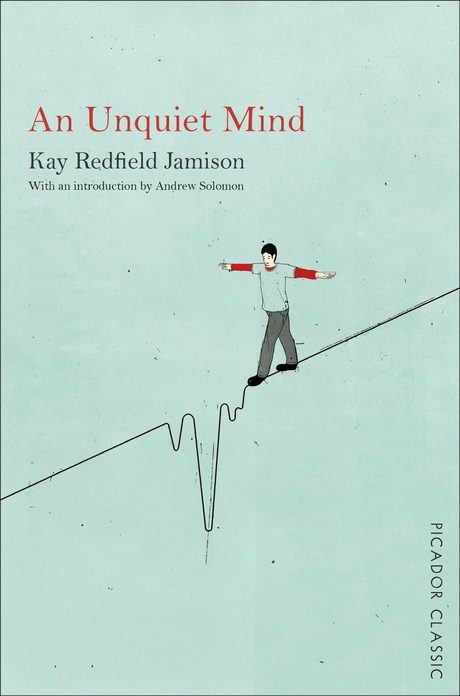
Status: testimony, and the rarest kind of it.
An Unquiet Mind
Kay Redfield Jamison1995about 257 pages
A clinical psychologist who studies manic depressive illness writes about having it, including the years she refused to take her medication.
Jamison is a professor of psychiatry whose research subject is bipolar disorder, and she has lived with it since she was seventeen. The memoir moves between the two positions. There are the seductive early highs where the mind runs faster than the world, the crashes that follow, a suicide attempt, and the long negotiation with lithium and with her own resistance to admitting she needed it. Because she knows the science she can tell you what was happening in her brain while also telling you what it felt like, and that double vision is what makes the book unlike any other account of mental illness.
Why it is at 8
Eighth because it is a different kind of knowledge from everything above it. Nothing in it needs to replicate. What it gives a beginner is the thing textbooks cannot, the inside of a diagnosis narrated by somebody professionally qualified to explain it. It is also short enough to finish in one long evening, and the best written book here after Sacks.
Read it ifyou want to understand bipolar disorder from inside and outside at once
Skip it ifaccounts of suicidal crisis are not something you can read right now
lucid, intense, honestBest for: readers who want lived experiencememoirbipolarpsychiatry
Heads up: a suicide attempt and severe depressive episodes are described in detail
9
Status: mixed. The research is real, the three box quiz is a simplification.
Attached
Amir Levine and Rachel Heller2010about 305 pages
Adult attachment styles explained well enough that you will have diagnosed your last three relationships before page ninety.
Levine and Heller take attachment theory, which began with research on infants and caregivers, and apply it to adult romance. The frame is three styles: anxious, avoidant and secure. Anxious people need reassurance and read silence as danger. Avoidant people need distance and read closeness as a trap. Put those two together and you get a loop that feels like passion and is mostly distress. The book adds a questionnaire, a lot of couple vignettes, and specific scripts for saying what you need. It is the least academic book here and the one most likely to get passed around a friend group.
Why it is at 9
Ninth because the underlying research on attachment is solid and the packaging is not. Real attachment measures run on continuous scales rather than three neat boxes, and a person's style shifts with the relationship and over time. Treat the quiz as a conversation starter, not a diagnosis. Used that way it explains more about ordinary dating misery than anything else at this price.
Read it ifyou keep having the same fight with different people
Skip it ifpersonality quizzes and self diagnosis frameworks put you off
practical, popular, simplifiedBest for: people decoding their dating patternsattachmentrelationshipspop psychology
10
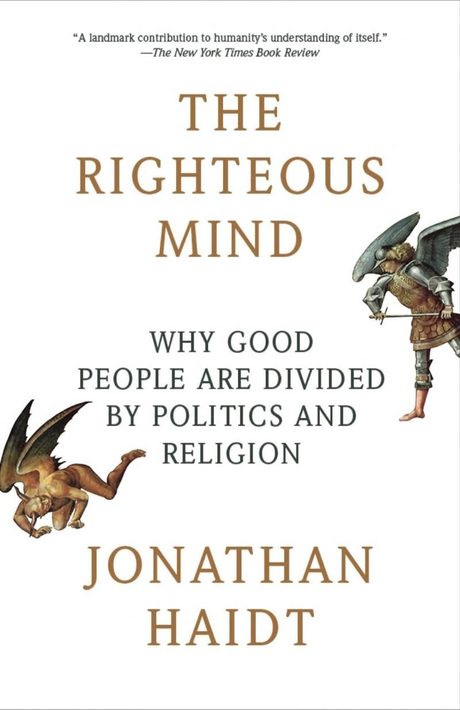
Status: argument with data attached. The foundations are debated.
The Righteous Mind
Jonathan Haidt2012
Why the other side is not stupid or evil, built on the finding that we judge first and reason afterwards.
Haidt's central image is a small rider on a large elephant. The elephant is intuition and it moves first. The rider is reasoning and its main job is inventing justifications for wherever the elephant was already headed. From there he argues that people across politics and religion run on different moral flavours, and that some groups use fewer of them, which is why each side keeps finding the other incomprehensible. The last third, on how groups bind people together and blind them at the same time, explains more about Indian political WhatsApp than any commentary I have read.
Why it is at 10
Tenth because the elephant and rider idea is well supported and genuinely changes how you argue, while the six moral foundations are a proposed framework that other researchers dispute rather than a settled result. Haidt says as much himself, though his fans rarely repeat that part. Read it to become less certain about people who vote differently, not to win the next argument.
Read it ifyou cannot understand how your own family votes the way it does
Skip it ifyou want your existing politics confirmed, because this will annoy you
provocative, generous, contestedBest for: people tired of arguing onlinemoral psychologypoliticsintuition
11
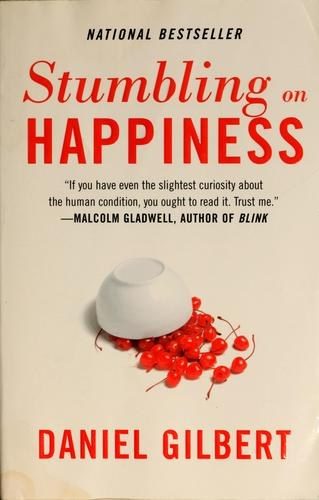
Status: mixed. The main finding is sturdy, some supporting studies are not.
Stumbling on Happiness
Daniel Gilbert2006about 277 pages
You are terrible at predicting what will make you happy, and this is the funniest available explanation of why that happens.
Gilbert's subject is imagination, specifically the fact that the future you picture is a cheap reconstruction assembled from bits of the past with the boring parts left out. So you overestimate how good the promotion will feel, how long the breakup will hurt, how much a bigger flat will change your mornings. Your mind then quietly adjusts to whatever actually happens and you forget you ever predicted otherwise. Gilbert writes like a stand up comic who read too much, which makes a book about failures of forecasting into oddly cheerful company.
Why it is at 11
Eleventh because affective forecasting, the core idea, has held up and matters enormously for the decisions people in their twenties are busy making. Some individual studies he cites come from the vulnerable era and a few have wobbled since. The argument survives them, and the sentences are the best in this half of the list.
Read it ifyou are about to make a big decision for happiness reasons
Skip it ifyou want practical steps, because this book only removes illusions
funny, wry, unsettlingBest for: people at a crossroadshappinessforecastingdecisions
12

Status: contested. Hugely influential and seriously criticised at once.
The Body Keeps the Score
Bessel van der Kolk2014
The argument that trauma lives in the body and not only in memory, and the book that put that idea into everyday conversation.
Van der Kolk spent decades treating trauma survivors and argues that ordinary talk therapy often fails them, because what trauma damages is the body's alarm system rather than the story you can tell about it. He walks through his clinical history, the neuroscience he draws on, and the treatments he favours, including EMDR, yoga, theatre work and neurofeedback. The case histories are the strongest part of the book. It has reshaped how a whole generation talks about itself, which is exactly why the criticism of it matters.
Why it is at 12
Twelfth because you will meet this book's ideas everywhere and you should meet them with context. Clinicians and researchers have publicly challenged how confidently it presents the neuroscience and the evidence for some of those therapies, and the phrase from the title now gets stretched to explain almost anything. Read it, then read a critic, then decide what you think.
Read it ifyou want to understand the vocabulary the internet now uses for trauma
Skip it ifdetailed accounts of abuse and violence are not safe reading for you
urgent, compassionate, overclaimedBest for: readers who will also read criticstraumatherapycontested
Heads up: sustained accounts of childhood abuse, sexual violence and self harm; this book is not treatment
13
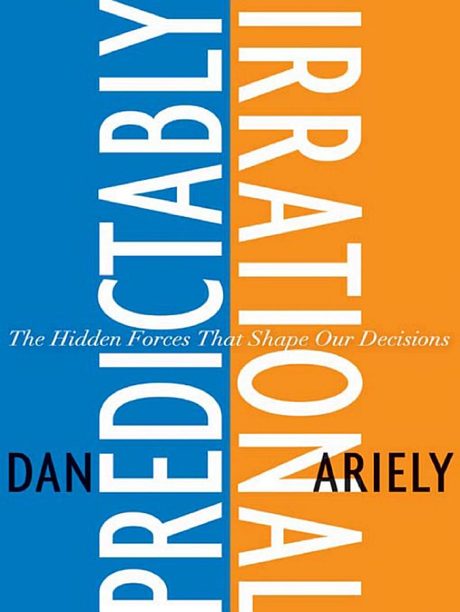
Status: badly damaged. Read it as a period document.
Predictably Irrational
Dan Ariely2008about 396 pages
The book that taught a generation of marketers that our mistakes are systematic, and the one with the biggest cloud over it now.
Ariely's argument is that irrationality is not random noise. We make the same errors in the same directions, reliably enough that you can design around them or exploit them. The examples became famous: the decoy subscription option that exists only to make the expensive one look reasonable, the way a price of zero changes behaviour far more than a price of one rupee, the gap between social norms and market norms, why we overvalue whatever we already own. It is short, chatty and packed with clever experiments, which is the format that made behavioural economics a boardroom religion.
Why it is at 13
Thirteenth, and the most damaged book on this list. A 2012 paper Ariely co-authored on honesty pledges was retracted in 2021 after independent analysts concluded the data had been fabricated, and Ariely has said he did not fabricate it. Separately, the honour code experiment described in this book did not hold up in a large multi lab replication. Useful now mainly as a record of how sure this field once sounded.
Read it ifyou want to see how behavioural economics sold itself at its peak
Skip it ifyou need to trust the evidence behind everything you read
chatty, clever, compromisedBest for: readers who want the historybehavioural economicsretractionperiod piece
14
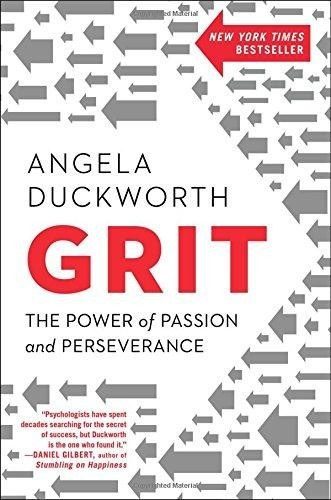
Status: weakened. Real trait, much smaller effect than advertised.
Grit
Angela Duckworth2016about 368 pages
Passion and perseverance over very long periods, offered as the thing that explains achievement better than talent does.
Duckworth's question came from watching who survives brutal selection courses at West Point and who wins national spelling bees. Her answer is grit, defined as sustained passion and perseverance towards a single long term goal, and she argues it predicts achievement better than raw ability. The book mixes her own research with profiles of people who kept going well past the point where quitting would have been reasonable, plus a scale you can score yourself on. It is warm, well told and endlessly quotable, which is how it reached school walls across India within about two years.
Why it is at 14
Fourteenth because the idea is real and the size of it was oversold. A 2017 meta analysis found grit predicts performance only weakly, and that it overlaps almost entirely with conscientiousness, a personality trait psychologists had been measuring for decades. So it looks closer to a rebranding than a discovery. Read it for the profiles and for a clear view of how a modest effect becomes a movement.
Read it ifyou want the original source rather than the motivational poster version
Skip it ifyou dislike books that turn one trait into a life philosophy
warm, motivating, oversoldBest for: parents, coaches and teachersmotivationachievementoversold
15
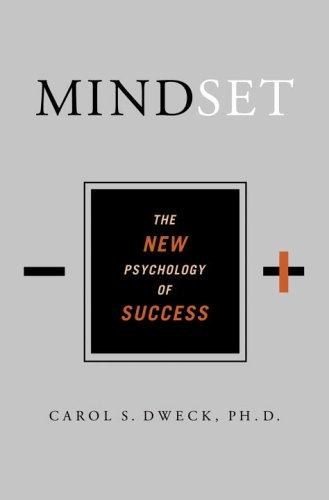
Status: weakened. Real effect, far smaller than schools were promised.
Mindset
Carol S. Dweck2006about 407 pages
The fixed versus growth mindset idea, which conquered every school and HR department on earth and then met a meta analysis.
Dweck's distinction is easy to hold onto. Some people treat ability as a fixed quantity they either have or do not, so a failure is a verdict and a hard task is a threat. Others treat it as something that grows with effort, so a failure is information about what to try next. Her research followed students through both frames and found the second group kept going where the first quit. The book extends the idea into sport, business, parenting and relationships, and it is written plainly enough that a fifteen year old can use it.
Why it is at 15
Last because the gap between the idea and the industry built on top of it is the widest here. Later meta analyses of school mindset programmes found average effects on grades that were small, and far smaller than the posters in every classroom implied. The original observation about how children respond to different kinds of praise is still worth having. The promise that a two hour workshop changes results is not.
Read it ifyou want the source rather than the corporate training deck version
Skip it ifyou have already absorbed the idea from ten LinkedIn posts
simple, useful, oversoldBest for: parents and teachersmotivationeducationoversold
Pairs with: Grit, its closest cousin and its partner in being oversold
Worth knowing
What the replication crisis actually is, in plain words
Around 2011 psychologists started systematically redoing famous experiments with bigger samples and pre registered methods, meaning they announced what they would test before they looked at the data. A lot of celebrated findings shrank or vanished. Social priming, where a subtle cue supposedly changes unrelated behaviour, was hit hardest. Other areas survived intact, particularly perception, memory, clinical treatment and anything with a biological mechanism you can point at.
The reason the weak studies became famous in the first place is boring and structural. Small experiments produce dramatic results by chance more often than large ones do. Dramatic results get published, get written up in newspapers, become a TED talk and then a book. Careful null results get filed in a drawer. So the pipeline that delivers psychology to a general reader was, for about thirty years, tuned to select for exactly the studies most likely to be wrong.
None of this means psychology is fake. It means one era of one subfield was oversold, the field noticed, and it started fixing the problem in public, which is more than most disciplines manage. Books published before roughly 2013 need a second look. Books built on clinical trials, neurology or biology were never in the same danger.
Worth knowing
Three habits that will protect you from the next viral finding
First, ask how many people were in the study. If a claim about all human beings rests on forty undergraduates at one American university, hold it loosely. Second, ask whether anybody has repeated it. A single result is a suggestion, while the same result from three independent labs starts to look like knowledge.
Third, notice the shape of the claim. Findings about mechanisms, how eyes work, how memory rebuilds itself, how a therapy performs against a control group, tend to survive. Findings shaped like a magic trick, where a tiny cue produces a large unrelated change in behaviour, tend not to. That one filter would have saved my wedding acquaintance from the warm tea theory.
People also ask
Questions, answered
Which psychology book should a complete beginner read first?
Start with The Man Who Mistook His Wife for a Hat. It needs no background, the chapters are short enough for a commute, and it teaches you how a brain is assembled by showing what happens when parts of it stop working. If you want something more immediately useful for daily life, go to Mistakes Were Made (But Not by Me) instead, which explains almost every argument you have ever lost.
Is Thinking, Fast and Slow still worth reading after the criticism?
Yes, with one chapter treated as history. Kahneman's own work on judgment and decision making is among the most re-tested material in psychology and it holds. The section on social priming leans on studies that later failed to reproduce, and Kahneman said so publicly in 2017. Read that part as a record of what the field believed in 2011, and read the rest as the working manual it still is.
What is the replication crisis in psychology?
It is the discovery, from about 2011 onwards, that many famous psychology experiments do not produce the same result when other researchers repeat them carefully with larger samples. Social priming suffered worst. Clinical, biological and perception research held up much better. The field responded by changing how studies are registered, run and reported, so newer work is generally more trustworthy than the 1990s and 2000s material that filled the bestseller lists.
Can psychology books replace therapy?
No. A book cannot assess you, cannot notice when you are getting worse, and cannot adjust anything it is doing. Feeling Good is the closest thing here to a usable tool, because cognitive behavioural therapy translates well into structured written exercises and therapists do hand it out. Even then it works alongside a professional rather than instead of one. If you are in real difficulty, please talk to a doctor or a qualified therapist first and read second.
Do I need a psychology textbook as well?
Only if you want to study the subject rather than understand yourself and the people around you. These fifteen give you the ideas, the vocabulary and enough scepticism to read further on your own. If you finish them and want more structure, an introductory university textbook will fill the developmental, statistical and clinical gaps that popular books skip, mostly because those chapters do not make good stories.
Why keep books on the list if their studies were discredited?
Because a beginner who has never met the oversold version cannot recognise it later. Predictably Irrational and Grit sit at thirteen and fourteen with their problems written on them, which is more useful than pretending they do not exist while their ideas keep circulating in every corporate deck. I did cut habit and productivity titles, though, since those belong on the self help list rather than here.
Before you go
What to read tonight
If you read one book from this list tonight, make it Sacks, because it asks nothing of you and hands you a new way of looking at your own head by page thirty. If you want the one that changes your behaviour rather than your conversation, it is Feeling Good, and you have to actually do the writing exercises for it to do anything at all.
The habit worth taking away is smaller than any single book. When somebody tells you a study proved something surprising about human nature, ask two questions. How many people were in it, and has anyone repeated it. Most viral psychology dies on the second question. The books that survive it are the ones on this list, and they are better company than the carousel version anyway.
Keep going
Lists that pair with this one