I read The Kite Runner in a hostel room in my second year, finished it around four in the morning, and then sat on the edge of the bed feeling ambushed by a book I had picked up for fun. Almost everyone I know has a version of that night. The novel does something very specific to you: it makes you stand next to a boy while he fails his best friend, keeps you there for twenty years of story time, and then hands him a chance to pay the debt back.
That is the engine. An old wrong, and a late, partial, expensive chance to settle it. Most lists that answer this question just hand you more sad novels set in a war, which is how readers end up opening A Fine Balance expecting a Hosseini ending and losing a week of their lives to it.
So each book here carries two markers. The first is the thread it shares with The Kite Runner: the friend you failed, the child inside the war, or the guilt of the one who got out. The second is the redemption dial, which reads offered, partial or withheld, and it is the most useful thing on this page. The order runs one to thirteen by how much of what you loved you will actually get back, not by literary prestige. Quick picks are below if you want to leave with one title and get on with your day.
How I picked these
- Same engine, not just the same setting. A private wrong that a person carries for years, sitting inside a country that keeps changing shape underneath them. Books that are only about a war did not make it.
- Two Hosseini novels are here because that is the first thing readers ask for, and I have ranked them honestly rather than politely.
- Two of the thirteen are not novels. One is reported nonfiction, one is a true story written as fiction with its subject as co-author, and both are marked so you know what you are getting.
- I kept The Boy in the Striped Pyjamas and put it last with the objection stated out loud, because pretending it does not appear on every list like this one helps nobody.
- Cut: novels that borrow a war for atmosphere and lay a tidy love story on top of it. There were more of those than I expected.
- Every title verified through Google Books and Open Library, real editions, real covers, no invented awards or sales figures anywhere on this page.
The whole list at a glance
All 13 books, in order
| # | Book | Author | Year | Vibe | Best for |
|---|
| 1 | A Thousand Splendid Suns | Khaled Hosseini | 2007 | warm, brutal, redemptive | readers who want full Hosseini |
| 2 | Half of a Yellow Sun | Chimamanda Ngozi Adichie | 2006 | clear-eyed, human, devastating | readers ready for a big novel |
| 3 | And the Mountains Echoed | Khaled Hosseini | 2013 | sprawling, tender, uneven | Hosseini completists |
| 4 | A Fine Balance | Rohinton Mistry | 1995 | warm, then merciless | readers who trust me completely |
| 5 | Homegoing | Yaa Gyasi | 2016 | propulsive, angry, wide | readers who like family sagas |
| 6 | The Book Thief | Markus Zusak | 2005 | gentle, sad, readable | first timers and younger readers |
| 7 | What Is the What | Dave Eggers | 2006 | urgent, funny, unsparing | readers who prefer true stories |
| 8 | The Beekeeper of Aleppo | Christy Lefteri | 2019 | quiet, grieving, hopeful | book clubs |
| 9 | Burnt Shadows | Kamila Shamsie | 2009 | ambitious, political, cold-burning | readers of literary epics |
| 10 | The Reluctant Fundamentalist | Mohsin Hamid | 2007 | sly, tense, argumentative | one evening |
| 11 | The Swallows of Kabul | Yasmina Khadra | 2002 | stark, feverish, short | readers who want the hard version |
| 12 | The Bookseller of Kabul | Asne Seierstad | 2002 | observant, intimate, contested | readers who like reportage |
| 13 | The Boy in the Striped Pyjamas | John Boyne | 2006 | simple, ominous, contested | school age readers |
The list
The books, ranked
1
The friend you failed, redemption offered
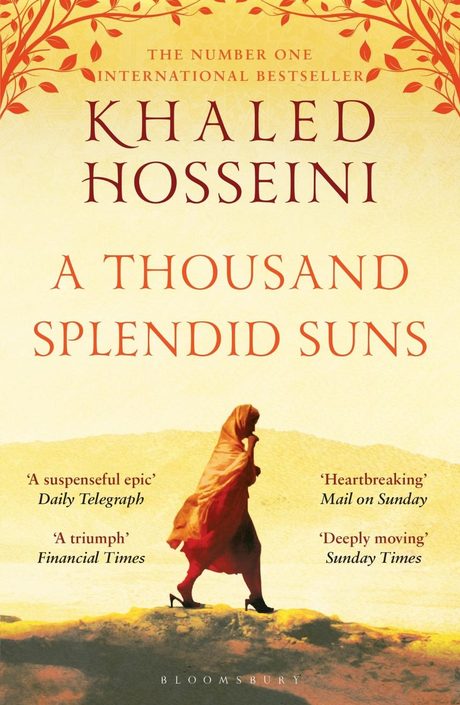
A Thousand Splendid Suns
Khaled Hosseini2007about 293 pages
Two women who should have been rivals become the only family each other has, in a Kabul that keeps changing hands.
Mariam is the unwanted daughter of a rich man, married off at fifteen to a shoemaker in Kabul thirty years older than her. Nearly two decades later Laila, a bright girl from the same street, ends up in the same house as the second wife. What happens between these two women across the Soviet withdrawal, the civil war and the Taliban years is the whole book. Hosseini writes here exactly as he did in The Kite Runner, plainly and emotionally, always aiming for your chest, and the aim is better this time. The ending asks one of them to pay for the other.
Why it is at 1
First because it gives a Kite Runner reader everything they came for, from the same writer, with women at the centre instead of boys. The guilt is there, the sacrifice is there, and the last fifty pages hit harder than anything else on this page. If you take one book from this list, take this one and clear an evening.
Read it ifyou want the same ache with the same kind of ending
Skip it ifyou found Hosseini manipulative, because he does not get subtler here
warm, brutal, redemptiveBest for: readers who want full Hosseiniafghanistanfriendshipwar
Heads up: domestic violence, forced marriage, child death
2
The friend you failed, redemption partial
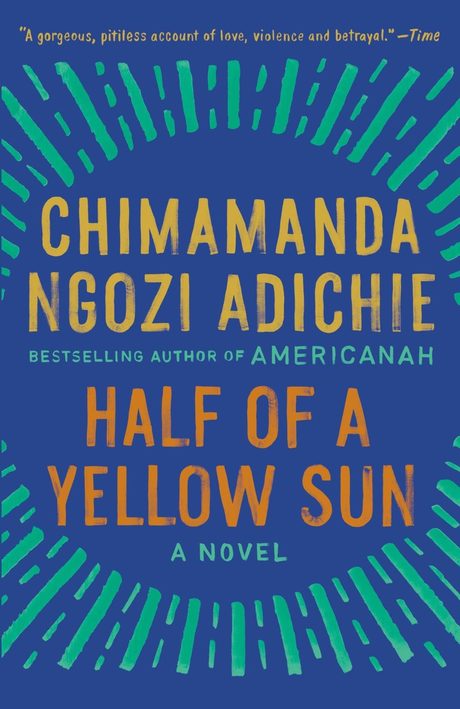
Half of a Yellow Sun
Chimamanda Ngozi Adichie2006
The Biafran war seen from a lecturer's kitchen, by the finest novelist on this list.
Nigeria in the 1960s. Ugwu is a village boy who becomes houseboy to a university lecturer with revolutionary opinions. Olanna, the lecturer's partner, is beautiful and educated and about to discover what her class has been protecting her from. Richard is an Englishman writing a book he will never finish. Then the east secedes as Biafra, the blockade begins, and the three of them are moved around by a war that eats everything, including their decency. Adichie writes people first and history second, which is why the horror lands. You know these characters well enough to be furious at what they do to survive.
Why it is at 2
Second because it runs the same machinery at a higher level: an ordinary person commits an act he can never take back, and the country he was loyal to disappears while he is doing it. It sits below Hosseini only because Adichie will not give you the clean settling of accounts that most people arriving from The Kite Runner are quietly hunting for.
Read it ifyou want serious literary weight with your heartbreak
Skip it ifyou need the last chapter to comfort you
clear-eyed, human, devastatingBest for: readers ready for a big novelnigeriawarbiafra
Heads up: war violence, sexual violence, starvation
3

The friend you failed, redemption partial
And the Mountains Echoed
Khaled Hosseini2013about 417 pages
A brother and sister are separated in 1952 and the ripples run through six decades and four countries.
It opens with a folk tale about a farmer forced to hand one child to a monster so the rest of the family can live, and then Hosseini spends four hundred pages playing that story out in real lives. Abdullah and his small sister Pari are separated by a decision adults make while telling themselves they are being kind. The chapters that follow jump to Paris, a Greek island, California and back to Kabul, each in a different voice, each standing at some distance from the first wound. It is his most ambitious book and his least tidy one.
Why it is at 3
Third because the first fifty pages contain the purest version of the betrayal that makes The Kite Runner work, and because the rest cannot hold that pressure. Some chapters are superb, one or two read like short stories that wandered into the wrong building. Come for the opening and the final chapter, and forgive the middle stretch.
Read it ifyou loved Hosseini's voice and want more of it
Skip it ifyou want one continuous story with one narrator
sprawling, tender, unevenBest for: Hosseini completistsafghanistanfamilyseparation
4
The child in the war, redemption withheld
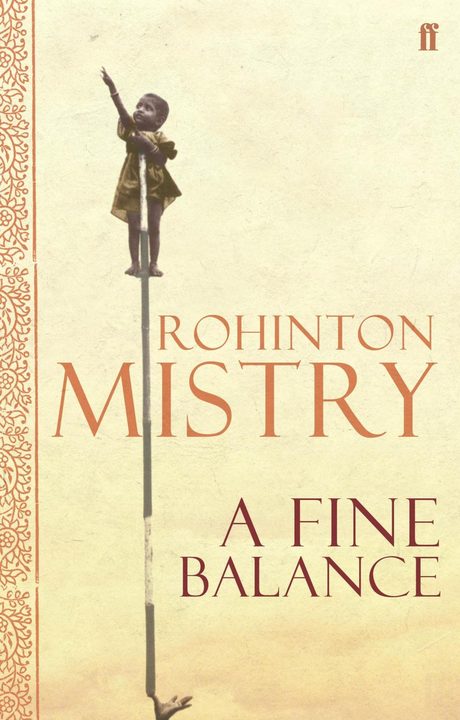
A Fine Balance
Rohinton Mistry1995about 816 pages
Four strangers share a flat in Bombay during the Emergency, and the state does to them what history does to Amir's Kabul.
It is 1975, the Emergency has been declared, and a widow named Dina takes in two tailors from a village and a student boarder to keep her small business alive. For a few hundred pages you get something close to happiness in that flat, four people learning how to eat together. Then Mistry removes it piece by piece, through slum clearance, forced sterilisation and caste violence, and he does it without ever raising his voice. Structurally this is the Indian novel closest to The Kite Runner, an ordinary life crushed by a state, except that Mistry refuses to pay anybody back at the end.
Why it is at 4
Fourth because it will do what The Kite Runner did to you, harder, and in the country most of my readers live in, which removes the safety of distance. The dial reads withheld and I mean it literally. There is no scene where anyone gets to make anything right, and the last forty pages are the cruellest thing on this list.
Read it ifyou want the Indian equivalent and can take an ending with no mercy in it
Skip it ifyou need hope at the finish, because there is none here
warm, then mercilessBest for: readers who trust me completelyindiaemergencycaste
Heads up: caste violence, forced sterilisation, suicide
5
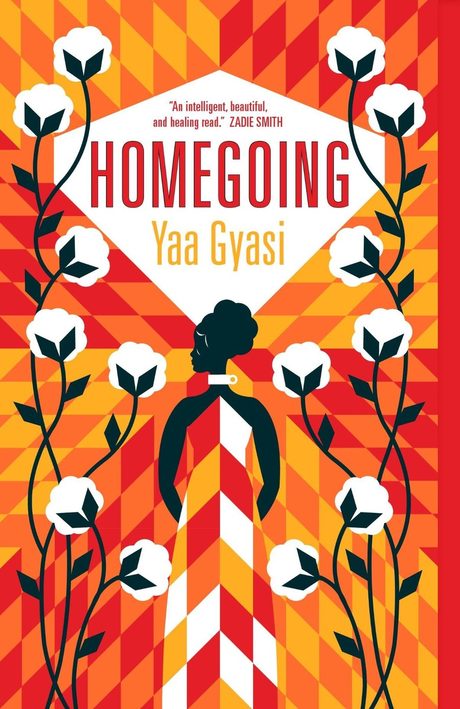
The one who got out, redemption partial
Homegoing
Yaa Gyasi2016about 311 pages
Two half sisters in eighteenth century Ghana, one married to a slave trader, one sold through his dungeon, and three centuries of consequences.
Effia and Esi are born in different villages in what is now Ghana and never meet. One is married to the British governor of Cape Coast Castle. The other is held in the dungeon beneath that same castle before being shipped across the Atlantic. Every chapter afterwards belongs to one descendant of one of them, alternating branches, moving through slavery, the Asante wars, coal mines in Alabama, Harlem, and finally two young people in the present who know none of this. Each chapter works almost as a short story, so the book moves quickly even when the subject is unbearable.
Why it is at 5
Fifth because the first two chapters give you one of the cleanest betrayals in modern fiction, and because it answers a question Hosseini leaves alone: what happens to the descendants of the people who did the selling. The structure costs you something, since you lose characters exactly as you begin to love them. That is the price of covering three hundred years in three hundred pages.
Read it ifyou like a novel that moves generation to generation
Skip it ifyou want to stay with one character for a whole book
propulsive, angry, wideBest for: readers who like family sagasghanaslaverygenerations
Heads up: slavery, sexual violence, addiction
6
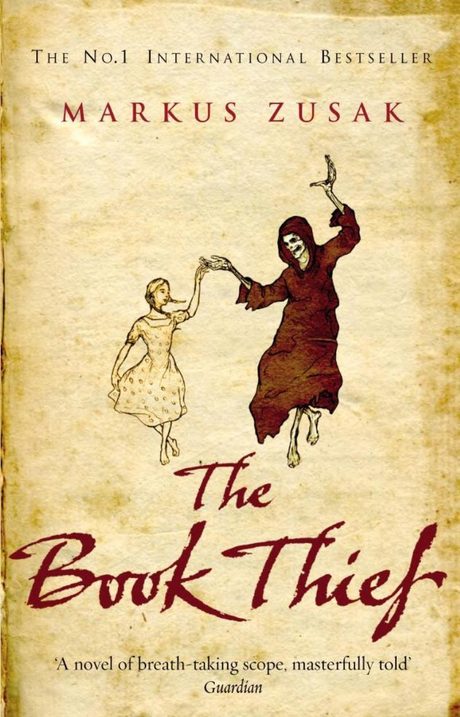
The child in the war, redemption offered
The Book Thief
Markus Zusak2005about 564 pages
Death narrates the story of a German girl who steals books while the couple raising her hide a Jewish man in the basement.
Liesel is nine when she is handed to a poor couple in a small German town in 1939, and she cannot read. Hans, the man of the house, teaches her at night out of a book she stole at her brother's funeral. The war arrives slowly, in ration queues and Hitler Youth drills, and then all at once in the form of a young Jewish man named Max who knocks on the door and lives in the basement. The narrator is Death, tired and unexpectedly kind, who tells you what is coming long before it arrives. That choice should be a gimmick and somehow never is.
Why it is at 6
Sixth because it is the gentlest way into this list, and because the machinery is identical: a child who controls nothing, adults making dangerous decisions around her, and a friendship that history keeps trying to break. Younger readers and people who do not read much do well with this one, which is why it sits above several harder and colder books.
Read it ifyou want war seen at a child's eye level
Skip it ifa chatty narrator irritates you
gentle, sad, readableBest for: first timers and younger readersgermanyholocaustchildhood
Heads up: Holocaust, bombing deaths
7

The one who got out, redemption partial
What Is the What
Dave Eggers2006about 726 pages
The real life of Valentino Achak Deng, one of the Lost Boys of Sudan, written as a novel with his blessing and his voice.
Valentino Achak Deng walked out of southern Sudan as a small boy when the civil war reached his village, crossed to Ethiopia and then Kenya on foot with thousands of other boys, spent years in camps, and was resettled in Atlanta, where the book opens with him tied up in his own apartment during a robbery. Eggers interviewed him for years and then wrote it in Valentino's first person, calling it a novel because nobody can report a childhood sentence by sentence from memory. It is funny in places, which you will not expect, and openly angry about what resettlement actually feels like.
Why it is at 7
Seventh, and the only book here where the survivor is a co-author rather than a subject. It goes straight at the part of The Kite Runner that is really about America: what it is to be the one who got out, sitting in a foreign flat with your country still burning behind you. The hybrid form keeps it below the pure novels, not the quality.
Read it ifyou want a true story told with a novelist's timing
Skip it ifthe blurred line between memoir and novel bothers you
urgent, funny, unsparingBest for: readers who prefer true storiessudanrefugeetrue story
Heads up: violence against children, war, armed robbery
8
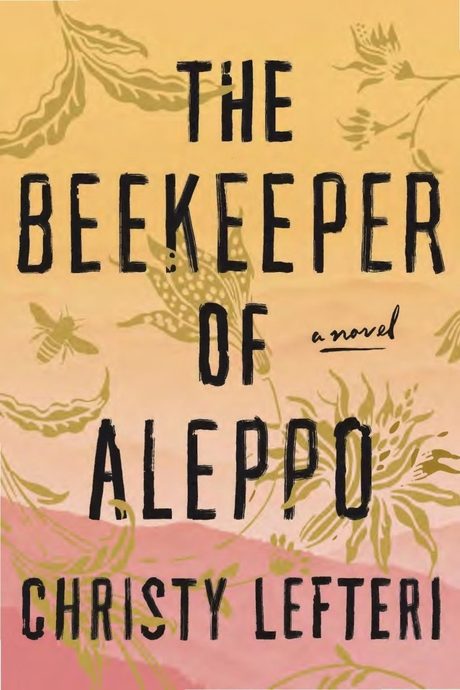
The child in the war, redemption partial
The Beekeeper of Aleppo
Christy Lefteri2019about 337 pages
A Syrian beekeeper and his wife cross Europe after Aleppo takes everything from them, including their son and her sight.
Nuri kept bees outside Aleppo with his cousin and sold honey at the market until the war ended that life and their small son with it. His wife Afra, a painter, loses her sight in the blast. The novel follows the two of them through Turkey, Greece and finally a boarding house in England, cutting between the road and the memory of the hives. Lefteri volunteered at a refugee centre in Athens, and the details of the journey feel gathered rather than imagined. Nuri is an unreliable guide to his own grief, which the book handles far better than it handles its final act.
Why it is at 8
Eighth because it is the most recent war here and the one still in the headlines, which puts every Kite Runner question in the present tense. The prose is simpler than Hosseini's and sometimes tips into softness. It is ranked here for that reason and not because the story is small, and it is the best book on this list for a reading group.
Read it ifyou want a current war at human scale
Skip it ifyou want prose that never slips into sentiment
quiet, grieving, hopefulBest for: book clubssyriarefugeegrief
Heads up: child death, war trauma, violence against refugees
9
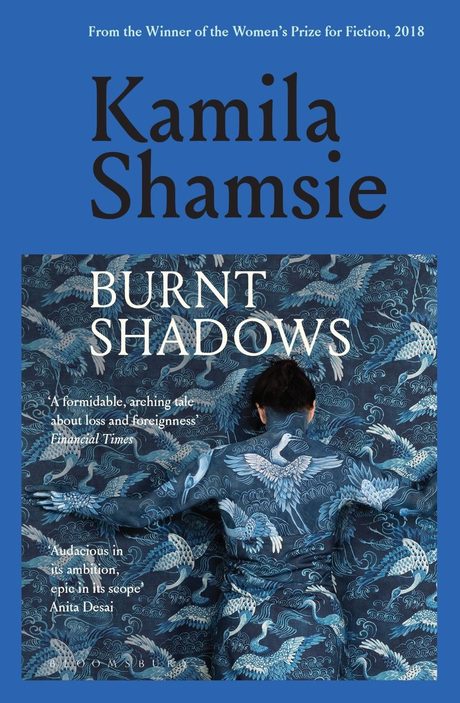
The one who got out, redemption withheld
Burnt Shadows
Kamila Shamsie2009about 385 pages
It begins in Nagasaki seconds before the bomb and ends in a cell after 9/11, following one woman and two entangled families.
Hiroko Tanaka is in Nagasaki in August 1945 with a German fiance and a silk kimono with birds on the back. The bomb kills him and burns those birds into her skin. She travels to Delhi to find his sister's family, marries the household's Indian employee, moves to Karachi at Partition, and decades later her son is in New York and then in Afghanistan. Shamsie is tracking one thing across sixty years: how powerful people borrow other people's countries and then go home. The final section, after 2001, is where a long polite friendship between two families finally snaps.
Why it is at 9
Ninth because it is the most ambitious book here and the one that quietly accuses the sort of reader who consumes other people's wars from a safe country. It strains occasionally to bolt its four eras together. When it works, which is often, it is unforgettable, and it makes a natural pair with the book directly below it.
Read it ifyou want history at continent scale with one family inside it
Skip it ifyou dislike novels that cross several decades at speed
ambitious, political, cold-burningBest for: readers of literary epicspakistanjapanpartition
Heads up: nuclear bombing, war, detention
10

The one who got out, redemption withheld
The Reluctant Fundamentalist
Mohsin Hamid2007about 118 pages
A Pakistani man buys tea for an American stranger in Lahore and talks all evening, and you never once hear the American speak.
Changez comes from a fading Lahore family, wins a place at Princeton, gets hired by a valuation firm in New York and turns out to be very good at it. Then the towers come down while he is away on a work trip, and he catches his own face in a hotel mirror doing something he cannot explain to himself: smiling. The whole novel is his monologue to an American he has invited to dinner in Lahore, and the tension sits in everything neither man says out loud. Under two hundred pages, moving like a thriller while arguing like an essay.
Why it is at 10
Tenth and the shortest real read on this page. It presses the same nerve The Kite Runner touches, the split self of the man who left, except that Hamid wants you uneasy and faintly accused where Hosseini wants you weeping. Finish it in one sitting, then argue about the last page with whoever is in the room.
Read it ifyou want a short book with a needle hidden in it
Skip it ifyou want warmth, because this one is deliberately cold
sly, tense, argumentativeBest for: one eveningpakistandiasporamonologue
11
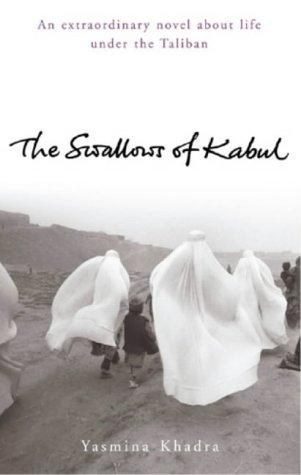
The friend you failed, redemption withheld
The Swallows of Kabul
Yasmina Khadratranslated by John Cullen2002about 195 pages
Kabul under the Taliban in under two hundred pages, seen through a jailer with a dying wife and a couple whose marriage is being crushed.
Yasmina Khadra is the pen name of Mohammed Moulessehoul, an Algerian army officer who wrote under his wife's names to get around military censorship. His Kabul is dust, public executions and men with nothing left to do. Atiq guards women condemned to die and cannot cope with his own wife's illness at home. Mohsen and Zunaira were educated and in love before the regime arrived, and are now sealed in a room together with their futures cancelled. The two households collide in a way you can see coming from a long way off and still cannot look away from.
Why it is at 11
Eleventh because it is the bleakest book here and the fastest route to understanding what Hosseini describes from a safer distance. Khadra writes in a heightened, almost operatic register that some readers love and others find overdone. Note that the failure here is not between friends, it is between husbands and wives, which makes it the strangest fit on the list and also the most airless.
Read it ifyou want Kabul at ground level, briefly and bleakly
Skip it ifyou need at least one character to get out alive
stark, feverish, shortBest for: readers who want the hard versionafghanistantalibantranslated
Heads up: public execution, misogyny, terminal illness
12
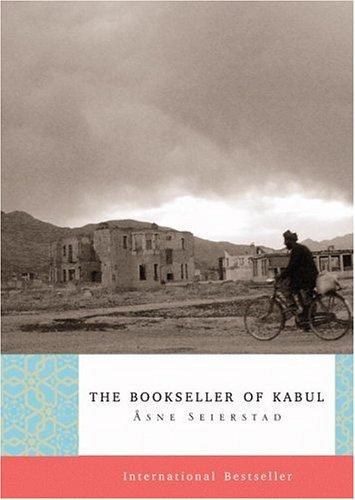
The one who got out, redemption withheld
The Bookseller of Kabul
Asne Seierstad2002about 304 pages
A Norwegian reporter lived with a Kabul bookseller's family for months in 2002 and wrote down everything, and the family took her to court over it.
Seierstad moved in with the household of a bookseller who had hidden and sold books through three regimes, and wrote the family as characters: the patriarch taking a second wife, the sons kept out of school to work the shop, the youngest sister running the house like an unpaid servant. Read as reportage it is one of the sharpest pictures of ordinary Afghan life after 2001 that anyone published. Read as ethics it is complicated, because the family objected in public, the bookseller wrote a book of his own in reply, and his second wife sued her in Norway.
Why it is at 12
Twelfth because it works better as a companion than as a standalone. Put it next to the two Hosseini novels and you can see which parts of that Kabul are observed and which are shaped for a western reader. Keep the court case in mind while you read: the woman at the centre of the story argued that her private life was published without her real consent, and a Norwegian court eventually cleared the author on appeal.
Read it ifyou want reported nonfiction next to the novels
Skip it ifyou are uneasy about a foreign reporter narrating a family's private life
observant, intimate, contestedBest for: readers who like reportageafghanistannonfictionreportage
Heads up: misogyny, domestic control
13
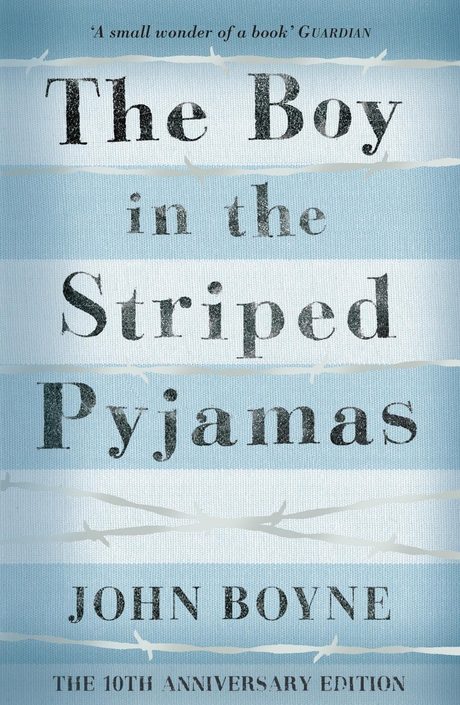
The child in the war, redemption withheld
The Boy in the Striped Pyjamas
John Boyne2006about 228 pages
Two nine year old boys meet at a fence, one on each side, and neither of them understands what the fence is for.
Bruno's father is promoted, the family leaves Berlin for a house beside a place Bruno hears as Out With, and from his window he can see people in striped pyjamas. He walks the length of the fence and meets Shmuel, a boy his own age on the other side, and their friendship is conducted through wire for most of the book. Boyne has called it a fable rather than a historical novel, and the flatness of the writing is deliberate. It reads in an afternoon, and the ending is famous enough that many readers arrive already knowing it.
Why it is at 13
Last, and on the list with an objection attached rather than hidden. It asks you to accept that a commandant's son knows nothing about the camp at his own gate, and historians and Holocaust educators have spent years arguing that this is not a small liberty. As a fable about two children and a fence it still does its work. As history it misleads, and children often read it as history.
Read it ifyou want the simplest and shortest entry point here
Skip it ifyou want accuracy, because this book is a fable and not a record
simple, ominous, contestedBest for: school age readersholocaustfablechildren
Heads up: Holocaust, child death
Worth knowing
How the redemption dial works
Every entry carries a label with two parts: the thread it shares with The Kite Runner, and one word about the ending. Offered means the book gives a character a real chance to settle the debt, and gives you the catharsis Hosseini gives you. Partial means somebody gets a fragment of peace and pays for it. Withheld means the book refuses on principle, because the writer thinks a clean ending would be a lie about the history in question.
This matters more than genre or setting. Readers do not actually come to this question looking for Afghanistan. They come looking for that specific feeling of being forgiven late, and four of the best books on this list will not give it to them. Better to know that before you start than at page six hundred.
Worth knowing
A reading order, if you want to build up to the hard ones
Start with rank one or rank six, both of which carry you rather than test you. Then take the short punch of rank ten in a single sitting. Then rank two, which is where the writing gets seriously good and the comfort starts to disappear.
Only after those would I open rank four. A Fine Balance is the book most likely to change how you think and the one most likely to leave you staring at a wall on a Sunday. Give it a fortnight and something light to read afterwards, and do not start it during exam week.
People also ask
Questions, answered
What book is most like The Kite Runner?
A Thousand Splendid Suns, by a distance. Same author, same city, same method of taking an ordinary person and making history walk over them, and it ends with the sacrifice and the partial forgiveness that most people are really looking for. If you want that feeling from a different writer instead, Half of a Yellow Sun does it with more skill and less comfort, and A Fine Balance does it with none at all.
Should I read A Thousand Splendid Suns or And the Mountains Echoed first?
A Thousand Splendid Suns first, always. It is the stronger novel, it has one continuous story, and it delivers the emotional payoff that made you look for this list. And the Mountains Echoed is worth reading afterwards for its opening section and its last chapter, but it scatters across nine narrators and several countries, and readers who start there often decide Hosseini has lost it when in fact they picked the wrong door.
Is The Kite Runner a true story?
No. It is fiction, though Hosseini grew up in Kabul in a diplomat's family, left as a child when his father was posted abroad, and his family sought asylum in the United States after the Soviet invasion. The city, the ethnic divide between Pashtun and Hazara, and the exile in California are drawn from a life he knows. Amir and Hassan are invented.
Which book on this list is the saddest?
A Fine Balance, and it is not close. The others show you terrible history and then let somebody survive it with a scrap of meaning. Mistry builds a small found family in a Bombay flat, makes you love the four of them, and then takes each one apart with total calm. Readers who finish it usually remember exactly where they were sitting. Keep something light for afterwards.
Are any of these suitable for a school student?
The Book Thief and The Boy in the Striped Pyjamas are the two written with younger readers in mind, and both are widely taught. With the second one, teach the objection alongside it: it is a fable, not a record of how the camps worked, and a student who takes it as history will come away with a false picture. A Thousand Splendid Suns is fine for older teenagers who can handle domestic violence on the page.
Do I have to read these in the order given?
No. The ranking is a recommendation, not a sequence. If you want a path rather than a menu, use the reading order section above: one of the gentle ones first, then the short sharp one, then Adichie, then A Fine Balance when you have the room in your week for it. The two nonfiction titles can be picked up at any point, and they read differently once you have the novels in your head.
Before you go
What to read tonight
If you finished The Kite Runner last night and you want the same feeling again tonight, start A Thousand Splendid Suns and cancel whatever you had planned for Sunday. If what actually stayed with you was the guilt rather than the crying, read The Reluctant Fundamentalist in one sitting instead, because it takes the same wound and refuses to bandage it.
And when you are ready for the book that does this best without any mercy in it, A Fine Balance is waiting, set on streets you already know. Read the first two hundred pages and you will understand why I put a warning on it rather than a recommendation. Whatever you pick, notice which ending you were hoping for. That tells you more about your reading taste than any list I can write.
Keep going
Lists that pair with this one
Mood & Life
15 Books About Friendship: Envy, Drift and the Ones That Last
Every friendship in fiction is under one particular strain, so I have named the strain on each book and ranked them by how true it feels.
Indian Fiction
14 Best Partition Novels and Books, Ranked by Where to Start
Fiction and first-hand testimony from both sides of the 1947 line, ordered so you begin with the one you can actually finish.
Genre
15 Literary Fiction Books for Beginners, Easiest First
Every book here asks one new thing of you that the book before it did not, so you climb instead of drowning.
Indian Fiction
14 Books About Kashmir, Each Labelled Fiction, Memoir or Reportage
Every entry says plainly what kind of book it is and whose life it comes from, and the books disagree with each other on purpose.
Indian Fiction
16 Best Books to Understand India, Ranked by What They Explain
Sixteen books, ten doors into the same country: history, caste, the mega city, the village, money, and where to start tonight.