Walk into any railway bookstall between Ahmedabad and anywhere else and you will find The Alchemist facing out, next to the crossword books and the Chetan Bhagat. I have bought that book twice, lost it twice, and given it away three times. India reads more Coelho than almost any country outside Brazil, which means most people I know have a firm opinion about him without having read past the shepherd boy.
Here is what nobody tells you before book two. Coelho writes two different kinds of book and the covers look identical. One kind is a novel: people who want things, a situation that tightens, an ending you did not order in advance. The other kind is him talking directly to you about destiny and signs and the universe, with a thin story wrapped around it so it can sit in the fiction section. Both sell well, and only one kind survives a second reading.
So I gave every book here a split: how much of it is story, how much is message. Those numbers are my reading rather than a formula, and I argue for each one on the entry. The ranking itself is simpler, and it asks one question: is this worth an actual evening of your life. A high message share is not automatically a mark against a book, plenty of readers want exactly that, but you deserve to know which one you are buying. Twelve books, best first, all of them easy to find in English in India.
How I picked these
- Story first. If I could delete the philosophy and still be left with a book that moves, it ranked higher. That single test does most of the sorting here.
- Cut on purpose: Adultery and The Winner Stands Alone, both of which read like Coelho working outside his range, and The Spy, which is too slight to recommend at full price.
- Also cut: Warrior of the Light, which is a quote book with a cover, and Aleph, a travelogue that never settles. Manuscript Found in Accra stayed only because it is the cleanest example of what a pure message book looks like.
- The years shown are the original Portuguese first publications, not the English reprint dates your shopping app displays. Brida says 1990 here even though English readers only got it in 2008.
- Every title was checked against Google Books and Open Library so the cover you see belongs to a real edition rather than a print-on-demand ghost.
- No sales numbers anywhere on this page. He sells enormously, you already know that, and it tells you nothing about whether you will still be reading at page ninety.
The whole list at a glance
All 12 books, in order
| # | Book | Author | Year | Vibe | Best for |
|---|
| 1 | Veronika Decides to Die | Paulo Coelho | 1998 | close, funny, unsettling | readers who want characters |
| 2 | The Alchemist | Paulo Coelho | 1988 | clean, warm, instructional | first time Coelho readers |
| 3 | The Devil and Miss Prym | Paulo Coelho | 2000 | tense, cold, small town | crime and thriller readers |
| 4 | Eleven Minutes | Paulo Coelho | 2003 | frank, cool, adult | adult readers who want candour |
| 5 | The Fifth Mountain | Paulo Coelho | 1996 | grave, patient, biblical | readers rebuilding after a loss |
| 6 | The Witch of Portobello | Paulo Coelho | 2006 | fragmented, searching, mystical | readers who like structure |
| 7 | The Pilgrimage | Paulo Coelho | 1987 | rough, autobiographical, walking | readers curious about the author |
| 8 | Hippie | Paulo Coelho | 2018 | wandering, nostalgic, warm | readers who like road stories |
| 9 | The Zahir | Paulo Coelho | 2005 | circular, self regarding, searching | readers in long relationships |
| 10 | By the River Piedra I Sat Down and Wept | Paulo Coelho | 1994 | quiet, romantic, devotional | readers stalling on a decision |
| 11 | Brida | Paulo Coelho | 1990 | earnest, occult, young | readers who liked Portobello |
| 12 | Manuscript Found in Accra | Paulo Coelho | 2012 | aphoristic, calm, sermon like | readers who want the quotes |
The list
The books, ranked
1
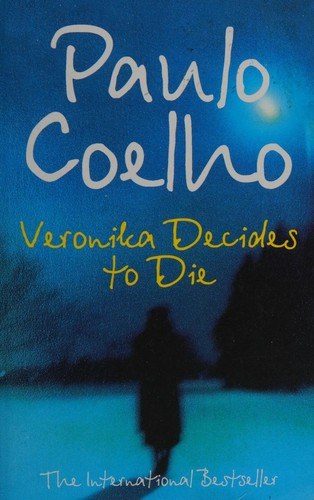
Story 75 / Message 25
Veronika Decides to Die
Paulo Coelho1998about 191 pages
A young woman survives her own suicide attempt, is told she has days left, and discovers that the mental hospital is the freest room in town.
Veronika, twenty four, in Ljubljana, takes an overdose because her life is perfectly fine and that is the problem. She wakes up in Villete, a psychiatric hospital, and is told her heart is damaged and she has about a week. The novel is that week. Coelho was put into psychiatric institutions by his parents as a young man, more than once, and he has written about it openly, so the ward here is populated by people with grudges and jokes and small daily tactics rather than symbols. It is the only book of his where the setting refuses to behave like a parable.
Why it is at 1
First because the characters win. Every other book on this list has a message that eventually takes the wheel, and in Villete the inmates keep talking over it. Compared with The Alchemist below, nobody gets handed a tidy lesson at the end. My one reservation is that the closing stretch reaches for a neatness the rest of the book had earned the right to refuse.
Read it ifyou want a Coelho novel that behaves like a novel and can sit with a hospital setting
Skip it ifsuicide and psychiatric wards are not what you want in your evening reading right now
close, funny, unsettlingBest for: readers who want charactersmental healthnovel1990s
Heads up: Suicide attempt, self harm, psychiatric confinement and electroconvulsive therapy. It is a novel, not treatment, and it is no substitute for talking to a professional if you are somewhere near that place yourself.
2

Story 55 / Message 45
The Alchemist
Paulo Coelhotranslated by Alan R. Clarke1988about 196 pages
A shepherd boy walks from Andalusia to the pyramids chasing a repeated dream, and gets told a great many things about the universe on the way.
The setup is a fable and the book never pretends otherwise. Santiago, an Andalusian shepherd, dreams twice of treasure at the pyramids and sells his flock to go and find it. On the road: a king, a crystal merchant, a caravan, a long stretch in the desert, and an alchemist who talks. The English most Indian readers hold is Alan R. Clarke's translation, and the sentences are deliberately plain enough for a school student to finish the whole thing in two sittings. What it does brilliantly is momentum. What it does not do is surprise you even once.
Why it is at 2
Second rather than first, and I will defend that. It is the most useful book he has written, the one that has genuinely moved people out of jobs they hated, and it is still the right place to start. But the story is thin by design and the parts that stay with you afterwards are lines, not scenes. Veronika above gives you both, which is why it takes the top spot.
Read it ifyou want the famous one and you want it short
Skip it ifyou find advice dressed up as fiction irritating rather than freeing
clean, warm, instructionalBest for: first time Coelho readersfableclassicshort
Pairs with: The Pilgrimage, the walk he published the year before this one.
3

Story 80 / Message 20
The Devil and Miss Prym
Paulo Coelho2000about 228 pages
A stranger walks into a dying village carrying gold and one offer: kill somebody in the next seven days and it is all yours.
Viscos is a mountain village of a couple of hundred people, most of them old and all of them broke. A stranger arrives, shows a young woman named Chantal Prym where he has buried a fortune in gold bars, and puts a proposition to the village with a deadline on it. From there the book does the one thing it needs to do, which is watch. Neighbours who have known each other for fifty years quietly start doing arithmetic. It is the tightest thing Coelho has written and it moves like a small cold thriller.
Why it is at 3
The highest story share on the list, and the book I hand to people who tell me they cannot stand him. The moral question is buried inside the plot instead of sitting on top of it, so nobody has to stop and explain the theme to you. It sits below The Alchemist purely because it is the less famous door into his work, not because it is the weaker book.
Read it ifyou like a moral trap with a countdown and a small cast
Skip it ifyou want warmth from a novel, because this one is cold on purpose
tense, cold, small townBest for: crime and thriller readersthrillermoral puzzlevillage
Heads up: The plot turns on a village debating whether to murder one of its own.
4

Story 70 / Message 30
Eleven Minutes
Paulo Coelho2003
A Brazilian girl goes to Geneva expecting to dance, ends up in sex work, and keeps a notebook sharper than most novels about desire.
Maria leaves a small town in Brazil for a dancing job in Switzerland and ends up working in a club instead. The title is her own estimate of how long sex actually takes once you subtract everything wrapped around it. Coelho runs her diary entries alongside the narration and the diary is the good half: unsentimental, flatly funny, arguing with itself about whether pleasure and love have anything to do with each other. The sex is explicit, and there is a strand about pain and consent that most readers do not see coming from the author of The Alchemist.
Why it is at 4
His most honest book about bodies, and one of the few where the message and the story are arguing rather than agreeing. It loses to the three above because Maria's ending is the softest thing in it and because Geneva stays a backdrop instead of a place. Still, this is the book I would give a reader who decided The Alchemist was written for children.
Read it ifyou want frank writing about desire and can take explicit scenes
Skip it ifyou would rather not read explicit sex or sex work as a plot engine
frank, cool, adultBest for: adult readers who want candoursexdiarySwitzerland
Heads up: Explicit sex throughout, sex work, and a subplot involving consensual pain.
5
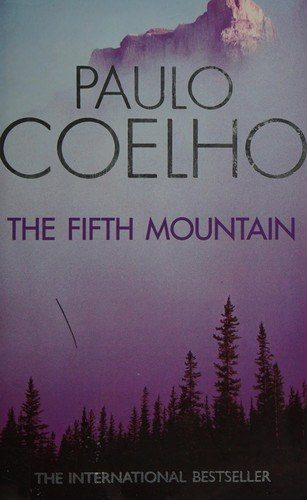
Story 75 / Message 25
The Fifth Mountain
Paulo Coelho1996about 18 pages
The prophet Elijah runs for his life, rebuilds a widow's house in a foreign town, and then watches an army burn the whole place down.
Coelho takes a handful of lines from the Book of Kings and builds a novel in the gap between them. Elijah, hunted out of Israel, hides in a Phoenician town with a widow and her son, learns carpentry, becomes useful, falls in love, and loses every bit of it when a war arrives. The interesting half is not the prophecy. It is the rebuilding: what a person actually does on the morning after the disaster, one brick at a time, with no sign from anybody that it is worth doing.
Why it is at 5
Fifth because it is genuinely good and almost nobody reads it. It has a real second half, which is rare in his work, since most Coelho novels are strongest in the setup and then coast. This one gets better after the catastrophe. It does not climb higher only because the biblical register keeps everyone at arm's length compared with the noisy human ward in Veronika.
Read it ifyou want a rebuilding story and do not mind a biblical frame
Skip it ifreligious source material puts you off before page one
grave, patient, biblicalBest for: readers rebuilding after a lossbiblicalgriefrebuilding
6
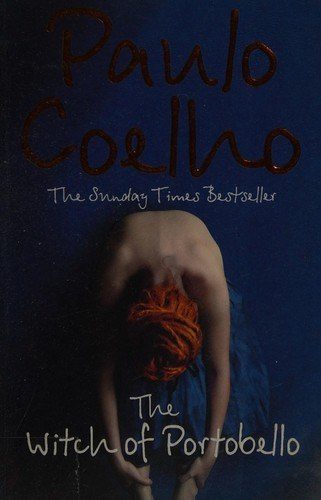
Story 65 / Message 35
The Witch of Portobello
Paulo Coelho2006about 348 pages
A woman born in Romania, adopted by a Lebanese family, ends up leading gatherings in London, and every witness tells a different version of her.
Athena is dead when the book opens and the entire novel is other people talking about her: the former husband, the priest, the landlord, the journalist, the mother who adopted her. Coelho never gives you her own voice directly, which is the smartest structural decision he has ever made. Each witness contradicts the last, so you assemble a woman out of grudges and affection and gaps. The material on dance, calligraphy and ecstatic ritual will either take hold of you or send you checking how many pages are left.
Why it is at 6
Sixth for the form rather than the philosophy. The multiple witness structure keeps the preaching inside quotation marks, so when somebody says something enormous about the Mother Goddess you can read it as that person being that person. It slips below The Fifth Mountain because the middle third sags and because two or three of the witnesses sound like the same voice wearing different jobs.
Read it ifyou like a portrait assembled from witnesses who disagree
Skip it ifgoddess worship and ecstatic dance is where you get off the bus
fragmented, searching, mysticalBest for: readers who like structuremysticismmultiple narratorsLondon
7
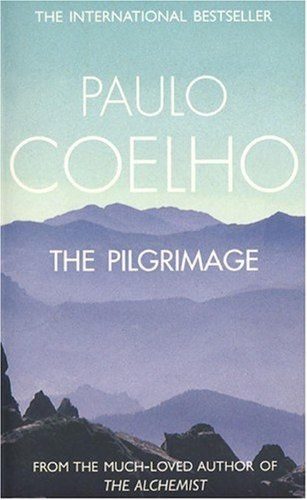
Story 60 / Message 40
The Pilgrimage
Paulo Coelho1987about 276 pages
Coelho's own walk to Santiago de Compostela with a guide called Petrus, plus a set of spiritual exercises he genuinely expects you to try.
His first book, and the one where the whole later career is visible in rough form. He walks the road to Santiago with a guide who sets him tasks, does breathing work and rituals between towns, meets a dog, argues, gets blisters, gets tired. Half of it is a travel diary of the Camino that holds up perfectly well as a travel diary. The other half is a manual, complete with numbered instructions you are meant to attempt yourself. It is rougher than everything that came after and more honest about the man doing the walking.
Why it is at 7
Seventh because it earns its place on interest rather than on craft. The writing is unsteady, the exercises stop the momentum dead every twenty pages, and a reader who is not curious about Coelho himself will wonder why the dog gets so much attention. But if The Alchemist worked on you, this is the raw material it came out of, published the year before.
Read it ifThe Alchemist worked on you and you want the raw material behind it
Skip it ifyou have no patience for spiritual homework in the middle of a story
rough, autobiographical, walkingBest for: readers curious about the authorcaminotraveldebut
Pairs with: The Alchemist, published the very next year and clearly built from this walk.
8
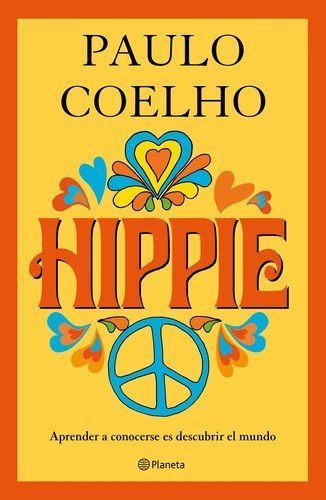
Story 70 / Message 30
Hippie
Paulo Coelho2018about 320 pages
1970, a bus running from Amsterdam to Kathmandu, and a skinny young Brazilian who has not become Paulo Coelho yet.
This is Coelho in his early twenties on the overland trail, written mostly in the third person about a character called Paulo. Dam Square, Istanbul, and then the long ride east. The travel is the pleasure here: cheap rooms, border officials, buses that break down, a Dutch woman called Karla who is written with more edge than most of his female characters, and a generation deciding that the answer must be somewhere in Asia. Indian readers get the odd experience of watching their own country arrive as somebody else's destination.
Why it is at 8
A late book that is better than its reputation, mostly because he stopped explaining for two hundred pages and simply described what he saw. It sits eighth because the ending goes vague at exactly the moment you want it to commit, and because the older narrator keeps stepping in to tell you what the younger one was learning, which is the habit the rest of the book had escaped.
Read it ifyou want travel writing and a period you only know from photographs
Skip it ifyou came for the mysticism, because there is almost none here
wandering, nostalgic, warmBest for: readers who like road storiestravel1970sautobiographical
9
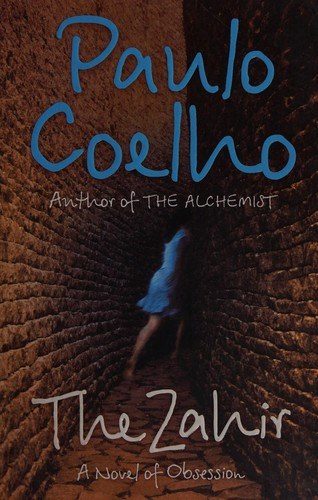
Story 50 / Message 50
The Zahir
Paulo Coelho2005about 272 pages
A famous writer's wife vanishes without a trace, and instead of a search we get three hundred pages of the writer thinking about himself.
The narrator is a successful author in Paris whose wife, a war correspondent, disappears. That premise could carry a very good novel. What arrives instead is a long circular meditation on obsession, freedom and the stories couples tell about their own marriages, with a trip to Kazakhstan arriving late. The wife stays offstage as an idea rather than a person, which is either the point or the flaw depending on your mood. When the thinking is good it is properly good, especially on how two people build a shared story and then get trapped inside it.
Why it is at 9
Exactly half story and half message, which is why it lands exactly here. Every time the book starts moving it stops to explain what the movement meant. Set it against The Devil and Miss Prym at rank three: the same author, the same interest in obsession, and only one of them trusts the reader to keep up. Worth your time if the marriage material speaks to you, skippable if it does not.
Read it ifyou are interested in what a long marriage does to two people
Skip it ifyou want the missing wife premise to actually behave like a plot
circular, self regarding, searchingBest for: readers in long relationshipsmarriageobsessionParis
10
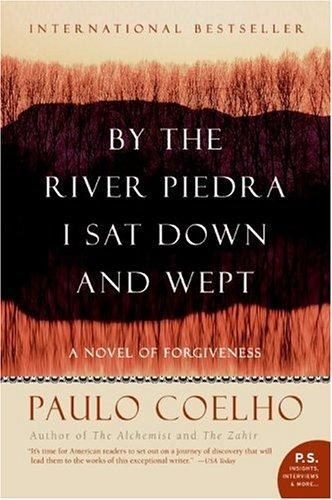
Story 45 / Message 55
By the River Piedra I Sat Down and Wept
Paulo Coelho1994about 208 pages
Two childhood friends meet again as adults, one of them now a seminarian who may be able to heal people, and they have a week to decide.
Pilar is studying in Zaragoza, tired and shut down, when a man she loved as a child gets back in touch. He is now a seminarian, apparently able to heal, and being courted by his order for it. They travel through the Pyrenees for a week and argue about whether he can have both a calling and her. The feminine face of God is the book's actual subject and the romance is the vehicle. It is a slight vehicle, but the arguments between those two are sharper than any summary makes them sound.
Why it is at 10
The message share tips past half here and you feel every point of it. Some of the best individual pages he has written about being frightened to want something sit inside this book, surrounded by a story you could fit on a postcard. Tenth rather than lower because when it connects it connects hard, particularly if you happen to be twenty six and stalling on a decision.
Read it ifyou want a short romance carrying a large question about faith
Skip it ifyou need plot, because almost nothing happens for long stretches
quiet, romantic, devotionalBest for: readers stalling on a decisionromancefaithshort
11
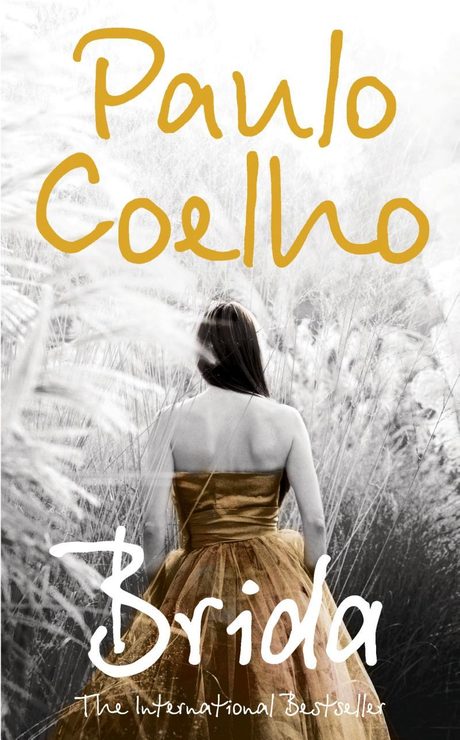
Story 40 / Message 60
Brida
Paulo Coelho1990about 276 pages
A young Irish woman decides she wants to be a witch, finds two teachers, and receives a great many lessons about soulmates.
Brida, twenty one, in Dublin, goes looking for magic and finds a hermit living in a forest and a woman who teaches what the book calls the tradition of the moon. There is a night alone in the woods early on that is the best scene Coelho has ever put on a page, genuinely frightening and completely wordless. After that the book settles into apprenticeship: lessons, symbols, past lives, and the idea that everyone has a soulmate you can identify by a light above the shoulder.
Why it is at 11
Eleventh because the ratio has flipped over: this is mostly instruction with a young woman walking between the lessons. That forest night proves he could have written a real novel out of the same material. It took eighteen years to reach English, arriving long after the books that made him famous, and reading it you can make a decent guess at why nobody was in a hurry.
Read it ifyou want the witchcraft strand of Coelho at its most direct
Skip it ifsoulmate metaphysics makes you put a book down
earnest, occult, youngBest for: readers who liked PortobellowitchcraftapprenticeshipIreland
Pairs with: The Witch of Portobello, which does the same subject with a much better structure.
12
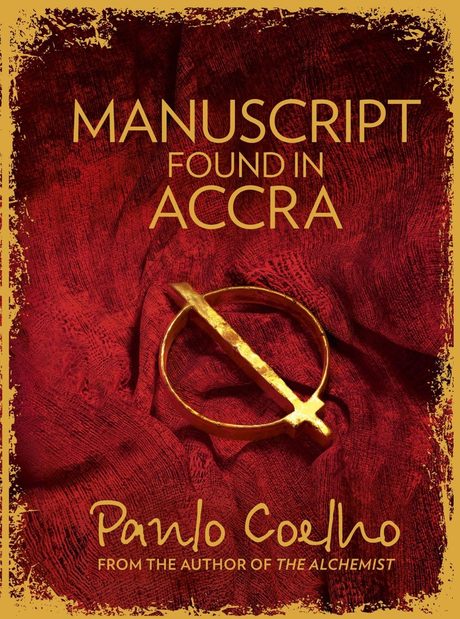
Story 5 / Message 95
Manuscript Found in Accra
Paulo Coelho2012about 131 pages
Jerusalem, 1099, the night before the siege breaks, and one wise man taking questions from people who expect to be dead by morning.
The frame is a manuscript supposedly discovered in Egypt, in which a Greek known as the Copt spends a single night in Jerusalem answering whatever the crowd asks him. Someone asks about defeat, someone else about solitude, then sex, then elegance, then beauty, and he answers each one in turn. That is the whole book, roughly a hundred and thirty pages of answers with an army outside the walls. There is no plot to spoil because there is no plot, and Coelho is not hiding that from anybody.
Why it is at 12
Last, and not as an insult. This is the purest version of the thing he actually is, a writer of maxims, with the novel scaffolding finally taken away. If the sentences you underline are the reason you read him, this is the highest concentration available. If you came for a story, it will feel like being handed a fortune cookie factory and told to help yourself.
Read it ifyou underline sentences and want them without a plot in the way
Skip it ifyou want a novel, because this is not one and never claims to be
aphoristic, calm, sermon likeBest for: readers who want the quotesaphorismsphilosophyshort
Worth knowing
How to read the split
The number on each entry is my own estimate of how much of the book is story doing the work and how much is Coelho addressing you directly. Eighty on the story side means the ideas arrive through what people do. Ninety five on the message side means a man is answering questions and the siege outside is set dressing.
It is a description, not a score. Nothing on this list is disqualified for being message heavy, because that is exactly what a lot of readers want on a Sunday afternoon and there is no shame in it. The split exists so you can match the book to the night. Pick a high story number when you want to be carried somewhere, and a high message number when you want somebody to talk to you.
Worth knowing
A note on translations
Coelho writes in Portuguese and every book on this page is a translation. The translator is not the same person across his catalogue and the English editions have been reissued many times, so the name on the copyright page of your copy may not match the one on somebody else's copy of the same title. The Alchemist you will find in Indian bookshops is Alan R. Clarke's version.
For the rest, check the first few pages of the edition in your hand rather than trusting a listing on a shopping app. Reprint dates on those listings are also why so many people think Brida is a recent book. It came out in Portuguese in 1990 and only reached English readers in 2008.
People also ask
Questions, answered
Which Paulo Coelho book should I read first?
The Alchemist, and I say that even though it sits second on this list. It is short, it is available at every railway stall in the country, and it tells you within fifty pages whether his voice works on you. If it does, go to Veronika Decides to Die next for the version with real characters in it. If the fable style annoyed you instead, try The Devil and Miss Prym, which is the closest he ever gets to writing a thriller.
Is The Alchemist overrated?
It is overpraised and over attacked in roughly equal measure, which is a strange place for a book to live. Judged as a novel it is thin: one boy, one journey, very little resistance anywhere. Judged as a piece of writing that changes what somebody does on Monday morning, it has a hit rate that almost nothing else in fiction can match. Read it as the second thing and it is not overrated at all. Read it as the first and you will feel short changed.
What order should I read Paulo Coelho in?
There is no series and no continuity, so order is about tolerance rather than plot. Start with The Alchemist for the voice. Move to Veronika Decides to Die or The Devil and Miss Prym when you want a story with edges. Take Eleven Minutes when you want him writing for adults. Leave The Pilgrimage and Brida until you already know you like him, because both of those assume you have signed up for the philosophy in advance.
Which Coelho books actually have a proper story?
Four of them in my reading: Veronika Decides to Die, The Devil and Miss Prym, The Fifth Mountain and Eleven Minutes. Those are the ones where you could remove the philosophy entirely and still be holding a book that goes somewhere. Everything from The Zahir downward is closer to an essay with characters attached, and Manuscript Found in Accra drops the pretence completely and simply answers questions for a hundred and thirty pages.
Are Paulo Coelho's books good for someone new to reading in English?
Yes, and that is a real part of why he is so big here. The sentences are short, the vocabulary is deliberately plain, and the translations keep it that way rather than showing off. A reader who is comfortable in English but not yet confident can finish The Alchemist in two sittings and walk away feeling like a reader, which matters more than any critic's opinion. Start there, then Veronika, then Eleven Minutes once you are old enough for it.
Which Paulo Coelho book is the most underrated?
The Fifth Mountain. Nobody quotes it, nobody puts it on lists, and it contains the strongest second half he has written: what a person does the day after everything they built has been destroyed. If you have recently lost a job, a home or a plan, that book knows what the morning after actually feels like. The Devil and Miss Prym is a close second for the same reason, which is that people skip straight past it.
Before you go
What to read tonight
If you have thirty pages left in you tonight, open The Devil and Miss Prym: a stranger, buried gold, a deadline, and nobody stopping to explain the theme. If you want the one that has genuinely rearranged people's lives, The Alchemist is still on the shelf at every station in the country and you will finish it before your train does.
The splits are mine and you will disagree with some of them, which is fine and slightly the point. What I would like you to take away is the habit. Before you buy the next Coelho, ask how much of it is a story and how much of it is him talking to you, then decide which of those two you are actually in the mood for. Buying the wrong one on the wrong night is how people end up saying they hate him, when what they hated was the ratio.
Keep going
Lists that pair with this one